
The Art of Grinding Coffee Beans
Quick answer
- Grind your beans right before you brew. Seriously.
- Match your grind size to your brewing method. Coarse for French press, fine for espresso.
- Invest in a decent burr grinder. Blade grinders are basically torture devices for beans.
- Freshness is king. Store beans in an airtight container, away from light and heat.
- Don’t over-grind. That’s how you get bitter, muddy coffee.
- Experiment with grind size. It’s the easiest way to tweak your brew.
Who this is for
- Anyone who’s tired of bland, boring coffee.
- Home brewers looking to elevate their daily cup.
- Coffee lovers who want to understand the “why” behind good coffee.
What to check first
Brewer type and filter type
This is ground zero. Your brewer dictates the grind. A French press needs a coarse grind because it uses a metal filter. Too fine, and you’ll get sludge. Espresso machines need super fine grounds to create resistance for the water. Drip machines fall somewhere in the middle. Paper filters catch more fines, so you can often go a touch coarser than with a metal filter.
Water quality and temperature
Bad water makes bad coffee. Period. Use filtered water if your tap water tastes off. For temperature, aim for 195-205°F. Too cool, and you won’t extract enough flavor. Too hot, and you’ll scorch the grounds, leading to bitterness.
Grind size and coffee freshness
This is the heart of it. Freshly roasted beans are best. Look for a roast date on the bag. Grind just before you brew. Pre-ground coffee loses flavor faster than a cheap tent in a hurricane. The grind size needs to match your brewer. Think coarse for French press, medium for drip, fine for espresso.
Coffee-to-water ratio
This is your recipe. A good starting point is 1:15 to 1:18. That means for every gram of coffee, use 15 to 18 grams of water. For example, 20 grams of coffee to 300-360 grams of water. It’s a balance. Too little coffee, and it’s weak. Too much, and it’s overpowering.
Cleanliness/descale status
A dirty brewer is a flavor killer. Coffee oils build up. Mineral deposits from water clog things up. Regularly clean your brewer and grinder. Descale your machine as recommended by the manufacturer. It’s not glamorous, but it’s crucial for good coffee.
Step-by-step (brew workflow)
1. Select your beans. Choose freshly roasted beans.
- What “good” looks like: Beans with a recent roast date (within 1-3 weeks is ideal).
- Common mistake: Buying beans without a roast date, or those that have been on the shelf for months. Avoid this by checking the bag carefully.
2. Measure your beans. Use a scale for accuracy.
- What “good” looks like: Precise measurement, like 20 grams for a standard cup.
- Common mistake: Using scoops. Scoops are inconsistent. A scale is your friend here.
3. Choose your grinder. A burr grinder is best.
- What “good” looks like: A grinder that produces uniform particle sizes.
- Common mistake: Using a blade grinder. They chop beans unevenly, creating dust and boulders.
For the most consistent results and to avoid the pitfalls of uneven chopping, investing in a quality burr grinder is highly recommended. This type of grinder ensures uniform particle size for a better extraction.
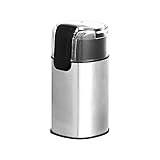
- Electric coffee bean grinder appliance for home use
- Can grind 30 grams/1 ounce of beans for drip coffee brewing in 10 seconds
- Grind coffee beans, herbs, spices, grains, nuts, and more
- Clear safety lid allows you to easily see the results in progress
- Heavy-duty stainless steel grind blade
4. Set your grind size. Match it to your brewing method.
- What “good” looks like: Coarse for French press, medium for drip, fine for espresso.
- Common mistake: Using the same grind for everything. This will ruin your brew.
5. Grind your coffee. Do it right before brewing.
- What “good” looks like: A fragrant, consistent grind.
- Common mistake: Grinding too far in advance. Coffee stales fast once ground.
6. Prepare your brewer. Ensure it’s clean and ready.
- What “good” looks like: A spotless brewer and filter holder.
- Common mistake: Using a dirty brewer. Old oils and residue will taint your fresh brew.
7. Heat your water. Aim for 195-205°F.
- What “good” looks like: Water just off the boil, usually about 30 seconds after it stops bubbling.
- Common mistake: Using boiling water or water that’s too cool. Boiling water can scorch the grounds.
8. Add ground coffee to brewer.
- What “good” looks like: An even bed of grounds.
- Common mistake: Tamping down the grounds too hard, or leaving clumps.
9. Bloom the coffee (optional but recommended). Pour just enough hot water to saturate the grounds.
- What “good” looks like: The grounds puff up and release CO2.
- Common mistake: Skipping this step. It helps release trapped gases for a more even extraction.
10. Pour the rest of the water. Use your measured amount.
- What “good” looks like: Even saturation of all grounds.
- Common mistake: Pouring too fast or unevenly. This leads to under- or over-extraction in different parts of the bed.
11. Let it brew. Follow your brewer’s specific timing.
- What “good” looks like: The right amount of time for your method (e.g., 4 minutes for French press).
- Common mistake: Rushing the brew time or letting it sit too long.
12. Serve and enjoy.
- What “good” looks like: A delicious, aromatic cup of coffee.
- Common mistake: Letting brewed coffee sit on a hot plate. It cooks the coffee and makes it bitter.
Common mistakes (and what happens if you ignore them)
| Mistake | What it causes | Fix |
|---|---|---|
| Using stale beans | Flat, dull, or even rancid coffee flavor | Buy beans with a roast date and use them within 2-3 weeks. |
| Grinding too far in advance | Rapid flavor loss, oxidized taste | Grind only what you need, right before brewing. |
| Using a blade grinder | Inconsistent extraction, muddy or weak coffee | Invest in a burr grinder for uniform particle size. |
| Incorrect grind size for brewer | Under-extraction (sour) or over-extraction (bitter) | Match grind size to brewer type: coarse for French press, fine for espresso. |
| Using tap water with off-flavors | Off-flavors in the coffee | Use filtered water. |
| Water too hot or too cold | Scorched coffee (bitter) or weak coffee (sour) | Aim for 195-205°F. |
| Incorrect coffee-to-water ratio | Weak, watery, or too strong coffee | Use a scale and aim for a ratio between 1:15 and 1:18. |
| Dirty grinder or brewer | Bitter, stale, or unpleasant coffee taste | Clean your equipment regularly. |
| Not blooming the coffee | Uneven extraction, potential for sourness | Pour a small amount of water to saturate grounds and let degas. |
| Leaving coffee on a hot plate | Bitter, burnt, and metallic taste | Transfer brewed coffee to a thermal carafe immediately. |
Decision rules (simple if/then)
- If your French press coffee tastes muddy and bitter, then your grind is likely too fine because the metal filter lets too many small particles through. Try a coarser setting.
- If your drip coffee tastes weak and sour, then your grind might be too coarse or your water temperature too low, leading to under-extraction. Check your grind and water temp.
- If you’re using a pour-over and the water drains too fast, then your grind is too coarse for that method.
- If you’re using an espresso machine and the shot runs too fast and is watery, then your grind is too coarse.
- If your coffee tastes like burnt rubber, then your water might be too hot, or your beans are old and oxidized.
- If your coffee tastes like old socks, then your brewing equipment is probably dirty. Give it a good scrub.
- If you’re tasting chalkiness in your cup, it could be too many fines from an inconsistent grind.
- If your coffee is consistently too strong, then reduce the amount of coffee or increase the water.
- If you want to experiment with brighter flavors, try a slightly finer grind and ensure your water temp is on the higher end of the range.
- If your coffee is tasting flat, even with fresh beans, check your water quality.
- If you’re using a new coffee and it tastes off, try adjusting your grind size slightly before changing anything else.
- If your espresso shot is bitter and channeling (water finding paths), your grind might be too fine, or you’re not tamping evenly.
FAQ
What’s the difference between a burr grinder and a blade grinder?
A burr grinder uses two abrasive surfaces (burrs) to crush beans into uniform particles. A blade grinder uses a spinning blade like a tiny blender, which chops beans unevenly. Burr grinders are superior for consistent coffee.
If you’re looking for convenience and speed, a good electric coffee grinder can make a significant difference. Look for models that offer adjustable grind settings to match your brewing method.

- 【Adjustable Grinding Precision】There are seconds marks above the timing knob, from coarse to fine. You can choose the precision of powder according to your needs.
- 【Removable Grinding Cup】The cup is removable and it can grinds 2.5oz coffee beans, up to 10 cups of coffee.
- 【Quiet Coffee Grinder】The average noise is 63 dB, which is quieter than other coffee grinders. Getting up early and grinding coffee beans without disturbing your families sleep in the morning.
- 【Multi-functional Coffee Grinder】This electric coffee grinder can also be used for grinding other dry ingredients, such as pepper, cumin, Fenugreek, parsley, cinnamon, star anise, peppermint, soya, quinoa, sorghum, rice and crystal sugar.
- 【What You Get】You will get a coffee grinder, a 2-blade cup, a 2-in-1 coffee spoon with brush, a user manual, the 2-year warranty and our friendly customer service.
How often should I clean my coffee grinder?
You should clean your grinder every few weeks, or more often if you notice oily buildup or a stale smell. Many grinders have brush attachments or can be disassembled for cleaning.
Can I reuse coffee grounds?
No, you shouldn’t. Used grounds have already given up most of their flavor. Reusing them will result in weak, unpleasant coffee.
How should I store whole coffee beans?
Store them in an airtight container, away from light, heat, and moisture. A cool, dark pantry is ideal. Avoid the refrigerator or freezer, as condensation can damage the beans.
What does “bloom” mean in coffee brewing?
Blooming is the initial pour of hot water onto fresh coffee grounds. It allows trapped CO2 gas to escape, which is a sign of freshness. This degasification helps ensure a more even extraction during the rest of the brew.
Is it okay to use pre-ground coffee?
It’s not ideal. Pre-ground coffee loses its aromatic oils and flavor much faster than whole beans. If you must use it, buy it in small quantities and use it quickly.
How do I know if my grind is too fine or too coarse?
If your brew is too bitter and takes a long time to drip, it’s likely too fine. If it’s weak, sour, and drains too fast, it’s probably too coarse.
What’s the best way to get consistent results?
Use a scale to measure both your coffee beans and your water. Consistency in your measurements is key to repeatable, delicious coffee.
What this page does NOT cover (and where to go next)
- Specific grinder recommendations (check reviews for models that fit your budget and brewing needs).
- Detailed guides for every single brewing method (e.g., Aeropress, Chemex).
- Advanced techniques like water chemistry or refractometry.
- The science behind coffee bean varietals and roast profiles.
- How to repair a broken coffee maker.