
Can Coffee Beans Be Used to Make Espresso?
Quick Answer
- Yep, you absolutely can use coffee beans to make espresso.
- The key is the grind size. Espresso needs a super-fine grind.
- You’ll need an espresso machine to force hot water through those grounds.
- Freshly roasted beans are your best bet for a killer shot.
- It’s not just about the beans; technique matters a ton.
Key Terms and Definitions
- Espresso: A concentrated coffee beverage brewed by forcing hot, pressurized water through finely-ground coffee beans.
- Grind Size: Refers to how coarse or fine the coffee particles are after grinding. Espresso requires a very fine grind.
- Portafilter: The basket that holds the ground coffee in an espresso machine.
- Tamper: A tool used to compress the coffee grounds evenly in the portafilter.
- Crema: The reddish-brown foam that forms on top of a well-pulled espresso shot, indicating good extraction.
- Extraction: The process of dissolving soluble compounds from coffee grounds using water.
- Bloom: The initial release of CO2 gas from freshly roasted coffee when hot water is first applied.
- Pressurized Water: Water forced through the coffee grounds at high pressure (typically 9 bars for espresso).
- Roast Level: How long and at what temperature coffee beans have been roasted, affecting flavor.
- Freshness: How recently the coffee beans were roasted and ground.
How Espresso is Made with Coffee Beans
- Start with whole coffee beans. Any kind will technically work, but some are better suited.
- Grind those beans to a super-fine consistency. Think powdered sugar, not sand.
- Dose the finely ground coffee into an espresso machine’s portafilter.
- Tamp the grounds down firmly and evenly to create a compact puck.
- Lock the portafilter into the espresso machine’s group head.
- The machine heats water to the right temperature, usually between 195-205°F.
- It then forces this hot water through the coffee puck under high pressure, typically around 9 bars.
- This process extracts the coffee’s oils and flavors rapidly, creating a concentrated shot.
- The result is a small, intense coffee topped with crema.
To make espresso, start with high-quality whole coffee beans. Consider trying these espresso beans for a rich and flavorful shot.
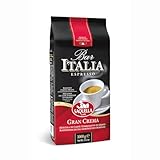
- AUTHENTIC ITALIAN ESPRESSO EXPERIENCE: From Saquella Caffè, family coffee roasters in Italy since 1856 — blending heritage, passion, and quality in every bean.
- FULL-BODIED & CREAMY FLAVOR: A signature Arabica and Robusta blend that delivers a bold espresso with a thick, velvety crema and lingering chocolate notes.
- MEDIUM-DARK ROAST: Carefully roasted for a rich aroma and balanced taste — smooth yet intense, ideal for espresso, cappuccino, or macchiato.
- CONSISTENT QUALITY: Beans are slow-roasted and expertly blended to ensure uniform extraction and a true Italian café-style experience at home.
- MADE IN ITALY: Imported directly from Italy — Saquella Bar Italia Gran Crema is the choice of professional baristas and espresso lovers worldwide.
What Affects Your Espresso Shot
- Bean Quality: High-quality, specialty coffee beans will always yield better results.
- Bean Freshness: Use beans roasted within the last few weeks for optimal flavor and crema.
- Grind Consistency: An even, super-fine grind is crucial. Inconsistent grinds lead to uneven extraction.
- Grind Size: Too coarse, and your shot will be weak and sour. Too fine, and it’ll be bitter and choked.
- Water Quality: Filtered water tastes better and is better for your machine.
- Water Temperature: Too hot burns the coffee; too cool under-extracts. Consistency is key.
- Brew Ratio: The ratio of dry coffee grounds to the final espresso yield. A common starting point is 1:2 (e.g., 18g coffee to 36g espresso).
- Brew Time: How long the water is in contact with the coffee. For espresso, this is typically 25-30 seconds.
- Tamping Pressure: Applying consistent, firm pressure with your tamper helps create an even puck.
- Machine Pressure: Espresso machines use high pressure, which is a defining factor.
- Machine Cleanliness: A clean machine ensures no old coffee oils interfere with the taste.
- Dose: The amount of ground coffee used in the portafilter.
Pros, Cons, and When Espresso Matters
- Pro: Intense Flavor: Espresso delivers a concentrated punch of flavor that’s hard to beat.
- Pro: Versatility: It’s the base for lattes, cappuccinos, americanos, and more.
- Pro: Speed: Once dialed in, an espresso shot brews in under a minute.
- Pro: Crema: That beautiful crema is a sign of a well-made shot.
- Con: Equipment Cost: A decent espresso machine and grinder can be a significant investment.
- Con: Learning Curve: Getting a perfect shot takes practice and attention to detail.
- Con: Bean Specificity: Not all beans shine as espresso; some are better suited for drip.
- Con: Waste: If a shot is bad, you’ve wasted coffee and water.
- When it Matters: For those who love bold coffee flavors, milk-based espresso drinks, or need a quick caffeine hit.
- When it Matters Less: If you prefer a milder, less intense cup or are on a tight budget for equipment.
- When it Matters: When you want to recreate cafe-style drinks at home.
- When it Matters: For understanding the foundation of many popular coffee beverages.
Common Misconceptions
- Myth: Any coffee bean works for espresso. While technically true you can try, certain beans and roasts perform much better.
- Myth: Espresso is just strong coffee. It’s brewed differently (pressure) and results in a different flavor profile and concentration.
- Myth: You can make espresso with a regular drip coffee maker. Nope. Drip makers don’t have the pressure needed.
- Myth: Pre-ground espresso coffee is fine. For the best results, grind your beans right before brewing. Pre-ground loses flavor fast.
- Myth: All espresso shots should taste bitter. A well-pulled shot should be balanced, not overwhelmingly bitter. Bitterness often means over-extraction.
- Myth: Espresso is always served black. While that’s the purest form, it’s also the base for many popular drinks.
- Myth: Crema means the espresso is good. Crema is an indicator, but a shot can have crema and still taste bad if not extracted properly.
- Myth: You need expensive beans for good espresso. While quality helps, technique and freshness can make decent beans shine.
- Myth: Espresso is bad for you because it’s strong. In moderation, it’s just coffee.
FAQ
- Can I use any coffee beans for espresso?
Yes, you can use any whole coffee beans. However, medium to dark roasts often perform well due to their bolder flavors, which can stand up to the intensity of espresso. Lighter roasts can also make excellent espresso, but they might require more careful dialing-in.
- What’s the most important factor for making espresso?
The grind size is arguably the most critical factor. It needs to be very fine and consistent to create enough resistance for the pressurized water to extract properly.
- Do I need a special grinder for espresso?
Yes, for true espresso, you need a grinder capable of producing a very fine and consistent grind. Blade grinders won’t cut it; you’ll need a burr grinder with micro-adjustments.
- How fresh do my coffee beans need to be?
For the best results, use beans that have been roasted within the last 1-4 weeks. Freshly roasted beans will have more CO2, which helps produce a better crema and richer flavor.
- Can I use pre-ground coffee for espresso?
It’s highly discouraged. Pre-ground coffee loses its aroma and flavor very quickly. For espresso, the grind is so specific that pre-ground coffee will almost certainly lead to poor-tasting shots.
- What is the ideal water temperature for espresso?
The generally accepted range is between 195°F and 205°F (90°C to 96°C). Most home espresso machines regulate this automatically, but it’s good to know.
- Is espresso just a small cup of strong coffee?
No, espresso is a method of brewing. It uses pressure to extract coffee, resulting in a concentrated beverage with a unique flavor and texture (crema) that differs from drip coffee, even if both use the same beans.
- What if my espresso shot is too bitter or too sour?
If it’s too bitter, it’s likely over-extracted (grind too fine, too much water, or too long a brew time). If it’s too sour, it’s likely under-extracted (grind too coarse, not enough water, or too short a brew time). Adjust your grind size first.
What This Page Does NOT Cover (and Where to Go Next)
- Specific espresso machine models and their features. (Look for reviews and comparisons.)
- Detailed guides on latte art. (Search for “latte art tutorials.”)
- Advanced espresso machine maintenance and repair. (Consult your machine’s manual or manufacturer support.)
- In-depth discussions on different coffee varietals and their suitability for espresso. (Explore coffee blogs and roaster websites.)
- Recipes for specific espresso-based drinks beyond the basics. (Find coffee recipe books or online resources.)