
Does Grinding Coffee Beans Make a Difference?
Quick answer
- Yeah, grinding coffee beans makes a huge difference.
- Freshly ground beans unlock way more flavor.
- The grind size is critical for extraction. Too fine? Bitter. Too coarse? Weak.
- Pre-ground coffee loses its punch fast.
- For the best cup, grind right before you brew.
- It’s not rocket science, but it’s the easiest upgrade you can make.
Key terms and definitions
- Extraction: The process of dissolving soluble compounds from coffee grounds into water. This is how you get flavor.
- Bloom: The initial release of CO2 gas from freshly roasted coffee when hot water hits it. It’s a good sign.
- Burr Grinder: A grinder with two abrasive surfaces (burrs) that crush beans to a consistent size. Way better than blade grinders.
- Blade Grinder: Uses a spinning blade like a tiny blender. Creates uneven particle sizes, leading to uneven extraction. Avoid if you can.
- Grind Size: Refers to the particle size of the coffee grounds. Coarse, medium, fine – each has its job.
- Freshness: How recently the coffee was roasted and ground. This is key for flavor.
- Aroma: The volatile compounds that create the smell of coffee. A big part of the taste experience.
- Acidity: Not sourness, but the bright, lively taste notes in coffee. Good acidity is a sign of quality.
- Bitterness: Can be a desirable trait in moderation, but too much usually means over-extraction.
- Body: The mouthfeel or weight of the coffee. Can range from light and tea-like to thick and syrupy.
While blade grinders are common, for a truly superior cup, consider upgrading to a burr grinder. However, if you’re just starting out, a simple blade coffee grinder can still be a step up from pre-ground coffee.
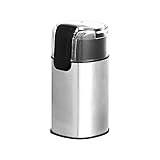
- Electric coffee bean grinder appliance for home use
- Can grind 30 grams/1 ounce of beans for drip coffee brewing in 10 seconds
- Grind coffee beans, herbs, spices, grains, nuts, and more
- Clear safety lid allows you to easily see the results in progress
- Heavy-duty stainless steel grind blade
How it works
- Coffee beans are roasted seeds. They contain a bunch of compounds that give coffee its flavor and aroma.
- These compounds are locked up inside the bean’s structure.
- When you grind the beans, you break open those cells. This exposes more surface area.
- Hot water can then more easily dissolve these flavor compounds. It’s like unlocking a treasure chest.
- The finer you grind, the more surface area is exposed. This speeds up extraction.
- The coarser the grind, the less surface area, and extraction slows down.
- Grinding releases volatile aromatic compounds into the air. That’s why fresh grounds smell so good.
- This process is called extraction. You want to get the right stuff out, not too much and not too little.
- Consistency in grind size is super important for even extraction. Uneven grinds mean some parts over-extract and some under-extract.
What affects the result
- Grind Size: This is the big one. Too fine for your brew method? Bitter coffee. Too coarse? Water runs through too fast, weak coffee.
- Grind Consistency: A burr grinder gives you uniform particles. Blade grinders give you dust and boulders. Guess which one brews better.
- Freshness of Beans: Even the best grind won’t fix stale beans. Aim for beans roasted within the last month or so.
- Freshness of Grind: Ground coffee stales out way faster than whole beans. Once ground, the flavor starts to fade in minutes, not days.
- Water Temperature: Too hot burns the coffee, too cool under-extracts. Around 195-205°F is usually the sweet spot. Check your brewer’s manual.
- Water Quality: Tap water can have off-flavors. Filtered water is usually best.
- Coffee-to-Water Ratio: The amount of coffee grounds versus water. Too much coffee, it’s strong. Too little, it’s weak.
- Brew Method: Different methods need different grind sizes. French press is coarse, espresso is fine.
- Roast Level: Lighter roasts might need a slightly finer grind than darker roasts.
- Pressure (for some methods): Espresso machines use pressure to force water through finely ground coffee.
- Brew Time: How long the water is in contact with the grounds. Longer contact usually means finer grind.
- Turbulence: How much the grounds are agitated during brewing. Can affect extraction rate.
Pros, cons, and when it matters
- Pro: Superior Flavor: Freshly ground beans offer a much richer, more nuanced flavor profile. You taste the difference immediately.
- Con: Requires a Grinder: You need to buy a grinder, which is an extra piece of equipment.
- Pro: Better Aroma: The intense smell of freshly ground coffee is part of the experience. It’s a sensory delight.
- Con: Takes More Time: Grinding adds a minute or two to your morning routine. But it’s worth it.
- Pro: Control Over Grind Size: You can dial in the perfect grind for your specific brew method. This is huge for dialing in your coffee.
- Con: Can Be Noisy: Some grinders can be loud, especially early in the morning.
- Pro: Maximizes Freshness: You’re getting the most out of your coffee beans by grinding them just before brewing.
- Con: Inconsistent Grinds (with blade grinders): Blade grinders create dust and chunks, leading to a muddy, unbalanced cup.
- When it matters: For any coffee you want to taste good. Seriously. If you care even a little about flavor, grind your own beans.
- When it matters less: Maybe for instant coffee, but that’s a different ballgame.
- When it matters most: For pour-overs, French press, Aeropress, and any method where you’re trying to highlight the coffee’s unique characteristics.
- When it matters for consistency: If you’re brewing daily and want repeatable results, a good grinder is non-negotiable.
Common misconceptions
- Myth: All grinders are the same. Nope. Burr grinders are the way to go for consistency. Blade grinders are a compromise.
- Myth: Pre-ground coffee stays fresh for a while. It starts losing flavor the second it’s ground. Oxygen is the enemy.
- Myth: You need a super expensive grinder to make good coffee. While high-end grinders are great, a decent burr grinder is a massive step up from a blade grinder and won’t break the bank.
- Myth: Grinding too fine will always make coffee bitter. It can lead to bitterness through over-extraction, but the primary issue is uneven extraction if the grind isn’t right for the brew method.
- Myth: The roast date doesn’t matter as much if you grind fresh. The bean’s inherent freshness is still critical. Old beans, even if ground fresh, won’t taste great.
- Myth: You can just use any grind size for any brewer. Big nope. Different methods require different grind sizes for proper extraction.
- Myth: Grinding coffee is complicated. It’s really not. You just set the size and go. The machine does the work.
- Myth: Coffee makers do the grinding for you. Some high-end machines have built-in grinders, but most standard coffee makers do not. You grind separately.
FAQ
- Does grinding coffee beans make a difference in taste?
Absolutely. Freshly ground beans release volatile aromatics and flavors that are lost quickly after grinding. It’s the most significant factor in improving your coffee’s taste.
- How much difference does a good grinder make?
A lot. A good burr grinder produces uniform particles, leading to even extraction and a balanced, flavorful cup. A cheap blade grinder creates inconsistency, resulting in bitter and weak flavors simultaneously.
- Is it worth buying a separate coffee grinder?
If you enjoy coffee, yes. It’s one of the simplest and most impactful upgrades you can make to your home brewing setup. The flavor payoff is huge.
- How long does ground coffee stay fresh?
Flavor starts degrading almost immediately after grinding. While it’s technically “fresh” for a few hours, you’ll notice a decline in quality very quickly. Best to grind only what you need.
- What’s the difference between blade and burr grinders?
Blade grinders chop beans with a spinning blade, creating inconsistent sizes. Burr grinders crush beans between two abrasive surfaces, producing a much more uniform grind size.
- Does grinding coffee beans make difference for espresso?
Yes, especially. Espresso requires a very fine and consistent grind. Without it, you won’t get proper extraction, and your espresso will likely be watery or bitter.
- Can I grind coffee beans with a food processor?
You can, but it’s not recommended for good coffee. Like a blade grinder, it produces very inconsistent particle sizes, leading to poor extraction and a less-than-ideal cup.
What this page does NOT cover (and where to go next)
- Specific grinder recommendations and brands. (Look for reviews comparing burr grinders.)
- Detailed explanations of different roast levels and their impact. (Explore coffee roasting guides.)
- Advanced brewing techniques like siphon or cold brew. (Search for guides on specific brew methods.)
- The science behind coffee bean varietals and origins. (Dive into coffee origin guides.)
- How to clean and maintain your coffee grinder. (Check your grinder’s manual or manufacturer’s website.)