
Can You Make Coffee From Cocoa Beans?
Quick answer
- No, you cannot make coffee from cocoa beans.
- Coffee comes from roasted coffee beans, which have a different chemical makeup.
- Cocoa beans can be roasted and ground, but the result is not coffee.
- You’ll get a chocolatey beverage, not a caffeinated jolt.
- Think of it like trying to bake a cake with flour instead of sugar. It’s a different ingredient for a different purpose.
Who this is for
- Curious home brewers wondering about alternative ingredients.
- Anyone who loves chocolate and coffee and wants to combine them.
- Experimenters looking to push the boundaries of their home coffee setup.
What to check first
Brewer type and filter type
What kind of coffee maker are you using? A drip machine, pour-over, French press, or something else? Each has its own filter requirements. Paper filters are common for drip and pour-over. Metal filters work for French presses and some pour-overs. If you’re trying to brew something other than coffee, make sure your chosen method can handle it. It’s easy to clog a paper filter with something too fine.
Water quality and temperature
Good coffee starts with good water. If your tap water tastes funky, your brewed beverage will too. Filtered water is usually best. For actual coffee, water temperature is key – typically between 195-205°F. For other things, like cocoa, you might just need hot water. Overheating water can scorch delicate ingredients, and underheating means you won’t extract much flavor.
Grind size and coffee freshness
This is where things get tricky when we’re talking about cocoa beans. Coffee beans need a specific grind size depending on your brewing method. Too fine, and it clogs. Too coarse, and you get weak brew. Freshly roasted and ground coffee is ideal for flavor. Cocoa beans, when roasted and ground, will have a different particle size distribution and texture than coffee.
Coffee-to-water ratio
The standard for coffee is usually around 1:15 to 1:18 (coffee to water by weight). This means for every gram of coffee, you use 15-18 grams of water. This ratio is optimized for coffee bean extraction. If you were to try brewing cocoa beans, you’d have to experiment wildly to find a ratio that yields a palatable drink. It’s not a standard measurement.
Cleanliness/descale status
This is crucial for any brewing. Old coffee oils and mineral buildup from water can mess with flavor. Regularly cleaning your brewer and descaling it (especially if you have hard water) is a must. If you’re trying something new, like cocoa, you don’t want old coffee gunk to ruin the experiment. A clean brewer means pure flavor.
Step-by-step (brew workflow)
This section details a standard coffee brewing workflow. Remember, this is for coffee, not cocoa beans.
1. Gather your ingredients: Get your fresh coffee beans and filtered water.
- What “good” looks like: You have quality beans and clean water ready to go.
- Common mistake: Using stale, old beans. Avoid this by buying beans roasted recently.
2. Heat your water: Bring your filtered water to the optimal brewing temperature, around 195-205°F.
- What “good” looks like: Water is hot but not boiling violently.
- Common mistake: Boiling water too hard. Let it sit for 30 seconds off the boil.
3. Grind your coffee beans: Grind your beans to the appropriate size for your brew method (e.g., medium for drip, coarse for French press).
- What “good” looks like: A consistent grind size that looks right for your brewer.
- Common mistake: Grinding too fine or too coarse. This leads to over or under-extraction.
4. Prepare your brewer: Rinse your paper filter with hot water if using one, or preheat your French press.
- What “good” looks like: Brewer is clean and ready, filter is rinsed to remove paper taste.
- Common mistake: Not rinsing the paper filter. This can leave a papery taste in your coffee.
5. Add ground coffee to brewer: Place the correct amount of ground coffee into your prepared brewer.
- What “good” looks like: A bed of grounds that looks even.
- Common mistake: Tamping down the grounds. You want them loose for water flow.
6. Bloom the coffee (pour-over/drip): Pour just enough hot water to saturate the grounds, then wait 30 seconds.
- What “good” looks like: The grounds puff up and release CO2, a sign of freshness.
- Common mistake: Skipping the bloom. This can lead to a less flavorful, uneven extraction.
7. Continue pouring water: Slowly pour the remaining hot water over the grounds in a controlled manner.
- What “good” looks like: A steady stream of water, saturating all grounds evenly.
- Common mistake: Pouring too fast or all at once. This can cause channeling and weak coffee.
8. Allow to brew/steep: Let the coffee drip through or steep for the recommended time (e.g., 4 minutes for French press).
- What “good” looks like: The brewing process finishes cleanly without sputtering.
- Common mistake: Brewing too long or too short. This causes bitterness or sourness.
9. Serve immediately: Pour your freshly brewed coffee into your favorite mug.
- What “good” looks like: A hot, aromatic cup of coffee.
- Common mistake: Letting coffee sit on a hot plate for too long. It gets burnt.
Common mistakes (and what happens if you ignore them)
| Mistake | What it causes | Fix |
|---|---|---|
| Using stale coffee beans | Flat, dull, or even rancid flavor | Buy beans roasted within the last 2-3 weeks and grind just before brewing. |
| Incorrect grind size | Bitter (too fine) or weak/sour (too coarse) | Adjust your grinder settings based on your brew method. Check guides. |
| Water temperature too low | Under-extracted, sour, weak coffee | Use a thermometer or let boiling water sit for 30-60 seconds. |
| Water temperature too high | Over-extracted, bitter, burnt coffee | Ensure water isn’t at a rolling boil when it hits the grounds. |
| Incorrect coffee-to-water ratio | Weak (too little coffee) or too strong/overpowering | Weigh your coffee and water for consistent results. Aim for 1:15-1:18. |
| Not cleaning the brewer regularly | Bitter, oily residue, off-flavors | Clean your brewer after every use and descale periodically. |
| Skipping the bloom | Uneven extraction, less flavorful coffee | Always do a 30-second bloom with fresh coffee. |
| Using poor quality water | Off-flavors, dullness, mineral buildup | Use filtered or bottled water. Avoid distilled water. |
| Over-extraction (brewing too long) | Bitter, astringent, harsh taste | Time your brew process accurately. |
| Under-extraction (brewing too short) | Sour, weak, underdeveloped flavor | Ensure sufficient contact time between water and grounds. |
Decision rules (simple if/then)
- If your coffee tastes bitter, then try a coarser grind or shorter brew time because you might be over-extracting.
- If your coffee tastes sour, then try a finer grind or longer brew time because you might be under-extracting.
- If your coffee tastes weak, then use more coffee or less water because your ratio is off.
- If your coffee tastes too strong, then use less coffee or more water because your ratio is too high.
- If your coffee has a papery taste, then rinse your paper filter thoroughly with hot water before brewing because the paper itself can impart flavor.
- If you notice sediment in your cup (French press excluded), then your grind might be too fine or your filter is compromised because particles are getting through.
- If your brewer is producing slow drips or no drips, then your grind is likely too fine, clogging the filter because the particles are too small.
- If your coffee tastes dull even with fresh beans, then check your water quality because bad water can mute flavors.
- If your brewing process is inconsistent, then start weighing your coffee and water because volume measurements can be inaccurate.
- If your brewer smells off, then it needs a thorough cleaning and descaling because old oils and mineral deposits affect taste.
FAQ
Can I actually brew cocoa beans like coffee?
No, you can’t make coffee from cocoa beans. Coffee is made from the roasted seeds of the coffee plant, while cocoa comes from the seeds of the cacao tree. They have fundamentally different chemical compounds and flavor profiles.
What would happen if I tried to brew cocoa beans?
If you roasted and ground cocoa beans and tried to brew them like coffee, you’d get a chocolatey beverage. It would likely be thick and might not extract well in a standard coffee maker. It would not have caffeine like coffee.
If you’re curious to try brewing cocoa beans, consider sourcing high-quality cocoa beans to get the best possible flavor profile from your experiment.
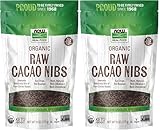
- The information below is per-pack only
- INTENSELY DELICIOUS BITS OF PURE CACAO BEANS: Organic Cacao Nibs are tasty little cocoa bean crumbles with a strikingly rich, delicious, chocolatey flavor
- GREAT AS A TOPPING, SNACK, OR IN BAKING: These beauties have naturally occurring vitamins, minerals, fiber, flavonols, and polyphenols
- RICH FLAVOR: They're perfect for snacking right out of the bag or as a natural substitute for chocolate chips in your favorite recipes
- Keto-Friendly;Kosher (Triangle K);Non-GMO Project Verified;Terracycle;USDA Organic
Is there any caffeine in cocoa beans?
Yes, cocoa beans do contain a small amount of caffeine, but significantly less than coffee beans. You’d need to consume a very large amount of cocoa-based drink to get a noticeable caffeine effect comparable to coffee.
Can I add cocoa powder to my coffee?
Absolutely! This is a popular way to combine coffee and chocolate flavors. You can add cocoa powder directly to your coffee grounds before brewing or stir it into your brewed coffee.
What’s the difference between cocoa and cacao?
Cacao is the raw bean, while cocoa powder is made from cacao beans that have been roasted and processed. Generally, raw cacao is considered to have more antioxidants and a more intense flavor.
Will my coffee maker handle ground cocoa beans?
It’s not recommended. Coffee makers are designed for the specific grind and oil content of coffee beans. Ground cocoa might clog filters, leave residue, or not extract properly, potentially damaging your machine.
Are there any chocolate-flavored coffee beans?
Not directly. Coffee beans themselves don’t taste like chocolate. However, some coffee beans, particularly certain varietals from specific regions, can have flavor notes that people describe as chocolatey, nutty, or caramel-like after roasting.
What’s a “mocha”?
A mocha is a coffee drink made with espresso, hot chocolate, and milk, often topped with whipped cream. It’s a direct combination of coffee and chocolate flavors, but it’s made with traditional coffee and chocolate ingredients.
What this page does NOT cover (and where to go next)
- Specific recipes for chocolate-infused coffee drinks. (Next: Look for “mocha recipes” or “coffee and chocolate pairings.”)
- Detailed comparisons of different coffee bean origins and their flavor profiles. (Next: Explore guides on single-origin coffees.)
- The science behind coffee roasting and bean chemistry. (Next: Read about the Maillard reaction and coffee processing.)
- How to roast your own coffee beans at home. (Next: Search for home coffee roasting techniques and equipment.)
- Troubleshooting specific issues with automated espresso machines. (Next: Consult your espresso machine’s manual or manufacturer support.)