
Understanding The Strong Brew Button
Quick answer
- The “strong brew” button usually means the coffee maker will run water through the grounds slower.
- This allows for longer contact time, extracting more flavor.
- Some machines might also use slightly more coffee grounds.
- It’s designed for a bolder, more intense cup.
- Don’t expect miracles; it’s a subtle adjustment.
- Always check your specific machine’s manual for exact details.
If you’re looking for a coffee maker with this convenient feature, many models, like those with a dedicated strong brew button, offer enhanced flavor extraction.
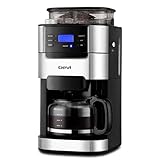
- 【𝟐-𝟏𝟎 𝐂𝐮𝐩 𝐅𝐥𝐞𝐱𝐢𝐛𝐥𝐞 𝐂𝐚𝐩𝐚𝐜𝐢𝐭𝐲】Our drip coffee maker with built-in grinder lets you brew anywhere from 2 to 10 cups. Simply use the “POWDER 2-10” button to adjust the ratio of coffee to water for your perfect strength.
- 【𝐂𝐮𝐬𝐭𝐨𝐦𝐢𝐳𝐚𝐛𝐥𝐞 𝐁𝐫𝐞𝐰 & 𝐆𝐫𝐢𝐧𝐝】This all-in-one machine with a burr grinder offers 3 grind strength levels and 8 adjustable settings. Grind fresh whole beans right before brewing for consistently smooth, flavorful coffee.
- 【𝐑𝐞𝐮𝐬𝐚𝐛𝐥𝐞 & 𝐄𝐚𝐬𝐲-𝐂𝐥𝐞𝐚𝐧 𝐅𝐢𝐥𝐭𝐞𝐫】The coffee maker includes a durable reusable filter that is easy to clean—just rinse with water for quick maintenance and less waste.
- 【𝐈𝐦𝐩𝐨𝐫𝐭𝐚𝐧𝐭 𝐍𝐨𝐭𝐞】Product dimensions: 12.36"D x 8.38"W x 16.93"H. Please measure your countertop and cabinet space beforehand to ensure proper fit.
- 【𝐏𝐫𝐞-𝐁𝐫𝐞𝐰 𝐄𝐱𝐭𝐫𝐚𝐜𝐭𝐢𝐨𝐧 𝐓𝐞𝐜𝐡𝐧𝐨𝐥𝐨𝐠𝐲】Featuring advanced pre-brew technology, this black & silver coffee maker evenly saturates coffee grounds through precise temperature control, unlocking richer flavor and aroma before full brewing.
Who this is for
- Coffee drinkers who like a robust cup.
- Anyone who finds their regular brew a bit weak.
- People looking to tweak their automatic drip coffee without buying new gear.
What to check first
Brewer type and filter type
Your coffee maker is likely an automatic drip machine if it has a “strong brew” button. Paper filters are common, but some use reusable metal or cloth filters. The filter type can affect flow rate and the amount of fine sediment in your cup.
Water quality and temperature
Tap water can have minerals that mess with flavor. Filtered water is usually best. Your coffee maker heats the water. For drip machines, the ideal temperature is generally between 195°F and 205°F. If your machine’s “strong” setting affects temperature, it’s usually a minor change.
Grind size and coffee freshness
Freshly roasted beans make a huge difference. Grind them right before brewing. A medium grind is typical for drip machines. Too fine, and water can’t flow. Too coarse, and you get a weak cup.
Coffee-to-water ratio
This is key. A common starting point is 1:15 to 1:18 (grams of coffee to grams of water). For a stronger brew, you might lean towards 1:15. If your machine has a dedicated scoop, use it consistently.
Cleanliness/descale status
A dirty coffee maker is a flavor killer. Mineral buildup can clog parts and affect water flow and temperature. Descale your machine regularly. It’s a simple process, usually involving vinegar or a descaling solution.
Step-by-step (brew workflow)
1. Add fresh, cold water to the reservoir.
- Good looks like: Water level is between the min and max lines. Using filtered water is a plus.
- Common mistake: Overfilling or underfilling. Too little water means less coffee. Too much can overflow. Avoid using hot water; it can affect brewing temperature.
2. Place the correct filter in the brew basket.
- Good looks like: The filter is seated properly and fits snugly. No kinks or tears.
- Common mistake: Using the wrong size filter or a damaged one. This can lead to grounds escaping into your coffee or poor water flow.
3. Add your coffee grounds to the filter.
- Good looks like: Grounds are evenly distributed. Use your preferred ratio (e.g., 2 tablespoons per 6 oz water).
- Common mistake: Tamping down the grounds. This restricts water flow. Just level them out gently.
4. Close the brew basket and ensure it’s properly seated.
- Good looks like: The basket clicks or slides securely into place.
- Common mistake: Not closing it fully. This can prevent the brew cycle from starting or cause water to spill.
5. Place the carafe on the warming plate.
- Good looks like: The carafe is centered and the lid is properly aligned with the brew basket’s drip-stop mechanism.
- Common mistake: Forgetting the carafe or not placing it correctly. This will result in hot coffee all over your counter.
6. Select your brew strength.
- Good looks like: You’ve pressed the “strong brew” button or selected the corresponding setting. The indicator light should confirm.
- Common mistake: Forgetting to press the button. You’ll just get a regular brew.
7. Press the brew/start button.
- Good looks like: The machine powers on, and water begins to heat and drip.
- Common mistake: Not starting the cycle. Your coffee will remain unbrewed.
8. Wait for the brew cycle to complete.
- Good looks like: The machine finishes dripping, and a “ready” indicator might light up.
- Common mistake: Removing the carafe too early. This stops the brewing process and can lead to a weaker, incomplete cup.
9. Serve immediately.
- Good looks like: Pouring hot, aromatic coffee into your mug.
- Common mistake: Letting it sit on the warming plate for too long. This can “cook” the coffee, making it bitter.
Common mistakes (and what happens if you ignore them)
| Mistake | What it causes | Fix |
|---|---|---|
| Using stale coffee beans | Weak, flat, or bitter coffee | Buy freshly roasted beans and grind just before brewing. |
| Incorrect grind size (too fine) | Bitter coffee, slow brewing, overflow | Use a medium grind for drip coffee. Check your grinder settings. |
| Incorrect grind size (too coarse) | Weak, watery coffee | Adjust grinder to a finer setting. |
| Using tap water with strong flavors | Off-tastes in your coffee | Use filtered or bottled water. |
| Not descaling the machine | Slow brewing, weak coffee, burnt taste | Follow your manual’s instructions for descaling regularly. |
| Overfilling or underfilling water | Weak coffee, overflow, or insufficient brew | Pay attention to the min/max lines on the reservoir. |
| Not pressing the “strong brew” button | Regular strength coffee instead of strong | Double-check that the button is pressed and the indicator is on. |
| Removing carafe too early | Incomplete brew, weaker coffee | Wait until the drip cycle is fully finished. |
| Leaving coffee on the warmer too long | Burnt, bitter taste | Pour your coffee soon after brewing or transfer to a thermal carafe. |
| Using too little coffee | Watery, weak brew | Stick to a recommended coffee-to-water ratio. |
| Using too much coffee | Over-extraction, bitter taste, potential clog | Adjust your ratio down slightly. |
Decision rules (simple if/then)
- If your coffee tastes weak, then try using the strong brew button because it increases extraction.
- If your coffee tastes bitter, then check your grind size and ensure it’s not too fine, because fine grinds can over-extract.
- If your brew cycle is taking forever or overflowing, then check your grind size and filter, because a clog is likely.
- If your coffee has a burnt taste, then clean or descale your machine, because mineral buildup affects temperature and flavor.
- If you’re not getting a full carafe, then check the water level, because you might be underfilling.
- If you’re using pre-ground coffee, then try grinding fresh beans, because freshness makes a massive difference.
- If you want a bolder cup without the button, then increase your coffee-to-water ratio slightly, because more coffee means a stronger brew.
- If your coffee still tastes weak after using the strong button, then try a slightly finer grind or more coffee, because the button alone might not be enough.
- If your coffee tastes sour, then check the water temperature; it might be too low, because proper extraction needs heat.
- If your coffee tastes muddy, then check your filter type; a paper filter usually traps more fines than a metal one.
FAQ
What exactly does the “strong brew” button do?
It tells your coffee maker to slow down the brewing process. This means the water spends more time in contact with the coffee grounds, pulling out more flavor compounds for a bolder taste.
Will the strong brew button make my coffee stronger if I use weak beans?
Not really. It enhances extraction from the beans you have. If the beans themselves lack flavor, the strong brew setting can’t create it. Fresh, quality beans are still the foundation.
How much more coffee should I use with the strong brew button?
You don’t necessarily need to add more coffee. The button primarily adjusts the brew time. However, if you want an even stronger cup, you can slightly increase your coffee-to-water ratio.
Is “strong brew” the same as espresso?
Absolutely not. Espresso is made under high pressure, resulting in a concentrated shot. Strong brew on a drip machine is just a slower, more thorough extraction of regular coffee.
Can I use the strong brew button with any type of coffee?
Yes, you can use it with any ground coffee. It’s most noticeable with medium to dark roasts, which tend to have more robust flavors to begin with.
How do I know if my coffee maker has a strong brew option?
Look for a button or setting on the control panel labeled “Strong,” “Bold,” or sometimes a symbol representing a fuller cup. Check your appliance’s manual if you’re unsure.
Does the strong brew button use more electricity?
Typically, no. The brewing time is slightly longer, but the heating element and pump operate similarly. The difference in energy consumption is negligible.
What this page does NOT cover (and where to go next)
- Specific coffee bean recommendations or tasting notes. (Next: Explore coffee bean origins and roast profiles.)
- Detailed explanations of different brewing methods like pour-over or AeroPress. (Next: Research manual brewing techniques.)
- Advanced water chemistry for coffee brewing. (Next: Look into water filtration systems and mineral content.)
- The science behind coffee extraction and flavor compounds. (Next: Dive into coffee science resources.)
- Troubleshooting specific error codes for your coffee maker model. (Next: Consult your brewer’s user manual or manufacturer support.)