
How the Strong Setting Affects Your Coffee
Quick answer
- The “strong” setting on your coffee maker usually means it brews slower.
- This longer brew time allows more flavor compounds to extract from the coffee grounds.
- It can also mean using slightly more coffee for the same amount of water.
- The result is a bolder, more intense cup, not necessarily more caffeine.
- It’s a simple way to tweak your coffee without buying new gear.
- Experimentation is key to finding your perfect “strong.”
If you’re looking to consistently achieve a bolder cup, consider a coffee maker with a dedicated ‘strong’ setting, like this model.

- Gold tone, commercial style permanent filter
- Brew strength control allows you to select regular or bold coffee flavor
- Adjustable keep warm temperature control
- Shipping package material may vary
Key terms and definitions
- Extraction: The process of dissolving soluble compounds from coffee grounds into water. This is where the flavor comes from.
- Bloom: The initial stage of brewing where hot water releases CO2 from fresh coffee grounds, causing them to puff up.
- Brew Ratio: The proportion of coffee grounds to water used in brewing. Typically measured in grams or ounces.
- Total Dissolved Solids (TDS): The amount of coffee solubles that have dissolved into the water. This impacts strength and body.
- Contact Time: How long the water is in contact with the coffee grounds during brewing. Longer contact time generally means more extraction.
- Grind Size: The coarseness or fineness of your coffee grounds. Finer grinds have more surface area, leading to faster extraction.
- Temperature: The water temperature used for brewing. Optimal temps are usually between 195-205°F.
- Bypass: A feature on some coffee makers where some water bypasses the coffee grounds, diluting the final brew. The strong setting often reduces bypass.
- Over-extraction: When too many compounds are dissolved, leading to bitter, unpleasant flavors.
- Under-extraction: When not enough compounds are dissolved, resulting in weak, sour, or thin coffee.
How it works
- Your coffee maker heats water to a specific temperature.
- This hot water then drips or is pumped through a basket of coffee grounds.
- As the water passes through, it dissolves flavor compounds, oils, and acids.
- This flavored water then collects in the carafe below.
- The “strong” setting typically modifies how this process happens.
- It might slow down the water flow, giving it more time to interact with the grounds.
- Some machines might also adjust the water temperature slightly higher, though this is less common.
- Others might simply ensure less water bypasses the grounds, meaning more water goes through the filter.
- The goal is to achieve a more complete extraction of desirable flavors.
- This results in a more concentrated coffee beverage.
What affects the result
- Water Quality: Filtered water is best. Tap water can add unwanted flavors.
- Coffee Freshness: Freshly roasted beans make a huge difference. Old coffee tastes flat.
- Grind Size: A finer grind increases surface area, leading to more extraction. The strong setting might work better with a slightly finer grind.
- Coffee-to-Water Ratio: Using more coffee grounds for the same amount of water is a direct way to make it stronger.
- Brew Time: The “strong” setting often increases this. Longer contact means more flavor extraction.
- Water Temperature: Too hot can scorch the grounds, too cool leads to weak coffee. Most auto-drip machines aim for the sweet spot.
- Brewer Type: Drip, French press, pour-over – they all extract differently.
- Filter Type: Paper filters absorb oils, metal filters let them through, affecting body and flavor.
- Water Flow Rate: How fast the water moves through the grounds. The strong setting often slows this down.
- Coffee Bean Type: Different beans have different inherent flavors and roast levels.
- Cleanliness of the Brewer: Old coffee oils can make fresh coffee taste bitter. Keep it clean!
- Humidity: Believe it or not, humidity can affect how coffee grounds absorb water.
Understanding how different coffee maker settings impact your brew is crucial; exploring machines with adjustable settings can offer more control over your coffee’s strength.
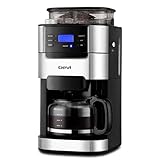
- 【𝟐-𝟏𝟎 𝐂𝐮𝐩 𝐅𝐥𝐞𝐱𝐢𝐛𝐥𝐞 𝐂𝐚𝐩𝐚𝐜𝐢𝐭𝐲】Our drip coffee maker with built-in grinder lets you brew anywhere from 2 to 10 cups. Simply use the “POWDER 2-10” button to adjust the ratio of coffee to water for your perfect strength.
- 【𝐂𝐮𝐬𝐭𝐨𝐦𝐢𝐳𝐚𝐛𝐥𝐞 𝐁𝐫𝐞𝐰 & 𝐆𝐫𝐢𝐧𝐝】This all-in-one machine with a burr grinder offers 3 grind strength levels and 8 adjustable settings. Grind fresh whole beans right before brewing for consistently smooth, flavorful coffee.
- 【𝐑𝐞𝐮𝐬𝐚𝐛𝐥𝐞 & 𝐄𝐚𝐬𝐲-𝐂𝐥𝐞𝐚𝐧 𝐅𝐢𝐥𝐭𝐞𝐫】The coffee maker includes a durable reusable filter that is easy to clean—just rinse with water for quick maintenance and less waste.
- 【𝐈𝐦𝐩𝐨𝐫𝐭𝐚𝐧𝐭 𝐍𝐨𝐭𝐞】Product dimensions: 12.36"D x 8.38"W x 16.93"H. Please measure your countertop and cabinet space beforehand to ensure proper fit.
- 【𝐏𝐫𝐞-𝐁𝐫𝐞𝐰 𝐄𝐱𝐭𝐫𝐚𝐜𝐭𝐢𝐨𝐧 𝐓𝐞𝐜𝐡𝐧𝐨𝐥𝐨𝐠𝐲】Featuring advanced pre-brew technology, this black & silver coffee maker evenly saturates coffee grounds through precise temperature control, unlocking richer flavor and aroma before full brewing.
Pros, cons, and when it matters
- Pro: Bolder Flavor: You get a more intense, full-bodied cup. Great for those who like their coffee robust.
- Con: Potential for Bitterness: If the brew time gets too long, you can over-extract.
- Pro: Simple Adjustment: No need to buy fancy equipment. Just push a button.
- Con: Not Always a Huge Difference: Some machines have weak “strong” settings.
- Pro: Good for Dark Roasts: Can help extract more from darker, less dense beans.
- Con: May Not Increase Caffeine: Strength is about flavor intensity, not necessarily caffeine content.
- Pro: Can Compensate for Lower Quality Beans: A bolder brew can mask some of the flaws in less-than-stellar coffee.
- Con: Might Mask Subtle Flavors: If you enjoy delicate floral or fruity notes, the strong setting might obscure them.
- Pro: Great for Mornings: When you need that extra kick of flavor to wake up.
- Con: Can Make Coffee Too Intense: If you prefer a lighter, brighter cup, this isn’t for you.
- Pro: Useful for Adding Milk/Cream: The bolder flavor holds up better when you add dairy or non-dairy alternatives.
- Con: Still Limited by the Machine: It’s a setting, not a fundamental change to the brewing technology.
Common misconceptions
- Myth: “Strong” means more caffeine. Not necessarily. It primarily means more dissolved flavor compounds, leading to a bolder taste. Caffeine extraction is complex and depends more on grind, time, and temperature than just a “strong” setting.
- Myth: The strong setting just adds more coffee grounds. While some machines might adjust slightly, the primary mechanism is usually altering the brew process, not just the coffee dose. You still need to add the right amount of grounds.
- Myth: Strong coffee is always bitter. Bitter coffee is usually a sign of over-extraction, which can happen with or without the strong setting if the brew time is too long or the grind is too fine.
- Myth: You need a special “strong brew” coffee maker. Many standard drip machines offer this setting. It’s a common feature.
- Myth: The strong setting makes coffee hotter. While some very minor temperature fluctuations might occur, the primary goal isn’t to increase heat, but to increase extraction time or efficiency.
- Myth: It automatically makes your coffee taste better. “Better” is subjective. It makes it bolder, which some people prefer, but it doesn’t guarantee a universally superior taste.
- Myth: You can’t use pre-ground coffee with the strong setting. You can, but fresh, properly ground beans will always yield better results, regardless of the setting.
- Myth: It’s the same as a double brew. A double brew usually implies doubling the coffee grounds or water, a more significant change than what the strong setting typically does.
FAQ
Q: What does the “strong” setting on my coffee maker actually do?
A: It usually makes the brewing process take longer. This allows more flavor compounds to be extracted from the coffee grounds, resulting in a bolder taste.
Q: Will the strong setting give me more caffeine?
A: Not necessarily. While a more robust flavor might feel like more caffeine, the actual caffeine content depends on many factors, including the beans themselves and the brew ratio.
Q: Can I use a finer grind with the strong setting?
A: You can try it, but be careful. A finer grind combined with a longer brew time can easily lead to over-extraction and bitter coffee. Start with your usual grind.
Q: Is the strong setting good for all types of coffee?
A: It’s best for those who prefer a bolder, more intense cup. Lighter roasts with delicate flavors might lose some of their nuance.
Q: How do I know if my coffee maker’s strong setting is working?
A: The most obvious sign is a longer brew cycle. The coffee should also taste more full-bodied and less watery than a standard brew.
Q: What if my coffee tastes bitter when I use the strong setting?
A: This likely means you’re over-extracting. Try using a slightly coarser grind, a bit less coffee, or ensure your machine isn’t brewing for an excessively long time.
Q: Does the strong setting use more electricity?
A: It might use a tiny bit more due to the longer heating/brewing time, but it’s usually not a significant difference.
Q: Should I use more coffee grounds when I select the strong setting?
A: The setting is designed to work with your usual amount of grounds by altering the brew time. Adding more grounds can lead to over-extraction unless you also adjust the water.
What this page does NOT cover (and where to go next)
- Specific coffee bean recommendations for strong brews.
- Detailed technical specifications for various coffee maker models.
- Advanced brewing techniques like manual pour-over or espresso.
- The exact chemical compounds responsible for coffee flavor.
- Comparisons of specific coffee maker brands and their “strong” settings.