
Tips For Brewing Coffee That’s Easier On Your Stomach
Quick answer
- Use a darker roast. It’s generally less acidic.
- Try a cold brew. The process naturally lowers acidity.
- Grind coarser. Finer grinds can extract more bitter compounds.
- Use filtered water. Tap water can sometimes add unwanted flavors or acidity.
- Experiment with coffee-to-water ratios. Too much coffee can lead to over-extraction.
- Clean your brewer regularly. Old grounds can turn rancid and add bitterness.
Who this is for
- Anyone who loves coffee but experiences stomach upset or heartburn.
- Home brewers looking to fine-tune their process for a smoother cup.
- People curious about how brewing methods affect coffee acidity.
What to check first
Brewer type and filter type
Your brewer matters. Drip machines, French presses, pour-overs – they all extract coffee differently. Paper filters tend to remove more oils and acids than metal filters, which can result in a cleaner, less harsh cup. Some brewers, like AeroPress, offer both options.
Water quality and temperature
Good coffee starts with good water. If your tap water tastes off, your coffee will too. Consider a simple water filter. Water temperature is also key. Too hot, and you risk over-extracting bitter, acidic compounds. Aim for around 195-205°F (90-96°C) for most hot brewing methods.
Good coffee starts with good water. If your tap water tastes off, your coffee will too. Consider a simple coffee water filter to improve the taste and reduce potential acidity.
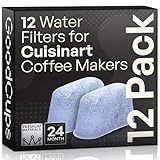
- Universal Compatibility: These premium replacement charcoal water filters are designed to fit all Cuisinart coffee maker models, ensuring a perfect fit for both newer and older models, including Cuisinart coffee maker 12 cup, Grind and Brew, and coffee maker with grinder.
- Enhanced Beverage Flavor: GoodCups charcoal water filters for Cuisinart coffee maker remove calcium, chlorine, and odors, giving you fresh, great-tasting coffee with every brew.
- Superior Filtration: Our charcoal boasts a strong absorption capacity and maximizes filtration efficiency. These water filters for Cuisinart coffee makers protect your brewer, extend its lifespan, and improve every coffee cycle.
- Optimal Water Flow Design: GoodCups filters feature a carefully crafted design that allows for optimal water flow, preventing clogs while ensuring your Cuisinart coffee maker operates smoothly and efficiently.
- Environmentally Conscious: These Cuisinart replacement water filters are made from recyclable materials, demonstrating our commitment to environmental responsibility.
Grind size and coffee freshness
Freshly ground beans are a game-changer. Pre-ground coffee loses its volatile aromatics fast. For most hot brewing, a medium grind is a good starting point. Coarser grinds are often better for French press or cold brew. The fresher the beans, the better they’ll taste, and less likely to need harsh extraction.
Coffee-to-water ratio
This is about balance. Too much coffee for the amount of water can lead to over-extraction, pulling out more acids and bitter flavors. A common starting point is a 1:15 to 1:18 ratio (grams of coffee to grams of water). So, for 20 grams of coffee, you’d use 300-360 grams (or ml) of water.
Cleanliness/descale status
This is HUGE. Rancid oils and mineral buildup are coffee’s worst enemies. A dirty brewer will make even the best beans taste bad. If you haven’t descaled your machine in a while, or if your French press is looking a bit grimy, that’s likely your first problem.
Step-by-step (brew workflow)
1. Select your beans: Choose darker roasted beans.
- What “good” looks like: Beans that look uniformly dark brown, with minimal oil sheen (for espresso, some oil is fine).
- Common mistake: Grabbing the lightest roast on the shelf because it smells “fruity.” Fruity can mean acidic.
- Avoid it: Read the roast level on the bag. Darker is generally better for lower acidity.
2. Grind your coffee: Grind just before brewing. Aim for a medium-coarse grind for most drip or pour-over methods.
- What “good” looks like: Uniformly sized particles, resembling coarse sand or sea salt.
- Common mistake: Using a blade grinder that creates a mix of dust and boulders.
- Avoid it: Invest in a burr grinder. It’s worth it for consistent results.
3. Heat your water: Bring filtered water to the right temperature, around 195-205°F (90-96°C).
- What “good” looks like: Water that’s hot but not boiling violently. Let it sit for 30-60 seconds off the boil.
- Common mistake: Pouring boiling water directly onto the grounds.
- Avoid it: Use a thermometer or let your kettle sit for a minute after it clicks off.
4. Prepare your brewer: Rinse your paper filter with hot water if using one. This removes papery taste and preheats the vessel.
- What “good” looks like: A damp filter and a warm brewer. Discard the rinse water.
- Common mistake: Skipping the rinse and getting a papery taste.
- Avoid it: Always rinse paper filters.
5. Add coffee grounds: Place your freshly ground coffee into the prepared brewer.
- What “good” looks like: A nice, even bed of grounds.
- Common mistake: Tamping down the grounds too much, restricting water flow.
- Avoid it: Just level the grounds gently; don’t press them down.
6. Bloom the coffee: Pour just enough hot water to saturate the grounds (about twice the weight of the coffee). Let it sit for 30 seconds.
- What “good” looks like: The grounds puff up and release CO2, creating a bubbly “bloom.”
- Common mistake: Pouring all the water at once, skipping the bloom.
- Avoid it: This step is crucial for even extraction. Don’t rush it.
7. Continue pouring: Slowly pour the remaining water over the grounds in a controlled manner.
- What “good” looks like: A steady, even stream of water, ensuring all grounds are evenly saturated. Aim for a total brew time of 2-4 minutes for most methods.
- Common mistake: Pouring too fast or too erratically, leading to uneven extraction.
- Avoid it: Use a gooseneck kettle for better control. Pour in slow, concentric circles.
8. Let it finish: Allow all the water to drip through.
- What “good” looks like: The brewer is empty or nearly empty, and the coffee is ready.
- Common mistake: Leaving the grounds in contact with the brewed coffee too long (especially with French press).
- Avoid it: Separate the grounds from the liquid promptly.
9. Serve immediately: Pour your freshly brewed coffee into your favorite mug.
- What “good” looks like: Aromatic, hot coffee ready to enjoy.
- Common mistake: Letting coffee sit on a hot plate for too long.
- Avoid it: Transfer brewed coffee to a thermal carafe or drink it right away.
10. Clean your equipment: Rinse and clean your brewer thoroughly after each use.
- What “good” looks like: All parts are free of coffee grounds and oils.
- Common mistake: Letting grounds and oils build up.
- Avoid it: A quick rinse is usually enough. For deeper cleans, follow your brewer’s instructions.
Common mistakes (and what happens if you ignore them)
| Mistake | What it causes | Fix |
|---|---|---|
| Using stale coffee beans | Flat, bitter, and potentially harsh flavor | Buy freshly roasted beans and grind them just before brewing. |
| Grinding too fine for the brew method | Over-extraction, leading to bitterness | Use a coarser grind for French press and cold brew; medium for drip. |
| Using water that’s too hot | Scorched grounds, extracting bitter acids | Let boiling water cool for 30-60 seconds (195-205°F / 90-96°C). |
| Not rinsing paper filters | A papery, unpleasant taste | Always rinse paper filters with hot water before adding grounds. |
| Skipping the coffee bloom | Uneven extraction, leading to sourness/bitterness | Pour a small amount of water to wet grounds and let them degas (30s). |
| Inconsistent water pouring (pour-over) | Channeling and uneven extraction | Use a gooseneck kettle for slow, controlled, circular pours. |
| Leaving coffee grounds in contact too long | Over-extraction and bitter taste | Plunge the French press or remove the filter basket promptly. |
| Not cleaning the brewer regularly | Rancid oils and mineral buildup, bad taste | Descale and clean your brewer according to manufacturer instructions. |
| Using pre-ground coffee | Loss of aromatics and flavor, faster staling | Grind whole beans right before you brew for optimal freshness. |
| Using too much coffee | Over-extraction, leading to intense bitterness | Start with a 1:15 to 1:18 coffee-to-water ratio. |
Decision rules (simple if/then)
- If your coffee tastes bitter, then try a coarser grind because finer grinds extract more easily and can lead to bitterness.
- If your coffee tastes sour, then try a finer grind or a slightly higher water temperature because sourness can indicate under-extraction.
- If you experience stomach upset after coffee, then try a darker roast because darker roasts are generally less acidic.
- If you want to significantly reduce acidity, then try cold brew because the cold water extraction process naturally lowers acid levels.
- If your coffee tastes “off” or stale, then check the freshness of your beans and grind them just before brewing because stale grounds lose flavor fast.
- If your brewer seems slow or clogs, then it’s likely time to descale it because mineral buildup restricts water flow.
- If you’re using a metal filter and the coffee is too oily or heavy, then try a paper filter because paper filters trap more oils and fines.
- If your coffee tastes weak and watery, then increase your coffee-to-water ratio slightly because you might be using too little coffee.
- If your coffee tastes muddy or gritty, then ensure your grind size is appropriate for your filter type because fines can clog filters.
- If you’re brewing hot coffee and it still feels too harsh, then consider a lower water temperature (around 195°F / 90°C) because excessively hot water can extract more bitter compounds.
FAQ
Q: Does the type of coffee bean matter for acidity?
A: Yes. Arabica beans are generally more acidic than Robusta. However, roast level has a bigger impact for most people looking to reduce acidity.
Q: Can I just add milk to make coffee less acidic?
A: Milk can buffer some of the acidity and mask the taste, but it doesn’t actually change the chemical acidity of the coffee itself.
Q: Is cold brew really less acidic?
A: Generally, yes. The cold water extraction process pulls out fewer of the acidic compounds compared to hot water brewing.
Q: What is “blooming” coffee?
A: It’s the initial wetting of fresh coffee grounds with hot water, allowing trapped CO2 to escape. This helps ensure even extraction and a better-tasting cup.
Q: How often should I descale my coffee maker?
A: It depends on your water hardness and how often you brew. A good rule of thumb is every 1-3 months. Check your brewer’s manual for specific recommendations.
Q: Does grinding coffee coarser really help with acidity?
A: Yes, a coarser grind can lead to less extraction of certain compounds, including some acids, which can make the coffee taste smoother.
Q: I’m using a pour-over, what’s the best way to pour?
A: Use a gooseneck kettle for control. Pour slowly in a circular motion, starting from the center and moving outwards, then back in. Aim for even saturation.
Q: My coffee tastes burnt. What did I do wrong?
A: This often means your water was too hot, or you over-extracted the coffee. Try letting your water cool slightly before brewing.
What this page does NOT cover (and where to go next)
- Specific coffee bean varietals and their inherent acidity profiles.
- Detailed explanations of over-extraction vs. under-extraction chemistry.
- Reviews of specific coffee maker brands or models.
- Advanced techniques like siphon brewing or espresso extraction.
- The impact of altitude or water mineral content beyond basic filtration.