
Make A Batch Of Iced Coffee Easily
Quick answer
- Use a cold brew method for the smoothest flavor.
- Start with fresh, good-quality coffee beans.
- Grind your beans coarse, like sea salt.
- Use a 1:4 coffee-to-water ratio for a concentrate.
- Let it steep for at least 12 hours, up to 24.
- Dilute with water or milk over ice.
Who this is for
- Anyone who wants a ready-to-go iced coffee stash.
- Busy folks who need their caffeine fix fast in the morning.
- Home brewers looking to expand their iced coffee game.
What to check first
Brewer type and filter type
Most folks making batch iced coffee go the cold brew route. That means a big jar or a dedicated cold brew maker. Paper filters work, but a mesh filter is often built-in or recommended for cold brew. It lets more oils through, giving you a richer taste. If you’re using a French press for cold brew, the metal filter is your friend.
A mesh filter is often built-in or recommended for cold brew, letting more oils through for a richer taste. If you’re using a French press for cold brew, the metal filter is your friend.
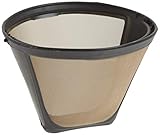
- Genuine Cuisinart Item
- Permanent gold-tone filter
- Helps provide full-flavored coffee
- Cortado con láser
Water quality and temperature
This is huge. If your tap water tastes funky, your coffee will too. Filtered water is the way to go. For cold brew, you’re using cold or room temperature water. No need to heat anything up, which is part of the appeal.
Grind size and coffee freshness
Coarse grind is key for cold brew. Think coarse sea salt. Too fine, and you’ll get sludge and over-extraction. Freshly ground beans are always best. Buy whole beans and grind them right before you brew. It makes a world of difference.
Coffee-to-water ratio
For cold brew concentrate, aim for a 1:4 ratio. That’s 1 part coffee to 4 parts water by weight. So, for example, 8 oz of coffee grounds to 32 oz of water. This makes a strong base you can dilute later.
Cleanliness/descale status
Anything that touches your coffee needs to be clean. Seriously. Old coffee oils can turn your fresh brew bitter. If you’re using a machine, make sure it’s descaled according to the manufacturer’s instructions. For jars and filters, a good wash with soap and water is usually enough.
Step-by-step (brew workflow)
1. Measure your coffee beans. Use a scale for accuracy. Aim for that 1:4 ratio for concentrate.
- What “good” looks like: Precise measurement, no guessing.
- Common mistake: Eyeballing it. This leads to weak or too-strong coffee. Use a scale.
2. Grind your coffee beans. Use a coarse setting.
- What “good” looks like: Uniform, coarse grounds. Like sea salt.
- Common mistake: Grinding too fine. This makes your cold brew cloudy and bitter.
3. Combine coffee grounds and water. Put grounds in your cold brew maker, jar, or French press. Add cold, filtered water.
- What “good” looks like: All grounds are saturated.
- Common mistake: Not stirring gently to ensure all grounds are wet. Give it a gentle stir.
4. Steep the coffee. Put the lid on and let it sit at room temperature or in the fridge.
- What “good” looks like: Patience. Minimum 12 hours, up to 24.
- Common mistake: Rushing the steep time. You need that long soak for full extraction.
5. Filter the coffee. If using a dedicated cold brew maker, follow its instructions. If using a jar, strain through a fine-mesh sieve lined with cheesecloth or a coffee filter.
- What “good” looks like: Clear liquid, minimal sediment.
- Common mistake: Not filtering thoroughly. You’ll end up with gritty coffee. Double-filter if needed.
6. Discard the grounds. Compost them if you can.
- What “good” looks like: Clean brewing vessel.
- Common mistake: Leaving wet grounds sitting around. They can get moldy.
7. Store the concentrate. Pour the filtered coffee into an airtight container.
- What “good” looks like: A clean jar or bottle, tightly sealed.
- Common mistake: Leaving it uncovered. It can absorb fridge odors.
8. Prepare to serve. Fill a glass with ice.
- What “good” looks like: Plenty of ice. Cold coffee needs cold.
- Common mistake: Not using enough ice. Your coffee will melt it too fast.
9. Dilute the concentrate. Pour your cold brew concentrate over the ice. A 1:1 or 1:2 ratio with water or milk is a good starting point.
- What “good” looks like: A balanced flavor, not too strong, not too weak.
- Common mistake: Drinking the concentrate straight. It’s potent! Dilute it.
10. Add your favorites. Milk, cream, sugar, or whatever you like.
- What “good” looks like: Your perfect cup.
- Common mistake: Adding too much sweetener. You can always add more.
Common mistakes (and what happens if you ignore them)
| Mistake | What it causes | Fix |
|---|---|---|
| Using stale coffee beans | Flat, dull, or bitter flavor | Use freshly roasted, whole beans. |
| Grinding too fine for cold brew | Cloudy coffee, bitter taste, difficult to filter | Use a coarse grind, like sea salt. |
| Not filtering enough grounds | Gritty texture, over-extracted bitterness | Strain thoroughly through a fine-mesh sieve, possibly with cheesecloth. |
| Incorrect coffee-to-water ratio | Weak or overly strong concentrate | Use a scale for a 1:4 ratio for concentrate. Adjust dilution to taste. |
| Not steeping long enough | Weak, underdeveloped flavor | Steep for at least 12 hours, up to 24. |
| Using poor quality water | Off-flavors, muted coffee notes | Use filtered or spring water. |
| Not cleaning equipment | Rancid oils, bitter, stale-tasting coffee | Wash all brewing gear thoroughly after each use. |
| Diluting too much/little | Watery coffee or too strong to drink | Start with 1:1 or 1:2 dilution and adjust. |
| Storing uncovered | Absorbs fridge odors, loses freshness | Keep your cold brew concentrate in an airtight container. |
| Over-extraction (too long steep) | Bitter, unpleasant taste | Stick to the 12-24 hour range. Taste test if unsure. |
Decision rules (simple if/then)
- If your cold brew tastes bitter, then you probably ground it too fine or steeped it too long, because those lead to over-extraction.
- If your cold brew is weak, then you might need more coffee grounds or a longer steep time, because extraction takes time.
- If you want a smoother, less acidic coffee, then cold brew is your best bet because the cold water extracts fewer bitter compounds.
- If you have a lot of sediment in your cup, then your filter wasn’t fine enough or you didn’t filter thoroughly, because those fine particles need to be caught.
- If you’re in a hurry, then make a big batch of cold brew concentrate on the weekend, because it’s ready to go when you are.
- If your coffee tastes stale, then your beans are old or your brewing equipment is dirty, because freshness matters at every step.
- If you like a bolder flavor, then use a slightly higher coffee-to-water ratio for your concentrate, because more coffee means more flavor.
- If you want to cut down on waste, then use a reusable cold brew filter instead of paper filters, because it’s better for the planet.
- If you’re sensitive to caffeine, then remember that cold brew can be quite concentrated, so dilute it generously, because a little goes a long way.
- If you notice off-flavors, then check your water source, because bad water makes bad coffee.
FAQ
How long does cold brew last?
Stored properly in an airtight container in the fridge, cold brew concentrate can last for about 1 to 2 weeks. After that, the flavor starts to degrade.
Can I use hot water to speed up cold brew?
No, that defeats the purpose of cold brew. Using hot water will result in a different brewing method, like pour-over or drip coffee, and will extract different flavor compounds, often more bitter ones.
What kind of coffee beans are best for iced coffee?
Medium to dark roasts often work well for iced coffee because their bolder flavors hold up well against ice and dilution. However, lighter roasts can also produce delicious results if you prefer brighter notes.
How much caffeine is in batch iced coffee?
The caffeine content can vary a lot depending on the coffee beans, the coffee-to-water ratio, and how long it steeped. Cold brew concentrate is generally quite strong, so dilution is key.
What’s the difference between cold brew and regular iced coffee?
Regular iced coffee is typically brewed hot and then chilled, which can sometimes lead to a more bitter or acidic taste. Cold brew is brewed with cold water over a long period, resulting in a smoother, less acidic, and often sweeter flavor profile.
Can I use pre-ground coffee for cold brew?
While you can, it’s not ideal. Pre-ground coffee tends to be finer than what’s best for cold brew and it loses its freshness much faster. For the best results, grind whole beans just before brewing.
How do I make my iced coffee taste less bitter?
Ensure you’re using a coarse grind, steeping for the right amount of time (not too long), and using good quality water. Diluting your cold brew concentrate properly is also crucial.
What this page does NOT cover (and where to go next)
- Specific cold brew maker reviews and recommendations. (Check out coffee gear review sites.)
- Advanced flavor infusion techniques for cold brew. (Explore recipes for adding spices or fruits.)
- The science behind coffee extraction and flavor chemistry. (Look for resources on coffee science.)
- Making single servings of iced coffee quickly. (Explore quick iced coffee methods.)