
Easy Homemade Iced Coffee Recipes and Techniques
Quick answer
- Use cold brew concentrate for the smoothest, least diluted iced coffee.
- Brew hot coffee strong and chill it quickly over ice.
- Start with quality beans, ground fresh.
- Get your water right – filtered is best.
- Experiment with ratios to find your sweet spot.
- Don’t forget to keep your equipment clean.
Who this is for
- Anyone who loves iced coffee but hates the coffee shop price tag.
- Home brewers looking to expand their skills beyond a hot cup.
- Campers and outdoor enthusiasts who want a killer cold brew on the trail.
What to check first
Brewer type and filter type
Your setup matters. Are you using a French press, a pour-over, or a dedicated cold brew maker? Each needs a slightly different approach. For cold brew, paper filters can sometimes strip out flavor oils, but they’re great for cleaning up hot coffee brews. Mesh filters let more oils through, which some folks dig.
Water quality and temperature
Tap water can mess with taste. If yours has chlorine or other funky stuff, grab some filtered water. For hot brewing, aim for temps around 195-205°F. For cold brew, it’s all about time, not temp, so room temp or fridge temp works.
Grind size and coffee freshness
This is huge. For cold brew, you want a coarse grind, like sea salt. For hot brewing methods, it’s usually medium to fine. And always, always use freshly roasted beans, ground right before you brew. Pre-ground stuff goes stale fast.
Coffee-to-water ratio
This is your personal preference, but a good starting point for cold brew is 1:4 (coffee to water by weight). For hot coffee you plan to chill, brew it stronger than usual, maybe 1:15 or 1:16, so it doesn’t get watery.
Cleanliness/descale status
Grime and old coffee oils build up. Seriously, clean your gear. A dirty brewer makes sad, bitter coffee. Descale your machines regularly too, especially if you have hard water. Check the manual for your specific brewer.
Step-by-step (brew workflow)
Cold Brew Method
1. Measure your coffee: Use a coarse grind. For a standard 1-quart jar, start with about 1 cup of beans (around 4 oz by weight).
- What “good” looks like: Consistent, coarse grounds.
- Common mistake: Using a fine grind. This leads to over-extraction and a muddy, bitter brew. Use a burr grinder for best results.
2. Add water: Pour filtered water over the grounds. A 1:4 ratio (coffee to water) is a good start. So, for 1 cup of coffee, use about 4 cups of water.
- What “good” looks like: All grounds are saturated.
- Common mistake: Not saturating all the grounds. This leads to uneven extraction. Stir gently to ensure everything is wet.
3. Stir gently: Give it a light stir to make sure all the coffee grounds are submerged.
- What “good” looks like: Uniform saturation without disturbing the grounds too much.
- Common mistake: Over-stirring or agitating aggressively. This can lead to over-extraction and bitterness.
4. Steep: Cover the container and let it steep at room temperature or in the fridge for 12-24 hours. Longer steeps extract more flavor.
- What “good” looks like: Patience. The longer it steeps, the more concentrated it gets.
- Common mistake: Steeping for too short a time. You’ll end up with weak, watery coffee. Don’t rush it.
5. Filter the concentrate: Strain the coffee. A fine-mesh sieve lined with cheesecloth or a coffee filter works well. You might need to do this in batches.
- What “good” looks like: Clear liquid, minimal sediment.
- Common mistake: Not filtering thoroughly. You’ll have gritty coffee. Double-filter if needed.
6. Dilute and serve: Dilute the concentrate with water or milk to your liking. A 1:1 or 1:2 ratio of concentrate to liquid is typical. Pour over ice.
- What “good” looks like: A balanced, delicious iced coffee.
- Common mistake: Not diluting enough. The concentrate is potent! You’ll get a caffeine shock.
Once your cold brew is diluted and ready, pour it over ice into your favorite iced coffee glasses for the perfect chill.
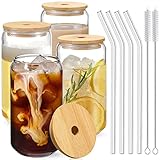
- PRODUCT CONFIGURATION: Drinking glass set includes 4 glass cups [ Diameter - 3 inches, Height - 5.6 inches ],4 nature bamboo lids, 4 reusable glass straws and 2 cleaning brushes, Classic design tumbler
- DURABLE and SAFE: The glasses are made of high-quality durable clear glass, Lead-free and BPA-free. It can be used safely for a long time. This thick clear glass can withstand the sudden changes in the temperature difference between -68°F to 212°F, making them dishwasher safe. If you want to decorate this glass, you can do DIY easily without breakage
- MULTI-PURPOSE: The glassware Great for any Occasion, any hot and cold drinks, home essentials. It is widely loved by families, kitchen, breweries, cafes, bars and restaurants. You can use it to make perfect tea, bubble Pearl Milk Tea, soda, water, iced coffee, smoothie, fruit juice or any other interesting holiday drinks
- AMAZING GIFT: This jar is very fashionable, aesthetic and characteristic. Excellent workmanship. Perfect Gifts for Women, House warming gifts, Tea mug Sets, Highball Glasses, Home Bar Accessories, Birthdays, Graduation, Weddings and Christmas Gifts
- SATISFIED SERVICE: This glass set is packaged in the heavy bubble holder and thick carton box to prevent damage while in transport. If the glass set you received was damaged or imperfect or you are not satisfied, we will offer a satisfactory solution
Quick Chill Hot Coffee Method
1. Brew hot coffee strong: Use your favorite hot brew method (pour-over, drip, Aeropress) but use a stronger ratio, like 1:15 instead of 1:17.
- What “good” looks like: A concentrated, flavorful hot coffee.
- Common mistake: Brewing at a normal strength. It will be too diluted once chilled.
2. Prepare ice: Fill a glass or pitcher about halfway with ice.
- What “good” looks like: Plenty of ice to chill the coffee quickly.
- Common mistake: Not using enough ice. The coffee will melt it too fast, making it watery.
3. Pour hot coffee over ice: Immediately after brewing, pour the hot coffee directly over the ice.
- What “good” looks like: The coffee chills rapidly.
- Common mistake: Letting the hot coffee cool down first. This creates a less intense chill and can lead to a less desirable flavor profile.
4. Stir: Stir the coffee and ice together until the coffee is chilled.
- What “good” looks like: The ice has melted somewhat, and the coffee is cold.
- Common mistake: Not stirring enough. You’ll have hot spots and cold spots.
5. Add milk/sweetener (optional): Add your preferred additions.
- What “good” looks like: Perfectly customized iced coffee.
- Common mistake: Adding too much, overpowering the coffee flavor.
6. Serve: Enjoy your quickly made iced coffee.
- What “good” looks like: A refreshing cold drink.
- Common mistake: Letting it sit too long. It can still get diluted as the ice melts.
Common mistakes (and what happens if you ignore them)
| Mistake | What it causes | Fix |
|---|---|---|
| Using stale, pre-ground coffee | Flat, dull, bitter flavor | Buy fresh, whole beans and grind them just before brewing. |
| Using the wrong grind size | Over-extraction (bitter) or under-extraction (weak) | Coarse for cold brew, medium-fine for most hot methods. Check your brewer. |
| Using poor quality water | Off-flavors, muted coffee notes | Use filtered or bottled water. |
| Incorrect coffee-to-water ratio | Too weak or too strong/bitter | Start with recommended ratios (e.g., 1:4 cold brew, 1:15 hot) and adjust. |
| Not cleaning the brewer regularly | Rancid oils, bitter, unpleasant taste | Clean all parts after each use. |
| Not descaling the machine | Slow brewing, inconsistent temperature, mineral taste | Descale according to manufacturer’s instructions. |
| Not chilling hot coffee quickly | Diluted flavor, less vibrant taste | Brew strong and pour immediately over plenty of ice. |
| Using too little ice for chilling | Watery coffee | Use more ice than you think you need. |
| Not letting cold brew steep long enough | Weak, underdeveloped flavor | Steep for at least 12 hours, up to 24. |
| Over-agitating cold brew | Bitter, muddy taste | Stir gently only to ensure saturation. |
Decision rules (simple if/then)
- If you want the smoothest, least acidic iced coffee, then use the cold brew method because it extracts coffee differently at room temperature.
- If you need iced coffee fast, then use the quick chill hot coffee method because it takes minutes instead of hours.
- If your iced coffee tastes bitter, then check your grind size and brewing time; you might be over-extracting.
- If your iced coffee tastes weak, then check your coffee-to-water ratio or brewing time; you might be under-extracting or not using enough coffee.
- If you notice mineral buildup in your coffee maker, then it’s time to descale because it affects taste and performance.
- If your iced coffee has a muddy texture, then you likely didn’t filter your cold brew thoroughly enough.
- If you’re brewing hot coffee to chill, then brew it stronger than you normally would because the ice will dilute it.
- If you can taste chlorine or other off-flavors, then switch to filtered water for a cleaner cup.
- If your cold brew concentrate tastes too intense, then dilute it more with water or milk.
- If you want to experiment with flavors, then add syrups or spices after brewing and chilling.
- If your iced coffee is consistently watery, then use more coffee grounds or less water in your initial brew.
FAQ
What’s the difference between cold brew and regular iced coffee?
Cold brew is made by steeping coffee grounds in cold water for 12-24 hours, resulting in a smooth, low-acid concentrate. Regular iced coffee is typically hot coffee brewed and then chilled, often over ice, which can dilute the flavor more.
Can I just put leftover hot coffee in the fridge?
You can, but it’s not ideal. Hot coffee oxidizes as it cools, which can lead to a stale, bitter taste. Brewing it strong and chilling it quickly over ice is a better method if you’re not making cold brew.
How long does cold brew concentrate last?
Stored in an airtight container in the refrigerator, cold brew concentrate can last for about 1-2 weeks. However, the flavor is best within the first week.
What kind of coffee beans are best for iced coffee?
Medium to dark roasts are often preferred for iced coffee because their bolder flavors hold up well against dilution and ice. However, lighter roasts can also make interesting, nuanced iced coffee if brewed correctly.
How do I make my iced coffee less bitter?
Ensure you’re using the correct grind size for your brewing method (coarse for cold brew, medium-fine for hot). Also, avoid over-extracting by not steeping cold brew too long and by using the right water temperature for hot brewing.
Can I use a regular drip coffee maker for iced coffee?
Yes, you can brew hot coffee in a drip maker and then chill it quickly over ice. Just remember to brew it stronger than usual so it doesn’t get watery.
What’s the best way to sweeten iced coffee?
Simple syrup (equal parts sugar and water heated until dissolved, then cooled) mixes in easily without leaving a gritty texture. Other sweeteners like agave, maple syrup, or flavored syrups can also be used.
Does the water temperature really matter for hot coffee that I’m going to chill?
Yes, it does. Water that’s too cool won’t extract the coffee properly, leading to a weak, sour taste. Water that’s too hot can scorch the grounds, making it bitter. Aim for 195-205°F.
What this page does NOT cover (and where to go next)
- Specific brand reviews or comparisons of coffee makers. (Look for “best cold brew makers” or “best drip coffee machines” articles.)
- Advanced latte art or milk steaming techniques. (Search for “barista techniques” or “milk frothing guides.”)
- Detailed explanations of coffee bean origins and processing methods. (Explore “coffee bean origins” or “coffee processing” resources.)
- Recipes for complex coffee cocktails or desserts. (Check out “coffee drink recipes” or “dessert with coffee” blogs.)