
Easy Iced Coffee Recipes
Quick answer
- Use cold brew for the smoothest base. It’s less acidic and naturally sweeter.
- If you’re short on time, brew hot coffee extra strong and chill it fast.
- Use good quality beans. Freshly roasted makes a big difference.
- Get your grind right for your brew method. This is key.
- Don’t drown it in sugar. Start light and add more if needed.
- Experiment with flavors. Vanilla, caramel, or a touch of spice goes a long way.
- Ice matters. Use plenty of it, or even coffee ice cubes.
Who this is for
- Anyone who loves a cold, refreshing coffee drink on a warm day.
- Home baristas looking to elevate their iced coffee game beyond just pouring hot coffee over ice.
- Busy folks who need quick and easy ways to get their caffeine fix without a fuss.
What to check first
Brewer type and filter type
What are you using to make your coffee base? Drip machine? French press? Pour-over? Each has its own quirks. Filters, too. Paper filters can impart subtle flavors, while metal filters let more oils through. For iced coffee, especially cold brew, a good filter is crucial to avoid sediment.
Water quality and temperature
Your coffee is mostly water. If your tap water tastes funky, your coffee will too. Filtered water is your friend here. For hot brewing, aim for 195-205°F. For cold brew, it’s room temp or fridge temp water, but the brew time is what matters.
Grind size and coffee freshness
This is non-negotiable. Coarse grind for French press and cold brew. Medium for drip. Fine for espresso. Stale beans taste flat. Try to buy beans roasted within the last few weeks and grind them right before brewing. Seriously, it’s a game-changer.
Coffee-to-water ratio
Too weak and it’s watery sadness. Too strong and it’s bitter punishment. A good starting point for hot coffee is around 1:15 to 1:17 (coffee to water by weight). For cold brew, it’s often richer, like 1:5 to 1:8. Adjust to your taste.
Cleanliness/descale status
Gunk builds up. Old coffee oils turn rancid and will ruin your brew. Descale your machine regularly. A clean brewer means clean flavor. It’s simple hygiene, really.
Step-by-step (brew workflow)
Method 1: Quick & Dirty Iced Coffee (Hot Brew Method)
1. Brew your coffee extra strong.
- What “good” looks like: A concentrated, flavorful coffee.
- Common mistake: Brewing at your normal strength. This leads to a watered-down mess.
- Avoid it: Use about 1.5 to 2 times the amount of coffee grounds you normally would for the same amount of water.
2. Use hot, but not boiling, water.
- What “good” looks like: Water in the 195-205°F range.
- Common mistake: Using water straight off a rolling boil, which can scorch the grounds.
- Avoid it: Let your kettle sit for about 30-60 seconds after it boils before pouring.
3. Brew using your preferred method (drip, pour-over, French press).
- What “good” looks like: A smooth, aromatic brew.
- Common mistake: Rushing the brew cycle or not letting it bloom properly (for pour-over).
- Avoid it: Follow the recommended brew times for your method. For pour-over, let the grounds “bloom” for 30 seconds after the initial pour.
4. Chill it fast.
- What “good” looks like: Coffee that’s cool enough to drink without melting all the ice instantly.
- Common mistake: Letting hot coffee sit on the counter for too long, leading to off-flavors.
- Avoid it: Pour the hot coffee into a heat-safe pitcher and place it in an ice bath in your sink, or transfer it to the fridge for about 30-45 minutes.
5. Prepare your serving glass.
- What “good” looks like: A glass packed with ice.
- Common mistake: Not using enough ice.
- Avoid it: Fill your glass to the brim. Seriously.
What ‘good’ looks like: A glass packed with ice. To really elevate your iced coffee experience, consider using dedicated iced coffee glasses that are designed to keep your drink colder for longer.
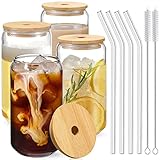
- PRODUCT CONFIGURATION: Drinking glass set includes 4 glass cups [ Diameter - 3 inches, Height - 5.6 inches ],4 nature bamboo lids, 4 reusable glass straws and 2 cleaning brushes, Classic design tumbler
- DURABLE and SAFE: The glasses are made of high-quality durable clear glass, Lead-free and BPA-free. It can be used safely for a long time. This thick clear glass can withstand the sudden changes in the temperature difference between -68°F to 212°F, making them dishwasher safe. If you want to decorate this glass, you can do DIY easily without breakage
- MULTI-PURPOSE: The glassware Great for any Occasion, any hot and cold drinks, home essentials. It is widely loved by families, kitchen, breweries, cafes, bars and restaurants. You can use it to make perfect tea, bubble Pearl Milk Tea, soda, water, iced coffee, smoothie, fruit juice or any other interesting holiday drinks
- AMAZING GIFT: This jar is very fashionable, aesthetic and characteristic. Excellent workmanship. Perfect Gifts for Women, House warming gifts, Tea mug Sets, Highball Glasses, Home Bar Accessories, Birthdays, Graduation, Weddings and Christmas Gifts
- SATISFIED SERVICE: This glass set is packaged in the heavy bubble holder and thick carton box to prevent damage while in transport. If the glass set you received was damaged or imperfect or you are not satisfied, we will offer a satisfactory solution
6. Pour chilled coffee over ice.
- What “good” looks like: A refreshing drink that doesn’t get immediately watered down.
- Common mistake: Pouring too slowly, allowing the ice to melt too much before the coffee is in.
- Avoid it: Pour with confidence.
7. Add sweetener and milk/cream (optional).
- What “good” looks like: Your perfect balance of sweet and creamy.
- Common mistake: Adding too much at once.
- Avoid it: Start with a little, stir, taste, and add more if needed. Simple syrup dissolves better than granulated sugar in cold drinks.
Method 2: Classic Cold Brew
1. Grind your coffee beans coarsely.
- What “good” looks like: Large, pebble-like grounds.
- Common mistake: Using a fine or medium grind. This leads to cloudy, over-extracted, bitter coffee.
- Avoid it: Use a burr grinder and set it to its coarsest setting. If you only have a blade grinder, pulse it in short bursts until you get a coarse consistency.
2. Combine coffee grounds and cold water.
- What “good” looks like: A slurry of grounds and water. A common ratio is 1:5 to 1:8 (coffee to water by weight).
- Common mistake: Not using enough coffee. This results in a weak, watery concentrate.
- Avoid it: Measure your coffee and water. For example, 1 cup of coffee grounds to 5 cups of water.
3. Stir gently to ensure all grounds are saturated.
- What “good” looks like: No dry clumps of coffee.
- Common mistake: Over-stirring, which can agitate the grounds too much.
- Avoid it: Just a few gentle stirs with a spoon or spatula will do.
4. Cover and let it steep.
- What “good” looks like: The mixture steeping undisturbed.
- Common mistake: Leaving it out on the counter in direct sunlight or in a place where it will be disturbed.
- Avoid it: Steep at room temperature or in the refrigerator for 12-24 hours. Longer steeping equals stronger flavor.
5. Filter the coffee concentrate.
- What “good” looks like: A clear, smooth liquid concentrate.
- Common mistake: Using a filter that’s too fine (clogs) or too coarse (lets sediment through).
- Avoid it: Use a cheesecloth-lined sieve, a dedicated cold brew filter bag, or a French press. You might need to filter twice for extra clarity.
6. Dilute the concentrate.
- What “good” looks like: A drinkable iced coffee.
- Common mistake: Drinking the concentrate straight. It’s way too strong!
- Avoid it: Start with a 1:1 ratio of concentrate to cold water or milk. Adjust to your liking.
7. Serve over ice with your favorite additions.
- What “good” looks like: A smooth, rich, and refreshing drink.
- Common mistake: Not using enough ice.
- Avoid it: Pack your glass with ice before pouring.
Common mistakes (and what happens if you ignore them)
| Mistake | What it causes | Fix |
|---|---|---|
| Using stale coffee beans | Flat, dull, and lifeless iced coffee | Buy freshly roasted beans and grind them just before brewing. |
| Incorrect grind size for brew method | Over-extraction (bitter) or under-extraction (weak) | Use coarse for cold brew/French press, medium for drip, fine for espresso. |
| Not enough ice | Watery, weak, and unappealing drink | Fill your glass to the brim with ice. |
| Using tap water with off-flavors | Unpleasant taste in your final coffee | Filter your water or use bottled spring water. |
| Brewing hot coffee too weak for iced | Diluted, watery, and disappointing iced coffee | Brew hot coffee 1.5-2x stronger than usual. |
| Letting hot coffee sit for too long | Off-flavors develop as it cools slowly | Chill hot coffee quickly in an ice bath or fridge. |
| Not cleaning your brewer regularly | Rancid coffee oils make your drink taste bad | Descale and clean your brewer after every few uses. |
| Adding too much sugar at once | Overly sweet drink that’s hard to fix | Use simple syrup and add it gradually, tasting as you go. |
| Using ice made from already weak coffee | Further dilutes an already potentially weak drink | Use good quality coffee for your ice cubes. |
| Not letting cold brew steep long enough | Weak, underdeveloped flavor | Steep for at least 12 hours, up to 24 hours for stronger flavor. |
Decision rules (simple if/then)
- If you have less than 30 minutes, then brew hot coffee extra strong and chill it fast because cold brew takes too long.
- If you want the smoothest, least acidic iced coffee, then make cold brew because it naturally produces a mellow flavor.
- If your iced coffee tastes bitter, then check your grind size and brew time because over-extraction is likely the culprit.
- If your iced coffee tastes weak and watery, then check your coffee-to-water ratio or the strength of your hot brew because you’re probably using too much water or not enough coffee.
- If you want to add sweetness without grit, then use simple syrup because it dissolves easily in cold liquids.
- If your cold brew is cloudy, then try filtering it a second time or using a finer filter because sediment can make it unpleasant.
- If you’re short on time and don’t have cold brew ready, then brewing hot coffee and chilling it quickly is your best bet.
- If your coffee tastes “off” even after making it right, then clean your brewing equipment because old coffee oils are the usual suspects.
- If you prefer a richer, more intense coffee flavor, then use a higher coffee-to-water ratio for your cold brew concentrate.
- If you’re making iced coffee for a crowd, then cold brew concentrate is a great option because you can make a big batch ahead of time and dilute it as needed.
- If you want to avoid diluting your drink too much, then consider making coffee ice cubes because they’ll melt slower than regular ice.
FAQ
What’s the best coffee bean for iced coffee?
You can use almost any bean, but medium to dark roasts often stand up well to ice and milk. Freshly roasted beans, ground right before brewing, will always give you the best flavor.
Can I use instant coffee for iced coffee?
You can, but it won’t taste as good as freshly brewed. If you must, use a good quality instant coffee and dissolve it in a little hot water first before adding cold water and ice.
How do I make my iced coffee sweeter without making it watery?
Use simple syrup! It’s just equal parts sugar and water heated until the sugar dissolves, then cooled. It mixes right into cold drinks without leaving gritty sugar behind.
What’s the difference between cold brew and iced coffee?
Iced coffee is typically hot brewed coffee that’s chilled, often poured over ice. Cold brew is coffee steeped in cold water for many hours, resulting in a smoother, less acidic concentrate.
How long does cold brew last in the fridge?
Good quality cold brew concentrate can last for about 7-10 days in an airtight container in the refrigerator. Flavor might degrade slightly over time.
Do I have to use milk in iced coffee?
Not at all! Many people enjoy iced coffee black. If you do add milk, dairy or non-dairy options like oat, almond, or soy milk all work great.
What is “Japanese-style” iced coffee?
This method involves brewing hot coffee directly over ice. The ice melts as the coffee brews, instantly chilling it and locking in aromas, often resulting in a brighter flavor than regular iced coffee.
How much caffeine is in iced coffee?
It varies wildly based on the beans, brew method, and how strong you make it. Cold brew generally has more caffeine than hot brewed coffee, especially if you’re using a higher coffee-to-water ratio.
What this page does NOT cover (and where to go next)
- Specific brand reviews of coffee makers or grinders. (Check out dedicated review sites for those.)
- Detailed explanations of advanced brewing techniques like siphon or AeroPress. (Look for guides focused on those specific methods.)
- Recipes for complex coffee cocktails or blended drinks. (Search for “coffee mocktails” or “coffee dessert recipes”.)
- The history of coffee or its cultivation. (There are many great books and documentaries on coffee’s journey.)
- Troubleshooting specific equipment malfunctions. (Consult your brewer’s manual or the manufacturer’s support.)