
Your Guide To Delicious Homemade Iced Coffee
Quick answer
- Start with strong, cold-brewed coffee for the smoothest flavor.
- Use a higher coffee-to-water ratio than hot brewing.
- Chill your coffee completely before adding ice.
- Consider brewing directly over ice for a concentrated, quick chill.
- Use good quality ice – it’s half your drink!
- Don’t forget a touch of sweetness or flavor.
Who this is for
- Anyone tired of watery, bitter iced coffee from the drive-thru.
- Home brewers looking to expand their coffee repertoire.
- Folks who want a refreshing pick-me-up without leaving the house.
What to check first
Brewer type and filter type
Your brewer dictates the base. Drip, French press, AeroPress, cold brew towers – they all work. The filter matters too. Paper filters catch more oils, leading to a cleaner cup. Metal filters let more oils through, giving a richer body. For iced coffee, a cleaner base is often preferred, but it’s your call.
Water quality and temperature
Tap water can have off-flavors. Filtered water is your friend here. For cold brew, room temp or cool water is standard. For hot brewing that you’ll chill, use water just off the boil, around 200-205°F.
Grind size and coffee freshness
Freshly ground beans make a world of difference. For cold brew, a coarse grind is key. It extracts slower and prevents bitterness. For hot methods you plan to chill, a medium to medium-fine grind usually works best. Stale coffee tastes dull, especially when chilled.
Coffee-to-water ratio
This is critical for iced coffee. You need to brew it stronger than you would for hot coffee, otherwise, the melting ice will dilute it into weakness. Think a higher coffee dose for the same amount of water, or less water for the same amount of coffee.
Cleanliness/descale status
A dirty brewer or stale coffee residue will ruin even the best beans. Make sure your equipment is spotless. If you haven’t descaled your machine in a while, now’s the time. It’s like starting with a clean slate.
Step-by-step (brew workflow)
Here’s how to nail a great batch using a simple cold brew method.
1. Measure your coffee beans.
- What “good” looks like: Using a scale for accuracy. For cold brew, aim for a ratio like 1:4 to 1:8 (coffee to water by weight). For example, 100g coffee to 400g water.
- Common mistake: Guessing the amount. This leads to inconsistent strength.
- Avoid it: Get a cheap kitchen scale. It’s a game-changer.
2. Grind your coffee beans.
- What “good” looks like: A coarse, even grind, like breadcrumbs or sea salt.
- Common mistake: Using a fine grind meant for espresso or drip. This over-extracts and makes bitter cold brew.
- Avoid it: Use a burr grinder and set it to coarse. A blade grinder will give you uneven particles.
3. Add coffee grounds to your brewer.
- What “good” looks like: All the grounds are in the vessel, ready for water.
- Common mistake: Leaving grounds clinging to the grinder or counter.
- Avoid it: Give your grinder a gentle tap. Brush off stray grounds.
4. Add cool or room-temperature filtered water.
- What “good” looks like: Water is evenly distributed over the grounds.
- Common mistake: Using hot water for cold brew. It defeats the purpose and extracts differently.
- Avoid it: Stick to cool or room temp water. If you’re unsure, let hot water cool for a good 30 minutes.
5. Stir gently to ensure saturation.
- What “good” looks like: All the coffee grounds are wet, no dry pockets.
- Common mistake: Over-stirring. This can break up grounds and lead to sediment.
- Avoid it: Just a couple of gentle stirs with a long spoon or chopstick.
6. Cover and let it steep.
- What “good” looks like: The container is sealed and sitting undisturbed.
- Common mistake: Leaving it uncovered on the counter. This can let in odors or dust.
- Avoid it: Use a lid, plastic wrap, or a plate. Keep it on the counter or in the fridge.
7. Steep for 12-24 hours.
- What “good” looks like: Patience! The longer it steeps, the stronger and smoother it gets. 18 hours is a sweet spot for many.
- Common mistake: Rushing the process. Cold brew needs time to extract.
- Avoid it: Plan ahead. Set a reminder for when it’s ready.
8. Filter the coffee concentrate.
- What “good” looks like: A clean, dark liquid with minimal sediment.
- Common mistake: Not filtering enough. You’ll end up with gritty coffee.
- Avoid it: Use a fine-mesh sieve lined with a paper filter, or a dedicated cold brew filter bag. Double-filtering is an option.
9. Dilute to taste (optional).
- What “good” looks like: The concentrate is still strong but drinkable.
- Common mistake: Not diluting at all. The concentrate can be too intense.
- Avoid it: Start by adding an equal part water or milk. Taste and adjust.
10. Chill thoroughly.
- What “good” looks like: The coffee is cold, not lukewarm.
- Common mistake: Adding ice to warm coffee. It melts too fast and waters it down.
- Avoid it: Let the concentrate (or diluted coffee) chill in the fridge for at least a few hours.
11. Serve over ice.
- What “good” looks like: A glass full of cold coffee and ice.
- Common mistake: Using small, fast-melting ice cubes.
- Avoid it: Use larger cubes or a dedicated ice maker’s slower-melting ice.
To truly elevate your homemade iced coffee experience, consider serving it in dedicated iced coffee glasses. These are designed to keep your drink colder for longer, ensuring every sip is as refreshing as the first.
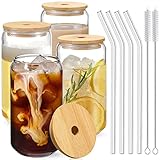
- PRODUCT CONFIGURATION: Drinking glass set includes 4 glass cups [ Diameter - 3 inches, Height - 5.6 inches ],4 nature bamboo lids, 4 reusable glass straws and 2 cleaning brushes, Classic design tumbler
- DURABLE and SAFE: The glasses are made of high-quality durable clear glass, Lead-free and BPA-free. It can be used safely for a long time. This thick clear glass can withstand the sudden changes in the temperature difference between -68°F to 212°F, making them dishwasher safe. If you want to decorate this glass, you can do DIY easily without breakage
- MULTI-PURPOSE: The glassware Great for any Occasion, any hot and cold drinks, home essentials. It is widely loved by families, kitchen, breweries, cafes, bars and restaurants. You can use it to make perfect tea, bubble Pearl Milk Tea, soda, water, iced coffee, smoothie, fruit juice or any other interesting holiday drinks
- AMAZING GIFT: This jar is very fashionable, aesthetic and characteristic. Excellent workmanship. Perfect Gifts for Women, House warming gifts, Tea mug Sets, Highball Glasses, Home Bar Accessories, Birthdays, Graduation, Weddings and Christmas Gifts
- SATISFIED SERVICE: This glass set is packaged in the heavy bubble holder and thick carton box to prevent damage while in transport. If the glass set you received was damaged or imperfect or you are not satisfied, we will offer a satisfactory solution
12. Add sweeteners or flavorings (optional).
- What “good” looks like: Your coffee tastes just how you like it.
- Common mistake: Adding too much, overpowering the coffee.
- Avoid it: Start small. You can always add more.
Common mistakes (and what happens if you ignore them)
| Mistake | What it causes | Fix |
|---|---|---|
| Using stale, pre-ground coffee | Flat, dull, or bitter taste | Buy fresh beans and grind them right before brewing. |
| Using hot water for cold brew | Bitter, over-extracted, or weak coffee | Always use cool or room-temperature filtered water for cold brew. |
| Using a fine grind for cold brew | Cloudy, sludgy coffee with bitter notes | Grind beans coarsely for cold brew. |
| Not brewing strong enough | Watery, weak iced coffee after ice melts | Increase coffee-to-water ratio for cold brew or hot brew methods. |
| Adding ice to warm coffee | Rapid dilution, leading to a watery drink | Chill coffee completely before serving over ice. |
| Using tap water with off-flavors | Unpleasant taste in the final beverage | Use filtered or bottled water. |
| Not cleaning equipment regularly | Rancid oils and residue affecting taste | Clean your brewer and grinder after every use. |
| Over-extracting hot coffee before chilling | Bitter, harsh flavor that’s amplified when cold | Brew hot coffee for the standard time, then chill quickly. |
| Not dissolving sweeteners properly | Gritty texture or uneven sweetness | Dissolve sweeteners in a small amount of hot water first, then chill. |
Decision rules (simple if/then)
- If you want a super smooth, low-acid iced coffee, then use the cold brew method because it extracts differently.
- If you’re short on time, then consider brewing a strong batch of hot coffee and chilling it rapidly in the fridge or over ice because it’s faster than cold brew.
- If your iced coffee tastes weak, then increase your coffee grounds or decrease your water next time because you need a higher concentration.
- If you notice sediment in your cup, then filter your coffee concentrate again using a finer filter because you might have missed some fines.
- If your iced coffee tastes bitter, then check your grind size (too fine for cold brew) or brew time (too long for hot methods) because extraction is key.
- If your coffee tastes dull, then ensure you’re using freshly roasted and ground beans because stale coffee lacks vibrancy.
- If you want to add milk or cream, then do so after chilling the coffee concentrate because it helps prevent curdling and allows for better flavor integration.
- If you’re making a large batch, then consider making a concentrate that you can dilute later because it stores better and is more versatile.
- If your ice is melting too fast, then use larger, denser ice cubes because they melt slower.
- If you’re unsure about sweetness, then start with a small amount of sweetener and add more to taste because it’s easier to add than remove.
FAQ
Q: What’s the best coffee bean for iced coffee?
A: Medium to dark roasts often work well because their bolder flavors stand up to chilling and dilution. However, experiment with lighter roasts if you prefer brighter notes.
Q: How long does homemade iced coffee last?
A: Cold brew concentrate can last up to two weeks in the fridge when stored in an airtight container. Brewed hot coffee, once chilled, is best consumed within 2-3 days.
Q: Can I use instant coffee to make iced coffee?
A: Yes, you can. Mix instant coffee with cold water according to package directions, then chill and serve over ice. It’s a quick option, but the flavor won’t be as complex as brewed coffee.
Q: What’s the difference between cold brew and regular iced coffee?
A: Cold brew is made by steeping coffee grounds in cold water for many hours, resulting in a smooth, low-acid concentrate. Regular iced coffee is typically hot-brewed coffee that is then chilled and served over ice, which can sometimes lead to a more bitter or acidic taste.
Q: How do I make my iced coffee sweeter without it being gritty?
A: Dissolve your sugar or syrup in a small amount of hot water or coffee concentrate first to create a simple syrup. Then, let it cool before adding it to your iced coffee.
Q: Should I brew my coffee stronger for iced coffee?
A: Absolutely. The melting ice will dilute your drink, so brewing a concentrate ensures your iced coffee still has a good, robust flavor.
Q: Can I freeze coffee for iced coffee?
A: Yes, you can freeze coffee in ice cube trays. This is a great way to prevent your iced coffee from getting watered down as the cubes melt.
Q: What if I don’t have a fancy cold brew maker?
A: No problem! A large jar or pitcher works perfectly. Just combine your coarse grounds and water, stir, cover, and let it steep. Then strain it through a fine-mesh sieve lined with a coffee filter.
What this page does NOT cover (and where to go next)
- Specific brewing equipment reviews (check dedicated review sites).
- Advanced latte art techniques for iced beverages.
- Detailed historical origins of iced coffee.
- Recipes for complex coffee cocktails or blended drinks.
- The science behind coffee bean varietals and their impact on flavor profiles.