
How To Make Frothy Coffee Without Adding Sugar
Quick answer
- Use a French press to create microfoam.
- Try a milk frother wand for a creamy texture.
- Aerate your coffee by pouring it back and forth between two vessels.
- Consider a moka pot for naturally concentrated, slightly frothy espresso-style coffee.
- Ensure your coffee beans are fresh and ground just before brewing.
- Experiment with different brewing methods to find your preferred froth level.
Who this is for
- Coffee lovers who want a richer texture without added sweeteners.
- Anyone looking to elevate their home coffee game.
- People who enjoy the mouthfeel of frothed milk but prefer black coffee.
What to check first
Brewer type and filter type
The gear you’re using makes a big difference. Some brewers are naturally better at creating froth than others. A French press, for example, can agitate the coffee enough to produce a bit of foam. Paper filters, on the other hand, will catch most of the oils that contribute to body and froth.
Water quality and temperature
Start with good water. Tap water can have off-flavors that mess with your coffee’s taste and texture. Filtered water is usually the way to go. For frothing, water temperature is key. Too hot, and you’ll scald the coffee. Too cool, and you won’t extract properly. Aim for that sweet spot, usually between 195°F and 205°F.
Grind size and coffee freshness
Fresh beans are non-negotiable for good coffee, and especially for getting any kind of texture. Grind them right before you brew. The grind size depends on your brewer. Too fine for a drip machine? You’ll get mud. Too coarse for espresso? Weak coffee. For methods that can create froth, like a French press, a medium-coarse grind is often best.
Coffee-to-water ratio
Getting this right is fundamental. Too much coffee, and it’ll be bitter and potentially sludgy. Too little, and it’ll be weak and watery, with no hope of froth. A common starting point is a 1:15 to 1:18 ratio (coffee to water by weight). So, for 30 grams of coffee, use about 450-540 grams (or ml) of water.
Cleanliness/descale status
Gunk builds up. Seriously. Old coffee oils and mineral deposits from water can ruin the taste and clog up your brewer. A clean machine brews better coffee. Descale your machine regularly, especially if you have hard water. It’s a simple step that pays off big time.
Step-by-step (brew workflow)
Here’s how to get a bit of froth going with a French press. It’s a solid starter.
1. Heat your water. Get it to your target temperature, around 200°F.
- What “good” looks like: Water is steaming, not boiling furiously. A kettle with a thermometer helps.
- Common mistake: Boiling water burns the coffee. Let it cool for 30 seconds after it boils.
To precisely hit that ideal temperature, a coffee kettle with an integrated thermometer can be incredibly helpful. This ensures your water is hot enough for extraction without scalding your precious coffee.
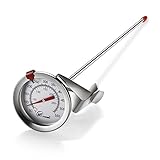
- Multi-purpose: Mechanical induction, can be directly and accurately measure the oil pan, frying, barbecue temperature control.
- Measuring a wide range: This Candy thermometer has a range of 50 degrees Fahrenheit to 550 degrees Fahrenheit, measurable boiling or frozen things.
- Compact stainless steel construction: The durable, stainless-steel casing provides strength and corrosion resistance. Easy to use and easy to clean.
- Equipped with temperature clamp: Can be used to hold the thermometer when the temperature is measured, which prevents the thermometer from falling into the container at the measured temperature
- Reliable and friendly customer service: Always be ready to respond within a 24-hour time frame.
2. Grind your coffee. Use a medium-coarse grind.
- What “good” looks like: Grounds look like coarse sand. Not powder, not pebbles.
- Common mistake: Grinding too fine clogs the filter and makes coffee bitter. Use a burr grinder for consistency.
3. Add grounds to the French press. Use your preferred ratio.
- What “good” looks like: Even distribution of grounds at the bottom.
- Common mistake: Uneven grounds lead to uneven extraction. Give the press a gentle shake.
4. Bloom the coffee. Pour just enough hot water to saturate the grounds. Wait 30 seconds.
- What “good” looks like: Coffee grounds puff up and release CO2. It smells amazing.
- Common mistake: Skipping the bloom. You miss out on degassing and a smoother taste.
5. Add remaining water. Pour slowly and evenly.
- What “good” looks like: All grounds are submerged.
- Common mistake: Pouring too fast, which can create channels and uneven extraction.
6. Place the lid on. Don’t plunge yet.
- What “good” looks like: Lid is resting on top, plunger pulled all the way up.
- Common mistake: Plunging too early. You need steeping time.
7. Steep for 4 minutes. This is your extraction time.
- What “good” looks like: Coffee is steeping undisturbed.
- Common mistake: Steeping too long or too short. This drastically affects flavor.
8. Slowly plunge. Press the plunger down with steady, even pressure.
- What “good” looks like: Plunger moves smoothly to the bottom.
- Common mistake: Plunging too fast. This can force fines through the filter and create sediment.
9. Agitate for froth. After plunging, give the coffee a few vigorous stirs or a quick pour back and forth between two containers.
- What “good” looks like: You see a light, airy foam forming on top.
- Common mistake: Not agitating enough. You’ll just have regular coffee.
10. Serve immediately. Don’t let it sit in the press.
- What “good” looks like: Coffee poured into your mug, showing a bit of head.
- Common mistake: Leaving coffee in the press. It will continue to extract and become bitter.
Common mistakes (and what happens if you ignore them)
| Mistake | What it causes | Fix |
|---|---|---|
| Using stale coffee beans | Flat taste, lack of aroma, no froth | Buy fresh beans and grind them just before brewing. |
| Incorrect grind size | Over-extraction (bitter) or under-extraction (weak) | Adjust grind based on your brewer; aim for consistency with a burr grinder. |
| Water temperature too high | Scalded, bitter coffee | Use a thermometer or let boiling water sit for 30-60 seconds. |
| Water temperature too low | Weak, sour coffee | Ensure water is between 195°F and 205°F. |
| Not blooming the coffee | Gassy taste, uneven extraction | Pour a small amount of water over grounds and wait 30 seconds. |
| Plunging the French press too fast | Sediment, cloudy coffee | Plunge slowly and steadily. |
| Over-agitation (e.g., with a whisk) | Too much foam, airy texture that dissipates | Gentle stirring or pouring is better for a stable froth. |
| Using dirty equipment | Off-flavors, poor extraction, reduced froth | Clean your brewer and accessories regularly. |
| Incorrect coffee-to-water ratio | Too strong/bitter or too weak/watery | Use a scale to measure for accuracy (e.g., 1:15 to 1:18 ratio). |
| Letting coffee sit in the French press | Over-extraction, bitter taste | Pour all coffee out immediately after plunging. |
Decision rules (simple if/then)
- If your coffee tastes bitter, then you might be grinding too fine or using water that’s too hot, because these lead to over-extraction.
- If your coffee tastes sour, then your water might be too cool or your grind too coarse, because these lead to under-extraction.
- If you want more body and potential for froth, then consider a metal filter or a French press, because they allow more oils to pass through.
- If you’re using a paper filter and want more froth, then you’re likely out of luck, because paper filters trap the oils that create froth.
- If you’re brewing a pour-over and want more froth, then try aerating the brewed coffee by pouring it between two pitchers, because this introduces air.
- If you’re aiming for a true espresso-like crema, then you need an espresso machine, because most other methods can’t generate that kind of pressure.
- If your coffee has sediment, then your grind might be too fine for your filter or you plunged too hard, because fines are getting through.
- If you’re chasing froth without sugar, then focus on agitation and brewing methods that preserve coffee oils, because these are the building blocks of froth.
- If your coffee tastes “off” or dull, then check the freshness of your beans and the cleanliness of your brewer, because these are the most common culprits.
- If you want a richer, thicker coffee texture without adding anything, then try a slightly higher coffee-to-water ratio (e.g., 1:14), because more coffee solids can contribute to body.
FAQ
Can I really make frothy coffee without sugar?
Absolutely. The froth comes from agitation and the oils in the coffee. Sugar can stabilize foam, but it’s not required for creating it.
What’s the best brewing method for frothy coffee?
A French press is a great starting point. Aerating by pouring is also effective. For espresso-style froth, a moka pot or espresso machine is best.
How does a French press create froth?
When you plunge, you’re agitating the coffee grounds and the liquid, which helps to incorporate air and create a bit of microfoam.
What if my coffee still isn’t frothy enough?
Try agitating more vigorously after brewing, like pouring the coffee back and forth between two containers a few times. Ensure your beans are fresh.
Does the type of coffee bean matter for froth?
Yes, darker roasts often have more oils, which can contribute to better froth. However, freshness is more important than roast level for achieving good texture.
Is it possible to get foam like latte art?
Achieving true latte art foam usually requires steamed milk from an espresso machine. Home methods can create a nice head, but it’s typically lighter and more bubbly.
How can I make my coffee taste richer without sugar?
Focus on brewing methods that preserve coffee oils, like French press or Aeropress. Using fresh, high-quality beans and the right grind size also makes a huge difference.
Should I use filtered water for frothy coffee?
Yes, filtered water is always recommended for better taste and to prevent mineral buildup in your brewer, which can affect extraction and texture.
What this page does NOT cover (and where to go next)
- Specific recommendations for espresso machines and their frothing capabilities.
- Detailed instructions for steaming milk with an espresso machine’s steam wand.
- Advanced techniques for latte art.
- Recipes for coffee drinks that do include sugar or other sweeteners.
- The science behind coffee oil extraction and foam stability.