
Making Coffee With Perfectly Frothed Milk
Quick Answer: How to Make Coffee With Frothed Milk
- Choose the right milk: Whole milk froths best, but alternatives can work with practice.
- Use a dedicated frother or steam wand: These tools create microfoam for a smooth texture.
- Heat milk to the correct temperature: Aim for 140-155°F for optimal sweetness and texture.
- Introduce air early and sparingly: Over-aerating leads to bubbly, unstable foam.
- Swirl and tap: This integrates the foam and removes large bubbles.
- Pour immediately: Frothed milk is best enjoyed fresh.
Who This Is For
- Home baristas looking to elevate their everyday coffee drinks with café-quality frothed milk.
- Anyone who enjoys lattes, cappuccinos, or macchiatos and wants to replicate them at home.
- Individuals experimenting with different milk types and frothing techniques to find their perfect cup.
What to Check First for Frothed Milk Coffee
- Milk Type: Different milks behave differently when frothed. Whole milk typically produces the richest, most stable foam due to its fat and protein content. Lower-fat milks can froth but may yield a lighter, less creamy texture. Non-dairy alternatives like oat milk and soy milk can also froth well, but results vary by brand and specific formulation.
- Frothing Method: The tool you use significantly impacts the outcome. A steam wand on an espresso machine is the professional standard, allowing for precise control over aeration and heating. Electric frothers (like those with a whisk or induction heating) are convenient for home use. French presses or handheld frothers can also work but may produce a less refined texture.
- Milk Temperature: For the best flavor and texture, milk should be heated but not scalded. Aim for a temperature between 140°F and 155°F. Temperatures below this may result in less sweet milk and a less stable foam. Temperatures above 160°F can “cook” the milk, diminishing its natural sweetness and creating a “boiled” taste.
- Coffee Base: The quality of your coffee base is crucial. Whether you’re using espresso, strong drip coffee, or another method, ensure it’s brewed fresh and to your liking. The coffee should be hot enough to mix well with the frothed milk without cooling it down too rapidly.
- Cleanliness: Any residue in your frothing pitcher, steam wand, or electric frother can impart off-flavors and hinder proper frothing. Regularly clean all equipment according to the manufacturer’s instructions.
For a convenient home solution, a handheld milk frother can be a great option to achieve good results.
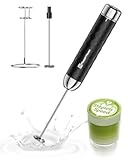
- 【Stepless Speed Control Design】Unlike traditional button-operated milk frother, this LunaFro 2.0 electric milk frother allows you to seamlessly adjust the frothing speed with unparalleled precision, ranging from 4500RPM to 10000RPM, simply by toggling the rotary switch. Experience the ultimate control as you craft the perfect froth for different beverages. Say goodbye to splashes and lackluster froth
- 【One Charging, 1440 Hours Ready】With a built-in 1200mAh lithium battery, this portable USB-C rechargeable milk frother provides up to 2 months of usage on a single charge(note: if use once per day). Fully charge the battery operated milk foam maker in just 2 hours with the included USB-C cable, eliminating the need for constant battery replacement
- 【Create Rich Creamy Foam in Seconds】Transform your morning coffee routine with our high-speed milk frother. Achieve smooth, creamy foam in just 10-15 seconds, perfect for busy mornings. Elevate your coffee experience with velvety milk foam every time
- 【Versatile for Various Beverages】 Beyond coffee, our LunaFro 2.0 milk frother excels at blending powdered supplements like protein into beverages and preparing mixed drinks. Its versatility makes it an essential tool for all your beverage-making needs, including Latte, Cappuccino, Matcha and cocoa powder
- 【Easy Cleaning and Storage】This Stepless Speed Control milk frother comes with two frothing whisks for easy replacement. Cleaning is straightforward—simply detach the whisk and wash it in water. The included compact stainless steel stand provides convenient storage and organization
Step-by-Step: Brewing Coffee With Frothed Milk
1. Prepare Your Coffee Base: Brew your espresso, strong coffee, or other desired coffee beverage.
- What “good” looks like: A hot, flavorful coffee base ready to receive the frothed milk.
- Common mistake: Using lukewarm or stale coffee.
- How to avoid: Brew your coffee just before you plan to froth the milk.
2. Pour Cold Milk into Pitcher: Add cold milk to your frothing pitcher. Fill it no more than halfway to allow room for expansion.
- What “good” looks like: Cold milk in a pitcher, leaving ample space for foam.
- Common mistake: Overfilling the pitcher.
- How to avoid: Always leave at least 1/3 of the pitcher empty.
3. Purge Steam Wand (if applicable): If using an espresso machine, briefly open the steam valve to clear out any condensed water.
- What “good” looks like: A short burst of steam, followed by dry steam.
- Common mistake: Not purging the wand.
- How to avoid: Always give the wand a quick purge before inserting it into the milk.
4. Position Steam Wand: Submerge the tip of the steam wand just below the surface of the milk, near the side of the pitcher.
- What “good” looks like: The wand tip is partially submerged, creating a gentle “kissing” sound.
- Common mistake: Immersing the wand too deeply or not deep enough.
- How to avoid: Listen for a gentle hissing or tearing sound, not a loud gurgling.
5. Introduce Air (Aeration Phase): Open the steam valve fully. Keep the wand tip near the surface to incorporate air, creating foam. You should hear a gentle “tsss” sound.
- What “good” looks like: The milk begins to swirl and expand slightly, with tiny bubbles forming.
- Common mistake: Aerating for too long or not long enough.
- How to avoid: Aerate for only the first 10-20 seconds, until the milk volume increases by about 20-30%.
6. Submerge Wand (Texturing Phase): Submerge the steam wand deeper into the milk, positioning it to create a vortex or whirlpool effect. This breaks down larger bubbles and integrates the air into the milk, creating microfoam.
- What “good” looks like: The milk is spinning in a vortex, and the “tsss” sound stops.
- Common mistake: Continuing to aerate or not creating a vortex.
- How to avoid: Once you stop hearing the “tsss” sound, submerge the wand to create the whirlpool.
7. Heat Milk to Temperature: Continue heating the milk until the pitcher is too hot to comfortably hold for more than a few seconds, or use a thermometer to reach 140-155°F.
- What “good” looks like: The milk is hot but not scalded.
- Common mistake: Overheating the milk.
- How to avoid: Remove the pitcher from the steam as soon as the pitcher becomes too hot to touch comfortably.
8. Turn Off Steam and Remove Wand: Close the steam valve completely before removing the steam wand from the milk.
- What “good” looks like: Steam is fully off, and the wand is clean.
- Common mistake: Removing the wand before turning off the steam.
- How to avoid: Always turn off the steam first, then remove the wand.
9. Clean Steam Wand: Immediately wipe the steam wand with a damp cloth and purge it again briefly to clear any milk residue.
- What “good” looks like: A clean steam wand, ready for the next use.
- Common mistake: Not cleaning the steam wand promptly.
- How to avoid: Make cleaning the wand a habit after every use.
10. Swirl and Tap: Gently swirl the milk in the pitcher to integrate the foam and milk. Tap the pitcher firmly on the counter a few times to break up any large bubbles.
- What “good” looks like: Glossy, smooth milk with a velvety texture and no large bubbles.
- Common mistake: Skipping the swirl and tap.
- How to avoid: This step is crucial for achieving a latte art-worthy microfoam.
11. Pour Milk: Pour the frothed milk into your coffee base, holding the pitcher close to the surface initially, then lifting to create latte art if desired.
- What “good” looks like: The milk flows smoothly, creating a desirable texture and appearance in the cup.
- Common mistake: Pouring too quickly or from too high.
- How to avoid: Start with a slow, steady pour from a low height.
If you have an espresso machine, purging the steam wand is a crucial first step before you begin frothing your milk.

- Make Your Favorite Espresso Coffee At Home: The CASABREWS coffee machine with milk frother allows you to prepare all your favorite espresso-based coffees. You can enjoy a barista-brewed latte, cappuccino or macchiato at home. Stainless steel appearance, stylish and durable, ideal for any size kitchen. This compact espresso coffee maker is perfect for home or office use
- Professional 20 Bar Pressure System: Semi-Automatic 2-in-1 Espresso Maker, with 20 bar professional Italian pump and 1350 W powerful boiler. This latte machine gives you top quality extraction, resulting in a more fragrant and rich aroma. The built-in pressure gauge on this cappuccino machine shows the exact pressure helping you make adjustments according to your personal taste preferences. You can create a cappuccino, latte or flat white at your home or office with our cappuccino maker
- Milk Frothing System: Our espresso machine with milk frother has a powerful steam wand, so you can texture creamy, rich microfoam milk to create amazing milk foam art and enhance the flavor of your brews. Awaken your inner barista and create your own unique milk foam art. Don't pass us by if you are looking for an excellent espresso coffee maker
- Compact, Stylish & Practical: The beautiful and compact design makes this small espresso machine suitable for any size kitchen. Make single or double espresso shots with a beautiful layer of crema in minutes! The 34 oz water tank allows you to brew multiple cups, and it is detachable for easy refilling. Included components: Espresso Machine, 34 oz Removable Water Tank, One Cup Brewing Filter, Two Cup Brewing Filter, Portafilter, Tamper With Spoon, Instruction Manual
- Useful Tips: Please kindly note that do not brew coffee immediately after frothing milk. The machine must cool down first otherwise the temperature and the pressure inside the machine will be too high, and the machine will go into over-heating protection mode. The lights for 1 cup or 2 cup will flash repeatedly and please follow the steps of included guide to cool down the machine. You can watch more INSTRUCTIONAL VIDEO by clicking Visit the CASABREWS Store
Pour cold milk into your frothing pitcher, ensuring you leave enough space for expansion.

- Perfect Combination Of Milk Frothing Pitcher And Latte Art Pen: The milk frother jug can be used in different ways: froth or steam milk for lattes; measure liquids; serve milk or cream. Featured with a latte art pen which can shape kinds of beautiful coffee pattern. Perfect for making frothing or steaming milk for espresso, cappuccino or hot chocolate. Be your own barista in home and office.
- Premium Quality: The milk steaming pitchers and coffee art pen are made of chrome finished #304 stainless steel. Rust-proof, stain-proof, heat-proof and nontoxic, unbreakable by daily use.
- Point-Mouth Design: Can prevent liquid leaking from the jug and make the coffee pattern pretty. Offer 12oz/20oz/32oz/50oz milk jugs to satisfied different customers demands, buy one at home or office for you and a couple of friends.
- Humanized Design: The weld joint of the cup body and the handle is firm, sturdy to use. Personalized design for easy carrying and saving energy.
- Easy To Clean & Dishwasher Safe:The stainless steel milk frothing pitcher smooth surface ensures easy cleaning, it's also dishwasher-safe, saving you time and effort. So you have more time to enjoy life and spend with your family. Thoughtful gifts for coffee lovers for for every occasion: Christmas, birthdays, housewarmings, Thanksgiving, and New Year's.
Common Mistakes (and What Happens If You Ignore Them)
| Mistake | What It Causes | Fix |
|---|---|---|
| Using too-hot milk | Scalded taste, loss of sweetness, poor foam stability. | Heat milk to 140-155°F; remove from heat when pitcher is too hot to hold comfortably. |
| Over-aerating the milk | Dry, bubbly, unstable foam that dissipates quickly. | Aerate for only the first 10-20 seconds, listening for a gentle “tsss” sound. |
| Not aerating enough | Milk is too hot and lacks foam, resulting in a thin, watery texture. | Ensure you hear the “tsss” sound to incorporate air initially. |
| Not creating a vortex | Large, unstable bubbles and unevenly distributed foam. | Submerge wand deeper to create a whirlpool after aeration to integrate foam. |
| Using old or dirty equipment | Off-flavors, poor frothing performance, potential bacteria growth. | Clean pitchers, wands, and frothers regularly according to manufacturer instructions. |
| Pouring milk too fast or from too high | Large bubbles, separation of milk and foam, difficulty in latte art. | Pour slowly and steadily from a low height, especially at the beginning. |
| Using skim milk (for some methods) | Thin, airy foam with little to no creaminess or sweetness. | Opt for whole milk or a barista-edition non-dairy alternative for best results. |
| Not purging the steam wand | Watery foam, potential for milk to be sucked into the machine. | Briefly open steam valve before and after frothing to clear water and residue. |
| Letting frothed milk sit too long | Foam separates from milk, texture degrades, and flavor diminishes. | Pour and enjoy immediately after frothing for the best experience. |
| Using a metal pitcher that’s too small | Insufficient room for milk expansion, leading to overflow or poor texture. | Use a pitcher at least twice the volume of the milk you’re frothing. |
Decision Rules for Frothed Milk Coffee
- If your milk is frothing but the foam is thin and dissipates quickly, then you are likely over-aerating. Reduce the time you introduce air at the beginning of the steaming process.
- If your milk is hot but has no foam or just large, unstable bubbles, then you are likely not aerating enough. Ensure the steam wand tip is near the surface to incorporate air at the start.
- If your frothed milk tastes “cooked” or lacks sweetness, then you have overheated the milk. Aim for a temperature between 140°F and 155°F.
- If you see large bubbles on the surface of your frothed milk, then you need to swirl and tap the pitcher more vigorously. This integrates the foam and breaks down larger bubbles.
- If your non-dairy milk isn’t frothing well, then try a different brand or opt for a “barista edition” version. These are formulated for better frothing performance.
- If your frothed milk has an off-flavor, then check the cleanliness of your frothing pitcher and steam wand. Residue can significantly impact taste.
- If you’re using a French press to froth, and the foam is too airy, then try pressing more gently and less vigorously. This can help create a finer texture.
- If your coffee tastes weak after adding frothed milk, then your coffee base might not be strong enough. Brew your coffee stronger or use a more concentrated method like espresso.
- If you’re struggling to create latte art, then focus on achieving a smooth, glossy microfoam first. Perfecting the texture is key before attempting intricate designs.
- If your frothed milk is too thin and watery, then you may need to use whole milk or a milk with a higher fat content. Fat content is crucial for creamy texture.
FAQ
Q: What is the best type of milk for frothing?
A: Whole milk generally produces the creamiest, most stable foam due to its fat and protein content. However, many barista-edition oat and soy milks also froth very well.
Q: How do I get that silky microfoam like in coffee shops?
A: The key is proper aeration and texturing. Introduce air for just a few seconds to create tiny bubbles, then submerge the wand to create a vortex that integrates the air into a smooth, glossy texture.
Q: My frothed milk is too bubbly. What did I do wrong?
A: You likely aerated for too long or kept the steam wand too close to the surface. Aerate only briefly at the start, then submerge the wand to break down bubbles. Swirling and tapping the pitcher also helps.
Q: Can I reheat frothed milk?
A: It’s not recommended. Reheating milk can degrade its texture and flavor, and it won’t froth well a second time. It’s best to froth fresh, cold milk for each drink.
Q: How hot should the milk be?
A: Aim for 140°F to 155°F. Any hotter, and you risk scalding the milk, which diminishes its natural sweetness and creates an unpleasant taste.
Q: What if I don’t have an espresso machine with a steam wand?
A: You can use an electric frother, a handheld whisk frother, or even a French press. While results may vary, these methods can still produce enjoyable frothed milk.
Q: How do I clean my steam wand?
A: Immediately after frothing, wipe the wand with a damp cloth and briefly purge it again to clear any milk residue. Regular deep cleaning according to your machine’s manual is also important.
Q: Why does my non-dairy milk not froth well?
A: Non-dairy milks vary greatly. Some have lower protein or fat content, or different stabilizers, which affect frothing. Look for “barista edition” versions, which are specifically formulated for better performance.
What This Page Does Not Cover (and Where to Go Next)
- Detailed instructions on latte art pouring techniques.
- Specific troubleshooting for all types of electric milk frothers.
- Comparisons of different milk brands for frothing performance.
- Advanced espresso extraction techniques.
- Recipes for specific coffee drinks beyond the milk frothing aspect.