
How to Make Thick Milk For Coffee: Step-by-Step Guide
Quick answer
- Frothing milk is all about introducing air and denaturing proteins.
- Use cold, fresh milk for the best results. Whole milk froths best.
- Don’t overheat the milk; aim for 140-150°F.
- Over-frothing leads to a bubbly, unstable foam.
- A good pitcher and consistent technique are key.
- Practice makes perfect. Seriously, just keep at it.
Who this is for
- Anyone who enjoys lattes, cappuccinos, or flat whites at home.
- Coffee enthusiasts looking to elevate their morning brew.
- Home baristas aiming for that cafe-quality texture and taste.
What to check first
Brewer type and filter type
This isn’t directly about your coffee brewer, but the type of coffee you’re making matters. Are you going for a strong espresso base for a latte, or a more mellow drip coffee for a simple coffee with a touch of frothed milk? The coffee’s strength will balance the richness of the milk. For espresso, a good espresso machine is usually the way to go. For drip, a pour-over or even a quality automatic brewer works. Filter type? Paper filters are common for drip, but metal filters let more oils through, which can add body to your coffee.
Water quality and temperature
While this guide focuses on milk, good coffee is the foundation. Use filtered water for your coffee. If your coffee tastes off, your water might be the culprit. For frothing milk, you’re aiming for specific temperatures. Too cold, and it won’t froth well. Too hot, and you’ll scald it, ruining the flavor and texture.
Grind size and coffee freshness
Again, this is about the coffee base. For espresso, you need a fine grind. For drip, it’s coarser. Freshly roasted and ground beans make a huge difference. Stale coffee just tastes… well, stale. This impacts the overall drink, even with perfectly frothed milk.
Coffee-to-water ratio
The ideal ratio for espresso is typically around 1:2 (e.g., 18g coffee to 36g espresso). For drip, it’s often around 1:15 to 1:18. Getting this right ensures your coffee has enough flavor to stand up to the milk. Too weak, and the milk will overpower it.
Cleanliness/descale status
This applies to both your coffee maker and your milk frothing equipment. Any old coffee residue or mineral buildup can affect the taste of both your coffee and your frothed milk. Regularly clean your espresso machine’s portafilter and steam wand. If you’re using an electric frother, make sure its components are clean. Descaling your coffee maker is also crucial for taste.
Step-by-step (how to make thick milk for coffee)
1. Choose your milk.
- What to do: Select your milk. Whole milk is generally the easiest to froth and gives the richest texture. Skim or low-fat milk can froth, but the foam is often less stable and thinner. Non-dairy milks vary widely; oat and soy often work well.
- What “good” looks like: Milk that is cold and fresh. You want to see that creamy, opaque look.
- Common mistake and how to avoid it: Using warm or old milk. It won’t incorporate air effectively and can taste off. Always start with cold milk straight from the fridge.
2. Pour milk into your frothing pitcher.
- What to do: Pour the desired amount of cold milk into your metal frothing pitcher. Don’t overfill it; milk expands significantly when frothed. Aim to fill it about one-third to one-half full.
- What “good” looks like: The pitcher is filled to a level that allows for expansion, usually about 4-6 oz for a standard latte.
- Common mistake and how to avoid it: Overfilling the pitcher. This will lead to milk overflowing and making a mess, and you’ll lose valuable milk for your drink.
Using a dedicated milk frothing pitcher is key to getting the right amount of foam. This metal pitcher is designed to help you achieve that perfect texture, allowing for expansion without overflow.

- Perfect Combination Of Milk Frothing Pitcher And Latte Art Pen: The milk frother jug can be used in different ways: froth or steam milk for lattes; measure liquids; serve milk or cream. Featured with a latte art pen which can shape kinds of beautiful coffee pattern. Perfect for making frothing or steaming milk for espresso, cappuccino or hot chocolate. Be your own barista in home and office.
- Premium Quality: The milk steaming pitchers and coffee art pen are made of chrome finished #304 stainless steel. Rust-proof, stain-proof, heat-proof and nontoxic, unbreakable by daily use.
- Point-Mouth Design: Can prevent liquid leaking from the jug and make the coffee pattern pretty. Offer 12oz/20oz/32oz/50oz milk jugs to satisfied different customers demands, buy one at home or office for you and a couple of friends.
- Humanized Design: The weld joint of the cup body and the handle is firm, sturdy to use. Personalized design for easy carrying and saving energy.
- Easy To Clean & Dishwasher Safe:The stainless steel milk frothing pitcher smooth surface ensures easy cleaning, it's also dishwasher-safe, saving you time and effort. So you have more time to enjoy life and spend with your family. Thoughtful gifts for coffee lovers for for every occasion: Christmas, birthdays, housewarmings, Thanksgiving, and New Year's.
3. Prepare your steam wand (if applicable).
- What to do: If using an espresso machine with a steam wand, purge the wand for a second or two by opening the steam valve. This clears out any condensation.
- What “good” looks like: A short burst of steam, followed by a consistent flow. No sputtering water.
- Common mistake and how to avoid it: Not purging the wand. This injects water into your milk, diluting it and affecting the foam quality.
If you have an espresso machine, mastering its steam wand is crucial for creating thick, velvety milk. Proper technique with the steam wand, as outlined here, will elevate your lattes and cappuccinos.

- Make Your Favorite Espresso Coffee At Home: The CASABREWS coffee machine with milk frother allows you to prepare all your favorite espresso-based coffees. You can enjoy a barista-brewed latte, cappuccino or macchiato at home. Stainless steel appearance, stylish and durable, ideal for any size kitchen. This compact espresso coffee maker is perfect for home or office use
- Professional 20 Bar Pressure System: Semi-Automatic 2-in-1 Espresso Maker, with 20 bar professional Italian pump and 1350 W powerful boiler. This latte machine gives you top quality extraction, resulting in a more fragrant and rich aroma. The built-in pressure gauge on this cappuccino machine shows the exact pressure helping you make adjustments according to your personal taste preferences. You can create a cappuccino, latte or flat white at your home or office with our cappuccino maker
- Milk Frothing System: Our espresso machine with milk frother has a powerful steam wand, so you can texture creamy, rich microfoam milk to create amazing milk foam art and enhance the flavor of your brews. Awaken your inner barista and create your own unique milk foam art. Don't pass us by if you are looking for an excellent espresso coffee maker
- Compact, Stylish & Practical: The beautiful and compact design makes this small espresso machine suitable for any size kitchen. Make single or double espresso shots with a beautiful layer of crema in minutes! The 34 oz water tank allows you to brew multiple cups, and it is detachable for easy refilling. Included components: Espresso Machine, 34 oz Removable Water Tank, One Cup Brewing Filter, Two Cup Brewing Filter, Portafilter, Tamper With Spoon, Instruction Manual
- Useful Tips: Please kindly note that do not brew coffee immediately after frothing milk. The machine must cool down first otherwise the temperature and the pressure inside the machine will be too high, and the machine will go into over-heating protection mode. The lights for 1 cup or 2 cup will flash repeatedly and please follow the steps of included guide to cool down the machine. You can watch more INSTRUCTIONAL VIDEO by clicking Visit the CASABREWS Store
4. Position the steam wand.
- What to do: Submerge the tip of the steam wand just below the surface of the milk, slightly off-center. Angle the pitcher so the wand is positioned to create a whirlpool effect.
- What “good” looks like: The wand tip is just kissing the surface, creating a gentle “tsss-tsss” sound as air is incorporated. You should see a vortex forming.
- Common mistake and how to avoid it: Submerging the wand too deep or not deep enough. Too deep, and you’ll just heat the milk without frothing. Not deep enough, and you’ll get huge, unstable bubbles.
5. Introduce air (stretching the milk).
- What to do: Turn on the steam. Listen for that gentle “kissing” or “tearing paper” sound. Keep the wand tip just at the surface to incorporate air for about 10-20 seconds, or until the milk volume increases by about 20-30%.
- What “good” looks like: A consistent, light aeration sound. The milk volume visibly increases.
- Common mistake and how to avoid it: Letting the wand suck in too much air too quickly or for too long. This creates giant, soapy bubbles that won’t integrate. It should be a subtle introduction of air.
6. Submerge the wand and create a vortex (texturing the milk).
- What to do: Once you’ve added enough air, submerge the steam wand deeper into the milk, keeping it off-center. This should stop the “tsss” sound and create a swirling vortex that pulls the milk around. Continue steaming until the pitcher feels hot to the touch, but not too hot to hold comfortably.
- What “good” looks like: A strong vortex, no loud hissing. The milk is heating evenly and smoothly. The pitcher should be around 140-150°F.
- Common mistake and how to avoid it: Keeping the wand at the surface too long or not submerging it enough. This leads to either too much foam or just hot milk. You want to integrate the air bubbles into a smooth, glossy microfoam.
7. Turn off steam and remove wand.
- What to do: Turn off the steam valve before removing the wand from the milk. Wipe the steam wand immediately with a damp cloth and purge it again briefly.
- What “good” looks like: A clean wand and no residual milk clinging to it.
- Common mistake and how to avoid it: Leaving the steam wand dirty. Milk residue will bake on and is hard to clean, plus it’s unhygienic.
8. Tap and swirl the pitcher.
- What to do: Gently tap the bottom of the pitcher on your counter a couple of times to break up any larger bubbles. Then, swirl the milk in the pitcher vigorously. This integrates the microfoam with the liquid milk, creating a glossy, paint-like texture.
- What “good” looks like: The milk looks smooth, shiny, and has a uniform consistency, like wet paint. No visible large bubbles.
- Common mistake and how to avoid it: Skipping this step. Large bubbles will ruin the texture of your latte art and the mouthfeel. Swirling ensures a smooth, integrated microfoam.
9. Pour immediately.
- What to do: Pour the frothed milk into your prepared coffee (usually an espresso shot). Start with a steady stream to mix the milk and coffee, then tilt the pitcher to allow the foam to flow onto the surface.
- What “good” looks like: A beautiful, creamy layer of microfoam sitting on top of your coffee, ready for latte art or just to be enjoyed.
- Common mistake and how to avoid it: Letting the frothed milk sit too long. The foam will separate from the liquid milk, and you’ll lose that desirable texture. Pour while it’s still fresh and integrated.
Common mistakes (and what happens if you ignore them)
| Mistake | What it causes | Fix |
|---|---|---|
| Using warm or old milk | Poor frothing, off-flavor, unstable foam. | Always use cold, fresh milk. |
| Overfilling the frothing pitcher | Milk overflow, mess, less milk for your drink. | Fill the pitcher only 1/3 to 1/2 full. |
| Not purging the steam wand | Water in milk, diluted flavor, poor foam quality. | Purge the wand for 1-2 seconds before and after steaming. |
| Steam wand too deep or too shallow | No foam, or large, bubbly foam. | Keep the tip just at the surface to aerate, then submerge to create a vortex. Listen for the sound. |
| Aerating for too long or too much air | Large, unstable bubbles, “soapy” texture. | Aerate only until milk volume increases slightly (20-30%). Aim for a gentle “tsss” sound. |
| Overheating the milk | Scalded flavor, burnt milk taste, foam collapses. | Steam until the pitcher is hot to touch but not painful (140-150°F). Use a thermometer if unsure. |
| Skipping the tap and swirl | Large bubbles on surface, uneven texture, poor latte art. | Tap pitcher to break bubbles, swirl to integrate foam with milk for a glossy finish. |
| Letting frothed milk sit too long | Foam separates from milk, texture degrades. | Pour immediately after swirling. |
| Using a dirty steam wand or pitcher | Off-flavors, hygiene issues, milk residue bakes on. | Clean wand immediately after use, wash pitcher thoroughly. |
| Using low-fat or skim milk | Foam is thin, less stable, and can dissipate quickly. | Whole milk generally yields the best results. Oat or soy milk can also work well. |
Decision rules (simple if/then)
- If your frothed milk has large, visible bubbles, then you likely introduced too much air too quickly or kept the wand at the surface for too long. Try submerging the wand sooner to create a vortex.
- If your frothed milk tastes burnt or “cooked,” then you overheated it. Aim for 140-150°F.
- If your foam is thin and disappears quickly, then you might be using lower-fat milk or not incorporating enough air initially.
- If your milk isn’t frothing at all, then check that it’s cold and fresh. Also, ensure your steam wand is properly positioned just below the surface.
- If your latte art is falling apart, then you probably didn’t achieve true microfoam. Ensure you’re swirling the milk to integrate the foam and liquid properly.
- If you’re getting sputtering water when you turn on the steam, then you need to purge the wand first to clear out condensation.
- If your frothed milk has a “soapy” texture, then you likely over-aerated or didn’t create a proper vortex to break down the bubbles.
- If your coffee tastes weak with the frothed milk, then consider brewing your coffee a bit stronger. The milk adds richness, and you need a robust coffee base to balance it.
- If your frothing pitcher feels too hot to hold comfortably, then you’ve definitely overheated the milk. Stop steaming immediately.
- If you’re using non-dairy milk and it’s not frothing well, then try a different brand or type. Some barista-edition non-dairy milks are formulated for better frothing.
FAQ
Q: What’s the best type of milk for frothing?
A: Whole milk is generally the easiest and produces the creamiest, most stable foam due to its fat and protein content. Oat and soy milk are good alternatives for non-dairy options.
Q: How do I know when the milk is hot enough?
A: The pitcher should be hot to the touch but still comfortable to hold for a few seconds, typically around 140-150°F. If it’s too hot to touch, you’ve likely overheated it.
Q: Why does my frothed milk have big bubbles?
A: This usually happens when you introduce too much air too quickly or keep the steam wand at the surface for too long. You want a gentle “tsss” sound for aeration, followed by a smooth vortex.
Q: Can I reheat frothed milk?
A: It’s best not to. Reheating frothed milk breaks down the foam and can make it taste scalded. Froth only what you need for your drink.
Q: What is “microfoam”?
A: Microfoam is the velvety, glossy texture of milk that has been properly steamed and integrated. It consists of tiny, uniform bubbles that create a smooth mouthfeel and are essential for latte art.
Q: My steam wand isn’t making much foam. What’s wrong?
A: Ensure the milk is very cold and fresh. Check that the steam wand tip isn’t clogged and that you’re positioning it correctly, just below the surface, to incorporate air.
Q: How do I clean my frothing pitcher and steam wand?
A: Wipe the steam wand immediately after use with a damp cloth and purge it. Wash your pitcher with soap and water after each use. Regular deep cleaning is also recommended.
Q: Can I use an electric milk frother instead of a steam wand?
A: Yes! Electric frothers are a great, easy option for home use. They typically heat and froth milk automatically, though the texture might differ slightly from steam wand frothing.
If you’re looking for a simpler way to achieve that cafe-quality texture without an espresso machine, a handheld milk frother is an excellent and affordable choice. They’re perfect for quickly creating foam for your favorite coffee drinks.
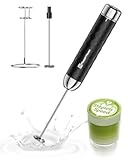
- 【Stepless Speed Control Design】Unlike traditional button-operated milk frother, this LunaFro 2.0 electric milk frother allows you to seamlessly adjust the frothing speed with unparalleled precision, ranging from 4500RPM to 10000RPM, simply by toggling the rotary switch. Experience the ultimate control as you craft the perfect froth for different beverages. Say goodbye to splashes and lackluster froth
- 【One Charging, 1440 Hours Ready】With a built-in 1200mAh lithium battery, this portable USB-C rechargeable milk frother provides up to 2 months of usage on a single charge(note: if use once per day). Fully charge the battery operated milk foam maker in just 2 hours with the included USB-C cable, eliminating the need for constant battery replacement
- 【Create Rich Creamy Foam in Seconds】Transform your morning coffee routine with our high-speed milk frother. Achieve smooth, creamy foam in just 10-15 seconds, perfect for busy mornings. Elevate your coffee experience with velvety milk foam every time
- 【Versatile for Various Beverages】 Beyond coffee, our LunaFro 2.0 milk frother excels at blending powdered supplements like protein into beverages and preparing mixed drinks. Its versatility makes it an essential tool for all your beverage-making needs, including Latte, Cappuccino, Matcha and cocoa powder
- 【Easy Cleaning and Storage】This Stepless Speed Control milk frother comes with two frothing whisks for easy replacement. Cleaning is straightforward—simply detach the whisk and wash it in water. The included compact stainless steel stand provides convenient storage and organization
What this page does NOT cover (and where to go next)
- Detailed latte art techniques (e.g., pouring hearts, tulips).
- Specific recommendations for espresso machines or grinders.
- Troubleshooting for specific electric milk frother models.
- The science behind milk protein denaturation and fat emulsification.
- Comparisons of different milk brands for frothing performance.