
How To Choose A Better Coffee Maker
Quick answer
- Consider your daily coffee consumption and the number of people you’ll brew for.
- Decide on your preferred brewing method (drip, pour-over, espresso, etc.).
- Look for features like adjustable brew strength, temperature control, and programmability.
- Evaluate ease of cleaning and maintenance.
- Think about your kitchen counter space and the machine’s footprint.
- Factor in your budget, but prioritize quality for a better coffee experience.
Buying priorities
- Brewing Method: Your preferred method (drip, single-serve, espresso, pour-over) is the most critical starting point.
- Capacity: How much coffee do you need at once? Single cups, a full pot, or something in between?
- Ease of Use: Look for intuitive controls and simple operation, especially for daily use.
- Brew Quality: Consider machines that offer control over water temperature and brew time for optimal extraction.
- Durability and Build Quality: A well-built machine will last longer and perform more consistently.
- Cleaning and Maintenance: Features like removable parts and descaling indicators simplify upkeep.
- Footprint and Design: Ensure it fits your kitchen space and aesthetic preferences.
- Budget: Determine a realistic price range, balancing features with cost.
- Specialty Features: Consider if you need a built-in grinder, milk frother, or programmability.
- Filter Type: Paper filters offer clarity, while permanent filters are reusable and can affect taste slightly.
Feature comparison
- Brew Method: Drip, single-serve (pod), espresso, French press, pour-over, cold brew.
- Capacity: Single cup, 4-cup, 8-cup, 10-cup, 12-cup, 14-cup.
- Temperature Control: Some offer precise digital control; others rely on standard heating elements. Check the manual for specific temperature ranges.
- Filter Type: Paper filters (cone or basket), permanent metal filters, cloth filters.
- Cleaning: Removable brew basket, carafe, drip tray; descaling alerts or cycles.
- Footprint: Compact designs for small kitchens versus larger machines with multiple components.
- Programmability: Set a brew time in advance for waking up to fresh coffee.
- Brew Strength Control: Options to adjust the intensity of the coffee flavor.
- Built-in Grinder: Grinds beans fresh for each brew, offering superior flavor.
- Carafe Type: Thermal carafes keep coffee hot without a warming plate; glass carafes may have a warming plate.
- Water Reservoir: Removable for easy filling and cleaning, or fixed.
- Pause and Serve: Allows you to pour a cup before the full brew cycle is complete.
How to choose a better coffee maker step-by-step
1. Assess your coffee habits.
- What to do: Think about how much coffee you drink daily and who else in your household drinks it. Do you prefer a single cup or a full pot?
- What “good” looks like: You can accurately estimate the volume needed, whether it’s for one person or a family of four.
- A common mistake and how to avoid it: Underestimating consumption. If you often find yourself wanting a second cup or brewing for guests, choose a larger capacity than you initially thought.
2. Determine your preferred brewing method.
- What to do: Research and consider the taste profiles and convenience of different methods like drip, pour-over, French press, or espresso.
- What “good” looks like: You have a clear idea of which brewing style best suits your taste preferences and lifestyle.
- A common mistake and how to avoid it: Buying a machine for a method you’re not truly interested in. For example, don’t get an espresso machine if you prefer a large, mild cup of drip coffee.
3. Prioritize key features.
- What to do: List the features that are most important to you, such as programmability, brew strength control, or a built-in grinder.
- What “good” looks like: Your list is focused and realistic, highlighting what will genuinely improve your coffee experience.
- A common mistake and how to avoid it: Getting overwhelmed by too many “nice-to-have” features. Stick to what you’ll actually use to avoid paying for unnecessary complexity.
4. Consider capacity and carafe type.
- What to do: Based on step 1, decide if a single-serve, 4-cup, 8-cup, 10-cup, or 12-cup capacity is best. Think about whether a thermal carafe or a glass carafe with a warming plate is preferable.
- What “good” looks like: You’ve selected a capacity that matches your needs and a carafe type that suits how you drink your coffee (e.g., thermal for slow drinkers).
- A common mistake and how to avoid it: Choosing a carafe that doesn’t keep coffee hot enough for your liking, or a warming plate that scorches the coffee over time.
5. Evaluate ease of cleaning and maintenance.
- What to do: Look for machines with removable parts, dishwasher-safe components, and simple descaling processes.
- What “good” looks like: The cleaning process is straightforward and doesn’t feel like a chore, encouraging regular maintenance.
- A common mistake and how to avoid it: Neglecting cleaning due to difficulty. This leads to poor-tasting coffee and can damage the machine.
6. Measure your kitchen space.
- What to do: Measure the available counter space, including height under cabinets, where the coffee maker will sit.
- What “good” looks like: You know the maximum dimensions the machine can be, ensuring a perfect fit.
- A common mistake and how to avoid it: Buying a machine that’s too tall to fit under cabinets or too wide for your designated spot.
7. Set a realistic budget.
- What to do: Determine how much you are willing to spend, keeping in mind that higher prices often correlate with better build quality and features.
- What “good” looks like: You have a price range that allows for a quality machine without breaking the bank.
- A common mistake and how to avoid it: Assuming the most expensive machine is always the best. Focus on value and features that matter to you.
8. Read reviews and compare models.
- What to do: Look for reviews from reputable sources and other users to get real-world feedback on performance, durability, and ease of use.
- What “good” looks like: You’ve gathered sufficient information to make an informed decision between a few top contenders.
- A common mistake and how to avoid it: Relying solely on marketing claims or a single positive review.
Common mistakes (and what happens if you ignore them)
| Mistake | What it causes | Fix |
|---|---|---|
| Not cleaning the machine regularly | Stale coffee oils build up, resulting in bitter, off-flavors; mineral deposits clog the machine. | Follow the manufacturer’s cleaning schedule; rinse parts after each use. |
| Using pre-ground coffee for espresso | Espresso requires a very fine, consistent grind; pre-ground is usually too coarse. | Grind whole beans fresh just before brewing espresso. |
| Using the wrong grind size for your method | Too coarse: weak, watery coffee. Too fine: bitter, over-extracted coffee, or clogged machine. | Use a burr grinder and consult guides for recommended grind sizes for your brewing method. |
| Using stale coffee beans | Coffee loses its volatile aromatic compounds after roasting; flavor degrades. | Buy whole beans and grind them just before brewing; store beans in an airtight container. |
| Incorrect water-to-coffee ratio | Too much coffee: bitter, strong. Too little coffee: weak, watery. | Use a scale or follow recommended ratios (e.g., 1:15 to 1:18 coffee to water by weight). |
| Using tap water with high mineral content | Can affect coffee taste and lead to scale buildup in the machine. | Use filtered or bottled water for better taste and to prolong machine life. |
| Rushing the brew process | Not allowing sufficient bloom time (for pour-over) or proper extraction. | Follow recommended brew times and techniques for your chosen method. |
| Overfilling the water reservoir | Can lead to leaks or improper brewing, potentially damaging the machine. | Always fill the reservoir to the indicated fill line. |
| Not preheating the brewing vessel | For methods like pour-over or French press, a cold vessel can shock the grounds. | Rinse your carafe or mug with hot water before brewing. |
| Not letting the machine cool down properly | Can strain components and potentially cause thermal shock. | Allow the machine to cool down before cleaning or storing. |
Decision rules (simple if/then)
- If you drink a lot of coffee daily, then choose a coffee maker with at least a 10-cup capacity because you’ll avoid multiple brew cycles.
- If you value convenience and speed above all else, then consider a single-serve (pod) coffee maker because they brew a cup in under a minute.
- If you want the freshest possible flavor, then opt for a machine with a built-in burr grinder or plan to buy a separate one because grinding beans just before brewing is crucial.
- If your kitchen counter space is limited, then look for compact or multi-functional coffee makers because they can save valuable real estate.
- If you prefer a cleaner cup with no sediment, then a drip coffee maker with a paper filter or a pour-over setup is ideal because these methods filter out fine particles.
- If you enjoy a rich, full-bodied coffee and don’t mind a bit of sediment, then a French press or a percolator might be your best choice because they allow coffee oils to pass through.
- If you want to wake up to coffee already brewed, then a programmable drip coffee maker is a good investment because you can set it the night before.
- If you are on a tight budget, then a basic drip coffee maker or a French press offers excellent value because they are generally less expensive.
- If you want to experiment with different brewing styles, then consider modular systems or machines that can perform multiple functions because they offer versatility.
- If you are concerned about the environmental impact of disposable pods, then a reusable filter for a drip machine or a French press is a more sustainable option because they reduce waste.
- If you prefer your coffee to stay hot for hours without a warming plate, then a thermal carafe coffee maker is the best choice because it insulates the coffee naturally.
- If you are a true coffee aficionado seeking precise control, then a high-end pour-over setup or a sophisticated espresso machine might be worth the investment because they offer granular adjustments.
If you prefer a cleaner cup with no sediment, then a drip coffee maker with a paper filter or a pour-over setup is ideal because these methods filter out fine particles. A pour over coffee maker offers excellent control for a nuanced brew.

- Pour Over Coffee: Manual Pour Over Coffee Maker allows you to brew an excellent cup of Coffee in minutes
- Stainless steel: Includes a new and improved permanent, stainless steel mesh filter that helps extract your coffee's aromatic oils and subtle flavors instead of being absorbed by a paper filter
- Coffee Carafe: Made of durable, heat-resistant borosilicate glass with Cork Band detailing that is both functional and elegant; single wall
- Quick and Easy: Simply add coarse ground Coffee to filter, pour a small amount of water in a circular motion over ground Coffee until soaked then add the remaining water and let drip
- Servings: Pour Over Coffee Maker makes 8 cups of Coffee, 4 oz each; dishwasher safe
If you prefer a cleaner cup with no sediment, then a drip coffee maker with a paper filter or a pour-over setup is ideal because these methods filter out fine particles. For a reliable option, consider the drip coffee maker.
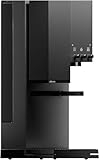
- 1. Three Levels of Automation for Any Skill Level: Choose from Autopilot, Copilot, or Free Solo mode. Autopilot handles the entire brewing process automatically. Copilot provides step-by-step guidance. Free Solo gives you full manual control. This coffee machine works for beginners and professional baristas alike.
- 2. Intuitive User Interface with Tactile Knobs and LED Matrix: The Studio features physical control knobs and a clear LED Matrix display. You can adjust grind size, water temperature, and flow rate in real time without navigating complicated touchscreen menus.
- 3. Full Customization via the xBloom App: Use the xBloom app to create, adjust, save, and share your favorite coffee recipes. Every brewing parameter can be fine-tuned and synced to the machine instantly. Your perfect cup is saved and repeatable.
- 4. Compostable xPod System for Minimal Waste and Maximum Flavor: Each xPod contains carefully selected whole beans and a built-in filter. Tap the recipe card, pour the beans into the grinder, place the pod into the dock, and press start. No capsules, no extra paper filters, no unnecessary waste.
- 5. What Is Included in the Box: The package includes the xBloom Studio, Omni Dripper 2 with Hyperflow Bottom, 10 paper filters, xPod Dock, Magnetic Dosing Cup, default recipe card, quick start guide, cleaning brush, universal power cord, and a 2-Year xbloom brand warranty. Everything you need is included—along with long-term peace of mind.
FAQ
Q: What is the difference between a drip coffee maker and a pour-over?
A: Drip coffee makers automate the process with a heating element and water dispersal system. Pour-over requires manual pouring of hot water over grounds in a filter, offering more control over the brew.
Q: How often should I clean my coffee maker?
A: It’s recommended to rinse removable parts after each use and perform a deeper clean (descaling) every 1-3 months, depending on water hardness and usage. Check your manual for specific recommendations.
Q: Does the type of filter matter for taste?
A: Yes. Paper filters tend to produce a cleaner cup by trapping more oils and fine sediment. Metal filters allow more oils and some sediment through, which can contribute to a fuller body and richer flavor.
Q: What is “blooming” in coffee brewing?
A: Blooming is the initial stage of brewing, usually in pour-over or French press, where hot water is first added to wet the grounds. This releases trapped CO2, allowing for a more even extraction in subsequent pours.
Q: Can I use any coffee grounds in any coffee maker?
A: No. Different brewing methods require specific grind sizes. Espresso needs a very fine grind, drip coffee a medium grind, and French press a coarse grind. Using the wrong grind can lead to poor extraction and taste.
Q: What does “brew strength” control do?
A: This feature typically adjusts the coffee-to-water ratio or the brew time, allowing you to make a stronger or weaker cup of coffee according to your preference.
Q: Are thermal carafes better than glass carafes?
A: Thermal carafes keep coffee hot for longer without a warming plate, preventing the coffee from becoming burnt or stale. Glass carafes often have warming plates, which can degrade coffee quality over time if left on too long.
Q: What is the ideal brewing temperature for coffee?
A: The Specialty Coffee Association recommends a brewing temperature between 195°F and 205°F (90.5°C to 96°C). Some machines offer precise temperature control within this range.
Q: How do I know if my coffee maker is descaling?
A: Many modern coffee makers have a descaling indicator light or a specific descaling cycle. If yours doesn’t, you’ll notice slower brewing times or a buildup of white residue.
What this page does NOT cover (and where to go next)
- Specific brand recommendations: This guide focuses on features and how to choose. For specific brand reviews, consult dedicated coffee equipment review sites.
- Detailed comparisons of advanced espresso machines: For in-depth analysis of semi-automatic and fully automatic espresso machines, look for specialized guides.
- The science of coffee bean roasting and sourcing: Understanding coffee beans themselves is a separate topic. Explore resources on coffee origins and roasting profiles.
- DIY coffee maker modifications or repairs: This guide assumes you are purchasing a new machine. For repair advice, consult service manuals or professional repair resources.
- Water filtration systems for coffee brewing: While water quality is mentioned, a deep dive into specific filtration technologies is beyond the scope here.