
Grinding Beans: Making Coffee From Scratch
Quick answer
- Grind your beans right before you brew. This is non-negotiable for good coffee.
- Match your grind size to your brewing method. Coarse for French press, fine for espresso.
- Use a burr grinder, not a blade grinder. It’s a game-changer for consistency.
- Fresh beans make a huge difference. Look for roast dates, not just “best by.”
- Water quality matters. Filtered water is usually best.
- Dial in your coffee-to-water ratio. Start around 1:15 (grams of coffee to grams of water).
- Keep your gear clean. Old coffee oils turn rancid fast.
Who this is for
- Anyone who’s tired of stale, pre-ground coffee.
- Home baristas ready to level up their morning ritual.
- Folks who just bought a bag of whole beans and want to know what to do next.
What to check first
Brewer type and filter type
Know what you’re working with. A drip machine needs a different grind than a pour-over or an AeroPress. Filters also matter. Paper filters trap more oils and fines than metal or cloth. This affects the body and clarity of your cup.
Water quality and temperature
Your coffee is mostly water. If your tap water tastes off, your coffee will too. Filtered water is usually the sweet spot. For temperature, aim for 195-205°F. Too hot can scorch the grounds, too cool leads to under-extraction.
Grind size and coffee freshness
This is the heart of it. Freshly roasted beans are key. Look for a roast date on the bag. Grind them just before brewing. The grind size needs to match your brewer. Too fine clogs filters; too coarse makes weak coffee.
Coffee-to-water ratio
This is your recipe. A good starting point is 1:15 – that’s 1 gram of coffee for every 15 grams of water. For example, 20g of coffee to 300g of water. Weighing your coffee and water is the best way to get consistent results.
Cleanliness/descale status
Old coffee oils are the enemy. They go rancid and make your coffee taste bitter and stale. Rinse your brewer and grinder after each use. Descale your machine regularly, especially if you have hard water. Check your brewer’s manual for specific instructions.
Step-by-step (brew workflow)
1. Weigh your whole beans.
- What to do: Measure out the amount of whole beans you need for your brew.
- What “good” looks like: You have the exact amount of beans ready.
- Common mistake: Guessing the amount. Avoid this by using a scale.
To ensure the freshest taste, always start by weighing your whole coffee beans. You can find a wide selection of quality whole coffee beans to get started.
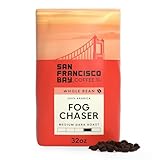
- Our iconic Fog Chaser is a blend of dark and medium roasted beans which results in a enjoyable medium dark roast coffee. It's a great combination of flavor, balance and smoothness that will chase away even the thickest morning fog.
- For finest taste, store in a cool, dark place and grind beans just berfore brewing
- QUALITY COFFEE: San Francisco Bay Coffee uses only 100% arabica coffee and certified Kosher coffee beans. Hand picked and grown in high altitude. We're so confident you'll love it, we back it with a satisfaction guarantee.
- SUSTAINABLY AND ECO- FARMED COFFEE: We offer a wide selection of sustainably grown, sourced, and packaged coffee from whole bean to ground, flavored to decaf, and much more.
- SF BAY COFFEE is a family owned, American made company with a rich tradition. Our reputation reflects on us as a family so if you're ever not happy with your purchase, call us and we'll make it right.
2. Heat your water.
- What to do: Heat filtered water to 195-205°F.
- What “good” looks like: Water is at the right temperature, not boiling over.
- Common mistake: Using boiling water. Let it sit for about 30 seconds off the boil.
3. Grind your coffee beans.
- What to do: Grind the measured beans using a burr grinder, matching the grind size to your brewer.
- What “good” looks like: Uniform particles, no dust or boulders.
- Common mistake: Using a blade grinder. This creates uneven grinds, leading to bitter and sour notes.
4. Prepare your brewer and filter.
- What to do: Place your filter in the brewer and rinse it with hot water. Discard the rinse water.
- What “good” looks like: Filter is seated correctly, and the brewer is preheated.
- Common mistake: Forgetting to rinse paper filters. This removes papery taste and preheats your brewer.
Prepare your brewer by placing a fresh coffee filter and rinsing it with hot water. High-quality coffee filters are essential for a clean brew.

- [100% Biodegradable & Pure] Clinuse disposable coffee filter paper is made from natural wood pulp, with zero bleach or fluorescent agents. The unbleached paper is completely adhesive-free, tasteless, and leaves no residue, keeping your coffee’s true flavor intact and your brew pure, hygienic, and eco-friendly.
- [Excellent Taste & Smooth Extraction] Crafted with fine, uniform-thickness paper, our V-shaped filter effectively removes excess oils and fine particles that cause bitterness, delivering a clean, mellow, and well-balanced cup. Because it’s entirely odor-free, nothing comes between you and the authentic taste of your beans.
- [V-Shaped Conical Design for Fuller Flavor] The specially designed V-shaped cone filter slows the water flow toward the center, allowing slower, deeper extraction and a richer, more aromatic brew. An easy-grip ear tab makes handling and cleanup simple — ideal for home, office, travel, or restaurant use.
- [Large Value Pack & Universal Fit] With 200 counts per pack, based on one cup daily, you’re set for over half a year of brewing. Designed to fit most 2-4 cup drip coffee makers, each filter measures approximately 6.3 x 4.6 x 4.4 inches. Please note: a reasonable variance of ±0.2 inches is normal. V02 is our model name and does not imply compatibility with other brands; always confirm your machine’s size requirements before purchase
- [Food-Grade Vacuum Packaging] To guarantee absolute freshness and purity, our coffee filters come sealed in food-grade vacuum packaging, keeping them dry, clean, and odor-free until use. From natural pulp to final package, every step meets strict hygiene standards — so every cup you brew is safe, clean, and worry-free
5. Add ground coffee to the brewer.
- What to do: Transfer the freshly ground coffee into the prepared filter.
- What “good” looks like: Coffee bed is flat and even.
- Common mistake: Tamping the grounds too hard. This restricts water flow. Just gently level it.
6. Bloom the coffee (for pour-over/drip).
- What to do: Pour just enough hot water (about twice the weight of the coffee) to saturate all the grounds. Wait 30 seconds.
- What “good” looks like: Coffee grounds puff up and release CO2 (bubbles).
- Common mistake: Skipping the bloom. This degasses the coffee, allowing for better extraction.
7. Begin pouring the main brew.
- What to do: Pour the remaining water slowly and evenly over the grounds, in a controlled pattern.
- What “good” looks like: Consistent stream, no dry spots, water level stays manageable.
- Common mistake: Pouring too fast or all at once. This can lead to channeling and uneven extraction.
8. Allow coffee to drip/extract.
- What to do: Let the water flow through the coffee grounds completely.
- What “good” looks like: The brew finishes within the expected time for your brewer.
- Common mistake: Letting it drip too long. This can lead to over-extraction and bitterness.
9. Remove the brewer/filter.
- What to do: Once brewing is complete, remove the filter and grounds.
- What “good” looks like: No dripping, brewer is empty.
- Common mistake: Leaving the grounds in the brewer. This can continue to extract and make the coffee bitter.
10. Serve and enjoy.
- What to do: Pour your freshly brewed coffee into a mug.
- What “good” looks like: A delicious, aromatic cup of coffee.
- Common mistake: Letting it sit too long. Coffee tastes best fresh.
Common mistakes (and what happens if you ignore them)
| Mistake | What it causes | Fix |
|---|---|---|
| Using pre-ground coffee | Stale, flat taste; lack of aroma | Grind beans right before brewing. |
| Using a blade grinder | Inconsistent grind size, uneven extraction | Switch to a burr grinder for uniform particles. |
| Incorrect grind size for brewer | Bitter (too fine) or weak/sour (too coarse) | Match grind size to brewer specs (e.g., coarse for French press). |
| Not cleaning equipment regularly | Rancid oil taste, bitter, off-flavors | Rinse grinder and brewer after every use; deep clean regularly. |
| Using tap water with off-flavors | Unpleasant taste in the final cup | Use filtered or bottled water for a cleaner taste. |
| Incorrect water temperature | Scorched taste (too hot) or weak/sour (too cool) | Aim for 195-205°F; let boiling water sit for 30 seconds. |
| Inconsistent coffee-to-water ratio | Coffee too strong or too weak | Weigh coffee and water for precise, repeatable results. |
| Skipping the bloom phase | Gassy coffee, uneven extraction, less flavor | Allow grounds to bloom for 30 seconds to release CO2. |
| Pouring water too quickly/unevenly | Channeling, uneven extraction, weak spots | Pour slowly and steadily in concentric circles. |
| Letting coffee sit on a hot plate | Burnt, bitter taste; loss of delicate aromatics | Drink immediately or transfer to a thermal carafe. |
| Using stale beans | Lack of flavor, muted aroma, dull taste | Buy beans with a roast date and use within 2-4 weeks of roasting. |
Decision rules (simple if/then)
- If your coffee tastes bitter, then your grind is likely too fine or you over-extracted. Try a coarser grind or brew for less time.
- If your coffee tastes sour or weak, then your grind is likely too coarse or you under-extracted. Try a finer grind or brew for longer.
- If you’re using a French press, then you need a coarse grind because the metal filter lets more fines through.
- If you’re making espresso, then you need a very fine grind because the high pressure needs resistance.
- If your coffee tastes dusty or muddy, then your grinder is producing too many fines. Check your grinder’s burrs or consider a better grinder.
- If your brew time is too fast, then your grind is likely too coarse for your brewer.
- If your brew time is too slow and the coffee overflows, then your grind is likely too fine for your brewer.
- If your coffee tastes like old socks, then your equipment is dirty. Give it a good scrub.
- If you’re not using a scale, then your coffee consistency will suffer. Start weighing your beans and water.
- If your beans are more than a month past their roast date, then expect diminished flavor. Buy fresh.
- If your water tastes funny, then your coffee will taste funny. Filter your water.
FAQ
Q: How do I know what grind size to use?
A: It depends on your brewer. Generally, coarse for French press, medium for drip, fine for espresso. Check your brewer’s manual for specific recommendations.
Q: How long do coffee beans stay fresh after grinding?
A: Not long. Flavor degrades rapidly. Aim to grind immediately before brewing for the best taste. Within minutes, quality drops.
Q: What’s the difference between a burr grinder and a blade grinder?
A: A burr grinder crushes beans into uniform particles. A blade grinder chops them inconsistently, creating dust and boulders. Burr grinders are way better for coffee.
Q: My coffee tastes burnt. What did I do wrong?
A: Likely too-hot water or over-extraction. Ensure your water is in the 195-205°F range and don’t brew for too long. A too-fine grind can also contribute.
Q: My coffee tastes weak and watery.
A: This usually means under-extraction. Try a finer grind, use more coffee, or extend your brew time slightly. Ensure your water temperature is sufficient.
Q: Should I store my beans in the fridge or freezer?
A: Generally, no. Temperature fluctuations and moisture can degrade flavor. Store whole beans in an airtight container in a cool, dark place.
Q: What’s the best way to clean my coffee grinder?
A: Empty it completely. Use a brush to get into crevices. Some grinders can be disassembled for deeper cleaning. Check your manual.
Q: How much coffee should I use?
A: A good starting point is a 1:15 ratio of coffee to water by weight. So, for 300 grams of water, use 20 grams of coffee. Adjust to your taste.
Q: Is it okay to reuse coffee grounds?
A: Nope. The first brew extracts most of the good stuff. Reusing grounds will result in weak, bitter coffee.
What this page does NOT cover (and where to go next)
- Specific grinder models and their features. (Next: Research grinder reviews based on your budget and brewing needs.)
- Advanced brewing techniques like siphon or Turkish coffee. (Next: Explore specialized brewing guides for those methods.)
- The impact of bean origin or roast level on flavor. (Next: Read up on coffee varietals and roast profiles to understand flavor nuances.)
- Detailed water chemistry and its effect on extraction. (Next: Dive into water filtration systems or water recipes for coffee.)