
Does Drinking Coffee Through A Straw Affect Temperature?
Quick answer
- Drinking coffee through a straw generally does not significantly affect its temperature in a way that makes it noticeably hotter.
- The primary factors influencing coffee temperature are brewing temperature, cooling time, and ambient conditions.
- A straw might slightly cool the coffee as it travels through the straw, but this effect is usually minimal.
- The material of the straw (plastic, metal, silicone) can have a minor impact on heat transfer.
- The length and thickness of the straw could theoretically influence heat loss, but this is generally not a major factor for typical straw use.
- If you perceive your coffee as hotter through a straw, it’s more likely due to psychological factors or how you’re sipping.
Key terms and definitions
- Heat Transfer: The movement of thermal energy from a hotter object to a cooler one. This can occur through conduction, convection, or radiation.
- Conduction: Heat transfer through direct contact. For example, heat moving from hot coffee to the straw material.
- Convection: Heat transfer through the movement of fluids (liquids or gases). Hot coffee moving up the straw and cooler air around the straw.
- Thermal Equilibrium: The state where two objects in contact have the same temperature and no net heat transfer occurs between them.
- Specific Heat Capacity: The amount of heat required to raise the temperature of one gram of a substance by one degree Celsius. Water has a high specific heat capacity.
- Ambient Temperature: The temperature of the surrounding environment.
- Insulation: A material that reduces heat transfer.
- Brewing Temperature: The temperature of the water used to extract coffee. Typically ranges from 195°F to 205°F.
- Cooling Rate: How quickly a hot beverage loses heat to its surroundings.
How it works
- When hot coffee is brewed, it holds a significant amount of thermal energy.
- As the coffee sits, it loses heat to the surrounding air through convection and radiation.
- When you sip coffee through a straw, the hot liquid travels from the mug up through the straw.
- During this transit, the coffee is in contact with the straw material.
- Heat can transfer from the coffee to the straw material via conduction.
- The straw material then transfers this heat to the air around it.
- If the straw material is a poor conductor (an insulator), it will slow down this heat transfer.
- Similarly, the surface area of the coffee exposed to air within the straw is minimal, limiting convection and evaporation.
- The overall effect is that the coffee might lose a tiny amount of heat as it travels through the straw.
- However, the volume of coffee moving through the straw at any given moment is small, and the time it spends there is brief, making the temperature change generally negligible.
If you’re looking for a straw that minimizes heat transfer, consider using silicone straws, which are less conductive than metal options.
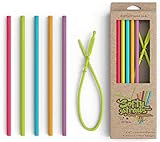
- Top Rated Silicone Straws: Premium Softy Straws + Patent Pending Straw Squeegee. Lab tested (FDA & RoHs) to ensure quality and safety for you and your family.
- Sized like a traditional Straw
- Safe due to their non teeth chipping silicone construction. Soft to bite down on, yet extremely durable. Our straws don’t get hot when hot drinks or cold with smoothies (unlike stainless steel metal straws).
- Dishwasher Safe + Squeegee - Use our straw squeegee straw cleaning tool to clean liquids and solids after each use ! Our straws are dishwasher safe (rated -40 to 500 degrees).
- Compatible with most cups and glasses and small tumblers
What affects the result
- Brewing Temperature: Coffee brewed at a higher temperature will naturally be hotter initially.
- Cooling Time: The longer coffee sits after brewing, the more it cools down.
- Ambient Temperature: Coffee in a cold room will cool faster than coffee in a warm room.
- Straw Material: Metal straws are better conductors of heat than plastic or silicone straws, meaning they might cool the coffee slightly more.
- Straw Length and Diameter: A longer or wider straw offers more surface area for heat exchange, but the effect is usually minor.
- Sipping Speed: How quickly you draw the coffee through the straw can influence the duration of contact with the straw.
- Mug Material: The material of the mug also plays a role in how quickly the coffee cools before it even reaches the straw.
- Coffee Volume: A larger volume of coffee will retain heat longer than a smaller volume.
- Evaporation: Some cooling occurs through the evaporation of water from the coffee’s surface, which is less of a factor when sipping through a straw.
- Initial Coffee Temperature: This is the most dominant factor. If the coffee is already lukewarm, a straw won’t make it hotter.
- Heat Retention of the Straw: Some straws might retain a small amount of heat from previous sips, but this is transient.
Pros, cons, and when it matters
- Pro: Reduced Burn Risk: For those sensitive to hot beverages, a straw can offer a slightly more controlled sip, potentially reducing the risk of burning your tongue or lips directly on the hot liquid.
- Con: Minimal Temperature Change: The primary “con” is that the idea of a straw making coffee hotter is largely a misconception; the temperature change is usually insignificant.
- Pro: Protects Teeth: Sipping through a straw can help minimize contact between hot coffee and tooth enamel, which some believe can help preserve tooth health over time.
- Con: Straw Material Issues: Some plastic straws can impart an undesirable taste to coffee, and metal straws can sometimes feel too hot or cold in the mouth.
- Pro: Convenience for Certain Situations: For individuals with certain medical conditions or those who prefer not to sip directly from a mug, a straw offers an alternative way to consume hot beverages.
- Con: Environmental Impact: Disposable plastic straws contribute to waste. Reusable straws require cleaning.
- Pro: Aesthetic Preference: Some people simply prefer the sensation of drinking through a straw.
- Con: Potential for Mess: If not used carefully, a straw can lead to spills, especially with very hot liquids.
- When it matters: If you are extremely sensitive to heat and find even slightly too-hot coffee uncomfortable, a straw might offer a marginal benefit in cooling. However, for most people, the difference is imperceptible. It matters more as a personal preference or for specific dental or medical considerations.
Common misconceptions
- Myth: Straws make coffee hotter. This is incorrect. Any temperature change is a slight cooling effect, not heating.
- Myth: All straws are made of the same material. Straws come in plastic, metal, glass, silicone, and bamboo, each with different thermal properties.
- Myth: A straw will significantly cool down your coffee. While there’s a minimal heat exchange, it’s not enough to drastically lower the coffee’s temperature.
- Myth: Sipping from a straw is always safer for your teeth. While it can reduce direct contact, the acidity of coffee still affects teeth.
- Myth: The length of the straw is the main factor in temperature change. Material and the brief transit time are more significant than length alone.
- Myth: Metal straws are always the best for hot drinks. Metal is a good conductor, so it can transfer heat quickly, potentially making the straw itself feel hot.
- Myth: You can’t taste the difference with a straw. Some materials, especially certain plastics, can impart a flavor.
- Myth: Straws are only for cold drinks. Many people use reusable straws for hot beverages as well.
- Myth: The straw adds heat from your mouth. The heat from your mouth is negligible compared to the heat of the coffee.
FAQ
Q1: Will drinking coffee through a straw make it hotter?
A1: No, drinking coffee through a straw will not make it hotter. If anything, there might be a very slight cooling effect as the coffee transfers a small amount of heat to the straw material.
Q2: Does the type of straw matter for coffee temperature?
A2: Yes, the material of the straw can have a minor impact. Metal straws are better conductors of heat than plastic or silicone, meaning they might cool the coffee slightly more as it passes through.
Q3: How much does a straw actually cool down my coffee?
A3: The cooling effect is generally very minimal, often imperceptible. The amount of coffee in the straw at any time is small, and it travels quickly, so significant heat loss is unlikely.
Q4: Is it safe to drink hot coffee through a straw?
A4: It is generally safe, but always exercise caution with hot beverages. A straw might help some people sip more deliberately, potentially reducing the risk of a direct burn on the tongue.
Q5: Can a straw protect my teeth from hot coffee?
A5: A straw can help minimize direct contact between hot coffee and your tooth enamel, which may be beneficial for some individuals concerned about the effects of hot or acidic beverages on their teeth.
Q6: Why do some people think straws make coffee hotter?
A6: This is likely a misconception. The perceived sensation might be psychological, or it could be related to the speed of sipping or the way the liquid hits the palate.
Q7: Are there any benefits to using a straw for hot coffee?
A7: Beyond potential minor cooling or dental benefits, some people prefer the sipping experience, or it may be necessary for individuals with certain medical conditions.
Q8: What is the best material for a straw if I want to minimize temperature change?
A8: If you’re concerned about minimizing any temperature change, a straw made of a less conductive material like silicone or a thicker plastic might be preferred over metal, though the difference is usually slight.
What this page does NOT cover (and where to go next)
- Specific temperature readings of coffee after passing through different straw types.
- In-depth analysis of the physics of heat transfer in straws.
- Recommendations for specific brands or types of reusable straws.
- Detailed advice on dental care related to coffee consumption.
- Information on the environmental impact of different straw materials.