
Choosing The Right Coffee For Your Espresso Machine
Quick answer
- Espresso machines require specific coffee beans for optimal results.
- Look for medium to dark roast beans, often labeled “espresso roast.”
- Freshly roasted and ground beans are crucial for the best flavor.
- Consider whole beans and grind them just before brewing.
- Experiment with single-origin beans or blends to find your preference.
- Avoid pre-ground coffee meant for drip machines, as the grind size is usually incorrect.
For the best results, look for high-quality espresso beans, often labeled specifically as ‘espresso roast’.
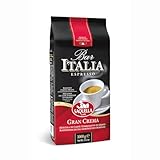
- AUTHENTIC ITALIAN ESPRESSO EXPERIENCE: From Saquella Caffè, family coffee roasters in Italy since 1856 — blending heritage, passion, and quality in every bean.
- FULL-BODIED & CREAMY FLAVOR: A signature Arabica and Robusta blend that delivers a bold espresso with a thick, velvety crema and lingering chocolate notes.
- MEDIUM-DARK ROAST: Carefully roasted for a rich aroma and balanced taste — smooth yet intense, ideal for espresso, cappuccino, or macchiato.
- CONSISTENT QUALITY: Beans are slow-roasted and expertly blended to ensure uniform extraction and a true Italian café-style experience at home.
- MADE IN ITALY: Imported directly from Italy — Saquella Bar Italia Gran Crema is the choice of professional baristas and espresso lovers worldwide.
Key terms and definitions
- Espresso Roast: A coffee roast profile specifically developed to bring out rich, bold flavors suitable for espresso.
- Single-Origin Coffee: Beans sourced from a single geographical location, offering a distinct flavor profile of that region.
- Blend: A mix of beans from different origins, crafted to achieve a balanced and complex flavor profile.
- Freshness: Refers to how recently the coffee beans were roasted and ground, directly impacting flavor and aroma.
- Grind Size: The coarseness or fineness of coffee particles after grinding, critical for proper extraction in espresso.
- Extraction: The process of dissolving soluble compounds from coffee grounds into water, creating the espresso shot.
- Crema: The reddish-brown foam that forms on top of a well-pulled espresso shot, indicating proper extraction and freshness.
- Bloom: The initial release of CO2 gas when hot water first hits fresh coffee grounds, essential for even extraction.
- Bar Pressure: The amount of pressure exerted by an espresso machine, typically between 7-10 bars for optimal extraction.
- Roast Level: Describes how long and at what temperature coffee beans have been roasted, influencing flavor from light to dark.
How it works
- Espresso machines use high pressure to force hot water through finely ground coffee.
- This process rapidly extracts oils, sugars, and flavors from the coffee grounds.
- The resulting concentrated coffee is known as espresso.
- The fine grind size creates resistance, allowing the pressurized water to saturate the grounds evenly.
- A specific water temperature, usually between 195-205°F, is maintained for efficient extraction.
- The pressure, combined with the fine grind and correct temperature, creates the characteristic crema.
- The speed of extraction is also a key factor, typically taking 20-30 seconds for a double shot.
- Freshly roasted beans release CO2, which aids in the extraction process and contributes to crema.
- The type of coffee bean and its roast profile significantly influence the final taste of the espresso.
- Understanding these elements helps in selecting the right coffee to maximize the potential of your espresso machine.
What affects the result
- Coffee Bean Type: Arabica beans generally offer more nuanced flavors, while Robusta beans provide a stronger crema and higher caffeine content. Many espresso blends use a combination.
- Roast Level: Medium to dark roasts are most common for espresso, as they develop bolder, richer flavors that stand up well to the extraction process. Light roasts can sometimes be too acidic or lack body.
- Freshness of Beans: Coffee is at its peak flavor for about 1-4 weeks after roasting. Stale beans will result in a flat, lifeless shot.
- Grind Size: For espresso, a very fine, consistent grind is essential. Too coarse, and the water will pass through too quickly, resulting in a weak shot. Too fine, and the water may struggle to pass through, leading to over-extraction and bitterness.
- Grind Consistency: Even particle size is as important as the fineness. Inconsistent grinds lead to uneven extraction, with some parts over-extracted and others under-extracted.
- Water Quality: Filtered or spring water is recommended. Hard water or water with off-flavors can negatively impact the taste of your espresso.
- Water Temperature: The ideal brewing temperature is typically between 195°F and 205°F. Too cool, and you get under-extraction; too hot, and you risk burning the coffee.
- Coffee-to-Water Ratio: The proportion of coffee grounds to water is crucial. A common starting point for espresso is a 1:2 ratio (e.g., 18 grams of coffee to 36 grams of espresso).
- Tamping Pressure: Applying consistent and appropriate pressure when tamping the coffee grounds in the portafilter helps create an even puck for uniform water flow.
- Machine Pressure: The espresso machine’s ability to generate and maintain stable pressure (ideally 7-10 bars) is fundamental to proper espresso extraction.
- Cleanliness of Equipment: Residual coffee oils can turn rancid and impart bitter flavors. Regular cleaning of your espresso machine, portafilter, and grinder is vital.
- Storage of Beans: Storing whole beans in an airtight container away from light, heat, and moisture helps preserve their freshness and flavor.
If you enjoy exploring distinct regional flavors, consider experimenting with single origin coffee beans.

- Brooklyn Blend - A perennial filter classic, we use the Brooklyn blend as our go-to coffee of the day. We source community-grown coffees from our trusted relationships in Colombia, Guatemala, and Honduras for a blend that’s sweet and familiar.
- Flavor Profile - A medium roast blend brimming with flavors of creamy cocoa, sweet toffee, and rich dried fruits. This offering brews beautifully on the French Press at home and is equally tasty with or without milk.
- Freshly Roasted Coffee - We believe fresh coffee matters, so we put the roast date on all our 12oz bags. Our coffee stays fresh for 180 days and is best if brewed within 2 weeks of opening.
- Roasted in NYC - Open since 2012, our flagship cafe in Williamsburg, Brooklyn serves as the hub of all things Partners. Visit us there or in our other cafes in Manhattan and Long Island City for freshly brewed NY coffee.
- Sip With Confidence - We submit our coffees to third-party food safety labs for testing of heavy metals, mold, and mycotoxins, including ochratoxin A (OTA) and aflatoxin. Coffee that meets our strict internal quality and safety specs moves on to roasting.
Pros, cons, and when it matters
- Bold Flavor Profile: Espresso roasts are designed for intensity, which is desirable for the concentrated nature of espresso.
- Pro: Delivers the rich, powerful taste expected from espresso.
- Con: Can be too intense for those who prefer milder coffee.
- When it matters: Essential for classic espresso-based drinks like lattes and cappuccinos.
- Crema Production: Beans with sufficient oils and proper roasting contribute to a thick, stable crema.
- Pro: Visually appealing and contributes to mouthfeel and aroma.
- Con: Can be a sign of over-roasting or stale beans if not balanced.
- When it matters: A hallmark of well-made espresso; indicates freshness and proper extraction.
- Grind Adaptability: While specific grinds are needed, some beans are more forgiving of minor grind variations.
- Pro: Allows for some flexibility if your grinder isn’t perfectly calibrated.
- Con: Significant variations will still lead to poor results.
- When it matters: Useful for beginners or when dialing in a new coffee.
- Freshness: The window for optimal flavor is relatively short after roasting.
- Pro: Unbeatable aroma and taste when fresh.
- Con: Requires careful purchasing and consumption planning.
- When it matters: Critical for achieving the best possible espresso shot.
- Cost: Specialty espresso beans can be more expensive than commodity coffee.
- Pro: Often higher quality and ethically sourced.
- Con: Can be a significant investment for daily brewing.
- When it matters: Budget considerations for regular espresso drinkers.
- Experimentation: The variety of beans and roasts offers endless possibilities for exploration.
- Pro: Discovering new favorite flavors and profiles.
- Con: Can lead to wasted coffee if you choose poorly.
- When it matters: For those who enjoy the journey of coffee discovery.
- Origin Characteristics: Single-origin beans highlight unique regional flavors.
- Pro: Offers distinct tasting notes (e.g., fruity, floral, chocolatey).
- Con: Can sometimes be less balanced than a well-crafted blend.
- When it matters: For appreciating the terroir and specific qualities of a coffee-growing region.
- Blend Balance: Blends are created to achieve a specific flavor profile, often balancing acidity, body, and sweetness.
- Pro: Consistent and well-rounded taste.
- Con: May mask the unique characteristics of individual beans.
- When it matters: Ideal for those seeking a reliable and harmonious espresso experience.
- Grind Consistency: The need for a very fine and consistent grind is paramount.
- Pro: Essential for proper extraction and good espresso.
- Con: Requires a quality grinder, which can be an additional expense.
- When it matters: Directly impacts the quality of every shot pulled.
- Water Chemistry: The mineral content of your water affects extraction.
- Pro: Optimized water can enhance flavor.
- Con: Requires testing and potentially water treatment.
- When it matters: For those seeking to fine-tune every aspect of their espresso.
- Machine Capabilities: Not all machines perform equally.
- Pro: A good machine can make even average beans taste better.
- Con: A poor machine will struggle to extract good espresso, regardless of bean quality.
- When it matters: The machine is the foundation upon which bean choice builds.
- Personal Preference: Ultimately, the “right” coffee is subjective.
- Pro: Freedom to choose what you enjoy most.
- Con: Can be overwhelming with so many options.
- When it matters: The final decider for your daily cup.
Common misconceptions
- Any dark roast is good for espresso: While dark roasts are common, not all dark roasts are created equal. Some can be overly bitter or burnt, lacking the nuanced sweetness needed for good espresso.
- Pre-ground coffee is fine for espresso: Espresso requires a very fine and consistent grind. Pre-ground coffee, especially if not specifically for espresso, is usually too coarse or inconsistent, leading to poor extraction.
- Stale beans still work for espresso: Freshness is paramount. Stale beans lack the CO2 needed for proper crema formation and have lost their aromatic compounds, resulting in a flat, lifeless shot.
- Only Robusta beans make good espresso crema: While Robusta beans contribute to crema, many high-quality Arabica beans, especially when roasted for espresso, can produce excellent crema when brewed correctly. Blends often combine the two.
- Espresso beans are always very dark: Espresso roasts can range from medium-dark to dark. A medium-dark roast can offer more complexity and acidity than a very dark roast.
- You need expensive, exotic beans for good espresso: While premium beans can be excellent, well-chosen, freshly roasted beans from reputable roasters at various price points can produce delicious espresso.
- The grinder doesn’t matter as much as the beans: A quality grinder that produces a consistent, fine grind is arguably more important than the beans themselves for achieving good espresso.
- You can use any coffee maker for espresso: Espresso machines are specifically designed to produce high pressure. Drip coffee makers, French presses, or percolators cannot replicate the espresso brewing process.
- All espresso blends are the same: Blends are carefully crafted by roasters to achieve specific flavor profiles. The beans used and their proportions vary widely, leading to different taste experiences.
- “Espresso Roast” on a bag guarantees good espresso: While it’s a good indicator, the quality of the beans, the freshness, and your brewing technique are equally important.
FAQ
Q: What kind of coffee beans should I buy for my espresso machine?
A: Look for beans labeled “espresso roast” or medium to dark roasts. Whole beans are best, as you’ll grind them just before brewing for maximum freshness.
Q: Is it okay to use pre-ground coffee?
A: It’s generally not recommended. Espresso requires a very fine and consistent grind that pre-ground coffee rarely provides, leading to subpar espresso.
Q: How fresh do my coffee beans need to be?
A: Ideally, beans should be used within 1-4 weeks of their roast date. The fresher they are, the better the crema and flavor.
Q: What’s the difference between Arabica and Robusta for espresso?
A: Arabica beans offer more complex, nuanced flavors and acidity. Robusta beans tend to produce a thicker crema and have a bolder, more bitter taste with higher caffeine. Many espresso blends use a combination.
Q: Can I use light roast beans for espresso?
A: While possible, light roasts can be challenging for espresso. They may result in a very acidic, thin shot if not brewed perfectly. Medium to dark roasts are generally more forgiving and produce the classic espresso flavor profile.
Q: How fine should the coffee be ground?
A: For espresso, you need a very fine, powdery grind, similar to powdered sugar or flour. The exact fineness will depend on your machine and beans, often requiring experimentation.
Q: What if my espresso tastes bitter?
A: Bitterness often indicates over-extraction. This could be due to grinding too fine, brewing too long, or water that is too hot. Try adjusting your grind to be slightly coarser.
Q: What if my espresso tastes sour or weak?
A: This usually means under-extraction. Your grind might be too coarse, your brew time too short, or the water temperature too low. Try grinding finer or extending your brew time.
Q: Does the origin of the coffee matter for espresso?
A: Yes, the origin affects the flavor profile. Single-origin beans will showcase the unique characteristics of a region, while blends are crafted for balance and consistency. Experiment to find what you prefer.
Q: How should I store my espresso beans?
A: Store whole beans in an airtight, opaque container at room temperature, away from light, heat, and moisture. Avoid refrigerating or freezing them.
What this page does NOT cover (and where to go next)
- Specific machine calibration and troubleshooting: This guide focuses on coffee selection. For detailed advice on dialing in your specific espresso machine, consult its manual or manufacturer resources.
- Advanced brewing techniques: Topics like pre-infusion, pressure profiling, or specific water chemistry adjustments are beyond the scope of general coffee selection.
- Detailed flavor profiles of specific coffee origins: While origins are mentioned, in-depth tasting notes for every region are not provided. Exploring coffee tasting notes from roasters is recommended.
- Commercial espresso equipment and practices: This guide is geared towards home espresso brewing.
- Recipes for espresso-based drinks: Information on how to make lattes, cappuccinos, and other drinks is not included here.