
Chewy Coffee Candies Recipe
Quick answer
- Use a reliable candy thermometer. It’s your best friend here.
- Don’t rush the cooking process. Patience pays off.
- Measure ingredients precisely. Baking is chemistry, candy is like super-chemistry.
- Stir constantly once the sugar starts to dissolve. No burnt bits allowed.
- Cool the mixture to the right temperature before adding flavorings. Hotter than a pistol can ruin things.
- Cut the candy while it’s still warm but firm. It’s a race against time, but a slow one.
Who this is for
- Anyone who loves coffee and has a sweet tooth.
- Home cooks looking for a fun, slightly challenging new candy project.
- People who want to impress friends with homemade, gourmet-style treats.
What to check first
- Brewer type and filter type: This recipe doesn’t use a coffee brewer directly. We’re using strong brewed coffee or espresso. Make sure your coffee is brewed really strong. Think double strength.
- Water quality and temperature: Use filtered water for your coffee. The temperature of the water used to brew the coffee doesn’t matter as much as the final concentration. For the candy itself, you’ll be heating sugar to high temps, so a good thermometer is key.
- Grind size and coffee freshness: For the coffee itself, a finer grind might give you a more intense flavor extraction. Freshly ground beans are always best for flavor. For the candy, you’re not grinding anything.
- Coffee-to-water ratio: This is crucial for the coffee part. You want a very concentrated coffee flavor. Aim for a ratio like 1:8 or even 1:6 (coffee to water) for your brew.
- Cleanliness/descale status: Make sure all your pots, pans, and utensils are spotless. Any residue can mess with the candy’s clarity and flavor.
Step-by-step (brew workflow)
1. Brew super-strong coffee.
- What to do: Brew coffee using your preferred method (drip, AeroPress, espresso machine) but use double the amount of coffee grounds you normally would for the same amount of water.
- What “good” looks like: A dark, intensely flavored liquid that smells like pure coffee.
- A common mistake and how to avoid it: Using regular strength coffee. This will result in weak-tasting candy. Use twice the grounds.
2. Measure your ingredients.
- What to do: Get everything ready: granulated sugar, corn syrup, strong brewed coffee, butter, heavy cream, vanilla extract, and salt. Precise measurements are key.
- What “good” looks like: All ingredients measured out and within easy reach of your stovetop.
- A common mistake and how to avoid it: Measuring as you go. Things can go wrong quickly at high temperatures, so have it all prepped.
3. Combine sugar, corn syrup, and coffee in a heavy-bottomed saucepan.
- What to do: Pour these into your pot.
- What “good” looks like: A liquid mixture in the pot, ready for heat.
- A common mistake and how to avoid it: Not using a heavy-bottomed pot. This can lead to scorching. Trust me, I learned that the hard way once.
For best results, use a heavy-bottomed saucepan to prevent scorching and ensure even heat distribution.
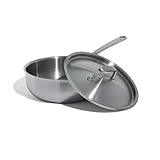
- Total Diameter: 10” | Cooking Surface Diameter: 7 | Height (with handle): 4.5” | Depth: 3.5” | Length (to end of handle): 18.25”
- Essential for Every Kitchen - The Made In Stainless Clad Sauce Pan is a must-have kitchen tool, offering maximum heat control, responsiveness, and versatility to elevate your cooking experience
- Superior Quality - Made from 5 layers of premium metal for professional-quality heat distribution
- Stay Cool Handle - Meticulously crafted to stay cool while cooking and fastened with stainless steel rivets for a lifetime of use
- Induction Cooktop Compatible - With a top layer of 430 stainless steel, these Stainless Clad Pots and Pans work effortlessly with any cooktop, including induction
4. Cook over medium heat, stirring until sugar dissolves.
- What to do: Stir gently until all the sugar crystals are gone.
- What “good” looks like: A clear liquid. No grainy bits at the bottom.
- A common mistake and how to avoid it: Stirring too vigorously or too long. You want the sugar dissolved, then stop stirring and let it heat.
5. Insert candy thermometer and cook to 300°F (150°C).
- What to do: Clip your thermometer to the side of the pot, making sure the tip is submerged but not touching the bottom. Let the mixture boil.
- What “good” looks like: The thermometer steadily climbing. The liquid will start to darken. This stage is called the “hard crack” stage.
- A common mistake and how to avoid it: Not using a candy thermometer. Guessing the temperature is a recipe for disaster. Get the tool.
A reliable candy thermometer is crucial for achieving the perfect consistency; it helps you hit the exact temperature needed for chewy candies.
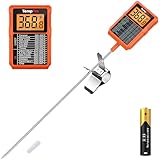
- 【Backlit 90° Rotating Display】The large 90-degree rotating screen enables effortless angle adjustment for optimal visibility, while the backlight ensures precise food temperature readings even in dimly lit environment
- 【More Accurate Reading】Food thermometer delivers precise temperature readings in 1 second with an accuracy of ±0.9 ℉, making it much faster and more reliable than traditional analog thermometers
- 【Easier to Clean】With IPX5 rated waterproof design, this kitchen thermometer probe cleans up in seconds, just rinse it under running water with no worries
- 【Durable to Use】Candy thermometer digital includes 1 AAA battery, made of sturdy plastic and food-grade stainless steel, features large capacity that enables long-lasting usage without requiring frequent battery replacement
- 【Temperature Chart】Featuring a printed temperature reference chart, this cooking thermometer covers a wide range from -58°F to 572°F, making it ideal for candy making, frying oil, meat, baking and liquids
6. Remove from heat and carefully stir in butter, cream, salt, and vanilla.
- What to do: Be extremely careful. The mixture is very hot. Add these ingredients quickly and stir until smooth. It will bubble up.
- What “good” looks like: A smooth, glossy mixture. All the additions are fully incorporated.
- A common mistake and how to avoid it: Adding ingredients too slowly or not stirring enough. This can cause uneven texture or separation.
7. Pour mixture onto a prepared baking sheet.
- What to do: Pour the hot candy onto a baking sheet lined with parchment paper or a silicone mat. Spread it thinly and evenly.
- What “good” looks like: A thin, even layer of liquid candy.
- A common mistake and how to avoid it: Pouring too thick. This will make the candy hard to cut and chew. Aim for about 1/4 inch thick.
8. Let cool until firm but still pliable.
- What to do: Let it sit at room temperature. This can take 15-30 minutes, depending on thickness and room temp. You want it firm enough to handle but still soft enough to cut.
- What “good” looks like: The candy is set but gives slightly when pressed.
- A common mistake and how to avoid it: Letting it cool completely. It will become too brittle and shatter when you try to cut it.
9. Score or cut into desired shapes.
- What to do: Use a sharp knife or pizza cutter to cut the candy into small squares or rectangles.
- What “good” looks like: Cleanly cut pieces, not jagged shards.
- A common mistake and how to avoid it: Waiting too long. If it hardens too much, you’ll have a tough time cutting.
10. Let cool completely and wrap.
- What to do: Allow the cut pieces to harden completely. Then, wrap each piece individually in wax paper or cellophane to prevent sticking.
- What “good” looks like: Individual, non-sticky candy pieces.
- A common mistake and how to avoid it: Not wrapping them. They’ll stick together in a big, unmanageable clump.
Common mistakes (and what happens if you ignore them)
| Mistake | What it causes | Fix |
|---|---|---|
| Using regular strength coffee | Weak, barely noticeable coffee flavor in the final candy. | Brew coffee at double strength using more grounds. |
| Not using a candy thermometer | Inconsistent results, candy too soft (taffy) or too hard (brittle glass). | Invest in a reliable candy thermometer and clip it properly. |
| Stirring after sugar dissolves | Crystallization, resulting in a grainy texture. | Once sugar is dissolved, stop stirring and let the temperature rise. |
| Not using a heavy-bottomed saucepan | Scorching the sugar mixture, leading to burnt flavors and black flecks. | Use a thick-bottomed pot to distribute heat evenly. |
| Adding butter/cream too quickly | The mixture can erupt and bubble over the sides, creating a mess and a burn hazard. | Remove from heat first, then add ingredients slowly and stir constantly. Be prepared for bubbling. |
| Pouring the candy too thick | Candy is difficult to cut and chew; may remain too soft in the center. | Spread the candy thinly (about 1/4 inch) on the prepared baking sheet. |
| Letting the candy cool too long before cutting | The candy hardens too much, making it impossible to cut cleanly. | Score or cut while the candy is still warm and pliable, but firm enough to hold its shape. |
| Not wrapping individual candies | Candies stick together into one solid mass, making them unappealing and difficult to serve. | Wrap each piece of cooled candy in wax paper or cellophane. |
| Not using filtered water for coffee | Off-flavors in your coffee can translate to the candy. | Use good quality, filtered water for brewing your coffee concentrate. |
| Over-boiling the sugar mixture | Can lead to a bitter taste and a darker, less appealing color. | Watch the thermometer carefully and remove from heat as soon as it reaches 300°F (150°C). |
Decision rules (simple if/then)
- If your coffee flavor is weak, then increase the coffee-to-water ratio for your brew because a concentrated flavor is essential for good candy.
- If your candy is grainy, then you likely stirred too much after the sugar dissolved or didn’t use enough corn syrup because stirring can cause crystallization.
- If your candy is too soft and chewy (like taffy), then it didn’t reach a high enough temperature because the “hard crack” stage is critical for chewy candy texture.
- If your candy is brittle and breaks easily, then it overheated or was cooked too long because you’ve gone past the hard crack stage.
- If the candy tastes burnt, then the sugar mixture scorched because the heat was too high or the pot wasn’t heavy enough.
- If the candy mixture bubbles over the pot, then you added the butter and cream too quickly because the sudden temperature change causes a rapid expansion.
- If the candy is difficult to cut, then it cooled too much before you started because you need to cut it while it’s still pliable.
- If the candy is sticky and clumps together, then you didn’t wrap it individually because the sugar attracts moisture and causes sticking.
- If your candy has an off-flavor, then check your coffee quality or the cleanliness of your equipment because impurities can affect the taste.
- If the candy is uneven in texture, then the ingredients weren’t mixed thoroughly enough after removing from heat because thorough mixing ensures consistency.
If your candy is grainy, you likely stirred too much after the sugar dissolved or didn’t use enough corn syrup, which helps prevent crystallization.

- Berry Boogie Blend: Made with real strawberry puree, raspberry puree, blackberry puree, & cranberry concentrate, this flavored syrup makes every bite a party! Add to pancakes, waffles, crepes, or french toast.
- Versatile & Vibrant: Use in drinks to jazz up lemonades, teas, cocktails, or as syrup for pancakes and waffles. Finally a mixed berries flavored pancake syrup & drink syrup with bold fruity sweetness!
- Real Fruit, No Corn Syrup: Crafted with premium fruit puree and no high fructose corn syrup, this gourmet syrup delivers the natural sweetness of your favorite berries in every rich, delicious drop.
- From Breakfast to Beverages: Whether you're topping pancakes, waffles, or french toast, or stirring into drinks, this is your go-to fruit syrup for flavored syrups for lemonade and other tasty sips.
- Groovy in a Glass: Packaged in bright syrup bottles, this breakfast syrup is the perfect syrup for pancakes and waffles, and one of the tastiest flavored syrups for lemonade or your next fruity drink.
FAQ
Q: Can I use instant coffee?
A: You can, but it’s not ideal. Instant coffee can sometimes have a slightly different, less nuanced flavor profile than brewed coffee. If you do use it, make sure to dissolve a generous amount in a small amount of hot water to get a concentrated liquid.
Q: My candy is too hard. What did I do wrong?
A: You likely cooked the sugar mixture too high. The target temperature for chewy coffee candy is around 300°F (150°C), the hard crack stage. If you go significantly over that, it will become brittle.
Q: My candy is too soft and sticky. How do I fix it?
A: This usually means the sugar mixture didn’t reach a high enough temperature. You’ll need to cook it longer, but be careful not to burn it. Ensure your thermometer is accurate.
Q: How long will these candies last?
A: Properly wrapped, these chewy coffee candies should last for several weeks at room temperature. Keep them in an airtight container to maintain freshness.
Q: Can I add other flavors?
A: Absolutely! A touch of peppermint extract, a pinch of cinnamon, or even a hint of cayenne pepper can complement the coffee flavor nicely. Add them with the vanilla.
Q: Why does the mixture bubble up so much when I add the cream and butter?
A: This is a chemical reaction. The hot sugar syrup causes the moisture in the cream and butter to rapidly turn to steam, creating that dramatic bubbling. It’s why you remove it from the heat first.
Q: Can I make this dairy-free?
A: You could try substituting a dairy-free butter alternative and a rich, full-fat coconut milk or a non-dairy creamer. Results might vary, so test a small batch first.
Q: Is it safe to cook sugar this hot?
A: It’s safe if you’re careful. Molten sugar is extremely hot and can cause severe burns. Always use caution, keep kids and pets away, and have a bowl of ice water nearby in case of minor burns.
What this page does NOT cover (and where to go next)
- Detailed explanations of sugar crystallization science. (Look into candy-making textbooks for the deep dive.)
- Advanced flavor infusion techniques beyond simple extracts. (Explore culinary science resources.)
- Specific troubleshooting for every single type of candy thermometer. (Consult your thermometer’s manual.)
- Industrial-scale candy production methods. (This is strictly for home kitchens.)