
Homemade Coffee Candy Recipe
Quick answer
- Coffee candy is a sweet treat that uses coffee as a primary flavor.
- It typically involves sugar, corn syrup, butter, and strong coffee.
- Be patient; candy making requires precise temperature control.
- Use a candy thermometer for accurate results.
- Have all ingredients pre-measured before you start.
- Cool the candy completely before cutting.
Who this is for
- Anyone with a sweet tooth who loves coffee flavor.
- Bakers looking for a new, fun recipe to try.
- Those who want to impress friends with homemade goodies.
What to check first
Brewer type and filter type
For this recipe, the type of coffee brewer matters less than the strength of the coffee itself. You want a concentrated coffee flavor. A strong drip brew, espresso, or even a French press can work. If using a filter, make sure it’s clean and won’t impart any papery taste to your coffee.
Water quality and temperature
Use good-tasting water. If your tap water is funky, it’ll affect your candy. For the coffee itself, brew it hot, as you normally would. The final candy will be cooked to high temperatures, so the initial water temperature for brewing the coffee isn’t the main concern, but rather the flavor concentration.
Grind size and coffee freshness
Freshly ground coffee beans will give you the best flavor. A medium grind is usually good for most brewing methods that will yield a strong cup. Stale coffee will result in dull candy.
Coffee-to-water ratio
This is key for strong flavor. You want a concentrated coffee liquid. Think about brewing it stronger than you normally would for drinking. For example, using more coffee grounds than usual for the amount of water.
Cleanliness/descale status
Make sure your pots and utensils are sparkling clean. Any residue from previous cooking can affect the flavor and clarity of your candy. If you use a coffee maker, ensure it’s descaled and clean too, though you’ll likely be using brewed coffee directly.
Step-by-step (brew workflow)
1. Brew strong coffee.
- What to do: Brew about 1/2 cup of coffee, using more grounds than usual for a concentrated flavor. Let it cool slightly.
- What “good” looks like: A small amount of intensely flavored, dark coffee liquid.
- A common mistake and how to avoid it: Brewing weak coffee. Use a higher coffee-to-water ratio, or brew it double-strength.
2. Prepare your pan and parchment.
- What to do: Line an 8×8 inch baking pan with parchment paper, leaving some overhang on the sides. Lightly grease the parchment.
- What “good” looks like: A clean, non-stick surface ready for hot candy.
- A common mistake and how to avoid it: Not greasing the parchment enough. The candy will stick like glue.
3. Combine sugar, corn syrup, and butter.
- What to do: In a heavy-bottomed saucepan, combine 2 cups granulated sugar, 2/3 cup light corn syrup, and 1/2 cup unsalted butter.
- What “good” looks like: Ingredients are measured and in the pan, ready to heat.
- A common mistake and how to avoid it: Not using a heavy-bottomed pan. It can lead to scorching.
For best results, consider using a high-quality heavy-bottomed saucepan to prevent scorching and ensure even heat distribution.
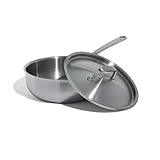
- Total Diameter: 10” | Cooking Surface Diameter: 7 | Height (with handle): 4.5” | Depth: 3.5” | Length (to end of handle): 18.25”
- Essential for Every Kitchen - The Made In Stainless Clad Sauce Pan is a must-have kitchen tool, offering maximum heat control, responsiveness, and versatility to elevate your cooking experience
- Superior Quality - Made from 5 layers of premium metal for professional-quality heat distribution
- Stay Cool Handle - Meticulously crafted to stay cool while cooking and fastened with stainless steel rivets for a lifetime of use
- Induction Cooktop Compatible - With a top layer of 430 stainless steel, these Stainless Clad Pots and Pans work effortlessly with any cooktop, including induction
4. Cook to medium-hard ball stage.
- What to do: Heat the mixture over medium heat, stirring until the sugar dissolves. Stop stirring once it boils. Clip a candy thermometer to the side of the pan, ensuring it doesn’t touch the bottom. Cook until the thermometer reads 250°F (121°C).
- What “good” looks like: The mixture is bubbling steadily, and the thermometer is climbing.
- A common mistake and how to avoid it: Stirring after it boils. This can cause crystallization.
A reliable candy thermometer is essential for precise temperature control, ensuring your candy reaches the perfect consistency.
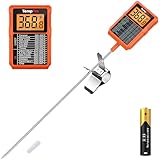
- 【Backlit 90° Rotating Display】The large 90-degree rotating screen enables effortless angle adjustment for optimal visibility, while the backlight ensures precise food temperature readings even in dimly lit environment
- 【More Accurate Reading】Food thermometer delivers precise temperature readings in 1 second with an accuracy of ±0.9 ℉, making it much faster and more reliable than traditional analog thermometers
- 【Easier to Clean】With IPX5 rated waterproof design, this kitchen thermometer probe cleans up in seconds, just rinse it under running water with no worries
- 【Durable to Use】Candy thermometer digital includes 1 AAA battery, made of sturdy plastic and food-grade stainless steel, features large capacity that enables long-lasting usage without requiring frequent battery replacement
- 【Temperature Chart】Featuring a printed temperature reference chart, this cooking thermometer covers a wide range from -58°F to 572°F, making it ideal for candy making, frying oil, meat, baking and liquids
5. Add cream and coffee.
- What to do: Carefully stir in 1/2 cup heavy cream and your cooled strong coffee. Be cautious, as it will bubble up.
- What “good” looks like: All ingredients are incorporated smoothly.
- A common mistake and how to avoid it: Adding cold cream or coffee too quickly. This can shock the mixture and cause crystallization.
6. Cook to hard crack stage.
- What to do: Continue cooking, stirring occasionally, until the thermometer reaches 300°F (149°C). This is the hard crack stage.
- What “good” looks like: The candy is a rich amber color and thick.
- A common mistake and how to avoid it: Overcooking. This will make the candy bitter and hard as a rock. Undercooking results in chewy, sticky candy.
7. Add flavorings (optional).
- What to do: Remove from heat. Stir in 1 teaspoon vanilla extract and a pinch of salt, if desired.
- What “good” looks like: Flavorings are evenly distributed.
- A common mistake and how to avoid it: Adding flavorings while the candy is still on high heat. Some flavorings can evaporate or burn.
8. Pour into the prepared pan.
- What to do: Carefully pour the hot candy mixture into the prepared pan. Do not scrape the bottom of the pan.
- What “good” looks like: A smooth, even layer of liquid candy.
- A common mistake and how to avoid it: Scraping the pan. This can introduce burnt bits or unwanted sugar crystals.
9. Cool completely.
- What to do: Let the candy cool at room temperature for at least 2-3 hours, or until completely firm.
- What “good” looks like: The candy is solid and no longer warm to the touch.
- A common mistake and how to avoid it: Trying to cut it while it’s still warm. It will be messy and won’t hold its shape.
10. Cut and enjoy.
- What to do: Once cooled, lift the candy out of the pan using the parchment paper. Place on a cutting board and use a sharp knife or pizza cutter to score it into bite-sized pieces.
- What “good” looks like: Cleanly cut pieces of coffee candy.
- A common mistake and how to avoid it: Using a dull knife. This will shatter the candy instead of cutting it cleanly.
Common mistakes (and what happens if you ignore them)
| Mistake | What it causes | Fix |
|---|---|---|
| Using weak coffee | Flavorless or weak-tasting candy | Brew coffee double-strength; use more grounds than water. |
| Stirring after boiling | Sugar crystallization, grainy candy | Stop stirring once the mixture boils; use a clean, wet pastry brush to wash down sides if needed. |
| Not using a heavy-bottomed saucepan | Scorching, burnt flavor | Use a thick-bottomed pot to distribute heat evenly. |
| Adding cold ingredients too quickly | Crystallization, temperature shock | Add cream and coffee gradually, stirring gently; ensure they are not ice-cold. |
| Overcooking the candy | Bitter, rock-hard candy | Monitor the thermometer closely; remove from heat immediately when 300°F is reached. |
| Undercooking the candy | Chewy, sticky, won’t harden | Cook to the hard crack stage (300°F); if it’s too soft, you can sometimes re-melt and cook longer. |
| Not greasing parchment paper sufficiently | Candy sticking, impossible to remove from pan | Use a good amount of butter or non-stick spray on the parchment. |
| Cutting warm candy | Messy, deformed pieces | Let candy cool completely until firm before cutting. |
| Using a dull knife | Shattered, uneven candy pieces | Use a sharp knife or pizza cutter for clean cuts. |
| Not cleaning equipment thoroughly | Off-flavors, poor texture | Ensure all pots, spoons, and pans are spotless before starting. |
Decision rules (simple if/then)
- If the sugar is not fully dissolved before boiling, then the candy might crystallize because undissolved sugar can act as a seed for crystal growth.
- If you stir the candy after it starts boiling, then you risk crystallization because stirring can disrupt the sugar molecules and encourage them to form crystals.
- If the candy thermometer reads below 290°F when you think it’s done, then it’s likely undercooked and will be too soft or chewy because the hard crack stage is crucial for firm candy.
- If the candy has a burnt smell, then it’s overcooked and will taste bitter because high heat has caramelized the sugars too much.
- If the candy is still sticky after cooling for 4 hours, then it was likely undercooked, and you might need to re-melt and cook it a bit longer, though this is risky.
- If the candy breaks into powdery dust instead of snapping cleanly, then it was likely overcooked and brittle.
- If you notice small white flecks in your candy, then it’s a sign of crystallization, usually caused by stirring too much or adding ingredients too quickly.
- If the candy is cloudy rather than clear, then it could be due to crystallization or impurities in the sugar/water.
- If you want a smoother texture, then ensure your heavy cream is at room temperature, not cold.
- If you are worried about burning, then use a lower heat setting and stir more frequently once you add the cream and coffee.
FAQ
What kind of coffee should I use for coffee candy?
Use a strong, good-quality coffee. Espresso or a double-strength drip brew works well. The goal is intense coffee flavor, so don’t skimp on the coffee strength.
Can I use instant coffee?
Yes, you can use instant coffee granules dissolved in a small amount of hot water to make a concentrated coffee liquid. Just ensure it dissolves completely.
Why is my candy grainy?
Grainy candy is usually a sign of sugar crystallization. This happens if you stir the mixture after it starts boiling or if there are undissolved sugar crystals.
My candy is too hard. What did I do wrong?
You likely cooked it too long. The hard crack stage is precise. Next time, watch the thermometer very carefully and remove it from the heat as soon as it hits 300°F.
My candy is too soft and chewy. What went wrong?
This means it wasn’t cooked long enough. It didn’t reach the hard crack stage. You need to cook it to 300°F for firm candy.
Can I add milk instead of cream?
While you can technically use milk, heavy cream is recommended for the best texture and richness. Milk has more water content, which can affect the final consistency.
How should I store homemade coffee candy?
Store it in an airtight container at room temperature. If it’s humid, you might want to wrap individual pieces in wax paper to prevent them from sticking together.
Is it safe to make candy?
Yes, but you need to be careful. Hot sugar syrup is extremely hot and can cause severe burns. Always use caution, keep children and pets away from the cooking area, and have a bowl of ice water nearby in case of minor burns.
What this page does NOT cover (and where to go next)
- Advanced candy-making techniques like tempering chocolate for coatings.
- Recipes for coffee-flavored caramels or fudges.
- Specific troubleshooting for candy thermometer inaccuracies.
- Tips for scaling this recipe up for larger batches.
- Decorating techniques for coffee candy.