
Best Coffee Makers With Thermal Carafes
Quick Answer
- A coffee maker with a thermal carafe keeps coffee hot without a warming plate, preventing burnt flavors.
- Look for models with good insulation, a comfortable pour spout, and a durable carafe.
- Consider brew capacity, programmability, and ease of cleaning when choosing.
- Features like pre-infusion and showerhead design can improve extraction.
- The “best” depends on your brewing habits and preferences for coffee taste and convenience.
- Many top-rated models offer consistent results and user-friendly operation.
Key Terms and Definitions
- Thermal Carafe: A double-walled, vacuum-insulated container designed to keep liquids hot or cold for extended periods without an external heat source.
- Warming Plate: A heated surface found on many coffee makers that keeps the brewed coffee in a glass carafe warm. This can lead to burnt or bitter flavors over time.
- Brewing Cycle: The complete process a coffee maker goes through to brew a pot of coffee, from heating water to dripping it over grounds.
- Pre-infusion: A brewing technique where a small amount of hot water is briefly applied to the coffee grounds before the main brew cycle begins, allowing them to “bloom” and release CO2.
- Showerhead: The part of the coffee maker that disperses hot water over the coffee grounds. A well-designed showerhead ensures even saturation.
- Bloom: The initial release of CO2 gas from fresh coffee grounds when hot water is first introduced, which is crucial for optimal flavor extraction.
- Grind Size: The coarseness or fineness of coffee beans after grinding. This significantly impacts how quickly water extracts flavor.
- Coffee-to-Water Ratio: The proportion of coffee grounds to water used in brewing, often expressed as grams of coffee per milliliters of water or as tablespoons per cup.
- Specialty Coffee Association (SCA): An organization that sets standards for coffee brewing equipment and methods to ensure optimal flavor extraction.
- Carafe Seal: The mechanism or lid that closes the thermal carafe to maintain temperature and prevent spills.
How It Works: Coffee Makers with Thermal Carafes
- Hot water is heated to an optimal brewing temperature, typically between 195°F and 205°F.
- This hot water is then dispersed over coffee grounds held in a filter basket.
- A well-designed showerhead ensures the water saturates the grounds evenly, promoting uniform extraction.
- As water passes through the grounds, it dissolves soluble flavor compounds, creating the coffee.
- The brewed coffee then drips down into the thermal carafe.
- The carafe’s double-walled, vacuum-sealed construction traps heat, keeping the coffee hot for hours.
- Unlike glass carafes on warming plates, thermal carafes do not apply direct heat, preventing the coffee from cooking.
- This preservation of temperature without added heat maintains the coffee’s fresh flavor profile for longer.
- Some advanced models may include pre-infusion cycles to enhance flavor extraction before the main brew.
- The brewing process itself is similar to other drip coffee makers, with the key difference being the carafe’s insulation.
For a consistently hot and flavorful brew, consider an insulated coffee maker like the insulated coffee maker. Its thermal carafe keeps coffee hot for hours without a warming plate.
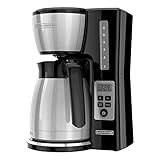
- 4-LAYER VACUUM SEALED THERMAL CARAFE: Double-walled 4-layer carafe keeps coffee hot for up to two hours—no warming plate needed. Preheat with hot water before brewing for best results.
- PROGRAMMABLE BREWING WITH AUTO-SHUTOFF: Program the 24-hour auto brew to enjoy fresh coffee anytime. After brewing, heating stops automatically for safety. The display stays lit to show time and freshness.
- VORTEX TECHNOLOGY: Exclusive showerhead design evenly saturates coffee grounds for optimal extraction, delivering full-bodied, rich flavor in every cup.
- BREW STRENGTH SELECTOR: Customize your coffee by pressing the STRONG button for a slower, richer brew, or leave it off for a classic, smooth taste.
- NO-DRIP PERFECT POUR SPOUT: Designed for smooth, mess-free serving. The Perfect
What Affects the Result in Your Thermal Coffee Maker
- Water Quality: Using filtered or bottled water can significantly improve taste by removing impurities that might otherwise affect the coffee’s flavor. Tap water with strong mineral content or chlorine can be detrimental.
- Coffee Bean Freshness: Whole beans roasted recently (within a few weeks) will produce a more vibrant and flavorful cup than older or pre-ground coffee.
- Grind Size: The grind should be appropriate for your coffee maker’s filter type and brewing speed. Too fine a grind can lead to over-extraction and bitterness, while too coarse can result in under-extraction and weak coffee. A medium grind is common for automatic drip.
- Coffee-to-Water Ratio: The balance between coffee grounds and water is critical. A common starting point is about 1 to 2 tablespoons of coffee for every 6 ounces of water, but this can be adjusted to personal preference.
- Water Temperature: While most machines aim for the ideal range of 195°F to 205°F, variations can impact extraction. Too cool, and you get sourness; too hot, and you can scald the grounds.
- Brewing Time: The duration water is in contact with the coffee grounds influences extraction. This is affected by the grind size and the coffee maker’s flow rate.
- Carafe Design and Seal: A well-insulated thermal carafe maintains temperature effectively. A good seal prevents heat loss and keeps the coffee from oxidizing too quickly.
- Filter Type: Paper filters can absorb some oils, leading to a cleaner cup, while metal or cloth filters allow more oils through, potentially yielding a richer body.
- Cleanliness of the Machine: Residual coffee oils and mineral buildup can impart off-flavors. Regular cleaning is essential for optimal taste.
- Showerhead Design: An even water distribution over the grounds ensures all coffee particles are extracted uniformly, preventing both under- and over-extraction in different parts of the basket.
- Pre-infusion (if available): This step allows grounds to degas, leading to a more even saturation and potentially a more complex flavor profile.
Pros, Cons, and When It Matters for Thermal Coffee Makers
- Pro: Preserves Flavor: Thermal carafes keep coffee hot without a warming plate, preventing the burnt, bitter taste that develops on heated glass carafes. This is crucial for enjoying coffee as it was brewed.
- Con: Carafe Durability: While not heated, thermal carafes can still be damaged if dropped, and some internal insulation can fail over time.
- Pro: Consistent Temperature: They maintain a steady, hot temperature for hours, ideal for those who sip their coffee throughout the morning or need a second cup later.
- Con: No Visual Indicator: You can’t see how much coffee is left inside the carafe, unlike with a glass carafe. This requires remembering or checking the pot’s weight.
- Pro: Energy Efficiency: No external warming plate means less continuous energy consumption once brewing is complete.
- Con: Potential for Sediment: Depending on the carafe’s design, very fine grounds might pass through the filter and settle at the bottom, though this is usually minimal.
- Pro: Ideal for Entertaining: Keeps a full pot of coffee hot and ready for guests over an extended period without degradation of taste.
- Con: Can be Bulkier: The insulation in thermal carafes can sometimes make the overall unit slightly larger than models with simple glass carafes.
- Pro: Simplicity of Use: Most thermal carafe models operate with straightforward brewing controls, making them user-friendly.
- Con: Cleaning Can Be Tricky: The narrow openings of some thermal carafes can make thorough cleaning more challenging than with wider-mouthed glass carafes.
- Pro: Better for Cold Brew or Iced Coffee: While designed for hot coffee, a well-sealed thermal carafe can also keep cold beverages chilled for a while.
- When It Matters: If you value the taste of your coffee and dislike the “stewed” flavor from warming plates, or if you frequently brew more coffee than you drink immediately, a thermal carafe is a significant upgrade. It’s also beneficial for busy households where coffee might sit for a while before being consumed.
Common Misconceptions About Thermal Coffee Makers
- Misconception: Thermal carafes make coffee taste bland. In reality, they preserve the fresh-brewed taste by avoiding the heat damage from warming plates, often making coffee taste better for longer.
- Misconception: All thermal carafes keep coffee hot for the same amount of time. Insulation quality varies significantly between models and brands, affecting how long the coffee stays at an optimal drinking temperature.
- Misconception: Thermal carafes are impossible to clean. While some have narrower openings, most can be effectively cleaned with a bottle brush and appropriate cleaning solutions.
- Misconception: Coffee in a thermal carafe will eventually get cold. While they don’t keep coffee piping hot indefinitely, good thermal carafes can maintain a drinkable temperature for 1-2 hours, sometimes longer.
- Misconception: You need a special type of coffee for thermal carafes. Any coffee you enjoy can be brewed; the carafe simply preserves its intended flavor.
- Misconception: Thermal carafes are overly expensive. Many excellent coffee makers with thermal carafes are available at competitive price points, offering good value for the improved coffee quality.
- Misconception: You can’t tell how much coffee is left. While you can’t see it, you can often gauge the amount by weight or by listening for sloshing when you pour.
- Misconception: Thermal carafes are fragile and break easily. While not indestructible, they are generally quite robust for daily use. Dropping is the primary risk.
- Misconception: Warming plates are necessary to keep coffee hot. Thermal insulation is the modern, superior method for maintaining coffee temperature without negatively impacting flavor.
FAQ
Q: What is the primary advantage of a thermal carafe over a glass carafe with a warming plate?
A: The main benefit is flavor preservation. Thermal carafes keep coffee hot using insulation, preventing the burnt, stale taste that results from prolonged exposure to a warming plate.
Q: How long does coffee typically stay hot in a thermal carafe?
A: This varies by model and insulation quality, but most good thermal carafes will keep coffee at a drinkable temperature for at least 1 to 2 hours, and some can maintain heat for up to 4-6 hours.
Q: Can I reheat coffee in a thermal carafe?
A: No, you should not reheat coffee directly in a thermal carafe. They are designed to keep already brewed coffee hot, not to heat cold liquids. Reheating should be done in a separate pot or microwave.
Q: Are coffee makers with thermal carafes generally harder to clean?
A: Some thermal carafes have narrower openings, which can make cleaning a bit more challenging than with wide-mouthed glass carafes. Using a long-handled bottle brush and descaling solutions can help.
Q: Do I need to preheat a thermal carafe?
A: Preheating a thermal carafe with hot water before brewing can help maintain the coffee’s temperature for a slightly longer period, similar to preheating any insulated container.
Q: What kind of coffee grind is best for a thermal coffee maker?
A: For most automatic drip coffee makers, a medium grind is recommended. The exact grind size can affect extraction, so you may need to experiment slightly based on your coffee and brewer.
Q: Are there any drawbacks to using a thermal carafe?
A: Some users miss being able to see the coffee level. Also, the insulation can sometimes make the overall coffee maker unit slightly bulkier.
What This Page Does Not Cover (and Where to Go Next)
- Specific brand performance reviews and comparisons. For detailed insights into individual models, look for reviews from reputable consumer testing publications or coffee enthusiast sites.
- In-depth analysis of SCA certification criteria. To understand the technical standards for brewing, explore resources from the Specialty Coffee Association.
- Detailed troubleshooting for specific machine malfunctions. For technical issues, consult your coffee maker’s user manual or contact the manufacturer’s support.
- Advanced brewing techniques like pour-over or French press. If you’re interested in manual brewing methods, seek out guides dedicated to those specific techniques.
- The science behind coffee bean roasting profiles. For a deeper dive into how beans are roasted and how it affects flavor, explore resources on coffee science and roasting.