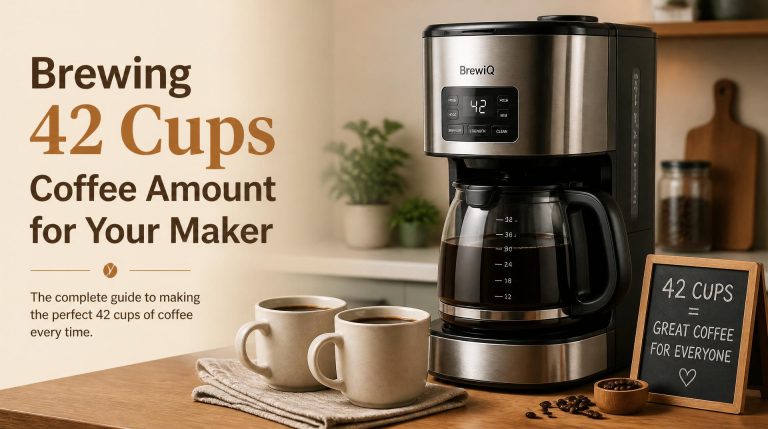
The Role of the Coffee Maker Carafe
Quick answer
- The carafe is the vessel that holds your brewed coffee.
- It’s usually made of glass or thermal material.
- Its main job is to keep coffee hot and ready to pour.
- The design impacts heat retention and ease of use.
- Some carafes are better at preserving flavor over time.
- It’s a pretty simple part, but important for your morning brew.
Key terms and definitions
- Carafe: The container that collects and holds brewed coffee.
- Thermal Carafe: A carafe with double-walled insulation to keep coffee hot.
- Glass Carafe: A carafe made of glass, often with a heating plate underneath.
- Brew Basket: Where coffee grounds are placed for brewing.
- Heating Element: The part of a coffee maker that heats water.
- Drip Coffee Maker: A common machine where hot water drips through grounds into a carafe.
- Insulation: Material used to reduce heat transfer, keeping coffee hot.
- BPA-Free: A designation indicating a product does not contain Bisphenol A, a chemical often found in plastics.
- Flavor Preservation: The ability of a carafe to maintain the taste of coffee over time.
- Durability: How well a carafe holds up to regular use and potential accidents.
How it works
- Hot water is brewed and drips into the carafe.
- The carafe’s primary function is collection.
- It acts as a reservoir for your coffee.
- Glass carafes often sit on a warming plate.
- This plate keeps the coffee at a certain temperature.
- Thermal carafes use insulation to retain heat.
- No external heat source is usually needed for thermal ones.
- The lid often helps with pouring and heat retention.
- It’s all about keeping that coffee warm and accessible.
- Simple mechanics, really.
What affects the result
- Carafe Material: Glass can impart a clean taste but loses heat faster. Thermal carafes excel at heat retention.
- Carafe Design: A well-sealed lid on a thermal carafe means less heat escapes. Some glass carafes have wider mouths, which can also lead to faster cooling.
- Warming Plate Temperature: For glass carafes, the setting of the warming plate matters. Too hot, and it can scorch the coffee. Too cool, and it’s lukewarm.
- Brewing Time: How long the coffee sits in the carafe. Longer sits mean more potential for flavor degradation.
- Cleaning Habits: A clean carafe means better flavor. Old coffee residue can really mess things up.
- Coffee Freshness: Even the best carafe can’t save stale coffee.
- Water Quality: Always important, no matter the carafe.
- Coffee Grind Size: Affects extraction, which impacts the final taste in the carafe.
- Coffee-to-Water Ratio: Determines the strength of the brew collected.
- Carafe Lid Seal: A good seal on a thermal carafe is key for keeping it hot.
- Preheating: For thermal carafes, preheating with hot water can help it maintain temperature longer.
- Ambient Temperature: Where you leave your coffee maker and carafe can influence how quickly the coffee cools.
Pros, cons, and when it matters
- Glass Carafe Pros: Often cheaper. Easy to see how much coffee is left. Doesn’t typically impart flavors.
- Glass Carafe Cons: Coffee can get burnt or stale on the warming plate. Fragile. Loses heat quickly without the plate.
- Glass Carafe When it Matters: If you drink coffee quickly and want to brew multiple pots throughout the morning. If budget is a primary concern.
- Thermal Carafe Pros: Keeps coffee hot for hours without scorching. Preserves flavor better over time. No warming plate needed, saving energy.
- Thermal Carafe Cons: Can be more expensive. Harder to see how much coffee is left. Some materials might impart subtle flavors if not cared for.
- Thermal Carafe When it Matters: If you like to savor your coffee over a longer period. If you brew a full pot and want it to stay good for a couple of hours. If you’re sensitive to burnt coffee taste.
- Durability: A sturdy carafe is a good thing, especially if you’re clumsy like me.
- Ease of Pouring: A well-designed spout means fewer spills. Nobody likes cleaning up coffee.
- Capacity: Make sure it holds enough for your needs.
- Cleaning Access: Can you get a brush or sponge in there easily?
- Material Safety: Look for BPA-free options if that’s a concern.
Common misconceptions
- All carafes keep coffee hot equally: Nope. Thermal carafes are built for this. Glass ones rely on a hot plate.
- Glass carafes don’t affect taste: Generally true, but a dirty glass carafe is a flavor killer.
- Warming plates are always good: They can scorch coffee if left on too long. It’s a delicate balance.
- Thermal carafes make coffee taste bad: Not if they’re clean and well-made. They actually preserve flavor better than a hot plate.
- You can’t clean a thermal carafe easily: Most are designed for easy cleaning, often with wide openings.
- Carafe material doesn’t matter for flavor: It can. Cheap plastics can leach flavors. Stainless steel can sometimes too, depending on the finish.
- You need a special carafe for specialty coffee: Not really. The brewing method and bean quality matter more.
- A full carafe stays hotter longer: Yes, due to more mass to retain heat.
- Any carafe will work with any coffee maker: Not always. They are usually designed for specific models.
- Carafe size is just about volume: It can also affect how quickly coffee cools.
FAQ
What is the main purpose of a coffee maker carafe?
Its main job is to hold the brewed coffee and keep it at a drinkable temperature until you’re ready to pour.
What’s the difference between a glass carafe and a thermal carafe?
A glass carafe usually sits on a warming plate to stay hot, while a thermal carafe uses insulated, double-walled construction to keep coffee hot for hours without a plate.
Can a carafe affect the taste of my coffee?
Yes, a dirty carafe can impart stale or bitter flavors. Some materials, especially lower-quality plastics, might also leach flavors over time.
How long does coffee stay hot in a thermal carafe?
Typically, a good thermal carafe can keep coffee hot for 2 to 4 hours, sometimes longer depending on the insulation and how full it is.
Is it okay to leave coffee on a warming plate all day?
It’s generally not recommended. Warming plates can scorch the coffee, making it taste bitter and burnt after a while.
How do I clean my coffee carafe?
For glass carafes, a good scrub with soap and water is usually fine. For both types, a specialized coffee maker cleaner or a vinegar solution can tackle stubborn stains. Always rinse thoroughly.
What does “BPA-free” mean for a carafe?
It means the carafe is made without Bisphenol A, a chemical that some people prefer to avoid in food and beverage containers.
Which type of carafe is better for preserving coffee flavor?
Thermal carafes are generally better at preserving flavor because they don’t use direct heat, which can cook and alter the coffee’s taste.
Can I put my carafe in the dishwasher?
Check your manual. Many glass carafes are dishwasher safe, but thermal carafes, especially those with vacuum seals, often require hand washing to protect the insulation.
What this page does NOT cover (and where to go next)
- Detailed comparisons of specific carafe brands and models. (Look for product reviews.)
- The intricate science of coffee bean roasting and its impact on brewed flavor. (Explore coffee roasting guides.)
- Advanced brewing techniques like pour-over or espresso. (Dive into specialty coffee brewing methods.)
- Troubleshooting specific coffee maker malfunctions. (Consult your coffee maker’s manual.)
- The history of coffee maker design. (Research coffee appliance history.)