
Why Cold Coffee Might Make You Feel Sleepy
Quick answer
- Cold coffee can make you feel sleepy because it contains less caffeine than hot coffee.
- The brewing method for cold coffee often extracts fewer solubles, including caffeine.
- Some people might experience a placebo effect or associate cold drinks with relaxation.
- The temperature itself might influence how quickly caffeine is absorbed.
- If you’re feeling sleepy after cold coffee, it’s likely a caffeine-related issue.
- Adjusting your cold brew ratio or method can boost caffeine levels.
Key terms and definitions
- Caffeine: A natural stimulant found in coffee beans that blocks adenosine, a neurotransmitter that makes you feel tired.
- Adenosine: A brain chemical that builds up throughout the day, promoting sleepiness.
- Extraction: The process of dissolving soluble compounds from coffee grounds into water.
- Solubles: Compounds in coffee grounds that dissolve into water, including caffeine, acids, and flavor compounds.
- Cold Brew: Coffee brewed with cold or room temperature water over a long period (12-24 hours).
- Hot Brew: Coffee brewed using hot water, typically in a matter of minutes.
- Tannins: Compounds in coffee that can contribute to bitterness and mouthfeel.
- Acidity: A flavor component in coffee, often perceived as brightness.
- Placebo Effect: A phenomenon where a person experiences a perceived benefit or effect from a treatment or substance simply because they expect to.
- Metabolism: The chemical processes in your body that convert food and drink into energy.
How it works
- Caffeine is the primary reason coffee wakes you up.
- It works by blocking adenosine receptors in your brain.
- This blockage prevents the “sleepy” signal from getting through.
- Cold brewing uses time instead of heat for extraction.
- This slower, cooler process can be less efficient at pulling out certain compounds.
- Caffeine is moderately soluble in cold water, but much more so in hot water.
- Therefore, cold brew often has a lower caffeine concentration per ounce than hot coffee.
- If your cold coffee has less caffeine, it might not provide the same wake-up kick.
- Your body’s response to caffeine can vary based on individual factors.
- The overall experience of drinking a cold beverage might also play a role.
What affects the result
- Brewing Temperature: Hotter water extracts caffeine more effectively than cold water. This is the main driver for cold coffee’s lower caffeine content.
- Brew Time: While cold brew uses long brew times, the lack of heat limits total extraction. Hot brew’s short time is still effective due to heat.
- Coffee-to-Water Ratio: A stronger ratio in cold brew can compensate for lower extraction efficiency. This is a key adjustment point.
- Grind Size: A finer grind increases surface area, which can aid extraction, but it’s still limited by temperature.
- Bean Type and Roast: Lighter roasts and certain bean varietals might have slightly different caffeine levels to begin with.
- Freshness of Beans: Stale beans lose volatile compounds, potentially affecting both flavor and caffeine extraction.
- Water Quality: Minerals in water can impact how well compounds dissolve. Good filtered water is always a solid choice.
- Serving Size: A larger serving of lower-caffeine cold brew might still deliver more caffeine than a small hot coffee.
- Personal Sensitivity: How your body processes caffeine is unique. Some folks are more or less sensitive.
- Other Ingredients: Adding milk, cream, or sugar doesn’t change the caffeine content, but it changes the overall drink.
- Expectations: If you expect a jolt, you might notice its absence more.
- Dilution: If you add a lot of ice or water to your cold brew, it further lowers the caffeine concentration.
Pros, cons, and when it matters
- Pro: Smoother Flavor: Cold brew is often less acidic and bitter, making it easier to drink for some. This is a big win for sensitive stomachs.
- Con: Lower Caffeine Potential: Unless you adjust your ratio, you might get less of a buzz. This is the core of the “sleepy” issue.
- Pro: Less Stomach Upset: Lower acidity means less heartburn for many.
- Con: Longer Prep Time: Cold brew takes hours to make, unlike a quick pour-over. Patience is key here.
- Pro: Great for Iced Coffee: It’s the perfect base for a refreshing cold drink.
- Con: Can Be Over-Extracted (Flavor-wise): If left too long, it can develop off-flavors, though caffeine extraction is still limited.
- Pro: Versatile: You can make a concentrate and dilute it to your liking.
- Con: May Require More Coffee Grounds: To achieve a comparable caffeine level to hot coffee, you might use more beans.
- Pro: Less Energy Needed: No heating element means less energy consumption compared to electric brewers.
- Con: Not Ideal for a Quick Fix: If you need coffee now, cold brew isn’t your go-to.
- Pro: Concentrated Form: Easy to store in the fridge and use throughout the week.
- Con: Can Mask Quality: The smooth profile might hide subtle nuances of high-quality beans.
While cold brew is perfect for a refreshing cold drink, consider serving it in stylish iced coffee glasses to enhance the experience.
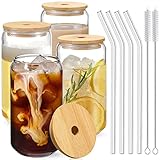
- PRODUCT CONFIGURATION: Drinking glass set includes 4 glass cups [ Diameter - 3 inches, Height - 5.6 inches ],4 nature bamboo lids, 4 reusable glass straws and 2 cleaning brushes, Classic design tumbler
- DURABLE and SAFE: The glasses are made of high-quality durable clear glass, Lead-free and BPA-free. It can be used safely for a long time. This thick clear glass can withstand the sudden changes in the temperature difference between -68°F to 212°F, making them dishwasher safe. If you want to decorate this glass, you can do DIY easily without breakage
- MULTI-PURPOSE: The glassware Great for any Occasion, any hot and cold drinks, home essentials. It is widely loved by families, kitchen, breweries, cafes, bars and restaurants. You can use it to make perfect tea, bubble Pearl Milk Tea, soda, water, iced coffee, smoothie, fruit juice or any other interesting holiday drinks
- AMAZING GIFT: This jar is very fashionable, aesthetic and characteristic. Excellent workmanship. Perfect Gifts for Women, House warming gifts, Tea mug Sets, Highball Glasses, Home Bar Accessories, Birthdays, Graduation, Weddings and Christmas Gifts
- SATISFIED SERVICE: This glass set is packaged in the heavy bubble holder and thick carton box to prevent damage while in transport. If the glass set you received was damaged or imperfect or you are not satisfied, we will offer a satisfactory solution
Common misconceptions
- Myth: Cold brew is always stronger. Nope. It’s often less caffeinated unless you make a stronger ratio.
- Myth: Cold brew is more caffeinated because it brews longer. Time helps, but heat is a much bigger factor for caffeine extraction.
- Myth: Cold water doesn’t extract caffeine at all. It does, just much less efficiently than hot water.
- Myth: All cold coffee is cold brew. Not true. You can just chill hot coffee, which retains its original caffeine level.
- Myth: Caffeine is the only thing that wakes you up in coffee. While it’s the main player, the aroma and ritual can also contribute.
- Myth: Cold brew has zero acidity. It has less, but not zero. Some compounds are still extracted.
- Myth: You can’t get a caffeine jolt from cold coffee. You absolutely can, if it’s made strong enough or if you’re referring to chilled hot coffee.
- Myth: Cold brew is inherently healthier. It’s mostly about the caffeine and acidity levels, not a massive health difference.
- Myth: The temperature of the coffee changes how caffeine affects you. It’s the amount of caffeine, not its temperature, that matters for the stimulant effect.
- Myth: Adding milk or sugar cancels out caffeine. These additions change the taste and texture, but not the caffeine content.
FAQ
Q: Does cold coffee make you sleepy because it has less caffeine?
A: Yes, this is the most common reason. Cold brewing methods generally extract less caffeine than hot brewing methods. If you’re used to the caffeine kick from hot coffee, cold coffee might feel less effective, leading to a perceived “sleepiness” or lack of alertness.
Q: Is all cold coffee made the same way?
A: No. There’s cold brew, which is brewed cold over many hours. Then there’s simply chilled hot coffee, which retains its original caffeine content. They are very different.
Q: How can I make my cold brew more caffeinated?
A: Use a higher coffee-to-water ratio. More grounds mean more potential caffeine to extract, even with cold water. You can also try a slightly finer grind, but be careful not to over-extract for flavor.
Q: Can the temperature of the drink itself make me feel sleepy?
A: For some people, a very cold drink can have a calming effect, similar to how a hot drink might be associated with relaxation. This is more of a psychological or physiological response to temperature rather than a direct caffeine effect.
Q: If I chill hot coffee, will it still wake me up?
A: Absolutely. Chilling hot coffee doesn’t remove the caffeine. It will have the same caffeine level as when it was hot, so it should provide the same wake-up effect.
Q: Are there specific coffee beans that are better for cold brew if I want caffeine?
A: While bean type and roast level affect caffeine, the brewing method is the primary factor for cold brew. Focus on your ratio and brew time rather than a specific bean for caffeine content in cold brew.
Q: What if I feel sleepy after drinking cold brew, even if it’s strong?
A: It’s possible you have a higher caffeine tolerance, or perhaps it’s unrelated to the coffee. Sometimes, we just feel tired, and the coffee doesn’t overcome it. Consider your sleep patterns and overall health.
Q: Does the type of cold brewer matter for caffeine?
A: Not significantly. Whether you use a French press, a dedicated cold brew maker, or a mason jar, the principles of cold extraction apply. The ratio and time are the main variables.
What this page does NOT cover (and where to go next)
- Specific brand recommendations for cold brew makers. (Check coffee gear reviews.)
- Detailed scientific studies on caffeine absorption rates. (Look for research papers on caffeine pharmacology.)
- Recipes for flavored cold coffee drinks. (Explore coffee blogs and recipe sites.)
- The history of coffee brewing methods. (Consult books or articles on coffee culture.)
- Advanced techniques for optimizing cold brew flavor profiles. (Dive into specialty coffee forums.)