
Tips for Making Great Iced Coffee
Quick answer
- Start with freshly roasted, quality coffee beans.
- Use a higher coffee-to-water ratio than for hot coffee to prevent dilution.
- Chill your brewed coffee quickly or use the cold brew method for best flavor.
- Use cold, filtered water for brewing.
- Serve over fresh, large ice cubes to minimize melting.
- Consider a concentrate method for easy, on-demand iced coffee.
- Experiment with different roasts and brewing methods to find your preference.
Who this is for
- Anyone who loves iced coffee but is tired of watery, bland results.
- Home brewers looking to elevate their cold coffee game.
- Coffee enthusiasts wanting to understand the science behind a perfect chilled cup.
What to check first
Brewer type and filter type
The type of brewer you use influences the final taste and body of your iced coffee. For pour-over or drip methods, paper filters are common and produce a clean cup. Metal or cloth filters allow more oils and fines through, leading to a fuller-bodied brew. Cold brew makers typically use fine mesh filters. Ensure your brewer is clean and the filter is appropriate for your chosen method.
Water quality and temperature
Water makes up over 98% of your coffee, so its quality is crucial. Use filtered water to avoid off-flavors from chlorine or minerals. For hot brewing methods, water temperature should ideally be between 195-205°F (90-96°C) for optimal extraction. For cold brew, use cold filtered water.
Grind size and coffee freshness
Coffee beans should be ground fresh right before brewing. For most hot brewing methods that will be chilled, a medium grind is a good starting point. For cold brew, a coarse grind is essential to prevent over-extraction and bitterness. Check the roast date on your coffee; beans are best used within a few weeks of roasting.
Coffee-to-water ratio
This is particularly important for iced coffee. A common starting point for hot coffee is a 1:15 or 1:16 coffee-to-water ratio (e.g., 1 gram of coffee to 15-16 grams of water). For iced coffee, you often need a stronger concentrate to account for dilution from ice. Ratios like 1:8 to 1:12 are common for brewing hot coffee to be chilled, or even 1:4 for cold brew concentrates.
Cleanliness/descale status
A clean brewer is vital for good-tasting coffee. Residue from old coffee oils can go rancid and impart bitter flavors. Descale your machine regularly, especially if you have hard water, to ensure proper heating and water flow. Rinse all components after each use.
To truly elevate your iced coffee experience, consider serving it in dedicated iced coffee glasses. These often have a larger capacity and a shape that keeps your drink colder for longer.
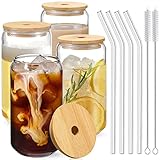
- PRODUCT CONFIGURATION: Drinking glass set includes 4 glass cups [ Diameter - 3 inches, Height - 5.6 inches ],4 nature bamboo lids, 4 reusable glass straws and 2 cleaning brushes, Classic design tumbler
- DURABLE and SAFE: The glasses are made of high-quality durable clear glass, Lead-free and BPA-free. It can be used safely for a long time. This thick clear glass can withstand the sudden changes in the temperature difference between -68°F to 212°F, making them dishwasher safe. If you want to decorate this glass, you can do DIY easily without breakage
- MULTI-PURPOSE: The glassware Great for any Occasion, any hot and cold drinks, home essentials. It is widely loved by families, kitchen, breweries, cafes, bars and restaurants. You can use it to make perfect tea, bubble Pearl Milk Tea, soda, water, iced coffee, smoothie, fruit juice or any other interesting holiday drinks
- AMAZING GIFT: This jar is very fashionable, aesthetic and characteristic. Excellent workmanship. Perfect Gifts for Women, House warming gifts, Tea mug Sets, Highball Glasses, Home Bar Accessories, Birthdays, Graduation, Weddings and Christmas Gifts
- SATISFIED SERVICE: This glass set is packaged in the heavy bubble holder and thick carton box to prevent damage while in transport. If the glass set you received was damaged or imperfect or you are not satisfied, we will offer a satisfactory solution
Step-by-step: How do you make a good iced coffee at home?
1. Choose your coffee beans.
- Good looks like: Freshly roasted beans (check the roast date), often medium to dark roast for a robust flavor that stands up to chilling and ice.
- Common mistake: Using stale beans. Avoid it by: Buying smaller quantities more frequently and storing beans in an airtight container away from light and heat.
2. Grind your coffee.
- Good looks like: A consistent grind size appropriate for your brewing method. Medium for hot drip/pour-over, coarse for cold brew.
- Common mistake: Grinding too fine for cold brew or too coarse for hot brew. Avoid it by: Using a burr grinder and adjusting the setting based on your method.
3. Measure your coffee and water.
- Good looks like: Using a kitchen scale for precise measurements. For hot brew to be chilled, aim for a stronger ratio like 1:10 or 1:12 (coffee to water). For cold brew, a 1:4 to 1:8 ratio for concentrate.
- Common mistake: Eyeballing measurements, leading to weak or overly strong coffee. Avoid it by: Investing in a digital scale.
4. Brew your coffee (hot method example).
- Good looks like: Even saturation of grounds, proper extraction time (e.g., 3-5 minutes for pour-over, 5-8 minutes for drip).
- Common mistake: Uneven extraction (some grounds under-extracted, some over-extracted). Avoid it by: Pre-wetting grounds (blooming) and pouring water slowly and evenly.
5. Chill your brewed coffee quickly.
- Good looks like: Cooling the coffee rapidly to preserve flavor. An ice bath for the brewing vessel or brewing directly over a smaller amount of ice are good options.
- Common mistake: Letting coffee cool slowly at room temperature. Avoid it by: Using an ice bath immediately after brewing or brewing directly onto a portion of the ice.
6. Prepare your serving glass.
- Good looks like: A tall glass filled with fresh, large ice cubes.
- Common mistake: Using small, quickly melting ice cubes. Avoid it by: Making or buying large ice cubes.
7. Pour your chilled coffee.
- Good looks like: Pouring the cold coffee over the ice.
- Common mistake: Pouring hot coffee directly over ice, leading to excessive dilution and a weaker taste. Avoid it by: Ensuring your coffee is already cold or at least room temperature.
8. Add milk, sweetener, or flavorings (optional).
- Good looks like: Adding additions to taste.
- Common mistake: Adding too much sweetener or milk, masking the coffee’s flavor. Avoid it by: Adding in small increments and tasting as you go.
Common mistakes when you make a good iced coffee (and what happens if you ignore them)
| Mistake | What it causes | Fix |
|---|---|---|
| Using stale coffee beans | Flat, dull, or cardboard-like flavor. | Buy freshly roasted beans, store properly, use within a few weeks of roast date. |
| Grinding coffee too early | Loss of aromatic compounds, leading to weaker flavor. | Grind beans immediately before brewing. |
| Brewing too weak a concentrate | Watery, bland iced coffee once ice melts. | Use a higher coffee-to-water ratio (e.g., 1:10-1:12 for hot brew, 1:4-1:8 for cold brew concentrate). |
| Letting hot coffee cool slowly | Oxidation, resulting in sour or bitter notes. | Chill brewed coffee rapidly using an ice bath or brew directly over ice. |
| Using small, fast-melting ice cubes | Rapid dilution, leading to a watery drink. | Use large ice cubes or specialty ice molds for slower melting. |
| Using unfiltered tap water | Off-flavors from chlorine or minerals affecting taste. | Always use filtered water for brewing. |
| Not cleaning your brewer regularly | Rancid coffee oils imparting bitterness and off-flavors. | Clean your brewer components after each use and descale regularly. |
| Incorrect grind size for cold brew | Over-extraction (too fine) or under-extraction (too coarse). | Use a coarse, consistent grind for cold brew. |
| Not blooming coffee grounds (hot brew) | Uneven extraction, leading to sour or bitter notes. | Allow grounds to “bloom” for 30-45 seconds with a small amount of hot water before full pour. |
Decision rules for how do you make a good iced coffee
- If your iced coffee tastes watery, then increase your coffee-to-water ratio (use more coffee) because the ice is diluting it too much.
- If your iced coffee tastes sour or weak, then ensure your water temperature is correct (195-205°F for hot brew) or check your grind size because under-extraction might be occurring.
- If your iced coffee tastes bitter, then check your grind size (it might be too fine) or reduce your brewing time because over-extraction is likely.
- If you’re using hot brew method, then chill your coffee rapidly because slow cooling can lead to oxidation and off-flavors.
- If you want a smoother, less acidic iced coffee, then try the cold brew method because it extracts fewer acids and bitter compounds.
- If your ice melts too quickly, then use larger ice cubes or pre-chill your serving glass because larger ice melts slower, preserving flavor.
- If you want consistent flavor, then measure your coffee and water by weight because volume measurements can be inaccurate.
- If your coffee has a “muddy” taste, then check your filter type (paper filters offer a cleaner cup) or your grind consistency because fine particles can pass through.
- If you’re preparing iced coffee in advance, then make a concentrate because it takes up less space and can be diluted just before serving.
- If you notice residue in your cup, then ensure your grinder is clean and your filter is properly seated because stray grinds or old coffee oils can contaminate the brew.
FAQ
Q: Can I use regular hot coffee and just pour it over ice?
A: You can, but it’s not ideal. Pouring hot coffee directly over ice leads to rapid dilution and can “shock” the coffee, causing it to taste weaker and sometimes more acidic. It’s better to brew a stronger concentrate and chill it first, or use the cold brew method.
Q: What’s the best type of coffee bean for iced coffee?
A: This depends on personal preference. Many people enjoy medium to dark roasts for their robust flavors that stand up well to chilling and ice. However, lighter roasts can offer bright, fruity notes that are also delicious when cold. Experiment to find what you like best.
Q: How long does cold brew concentrate last in the fridge?
A: Cold brew concentrate, when stored in an airtight container in the refrigerator, typically lasts for about 1-2 weeks. Its flavor will gradually diminish over time, so it’s best consumed within that window.
Q: Should I use a different grind size for iced coffee?
A: Yes, generally. If you’re making cold brew, a coarse grind is essential. If you’re hot brewing coffee to be chilled, you might use a slightly finer grind than usual to achieve a stronger extraction that can withstand dilution from ice, but a standard medium grind often works well.
Q: Why does my iced coffee taste bitter or sour?
A: Bitterness often comes from over-extraction (grind too fine, brew time too long, water too hot), while sourness typically indicates under-extraction (grind too coarse, brew time too short, water too cool). Adjust your grind size, water temperature, or brew time accordingly.
Q: Is it okay to use pre-ground coffee for iced coffee?
A: While convenient, pre-ground coffee quickly loses its freshness and flavor. For the best-tasting iced coffee, it’s highly recommended to grind whole beans just before brewing. This preserves the aromatic oils and compounds that contribute to great flavor.
What this page does NOT cover (and where to go next)
- Specific recipes for flavored iced coffee drinks (e.g., lattes, mochas)
- Detailed comparisons of different cold brew makers
- Advanced coffee tasting notes and flavor profiles
- The history of iced coffee
- Commercial iced coffee production methods