
Your Guide to Making the Perfect Iced Coffee
Quick answer
- Use a strong brew ratio to compensate for ice dilution.
- Brew with fresh, quality coffee beans, ground right before brewing.
- Chill your serving glass and have plenty of ice ready.
- Consider cold brew or a concentrated hot brew method for best results.
- Experiment with coffee-to-water ratios and brewing times to find your ideal strength.
- Clean your brewing equipment regularly to prevent off-flavors.
- For optimal flavor, avoid brewing directly onto ice unless using a specific flash brew method.
Who this is for
- Anyone who loves iced coffee but struggles to make it taste as good as a coffee shop’s.
- Home brewers looking to upgrade their iced coffee game beyond just pouring hot coffee over ice.
- Coffee enthusiasts who want to understand the science behind a refreshing cold brew.
What to check first
Brewer type and filter type
The type of brewer you use significantly impacts your iced coffee. For hot-brewed iced coffee, a drip coffee maker, pour-over, or AeroPress can work well. For cold brew, you’ll need a dedicated cold brew maker or a large jar with a fine-mesh strainer and cheesecloth.
- Drip coffee makers are convenient for larger batches. Ensure your machine can brew a concentrated coffee without overflowing.
- Pour-over methods offer more control over extraction. You can adjust water flow and temperature precisely.
- AeroPress is excellent for small, concentrated batches due to its immersion brewing.
- Cold brew makers simplify the process of making a smooth, low-acid concentrate.
If you’re looking to simplify the process, a dedicated iced coffee maker can be a great investment. These are designed to brew coffee perfectly for chilling.

- BREW BY THE CUP OR CARAFE: Brews both K-Cup pods and coffee grounds.
- MULTISTREAM TECHNOLOGY: Saturates the grounds evenly to extract full flavor and aroma in every cup, hot or cold.
- BREW OVER ICE: Adjusts temperature for maximum flavor and less ice melt for single-cup iced coffees and teas.
- STRONG BREW & EXTRA HOT FUNCTIONALITY: Brews a stronger, more intense-flavored cup and the extra hot feature brews a hotter single cup.
- MULTIPLE BREW SIZES: Brew 6, 8, 10, or 12oz single cups or 6, 8, 10, or 12-cup carafes. 12-cup glass carafe specially designed to limit dripping.
Water quality and temperature
Water makes up over 98% of your coffee, so its quality is crucial. Use filtered water free of odors or excessive minerals.
- For hot brewing: Water temperature should be between 195°F and 205°F for optimal extraction. Too cold, and your coffee will be under-extracted and sour; too hot, and it will be over-extracted and bitter.
- For cold brewing: Room temperature or cool filtered water is typically used, as heat isn’t the extraction driver.
Grind size and coffee freshness
The right grind size is essential for proper extraction, especially for how to make a perfect iced coffee.
- For hot brewing (drip, pour-over): A medium grind, similar to table salt, is generally appropriate. Too fine, and you risk over-extraction and bitterness; too coarse, and it will be under-extracted and weak.
- For cold brewing: A coarse grind, resembling sea salt or breadcrumbs, is preferred. This prevents over-extraction during the long steeping process and makes filtering easier.
- Coffee freshness: Always use freshly roasted beans, ideally within 2-3 weeks of the roast date. Grind your beans immediately before brewing for the best flavor. Pre-ground coffee loses its aroma and flavor compounds rapidly.
Coffee-to-water ratio
This ratio is critical for making a strong enough brew to stand up to ice dilution.
- For hot-brewed iced coffee: You’ll typically need a stronger ratio than for hot coffee, often around 1:8 to 1:10 (coffee to water by weight). This means for every 1 gram of coffee, you use 8-10 grams of water.
- For cold brew concentrate: Ratios can be even stronger, ranging from 1:4 to 1:8, as this concentrate will be diluted with water, milk, or ice later. A common starting point is 1:5.
Cleanliness/descale status
A clean brewer is a happy brewer. Mineral buildup and old coffee oils can impart off-flavors to your coffee.
- Regular cleaning: Rinse your brewing equipment after every use. For drip machines and pour-over devices, wash thoroughly with soap and water.
- Descaling: For electric brewers, descale every 1-3 months, depending on your water hardness. Follow your manufacturer’s instructions, typically using a descaling solution or a vinegar-water mixture.
Step-by-step how to make a perfect iced coffee (brew workflow)
1. Select your brewing method and beans: Decide if you’re making hot-brewed iced coffee (flash brew) or cold brew concentrate.
- Good: Choosing a method that suits your time and taste preference. For flash brew, a pour-over or AeroPress works well. For cold brew, any large jar or dedicated brewer.
- Mistake: Using stale beans or a method not suited for iced coffee (e.g., trying to make cold brew in 5 minutes). Avoid: Always start with fresh, quality beans.
2. Measure your coffee beans: Weigh your coffee beans using a digital scale.
- Good: Using a precise coffee-to-water ratio (e.g., 1:8 for hot brew, 1:5 for cold brew concentrate).
- Mistake: Guessing or using volume measurements. Avoid: Inconsistent strength and flavor.
3. Grind your coffee: Grind the beans to the appropriate coarseness for your chosen method.
- Good: Grinding just before brewing. Medium for hot brew, coarse for cold brew.
- Mistake: Using pre-ground coffee or the wrong grind size. Avoid: Stale flavors or improper extraction (sour or bitter coffee).
4. Prepare your water: For hot brew, heat filtered water to 195-205°F. For cold brew, use room temperature filtered water.
- Good: Using filtered water at the correct temperature.
- Mistake: Using tap water with off-flavors or water that’s too hot/cold for hot brewing. Avoid: Unpleasant tastes or poor extraction.
5. Set up your brewer: Place your filter (if applicable) and coffee grounds in your chosen brewer.
- Good: Ensuring the filter is properly seated and the grounds are evenly distributed. For hot brew, pre-wetting the paper filter to remove papery taste.
- Mistake: Forgetting to pre-wet a paper filter. Avoid: A papery taste in your final brew.
6. Brew your coffee:
- Hot brew (flash brew): Slowly pour half of your measured hot water over the grounds, letting it bloom for 30 seconds. Then, continue pouring the remaining water in a steady, circular motion over 2-3 minutes directly into a heat-proof container filled with ice.
- Cold brew: Add all the water to the grounds, ensuring they are fully saturated. Stir gently. Cover and steep at room temperature or in the refrigerator for 12-24 hours.
- Good: Following the specific brewing instructions for your method and coffee.
- Mistake: Rushing the hot brew or not steeping cold brew long enough. Avoid: Under-extraction and weak coffee.
7. Filter your cold brew: If making cold brew, strain the concentrate through a fine-mesh sieve lined with cheesecloth or a dedicated cold brew filter.
- Good: Ensuring all grounds are separated from the concentrate for a clean taste.
- Mistake: Not filtering thoroughly. Avoid: Sludgy coffee with a gritty texture.
8. Chill your serving glass: Fill your serving glass with ice, or better yet, pre-chill it in the freezer.
- Good: Using plenty of ice to keep your iced coffee cold without excessive dilution.
- Mistake: Using too little ice or warm ice. Avoid: Rapidly diluted, watery iced coffee.
To truly elevate your iced coffee experience, consider using specialized iced coffee glasses. They are often designed to keep your drink colder for longer and look great too.
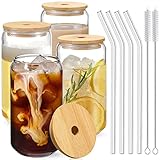
- PRODUCT CONFIGURATION: Drinking glass set includes 4 glass cups [ Diameter - 3 inches, Height - 5.6 inches ],4 nature bamboo lids, 4 reusable glass straws and 2 cleaning brushes, Classic design tumbler
- DURABLE and SAFE: The glasses are made of high-quality durable clear glass, Lead-free and BPA-free. It can be used safely for a long time. This thick clear glass can withstand the sudden changes in the temperature difference between -68°F to 212°F, making them dishwasher safe. If you want to decorate this glass, you can do DIY easily without breakage
- MULTI-PURPOSE: The glassware Great for any Occasion, any hot and cold drinks, home essentials. It is widely loved by families, kitchen, breweries, cafes, bars and restaurants. You can use it to make perfect tea, bubble Pearl Milk Tea, soda, water, iced coffee, smoothie, fruit juice or any other interesting holiday drinks
- AMAZING GIFT: This jar is very fashionable, aesthetic and characteristic. Excellent workmanship. Perfect Gifts for Women, House warming gifts, Tea mug Sets, Highball Glasses, Home Bar Accessories, Birthdays, Graduation, Weddings and Christmas Gifts
- SATISFIED SERVICE: This glass set is packaged in the heavy bubble holder and thick carton box to prevent damage while in transport. If the glass set you received was damaged or imperfect or you are not satisfied, we will offer a satisfactory solution
9. Serve your iced coffee: Pour your hot-brewed iced coffee directly over ice. For cold brew concentrate, dilute with water, milk, or creamer to taste, then pour over ice.
- Good: Adjusting dilution to your preference for cold brew, or pouring flash brew directly onto ice.
- Mistake: Pouring hot coffee over ice that hasn’t been brewed strong enough. Avoid: Watery, weak iced coffee.
10. Enjoy and adjust: Take a sip and note what you like or dislike.
- Good: Being open to experimenting with ratios, grind, and brew time for future batches.
- Mistake: Settling for a less-than-perfect brew without trying to troubleshoot. Avoid: Missing out on your ideal iced coffee.
Common mistakes (and what happens if you ignore them)
| Mistake | What it causes | Fix |
|---|---|---|
| Using regular strength coffee | Watery, weak, and bland iced coffee once ice melts. | Brew coffee at a stronger concentration (higher coffee-to-water ratio). |
| Brewing hot coffee directly onto ice slowly | Shocking the coffee, leading to a duller flavor and excessive dilution. | Flash brew: brew hot coffee directly onto <em>half</em> the final ice volume quickly. Or use cold brew. |
| Using stale coffee beans | Flat, lifeless flavor with no aroma. | Buy freshly roasted beans and grind them just before brewing. |
| Incorrect grind size | Under-extraction (sour, weak) or over-extraction (bitter, harsh). | Adjust grind size: coarser for cold brew, medium for hot drip/pour-over. |
| Poor water quality | Off-flavors (chlorine, metallic) in your iced coffee. | Use filtered water for all brewing methods. |
| Not enough ice in the glass | Rapid melting of ice, leading to quick dilution. | Fill your serving glass completely with ice, or pre-chill the glass. |
| Not cleaning brewing equipment | Built-up coffee oils and mineral deposits impart bitter, stale flavors. | Clean brewer after each use; descale electric brewers regularly. |
| Impatience with cold brew | Weak, under-extracted cold brew concentrate. | Allow sufficient steeping time (12-24 hours) for cold brew. |
| Guessing coffee-to-water ratios | Inconsistent results, difficulty replicating a good brew. | Use a digital scale to precisely measure coffee and water. |
| Not diluting cold brew concentrate | Overly strong, intense, and sometimes bitter concentrate. | Dilute cold brew concentrate with water, milk, or creamer to taste. |
Decision rules for how to make a perfect iced coffee
- If your iced coffee tastes watery, then use a higher coffee-to-water ratio (more coffee) because the ice is diluting it too much.
- If your iced coffee tastes sour, then try a finer grind size or higher brew temperature (for hot brew) because it’s likely under-extracted.
- If your iced coffee tastes bitter, then try a coarser grind size or lower brew temperature (for hot brew) because it’s likely over-extracted.
- If you want a smooth, low-acid iced coffee, then choose the cold brew method because its long, low-temperature extraction yields less acidity.
- If you need iced coffee quickly, then use the flash brew (hot brew directly over ice) method because it’s faster than cold brewing.
- If your iced coffee has an unpleasant aftertaste, then check your water quality or clean your brewing equipment because impurities or old coffee oils can cause off-flavors.
- If your hot-brewed iced coffee isn’t cold enough immediately, then ensure your serving glass is pre-chilled and full of ice because this helps rapidly cool the brew.
- If your cold brew concentrate is too strong, then dilute it with more water, milk, or ice because it’s designed to be a concentrate.
- If you’re using pre-ground coffee, then expect a less vibrant flavor because coffee begins to stale immediately after grinding.
- If you want to replicate a favorite iced coffee, then start by asking about their brew method and coffee type because this provides a good starting point for your own experiments.
FAQ
Q: Can I just pour hot coffee over ice for iced coffee?
A: You can, but it often results in watery, diluted coffee unless you brew it extra strong. The flash brew method, where hot coffee is brewed directly onto ice at a strong concentration, is a better approach for hot-brewed iced coffee.
Q: What’s the best coffee roast for iced coffee?
A: This is largely personal preference. Medium to dark roasts often stand up well to ice and dilution, offering rich, chocolatey, or nutty notes. Lighter roasts can also be excellent, providing brighter, fruitier flavors that are refreshing when chilled.
Q: How long does cold brew concentrate last?
A: Properly stored in an airtight container in the refrigerator, cold brew concentrate can last for up to 1-2 weeks. Its flavor may gradually diminish over time, so consuming it within a week is ideal.
Q: Do I need special ice for iced coffee?
A: While not strictly necessary, using larger ice cubes or coffee ice cubes (made from leftover coffee) can help prevent rapid dilution. Larger cubes melt slower, and coffee ice cubes won’t water down your drink.
Q: What’s the ideal coffee-to-water ratio for iced coffee?
A: For hot-brewed iced coffee, a ratio of 1:8 to 1:10 (coffee to water by weight) is a good starting point. For cold brew concentrate, ratios typically range from 1:4 to 1:8. Experiment to find what you prefer.
Q: Can I use a regular drip coffee maker for iced coffee?
A: Yes, you can. Brew a stronger batch than usual, and then either let it cool completely before pouring over ice, or brew it directly onto a full container of ice if your machine allows for a concentrated brew without overflow.
Q: Why does my iced coffee taste bitter?
A: Bitterness often indicates over-extraction. Try using a coarser grind, reducing your brew time (for hot brew), or using slightly cooler water (for hot brew). For cold brew, shorten the steeping time.
What this page does NOT cover (and where to go next)
- Specific recipes for flavored iced coffee drinks (e.g., iced lattes, mochas)
- Detailed comparisons of specific coffee bean origins for iced coffee
- Advanced coffee roasting techniques
- The history of iced coffee
- Commercial-scale iced coffee production
- Reviews of specific coffee makers or grinders