
The Best Water for Brewing Coffee: Taste and Quality
Quick answer
- Filtered water is your best bet for great coffee.
- Tap water can have minerals and chlorine that mess with taste.
- Distilled or heavily purified water lacks minerals for good extraction.
- Aim for water that’s clean, neutral, and has a balanced mineral content.
- Your coffee maker’s manual might have specific water recommendations.
- Good water makes a huge difference, trust me.
To ensure the best taste, consider using a quality coffee water filter. These filters effectively remove impurities that can negatively impact your brew.
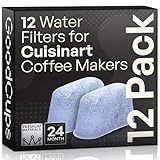
- Universal Compatibility: These premium replacement charcoal water filters are designed to fit all Cuisinart coffee maker models, ensuring a perfect fit for both newer and older models, including Cuisinart coffee maker 12 cup, Grind and Brew, and coffee maker with grinder.
- Enhanced Beverage Flavor: GoodCups charcoal water filters for Cuisinart coffee maker remove calcium, chlorine, and odors, giving you fresh, great-tasting coffee with every brew.
- Superior Filtration: Our charcoal boasts a strong absorption capacity and maximizes filtration efficiency. These water filters for Cuisinart coffee makers protect your brewer, extend its lifespan, and improve every coffee cycle.
- Optimal Water Flow Design: GoodCups filters feature a carefully crafted design that allows for optimal water flow, preventing clogs while ensuring your Cuisinart coffee maker operates smoothly and efficiently.
- Environmentally Conscious: These Cuisinart replacement water filters are made from recyclable materials, demonstrating our commitment to environmental responsibility.
Key terms and definitions
- Minerals: These are dissolved solids in water. They play a big role in coffee extraction. Think calcium and magnesium.
- Total Dissolved Solids (TDS): This measures the total amount of dissolved compounds in your water. For coffee, a sweet spot exists.
- pH: This measures how acidic or alkaline your water is. Coffee brewing works best in a slightly acidic to neutral range.
- Chlorine: A common disinfectant in tap water. It can impart an unpleasant chemical taste to your coffee.
- Hard Water: Water with a high mineral content, especially calcium and magnesium. Can lead to scale buildup in machines.
- Soft Water: Water with a low mineral content. Can result in flat or weak coffee.
- Filtered Water: Water that has passed through a filter to remove impurities like chlorine, sediment, and some minerals.
- Distilled Water: Water that has been boiled into vapor and condensed back into liquid, removing virtually all minerals and impurities.
- SCA Standards: The Specialty Coffee Association has guidelines for ideal coffee brewing water. They aim for a balance.
- Extraction: The process where water dissolves soluble compounds from coffee grounds. This is how flavor happens.
How it works
- Water is the main ingredient in coffee. It’s the solvent.
- It dissolves all the good stuff – the flavors, aromas, and oils – from the coffee grounds.
- Different water compositions interact differently with coffee compounds.
- Minerals in water help carry flavor compounds. Too few, and your coffee can taste flat.
- Too many minerals, especially certain types, can lead to over-extraction or off-flavors.
- Chlorine is a big no-no. It masks the delicate coffee notes.
- The temperature of the water is also crucial for proper extraction.
- The brewer type influences how water interacts with the grounds.
- The grind size of your coffee matters for how long water is in contact.
- It’s a whole system, and water is a foundational piece.
What affects the result
- Water Purity: Is it clean? Free of odors and weird tastes? That’s step one.
- Mineral Content (TDS): Too low, and your coffee might taste weak. Too high, and it can be bitter or scale up your gear.
- Mineral Type: Calcium and magnesium are good in moderation for extraction. Sodium can be tricky.
- pH Level: Ideally, water for coffee should be slightly acidic to neutral, around 6.5 to 7.5.
- Chlorine Presence: Any hint of chlorine is bad news for delicate coffee flavors.
- Water Hardness: Very hard water can lead to scale buildup in your machine and affect extraction.
- Water Softness: Very soft water might not extract enough flavor, leading to a dull cup.
- Water Temperature: Too hot or too cold, and you’ll mess with extraction. Aim for that sweet spot, usually 195-205°F.
- Water-to-Coffee Ratio: How much water you use for a given amount of coffee grounds is critical.
- Freshness of Coffee: Stale beans won’t taste great no matter how good your water is.
- Grind Size: Finer grinds extract faster than coarser grinds.
- Brewing Method: Pour-over, French press, espresso – they all use water differently.
Pros, cons, and when it matters
- Filtered Tap Water:
- Pro: Removes chlorine and sediment, improves taste. Easy to get.
- Con: Can sometimes strip too many minerals if the filter is aggressive.
- Matters: Great for everyday brewing when you want a clean cup without fuss.
- Spring Water:
- Pro: Often has a good mineral balance. Tastes clean.
- Con: Can be expensive. Mineral content can vary by brand.
- Matters: Good if you want to experiment with bottled water and find a consistent taste.
- Filtered Bottled Water:
- Pro: Convenient, usually consistent quality.
- Con: Costly, environmental impact of plastic bottles.
- Matters: A step up from basic tap if you’re looking for convenience and decent quality.
- Reverse Osmosis (RO) Water:
- Pro: Extremely pure, removes almost everything.
- Con: Strips out all minerals, leading to flat coffee. Requires remineralization for good taste.
- Matters: If you have an RO system, you’ll need to add minerals back.
- Distilled Water:
- Pro: Absolutely no impurities or minerals.
- Con: Makes coffee taste incredibly flat and lifeless because there’s nothing to extract with.
- Matters: Never use this alone for coffee. It’s a blank slate, and not in a good way.
- Tap Water (Unfiltered):
- Pro: Cheapest and most accessible.
- Con: Can contain chlorine, minerals, and other stuff that ruins taste and can harm your machine.
- Matters: Only if you have no other options and your tap water tastes exceptionally clean.
- Mineralized Water (e.g., for RO systems):
- Pro: Adds back the specific minerals needed for optimal coffee extraction.
- Con: Requires extra effort and specific products.
- Matters: Essential if you’re using RO or distilled water and want delicious coffee.
- Boiled and Cooled Tap Water:
- Pro: Can help drive off some chlorine.
- Con: Doesn’t remove dissolved minerals or other contaminants.
- Matters: A minor improvement, but not a magic bullet for bad tap water.
Common misconceptions
- “Any water is fine for coffee.” Nope. Water is like 98% of your coffee. It matters. A lot.
- “Distilled water is the purest, so it’s best.” Wrong. Purest isn’t always best for extraction. You need some minerals.
- “Hard water is good for coffee.” Not necessarily. Too much hardness leads to scale and can make coffee taste muddy.
- “Tap water is always bad.” Not always. Some municipal water supplies are excellent. Taste is the best judge.
- “Boiling water makes it perfect for coffee.” Boiling kills germs, sure. But it doesn’t remove dissolved minerals or chlorine effectively.
- “You need fancy, expensive bottled water.” Not really. Good filtered tap water is usually the best bang for your buck.
- “The coffee beans are all that matter.” Beans are king, but bad water will drag even the best beans down.
- “Water filters don’t make a difference.” They absolutely do. Removing chlorine alone is a game-changer.
- “My coffee tastes fine, so my water must be okay.” Your palate might be used to it. Try good water, then decide.
- “You need to add salt to your coffee water.” This is a weird one. No, you don’t. Stick to minerals.
FAQ
What kind of water should I use for my coffee maker?
Use filtered water. It removes chlorine and other impurities that affect taste without stripping out all the minerals needed for good extraction. Check your coffee maker’s manual for specific recommendations.
Is tap water bad for coffee?
It depends on your tap water. If it tastes clean and neutral, it might be okay. But if it has a chlorine smell or taste, or is very hard, it’s best to filter it.
Can I use distilled water for coffee?
No, not by itself. Distilled water lacks the minerals necessary to properly extract flavor from coffee grounds. This results in a flat, dull-tasting cup.
How much mineral content (TDS) is ideal for coffee water?
The Specialty Coffee Association suggests a TDS level between 75 and 250 parts per million (ppm). A good target is often around 150 ppm.
What’s the best way to filter my water for coffee?
A simple activated carbon filter, like those found in Brita or Pur pitchers, is a great starting point. For more advanced needs, consider a multi-stage filter or even a remineralization system if you use RO water.
Does water temperature affect coffee taste?
Absolutely. Water that’s too hot can scorch the grounds, leading to bitterness. Water that’s too cool won’t extract enough flavor, resulting in a weak, sour cup. Aim for 195-205°F.
How does water hardness affect my coffee?
Very hard water can lead to scale buildup in your coffee machine, reducing its lifespan and efficiency. It can also impact extraction, sometimes leading to a dull or muddy taste.
Should I buy bottled water for my coffee?
It can be an option if your tap water is poor quality and filtering isn’t feasible. However, good filtered tap water is usually more cost-effective and environmentally friendly.
What this page does NOT cover (and where to go next)
- Specific brand recommendations for water filters or bottled water. (Look for reviews on water quality and taste.)
- Advanced water chemistry for home baristas. (Explore resources on water science for coffee.)
- How to descale your specific coffee maker model. (Consult your appliance’s user manual.)
- The detailed mineral compositions of various spring waters. (Research water reports from bottling companies.)
- The impact of water on espresso machine performance. (Seek out espresso-specific brewing guides.)