
Startup Costs For A Coffee Shop
Quick answer
- Getting a coffee shop off the ground can range from $50,000 to over $500,000.
- The biggest chunks are rent, equipment, and initial inventory.
- Location is king – a prime spot costs more but brings more customers.
- Don’t forget permits, licenses, and insurance. That stuff adds up.
- Staffing and marketing are ongoing costs you need to plan for from day one.
- Building a solid business plan is your first and most crucial investment.
Key terms and definitions
- Build-out: The renovation and customization of your leased space to fit your coffee shop’s design and needs.
- Leasehold improvements: Permanent additions or alterations made to a leased property. Think custom counters or built-in seating.
- Working capital: The cash you need on hand to cover daily operating expenses until your business becomes profitable.
- POS system: Point of Sale system. This is your cash register, order taker, and sales tracker all in one.
- Inventory: The stock of goods you keep on hand – coffee beans, milk, syrups, pastries, cups, etc.
- Permits and licenses: Official government approvals required to operate a food service business. Varies by city and state.
- Franchise fees: If you’re buying into a franchise, this is the upfront cost for the brand, system, and support.
- Equipment: The big stuff – espresso machines, grinders, brewers, refrigerators, ovens, dishwashers.
- Contingency fund: A buffer for unexpected expenses. Always a good idea.
- Brand development: Creating your logo, signage, and overall look and feel.
A POS system is your central hub for sales and operations. Investing in a reliable coffee shop POS system can streamline everything from order taking to inventory management.
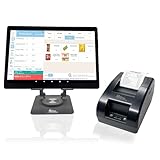
- 10.1" 8-core tablet with Wi-Fi and Bluetooth support, equipped with a 2" Bluetooth receipt printer and a stable aluminum alloy tablet stand that rotates 360°. Compatible with optional label printers, receipt printers, kitchen ticket printers, order ticket printers, barcode scanners, and electronic scales. Runs on a reliable Android operating system with built-in POS software. Hardware comes with a 1-year limited warranty
- You can download our mobile app in iOS and Android for settings, charts, reports, and storage management. We provide a online food ordering system. You or your customers can simply scan a QR code to place food orders via phone for to go delivery dine in
- LIFETIME SOFTWARE - Fast checkout, easy ordering and setup. User-friendly interface. The POS APP comes pre-installed and configured. The software is available for life and includes 1 year of customer service, 3 months of remote support, and 3 months of iCloud. No contract required, no mandatory fees
- We support payment terminals and Visa, Mastercard, Google Pay, and Apple Pay. If you sign up for our merchant services and begin accepting credit card payments after three months, we will refund you $200 for your business. Once your application is approved, you will receive a free EMV & credit card terminal
- Multifunctional-POS system, inventory management, tip tracking, membership system, reporting app, multi-region tax rate calculation, and more
How it works: The Coffee Shop Startup Process
- First, you need a killer business plan. This is your roadmap.
- Then comes finding the right location. Scout it out, check foot traffic.
- Secure your funding. Loans, investors, savings – whatever works.
- Sign that lease. Read the fine print.
- Get your permits and licenses sorted. This can take time.
- Design your space. Think workflow and customer comfort.
- Order your equipment. This is a big one.
- Hire your crew. Good baristas make a difference.
- Stock your inventory. Fresh beans are key.
- Train your staff. Make sure everyone knows the drill.
- Plan your grand opening. Get the word out.
- Open your doors and start brewing!
What affects the result: Factors in Coffee Shop Costs
- Location, location, location: A high-traffic area in a trendy neighborhood costs way more in rent than a quiet side street.
- Size of the space: A sprawling cafe needs more build-out, more furniture, and more utilities than a small kiosk.
- Build-out complexity: Are you just painting, or are you tearing down walls and installing custom plumbing? That’s a major cost driver.
- Equipment choices: New, top-of-the-line espresso machines cost a fortune. Used or smaller-scale equipment can save cash.
- Franchise vs. Independent: Buying into a franchise has upfront fees but offers a proven model. Going independent gives you freedom but requires building everything from scratch.
- Design and ambiance: Fancy finishes, custom furniture, and unique decor add up fast.
- Initial inventory levels: How much coffee, milk, pastries, and supplies do you plan to stock on day one?
- Permit and licensing fees: These vary wildly by municipality. Some are just a few hundred bucks, others can be thousands.
- Marketing and advertising budget: How much will you spend to get the word out before and after opening?
- Legal and professional fees: Lawyers for leases, accountants for setup – these are necessary evils.
- Staffing costs: Hiring and training your initial team.
- Contingency fund: The buffer you build in for the unexpected. Always budget for this.
Pros, cons, and when it matters: Weighing the Investment
- Pro: Owning your dream: The satisfaction of building something from the ground up.
- Con: High upfront investment: Can be tens or hundreds of thousands of dollars.
- Matters when: You have a passion for coffee and a solid business acumen.
- Pro: Potential for high profit margins: Coffee itself is relatively cheap to produce.
- Con: Intense competition: The market is crowded. Standing out is tough.
- Matters when: You have a unique selling proposition and a great location.
- Pro: Building a community hub: Coffee shops can become beloved local spots.
- Con: Long hours and hard work: It’s not just about making coffee; it’s about managing a business.
- Matters when: You’re prepared for the grind (pun intended).
- Pro: Scalability: You can expand to multiple locations or products.
- Con: Dependence on trends: Coffee preferences and dietary fads can shift.
- Matters when: You can adapt your offerings.
- Pro: Creative control (independent): You set the vision, the menu, the vibe.
- Con: Building brand recognition (independent): No established name to rely on.
- Matters when: You have a strong personal brand or marketing strategy.
- Pro: Established systems (franchise): Proven operational models and marketing support.
- Con: Franchise fees and royalties: Ongoing costs that eat into profits.
- Matters when: You prefer structure and brand recognition over total freedom.
Common misconceptions
- Myth: You just need an espresso machine and beans. Nope. It’s way more than that.
- Myth: Location isn’t that important. Wrong. It’s arguably the most important factor.
- Myth: You can open a shop for under $20,000. Highly unlikely for a brick-and-mortar. Maybe a tiny cart.
- Myth: Permits and licenses are a quick formality. They can be a bureaucratic maze.
- Myth: Marketing is just a sign out front. You need a strategy to draw people in.
- Myth: You’ll be profitable in the first month. Most shops take months, sometimes over a year, to break even.
- Myth: Coffee shops are easy money. It’s a high-volume, low-margin business that requires constant effort.
- Myth: You can just hire anyone to make coffee. Good baristas are skilled and crucial to the customer experience.
- Myth: Rent is your only major fixed cost. Don’t forget utilities, insurance, and staff wages.
- Myth: You can cut corners on equipment. Cheap equipment breaks down and makes bad coffee.
FAQ
How much does it cost to open a small coffee shop?
For a small, no-frills shop, you might be looking at $50,000 to $150,000. This assumes a smaller space and basic equipment.
What’s the biggest expense when starting a coffee shop?
Generally, it’s the build-out of the space and the purchase of essential equipment like espresso machines and grinders.
Do I need a business loan to open a coffee shop?
Many entrepreneurs use a combination of savings, loans, and sometimes investors. It depends on your capital needs and personal financial situation.
How much should I budget for rent?
Rent can vary wildly, but typically aim for it to be no more than 10-15% of your projected gross revenue.
Is it cheaper to buy an existing coffee shop?
Sometimes, yes. You inherit an existing customer base and some equipment, but you also inherit any existing problems.
How much working capital do I need?
You should have enough to cover 3-6 months of operating expenses (rent, payroll, inventory, utilities) before you expect to turn a profit.
What are common hidden costs?
Things like unexpected repairs, increased utility bills, or higher-than-expected permit fees can pop up. Always have a buffer.
How much does coffee shop equipment cost?
A commercial espresso machine alone can range from $3,000 to $20,000+. Grinders, brewers, refrigerators, and ovens add significantly more.
What this page does NOT cover (and where to go next)
- Specific brand recommendations or price comparisons for equipment. (Next: Research specific equipment manufacturers and models.)
- Detailed legal advice on forming your business entity. (Next: Consult with a business attorney or legal advisor.)
- In-depth marketing strategies for coffee shops. (Next: Explore digital marketing and local advertising tactics.)
- Operational management and staff training manuals. (Next: Look into resources for small business management and customer service training.)
- Detailed financial projections and P&L statements. (Next: Work with an accountant to build comprehensive financial models.)