
Successful Coffee Shop Revenue
Quick Answer: Coffee Shop Earnings Breakdown
- Success varies wildly. Location, concept, and management are key.
- Average net profit margins are often between 10-15%.
- A small, well-run shop might net $50k-$100k annually.
- Larger, high-volume shops can pull in much more, sometimes $200k+.
- Don’t forget owner salary is usually part of that profit.
- It takes time to build a loyal customer base.
Key Terms and Definitions for Coffee Shop Success
- Gross Revenue: Total money earned before any expenses are paid. This is the top-line number.
- Cost of Goods Sold (COGS): Direct costs of making your product. For coffee, this is beans, milk, cups, lids, etc.
- Operating Expenses: Costs to run the business daily. Think rent, utilities, wages, marketing.
- Net Profit: What’s left after all expenses are paid. This is your actual take-home money.
- Profit Margin: Net profit expressed as a percentage of gross revenue. A key indicator of efficiency.
- Customer Acquisition Cost (CAC): How much it costs to get one new customer. Needs to be lower than their lifetime value.
- Average Ticket Size: The average amount each customer spends per visit. Higher is generally better.
- Foot Traffic: The number of people walking by your location. Crucial for brick-and-mortar.
- Customer Lifetime Value (CLV): The total revenue you expect from a single customer over their relationship with your shop.
- Break-Even Point: The revenue level where total costs equal total revenue. You’re not making money, but you’re not losing it either.
How a Coffee Shop Makes Money
- Direct Sales: Selling coffee, tea, pastries, and other drinks and food items. This is the bread and butter.
- Volume: High customer traffic means more sales, even with lower individual transaction values.
- Premium Offerings: Higher-priced specialty drinks, single-origin coffees, or unique food items boost revenue.
- Merchandise: Selling branded mugs, beans, brewing equipment can add a nice chunk.
- Catering/Events: Providing coffee service for local businesses or parties. A good side hustle.
- Loyalty Programs: Encouraging repeat business through punch cards or digital rewards.
- Efficient Operations: Minimizing waste and labor costs directly increases profit.
- Smart Pricing: Setting prices that reflect value and cover all costs, while remaining competitive.
- Location, Location, Location: Prime spots with high visibility and good foot traffic are gold.
- Ambiance and Experience: Creating a welcoming space that makes people want to stay and spend.
To efficiently manage sales and track inventory, consider investing in a reliable coffee shop POS system. This can streamline operations and help you understand your best-selling items.
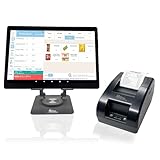
- 10.1" 8-core tablet with Wi-Fi and Bluetooth support, equipped with a 2" Bluetooth receipt printer and a stable aluminum alloy tablet stand that rotates 360°. Compatible with optional label printers, receipt printers, kitchen ticket printers, order ticket printers, barcode scanners, and electronic scales. Runs on a reliable Android operating system with built-in POS software. Hardware comes with a 1-year limited warranty
- You can download our mobile app in iOS and Android for settings, charts, reports, and storage management. We provide a online food ordering system. You or your customers can simply scan a QR code to place food orders via phone for to go delivery dine in
- LIFETIME SOFTWARE - Fast checkout, easy ordering and setup. User-friendly interface. The POS APP comes pre-installed and configured. The software is available for life and includes 1 year of customer service, 3 months of remote support, and 3 months of iCloud. No contract required, no mandatory fees
- We support payment terminals and Visa, Mastercard, Google Pay, and Apple Pay. If you sign up for our merchant services and begin accepting credit card payments after three months, we will refund you $200 for your business. Once your application is approved, you will receive a free EMV & credit card terminal
- Multifunctional-POS system, inventory management, tip tracking, membership system, reporting app, multi-region tax rate calculation, and more
What Affects Coffee Shop Revenue
- Location: High-traffic areas, proximity to offices, universities, or residential zones are vital. A bad spot is a killer.
- Competition: The number and quality of other coffee shops nearby. You need to stand out.
- Rent and Overhead: High lease costs can eat up profits quickly. Utilities add up too.
- Staffing Costs: Wages, benefits, and training for baristas and managers. Good staff are worth it, but costly.
- Quality of Product: Fresh, high-quality beans and well-made drinks keep customers coming back.
- Menu Variety and Innovation: Offering popular staples alongside new, exciting items.
- Marketing and Branding: How effectively you promote your shop and build a brand identity.
- Customer Service: Friendly, efficient service makes a huge difference in repeat business.
- Operational Efficiency: Streamlining workflows, minimizing waste, and managing inventory well.
- Economic Conditions: Recessions or local downturns can impact discretionary spending.
- Seasonality: Sales can fluctuate with weather and holidays. Summer slumps are real.
- Online Presence: A good website and active social media can drive in-store traffic.
Pros, Cons, and When It Matters for Coffee Shop Earnings
- Pro: High Potential for Passion: If you love coffee, it’s a dream job.
- Con: Intense Competition: The market is saturated in many areas.
- Pro: Community Hub: Can become a beloved local gathering spot.
- Con: Long Hours and Hard Work: Expect early mornings and late nights, especially at first.
- Pro: Scalability: Can grow into multiple locations or franchises.
- Con: Thin Profit Margins: Even busy shops can struggle if costs aren’t managed.
- Pro: Relatively Low Startup Barrier (compared to some businesses): You can start smaller.
- Con: Dependence on Location: A great shop in a bad spot will fail.
- Pro: Tangible Product: You see and taste the results of your labor.
- Con: Inventory Management: Perishables like milk and pastries require careful handling.
- Pro: Repeat Business Model: Loyal customers provide stable revenue.
- Con: Staff Turnover: Finding and keeping good baristas can be a challenge.
- Pro: Versatile Business Model: Can adapt to different concepts (grab-and-go, sit-down, etc.).
- Con: Economic Sensitivity: Coffee is often a “treat” and can be cut back in tough times.
- Pro: Building Relationships: You get to know your customers and build connections.
- Con: Physical Demands: Standing all day, repetitive tasks.
Common Misconceptions About Coffee Shop Revenue
- Myth: “If I make good coffee, they will come.” Nope. Marketing, service, and location are equally important.
- Myth: “Coffee shops are easy money.” Far from it. It’s a grind, literally and figuratively.
- Myth: “You get rich quick.” Success takes years of consistent effort and smart decisions.
- Myth: “Higher prices always mean higher profits.” Not if they drive customers away. It’s a balance.
- Myth: “You only need to worry about bean costs.” Milk, labor, rent, and utilities are major expenses.
- Myth: “A busy shop is always a profitable shop.” High volume can mask inefficiencies if costs are out of control.
- Myth: “You can just wing it.” A solid business plan and financial management are non-negotiable.
- Myth: “Online reviews don’t matter that much.” They are critical for reputation and attracting new customers.
- Myth: “Once you’re established, you can relax.” The market changes. You have to keep innovating.
- Myth: “You can pay yourself a huge salary from day one.” Most owners reinvest profits early on.
FAQ: Coffee Shop Earnings
- How much revenue does an average coffee shop generate annually?
This varies wildly, but a small, well-managed shop might see $200,000 to $500,000 in gross revenue. Larger, high-volume locations can easily exceed $1 million.
- What is a typical profit margin for a coffee shop?
Net profit margins usually hover between 10% and 15%. Some exceptionally efficient shops might push higher, while others might struggle to reach 10%.
- Can a single coffee shop location be very profitable?
Absolutely. A prime location with a strong concept, excellent product, and great service can be a cash cow.
- How much do coffee shop owners typically make?
This is usually tied to the net profit. After reinvesting in the business, an owner might take home $50,000 to $150,000+ annually, depending on the shop’s success.
- What are the biggest expenses for a coffee shop?
Rent, labor (wages and benefits), and the cost of goods sold (beans, milk, food items) are typically the largest expenditures.
- Does a coffee shop’s concept (e.g., specialty vs. fast-casual) impact earnings?
Yes. Specialty shops might have higher average ticket prices but lower volume, while fast-casual might have higher volume but lower margins per item.
- How important is foot traffic for coffee shop revenue?
For most brick-and-mortar coffee shops, foot traffic is paramount. It directly drives sales volume.
- Can a coffee shop make money without selling food?
It’s possible, but challenging. Food items often have higher profit margins and encourage longer stays, increasing drink sales.
What This Page Does NOT Cover (and Where to Go Next)
- Specific Startup Costs: This page focuses on revenue, not the initial investment needed.
- Detailed Financial Projections: We don’t dive into creating balance sheets or cash flow statements.
- Legal and Licensing Requirements: Navigating permits and health codes is a separate beast.
- Marketing Strategies: Specific tactics for promoting your shop are not detailed here.
- Human Resources Management: Hiring, training, and managing staff effectively is a whole other topic.
- Next Steps: Research your local market, develop a detailed business plan, and consult with financial advisors.