
Perfect Automatic Drip Coffee Every Time
Quick answer
- Use fresh, whole bean coffee. Grind it right before brewing.
- Filtered water is your friend. Avoid tap water if it tastes funky.
- Get your coffee-to-water ratio dialed in. Around 1:15 to 1:18 is a solid starting point.
- Keep your machine clean. Descaling is key.
- Water temperature matters. Aim for 195-205°F. Most machines handle this, but check.
- Don’t let coffee sit on the hot plate too long. It gets bitter.
Who this is for
- Anyone who owns an automatic drip coffee maker and wants better coffee.
- Folks tired of weak or bitter coffee from their morning brew.
- Home baristas looking to level up their everyday cup without fancy gear.
What to check first
Brewer type and filter type
Your machine is the heart of the operation. Most are standard drip, but some have fancier features. The filter is crucial too. Paper filters are common and catch more fines. Metal filters let more oils through, giving a fuller body. Some machines use permanent mesh filters. Make sure yours is clean and appropriate for the coffee you’re using.
Water quality and temperature
Coffee is mostly water, so good water makes good coffee. If your tap water tastes off, your coffee will too. Use filtered water. For temperature, the Specialty Coffee Association (SCA) recommends 195-205°F. Most decent machines hit this mark. If yours has a “keep warm” setting that seems to boil it, that’s not ideal.
Grind size and coffee freshness
This is huge. Pre-ground coffee goes stale fast. Buy whole beans and grind them just before you brew. For drip, a medium grind is usually best – think table salt. Too fine, and it’ll clog and over-extract (bitter). Too coarse, and it’ll under-extract (weak, sour).
For the freshest taste, buy whole coffee beans and grind them just before brewing. This makes a significant difference in your cup.
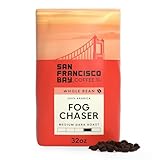
- Our iconic Fog Chaser is a blend of dark and medium roasted beans which results in a enjoyable medium dark roast coffee. It's a great combination of flavor, balance and smoothness that will chase away even the thickest morning fog.
- For finest taste, store in a cool, dark place and grind beans just berfore brewing
- QUALITY COFFEE: San Francisco Bay Coffee uses only 100% arabica coffee and certified Kosher coffee beans. Hand picked and grown in high altitude. We're so confident you'll love it, we back it with a satisfaction guarantee.
- SUSTAINABLY AND ECO- FARMED COFFEE: We offer a wide selection of sustainably grown, sourced, and packaged coffee from whole bean to ground, flavored to decaf, and much more.
- SF BAY COFFEE is a family owned, American made company with a rich tradition. Our reputation reflects on us as a family so if you're ever not happy with your purchase, call us and we'll make it right.
Coffee-to-water ratio
This is where you control the strength. A good starting point is a 1:15 to 1:18 ratio. That means 1 gram of coffee for every 15-18 grams of water. Or, for us home folks, about 2 tablespoons of coffee for every 6 oz of water. Play with this to find what you like.
Cleanliness/descale status
A dirty machine makes dirty coffee. Period. Coffee oils build up, and mineral deposits from water clog things up. Descale your machine regularly according to the manufacturer’s instructions. A clean machine brews clean coffee.
Step-by-step (brew workflow)
1. Gather your gear.
- What to do: Get your brewer, fresh whole beans, grinder, filter, and filtered water ready.
- What “good” looks like: Everything is clean and within easy reach. No last-minute scrambling.
- Common mistake: Forgetting to put the filter in the basket.
- How to avoid it: Always do a quick visual check of the basket before adding coffee.
2. Measure your beans.
- What to do: Weigh your whole beans for accuracy. A good starting ratio is 1:16 (coffee to water by weight). For example, 30 grams of coffee for 480 grams (about 16 oz) of water.
- What “good” looks like: You have the exact amount of coffee you need for your desired brew.
- Common mistake: Eyeballing the amount of coffee.
- How to avoid it: Use a kitchen scale. It’s a game-changer for consistency.
3. Grind your coffee.
- What to do: Grind the measured beans to a medium consistency, like coarse sand or table salt.
- What “good” looks like: The grounds are uniform in size, not too powdery or too chunky.
- Common mistake: Using a blade grinder that creates uneven particle sizes.
- How to avoid it: Invest in a burr grinder. It’s worth it for better extraction.
4. Prepare the filter.
- What to do: Place your filter in the brew basket. If using a paper filter, rinse it with hot water. This removes papery taste and preheats the brewer.
- What “good” looks like: The filter is seated properly, and any rinse water has been discarded.
- Common mistake: Not rinsing paper filters.
- How to avoid it: A quick rinse makes a noticeable difference in taste.
5. Add coffee grounds.
- What to do: Pour the freshly ground coffee into the prepared filter. Gently shake the basket to level the grounds.
- What “good” looks like: The coffee bed is flat and even, not piled up on one side.
- Common mistake: Not leveling the grounds.
- How to avoid it: A level bed ensures even water flow and extraction.
6. Add water to the reservoir.
- What to do: Pour your measured, filtered water into the machine’s reservoir.
- What “good” looks like: The water level matches your desired brew volume and ratio.
- Common mistake: Overfilling the reservoir.
- How to avoid it: Use the markings on the reservoir or your carafe, and measure your water beforehand.
7. Start the brew cycle.
- What to do: Turn on your coffee maker.
- What “good” looks like: Water starts heating and dripping through the grounds. You should see the bloom – grounds puffing up as CO2 escapes.
- Common mistake: Starting the machine before all components are in place.
- How to avoid it: Double-check that the brew basket and carafe are correctly positioned.
8. Monitor the brew (optional).
- What to do: Watch the coffee drip. It should flow steadily.
- What “good” looks like: The flow is consistent, not too fast or too slow.
- Common mistake: The coffee is gurgling or dripping too fast/slow.
- How to avoid it: This often points to grind size or filter issues.
9. Serve immediately.
- What to do: Once brewing is complete, pour your coffee.
- What “good” looks like: A fragrant, rich cup of coffee.
- Common mistake: Leaving coffee on the warming plate for too long.
- How to avoid it: Transfer brewed coffee to a thermal carafe if you won’t drink it all right away.
10. Clean up.
- What to do: Discard the used grounds and filter. Rinse the brew basket and carafe.
- What “good” looks like: Your brewing station is clean and ready for the next use.
- Common mistake: Letting used grounds sit in the basket.
- How to avoid it: Clean immediately after brewing to prevent mold and odors.
Common mistakes (and what happens if you ignore them)
| Mistake | What it causes | Fix |
|---|---|---|
| Using stale, pre-ground coffee | Weak, flat, or bitter flavor | Buy whole beans and grind just before brewing. |
| Incorrect grind size (too fine) | Bitter, over-extracted coffee; slow brew | Adjust grinder to a coarser setting (medium for drip). |
| Incorrect grind size (too coarse) | Weak, sour, under-extracted coffee; fast brew | Adjust grinder to a finer setting (medium for drip). |
| Using tap water with bad taste/odor | Off-flavors in your coffee | Use filtered or bottled water. |
| Wrong coffee-to-water ratio (too little coffee) | Weak, watery coffee | Increase the amount of coffee grounds or decrease water. |
| Wrong coffee-to-water ratio (too much coffee) | Bitter, overly strong coffee | Decrease the amount of coffee grounds or increase water. |
| Not cleaning the brewer regularly | Bitter, oily residue; mold growth; bad taste | Descale and clean your machine frequently. |
| Leaving coffee on a hot plate | Burnt, bitter, metallic taste | Transfer to a thermal carafe or drink immediately. |
| Using dirty or incorrect filters | Sediment in cup; poor extraction; bad taste | Ensure filter is clean and appropriate for your brewer. |
| Brewing with water that’s too cool | Under-extracted, sour, weak coffee | Ensure your machine heats water to the optimal range (195-205°F). |
Decision rules (simple if/then)
- If your coffee tastes bitter, then check your grind size and make it coarser because a finer grind can over-extract.
- If your coffee tastes weak or sour, then check your grind size and make it finer because a coarser grind can under-extract.
- If your coffee tastes flat, then try using fresher beans and grinding them right before brewing because stale coffee loses its aroma and flavor.
- If your coffee has off-flavors, then use filtered water because tap water impurities can affect taste.
- If your coffee is consistently too strong, then reduce the amount of coffee grounds you’re using or increase the water because too much coffee makes it intense.
- If your coffee is consistently too weak, then increase the amount of coffee grounds you’re using or decrease the water because not enough coffee results in a watery brew.
- If your machine brews very slowly or clogs, then check your grind size and make it coarser because fine grounds can block water flow.
- If your coffee tastes metallic or burnt, then don’t let it sit on the warming plate for too long because it degrades the flavor.
- If you notice a buildup in your machine, then it’s time to descale because mineral deposits affect performance and taste.
- If you’re using a paper filter and get a papery taste, then rinse the filter with hot water before brewing because this removes residual paper flavor.
- If you want more body in your cup, then consider a metal filter (if compatible) because they allow more oils to pass through.
FAQ
How often should I clean my automatic drip coffee maker?
You should rinse the brew basket and carafe after every use. For a deeper clean and descaling, follow your manufacturer’s recommendations, typically every 1-3 months depending on water hardness and usage.
What’s the best way to store coffee beans?
Store whole beans in an airtight container in a cool, dark place. Avoid the refrigerator or freezer, as moisture and temperature fluctuations can degrade the beans.
Can I use hot water from the tap?
It’s best to use filtered or bottled water. Tap water can contain minerals and chlorine that affect the taste of your coffee. Also, ensure your machine heats the water to the optimal brewing temperature.
My coffee maker has a “brew pause” feature. Should I use it?
The brew pause feature lets you grab a cup mid-brew. While convenient, it’s generally best to let the full brew cycle complete for optimal extraction. Prolonged pausing can also affect the flavor.
How do I know if my grinder is producing the right grind size?
For drip coffee, aim for a consistency similar to coarse sand or table salt. If it looks like powder, it’s too fine; if it looks like large pebbles, it’s too coarse.
Is it okay to reuse a coffee filter?
No, coffee filters are designed for single use. Reusing them can lead to mold growth, stale flavors, and poor extraction in subsequent brews.
What does “bloom” mean in coffee brewing?
The bloom is the initial phase when hot water hits fresh coffee grounds. It causes them to expand and release carbon dioxide gas. This is a sign of fresh coffee and helps ensure even extraction.
How do I measure coffee if I don’t have a scale?
A common starting point is 2 tablespoons of whole beans per 6 ounces of water. However, using a scale for grams is far more consistent for achieving your desired ratio.
What this page does NOT cover (and where to go next)
- Specific machine maintenance guides for every brand. (Check your brewer’s manual for detailed instructions.)
- Advanced brewing techniques like manual pour-over or espresso. (Explore dedicated guides for those methods.)
- Deep dives into coffee bean origins and varietals. (Look for resources on coffee sourcing and tasting notes.)
- Water chemistry beyond basic filtration. (For this level of detail, consult specialized water treatment resources.)
- Commercial brewing setups or industrial coffee makers. (These require different expertise and equipment.)