
Ninja Coffee Bar Cappuccino: Step-By-Step Guide
Quick answer
- Use fresh, high-quality coffee beans, ideally medium-dark roast for best flavor.
- Ensure your Ninja Coffee Bar is clean and descaled for optimal performance.
- Use cold, filtered water for a cleaner taste profile.
- Master the coffee-to-water ratio for a strong coffee concentrate base.
- Froth milk to a creamy, microfoam texture – not just bubbly.
- Practice pouring technique for latte art, if desired.
- Experiment with different milk types to find your preferred texture and taste.
Who this is for
- Home coffee enthusiasts who own a Ninja Coffee Bar system.
- Anyone looking to replicate café-style cappuccinos at home.
- Individuals eager to learn the nuances of milk frothing and coffee brewing for specialty drinks.
What to check first
Before you even think about frothing milk, let’s make sure your foundation is solid.
Brewer type and filter type
The Ninja Coffee Bar series (models vary, but typically include a frother) is designed for versatility. Most models use a permanent filter basket, often gold-tone, which allows more coffee oils to pass through, contributing to a fuller body. You can also use paper filters if you prefer a cleaner cup with less sediment, but this might slightly reduce the richness desired for a cappuccino base. Check your specific model’s manual for filter recommendations.
The Ninja Coffee Bar series is designed for versatility, making it a great choice for home baristas. If you’re looking to get started or upgrade, the Ninja Coffee Bar is a solid option.
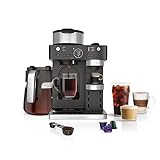
- BARISTA PLUS TECHNOLOGY: The 19-bar pressure system delivers ultra-flavorful espresso with a silky-smooth crema by brewing at the optimal temperature and pressure.
- COFFEEHOUSE DRINKS AT HOME: The built-in, fold-away frother allows you to create espresso-based cappuccinos, lattes, flat whites, and more.
- BREW SINGLE-SERVE ESPRESSO: Choose your favorite espresso capsule and brew up to 3 styles: Espresso (1.35 oz), Lungo (3.75 oz), and Over Ice (1 oz).
- BREW THROUGH COFFEE GROUNDS: Make a Classic, Rich, or Over Ice brew. Select 9 different sizes ranging from cup, to travel mug, to a full 12-cup carafe.
- VERSATILITY TO ENTERTAIN: Treat your guests to an espresso-based coffeehouse drink or brew a 12-cup carafe for the crowd.
Water quality and temperature
Water is 98% of your coffee, so its quality matters. Use cold, filtered water to avoid off-flavors from chlorine or mineral buildup. The Ninja Coffee Bar is designed to heat water to the optimal brewing temperature, typically around 200°F, which is crucial for proper extraction. Using water that’s too hot can over-extract, leading to bitterness, while water that’s too cold results in under-extraction and a weak, sour taste.
Grind size and coffee freshness
For the “Specialty Brew” or concentrated setting on your Ninja Coffee Bar, a medium-fine grind is generally recommended. This allows for efficient extraction of flavor in a shorter brewing cycle, creating a strong base for your cappuccino. Coffee freshness is paramount: use beans roasted within the last few weeks and grind them just before brewing for the best flavor and aroma. Stale coffee will produce a flat, lifeless drink.
Coffee-to-water ratio
For a strong coffee concentrate suitable for a cappuccino, the Ninja Coffee Bar’s “Specialty Brew” setting is your friend. It’s designed to deliver a concentrated shot. Typically, this setting uses a higher coffee-to-water ratio than a standard drip brew. For example, you might use 2-3 tablespoons of ground coffee for a 4 oz “Specialty Brew” shot. Refer to your Ninja Coffee Bar’s included scoop and recipe guide for precise measurements for the Specialty Brew setting.
Cleanliness/descale status
A clean machine brews better coffee. Residue from old coffee oils can turn rancid and impart bitter flavors. Regularly clean the brew basket, carafe, and frother. Descaling is also critical, especially if you have hard water. Mineral buildup can affect heating element efficiency and water flow, leading to under-extracted coffee. Your Ninja Coffee Bar likely has a descale indicator or cleaning cycle; follow the manufacturer’s instructions.
Step-by-step how to make cappuccino with Ninja Coffee Bar
Here’s how to brew and assemble your perfect Ninja Coffee Bar cappuccino.
1. Prepare your coffee grounds.
- What to do: Grind fresh whole beans to a medium-fine consistency. Measure the appropriate amount using the Ninja scoop for the “Specialty Brew” size (e.g., 2-3 scoops for a single serving). Add grounds to the permanent filter or a paper filter in the brew basket.
- What “good” looks like: Grounds are uniform, similar to table salt, and smell fragrant. The brew basket is filled evenly without overflowing.
- Common mistake: Using pre-ground or stale coffee. This results in a weak, flavorless base. How to avoid it: Always grind fresh beans just before brewing.
2. Fill the water reservoir.
- What to do: Fill the water reservoir with cold, filtered water to the desired line for a “Specialty Brew” (typically 4 oz for a single shot).
- What “good” looks like: The water level is accurate, and the water is clear and free of impurities.
- Common mistake: Using tap water directly or not enough water. This can introduce off-flavors or result in an incomplete brew. How to avoid it: Use filtered water and fill precisely to the marked line.
3. Select “Specialty Brew” and place your cup.
- What to do: Place your cappuccino cup (ideally pre-warmed) under the brew spout. Select the “Specialty Brew” setting on your Ninja Coffee Bar.
- What “good” looks like: The cup is centered, and the “Specialty Brew” light is illuminated.
- Common mistake: Forgetting to select the correct brew size/type. This will result in an incorrect coffee strength. How to avoid it: Double-check the brew setting before pressing start.
4. Start the coffee brewing.
- What to do: Press the brew button to start the “Specialty Brew” cycle.
- What “good” looks like: The machine begins to brew, and a strong, aromatic coffee concentrate drips into your cup.
- Common mistake: Walking away and letting the coffee sit too long. This allows it to cool. How to avoid it: Stay nearby to move to the next step promptly.
5. Prepare your milk for frothing.
- What to do: Pour cold milk (about 4-6 oz per cappuccino) into a frothing pitcher or a mug suitable for the Ninja frother. Dairy milks (whole or 2%) and some non-dairy alternatives (oat, almond barista blends) work best.
- What “good” looks like: Milk is fresh, cold, and there’s enough volume to expand without overflowing.
- Common mistake: Using warm milk or too little/too much milk. Warm milk won’t froth as well, and incorrect volume can lead to poor texture. How to avoid it: Always start with cold milk and measure carefully.
6. Froth the milk using your Ninja Coffee Bar frother.
- What to do: If your Ninja has a built-in frother, immerse the whisk into the milk. If it’s a separate wand, position it correctly. Turn on the frother. For best results, keep the whisk just below the surface to incorporate air, then lower it to heat and emulsify.
- What “good” looks like: The milk expands and develops a glossy, velvety texture with small, uniform bubbles (microfoam), reaching a temperature of about 140-155°F.
- Common mistake: Over-frothing or under-frothing. Over-frothing creates large, dry bubbles; under-frothing leaves it watery. How to avoid it: Listen for a “paper tearing” sound for aeration, then submerge to heat. Stop when the pitcher is too hot to comfortably hold.
7. Tap and swirl the frothed milk.
- What to do: Immediately after frothing, tap the pitcher gently on the counter to pop any large bubbles. Then, swirl the milk continuously to maintain its creamy, integrated texture.
- What “good” looks like: The milk is smooth, shiny, and flows like wet paint, with no visible large bubbles.
- Common mistake: Letting the milk sit without swirling. This causes the foam to separate from the liquid milk. How to avoid it: Tap and swirl immediately and continuously until pouring.
8. Combine coffee concentrate and frothed milk.
- What to do: Hold your cup of coffee concentrate at an angle. Pour the frothed milk steadily into the center, allowing the milk and foam to integrate.
- What “good” looks like: The milk blends seamlessly with the coffee, creating a harmonious drink with a distinct layer of creamy foam on top.
- Common mistake: Pouring too fast or too slow, or dumping the foam on top. This results in poor integration and an uneven drink. How to avoid it: Pour with controlled, steady motion, starting from a slight height and lowering as the cup fills.
9. Finish and serve.
- What to do: Once the cup is full, you should have a rich coffee base topped with a generous layer of velvety microfoam.
- What “good” looks like: A beautiful cappuccino with a balanced ratio of coffee to milk to foam, ready to enjoy.
- Common mistake: Not enjoying your creation immediately. How to avoid it: Sip and savor your homemade cappuccino while it’s fresh and warm!
Common mistakes (and what happens if you ignore them)
| Mistake | What it causes | Fix |
|---|---|---|
| Using stale coffee beans | Flat, dull flavor; lack of aroma; weak coffee base. | Buy fresh, whole beans and grind just before brewing. |
| Incorrect grind size for Ninja Coffee Bar | Too fine: bitter, over-extracted. Too coarse: weak, sour, under-extracted. | Use a medium-fine grind for “Specialty Brew” setting. |
| Not using filtered water | Off-flavors (chlorine); mineral buildup in machine; affects coffee taste. | Always use cold, filtered water in the reservoir. |
| Incorrect coffee-to-water ratio | Too little coffee: watery cappuccino. Too much: overly bitter. | Follow Ninja Coffee Bar’s scoop recommendations for “Specialty Brew.” |
| Not cleaning/descaling the machine | Bitter residue buildup; slow brewing; machine malfunction. | Clean brew basket and frother daily; descale regularly per manual. |
| Using warm milk for frothing | Poor foam texture; less volume; milk won’t aerate properly. | Always start with cold milk, ideally straight from the fridge. |
| Over-frothing milk | Large, dry, unstable bubbles; airy foam that separates quickly. | Stop frothing when milk is hot to the touch (140-155°F) and has doubled in volume. |
| Under-frothing milk | Watery milk with little to no foam; thin, weak cappuccino. | Aerate longer at the surface, then submerge to heat and integrate. |
| Letting frothed milk sit | Foam separates from liquid milk; difficult to pour smoothly. | Tap and swirl immediately and continuously until pouring. |
| Pouring milk too fast/slowly | Uneven layers; foam and liquid don’t integrate well. | Practice a steady, controlled pour, integrating milk and foam. |
Decision rules (simple if/then)
- If your cappuccino tastes weak, then increase the amount of coffee grounds or ensure you’re using the “Specialty Brew” setting, because your coffee base is under-extracted.
- If your cappuccino tastes bitter, then try a slightly coarser grind or reduce the coffee-to-water ratio, because your coffee is likely over-extracted.
- If your frothed milk has large, airy bubbles, then you are aerating too much at the surface; lower the frother whisk deeper into the milk to integrate.
- If your frothed milk is thin and watery, then you are not aerating enough; keep the frother whisk closer to the surface for longer to incorporate more air.
- If your Ninja Coffee Bar brews slowly, then it likely needs descaling, because mineral buildup can impede water flow.
- If your coffee has an off-taste, then clean your machine thoroughly and use filtered water, because old coffee oils or poor water quality can taint flavor.
- If your milk doesn’t froth well, then ensure your milk is cold and check the type of milk, because cold, high-fat milk or barista-blend non-dairy milks froth best.
- If your frothed milk separates quickly, then tap and swirl the pitcher more vigorously before pouring, because this integrates the foam and liquid.
- If you want a stronger coffee flavor, then use a darker roast coffee bean, because darker roasts tend to have a more pronounced coffee taste.
- If you prefer a richer, creamier texture, then use whole milk for frothing, because its fat content creates a more luxurious microfoam.
FAQ
Can I make a cappuccino with any Ninja Coffee Bar model?
Most Ninja Coffee Bar models include a built-in frother or have a “Specialty Brew” setting designed for concentrated coffee, making them suitable for cappuccinos. Check your specific model’s features to confirm.
What kind of milk is best for frothing in a Ninja Coffee Bar?
Whole milk or 2% dairy milk generally produce the best, most stable foam. For non-dairy options, barista-blend oat milk or almond milk often froth well due to added stabilizers. Cold milk is always key.
How much coffee concentrate do I need for one cappuccino?
For most Ninja Coffee Bar models, the “Specialty Brew” setting delivers about a 4 oz concentrated shot, which is ideal for a single cappuccino. Adjust to your taste preferences.
My frothed milk isn’t hot enough. What can I do?
Ensure you are frothing long enough. The milk should be hot to the touch (around 140-155°F). If your frother has heat settings, select a higher one. If not, you might need to extend frothing time.
Can I use pre-ground coffee for my Ninja Coffee Bar cappuccino?
While you can, for the best flavor and aroma, it’s highly recommended to use fresh whole beans and grind them just before brewing. Pre-ground coffee loses freshness quickly, impacting the taste.
How do I clean the frother on my Ninja Coffee Bar?
Immediately after use, wipe down the frother whisk or wand with a damp cloth. For deeper cleaning, consult your Ninja Coffee Bar manual; some parts may be dishwasher safe or require specific hand-washing instructions.
What this page does NOT cover (and where to go next)
- Detailed latte art techniques (e.g., rosettas, hearts)
- Specific brand comparisons of coffee beans or milk alternatives
- Advanced troubleshooting for specific Ninja Coffee Bar error codes
- The science behind coffee extraction or milk frothing
- Recipes for other specialty coffee drinks (e.g., lattes, macchiatos)
- In-depth reviews of different Ninja Coffee Bar models