
Making Filter Coffee Using A French Press
Quick answer
- Use a coarse grind for French press coffee to prevent sediment.
- Heat your water to around 200°F (93°C), just off the boil.
- Aim for a coffee-to-water ratio of about 1:15 to 1:17 by weight.
- Steep for 4 minutes, then slowly and steadily press the plunger.
- Avoid pressing too hard or too fast, which can force fine grounds into your cup.
- Clean your French press thoroughly after each use to prevent bitter build-up.
Who this is for
- Home coffee enthusiasts looking for a rich, full-bodied brew.
- Beginners seeking a straightforward method for delicious coffee without complex equipment.
- Anyone who enjoys a hands-on approach to their morning coffee ritual.
What to check first
Brewer type and filter type
Your brewer is a French press, also known as a plunger pot. It uses a metal mesh filter that allows more of the coffee’s natural oils and fine sediment to pass through into the final cup, contributing to its characteristic full body. Unlike paper filters, the French press filter doesn’t remove these compounds. Ensure your French press is assembled correctly, with the plunger and filter screen seated properly.
Water quality and temperature
The water you use significantly impacts the taste of your coffee. Filtered water is ideal, as tap water can contain minerals or chlorine that impart off-flavors. For optimal extraction, aim for water that is just off the boil, typically between 195°F and 205°F (90°C to 96°C). Water that is too hot can scorch the coffee, leading to bitterness, while water that is too cool will result in under-extraction and a weak, sour taste.
Grind size and coffee freshness
For a French press, a coarse, uniform grind is crucial. It should resemble sea salt. A grind that is too fine will pass through the metal filter, resulting in a muddy cup and potential over-extraction. Freshly roasted and ground coffee beans are paramount for the best flavor. Ideally, grind your beans just before brewing. Pre-ground coffee loses its volatile aromatics quickly.
For the best flavor, always opt for freshly roasted and ground coffee beans. If you’re looking for quality whole beans, consider this option.
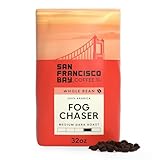
- Our iconic Fog Chaser is a blend of dark and medium roasted beans which results in a enjoyable medium dark roast coffee. It's a great combination of flavor, balance and smoothness that will chase away even the thickest morning fog.
- For finest taste, store in a cool, dark place and grind beans just berfore brewing
- QUALITY COFFEE: San Francisco Bay Coffee uses only 100% arabica coffee and certified Kosher coffee beans. Hand picked and grown in high altitude. We're so confident you'll love it, we back it with a satisfaction guarantee.
- SUSTAINABLY AND ECO- FARMED COFFEE: We offer a wide selection of sustainably grown, sourced, and packaged coffee from whole bean to ground, flavored to decaf, and much more.
- SF BAY COFFEE is a family owned, American made company with a rich tradition. Our reputation reflects on us as a family so if you're ever not happy with your purchase, call us and we'll make it right.
Coffee-to-water ratio
The ratio of coffee grounds to water determines the strength and flavor profile of your brew. A common starting point is a ratio of 1:15, meaning 1 gram of coffee for every 15 grams (or milliliters) of water. For example, if you’re using 30 grams of coffee, you’d use 450 grams (or ml) of water. You can adjust this to your preference, using a ratio closer to 1:17 for a lighter cup or 1:14 for a stronger one.
To achieve the perfect coffee-to-water ratio consistently, a coffee scale is an invaluable tool. This will help you dial in your brew every time.

- Barista-Level Precision: A 0.1g high-precision sensor with a rapid refresh rate responds instantly to changes in weight, helping you achieve consistent results across espresso, pour over, drip coffee, Chemex, V60, and filter coffee brewing.
- Integrated Brew Timer: A built-in count-up and count-down timer tracks bloom, extraction, and espresso shots. Ideal for dialing in espresso, timing Chemex and V60 pour over recipes, or steeping tea. Auto-shutoff helps preserve battery life between brews.
- Durable Waterproof Silicone Cover: The heat-resistant, dishwasher-safe silicone cover helps protect the coffee scale's spacious 5.25" x 5.25" weighing surface from splashes, spills, and hot equipment. The grooved surface provides added stability and makes cleanup quick and easy.
- Versatile Measurement Options: Quick-tare and 6 unit options make it easy to weigh coffee beans, espresso shots, matcha portions, and more. Choose from g, ml, lb, lb:oz, oz, and fl oz for added flexibility in the kitchen and coffee bar.
- Intuitive Design: A bright dual-color LCD display clearly separates weight and timer readings, while simple controls make daily brewing easy. Includes 3 AAA batteries and is backed by 5 years of coverage, with support from our St. Louis-based team whenever you need a hand.
Cleanliness/descale status
A clean French press is essential for good-tasting coffee. Coffee oils can build up on the metal filter and carafe, becoming rancid and imparting bitter, unpleasant flavors to subsequent brews. After each use, disassemble the plunger and wash all parts with warm, soapy water. Periodically, you may need to descale your French press, especially if you have hard water, by using a descaling solution or a vinegar-water mixture.
Step-by-step (brew workflow)
1. Heat Water: Heat your filtered water to the target temperature of 195°F-205°F (90°C-96°C).
- Good looks like: Water is steaming but not vigorously boiling. You can let boiling water sit for about 30-60 seconds to reach this temperature.
- Common mistake: Using boiling water straight from the kettle. This can scald the coffee, leading to bitterness. Avoid this by letting the water rest briefly.
2. Grind Coffee: Weigh your whole coffee beans and grind them to a coarse consistency, similar to sea salt.
- Good looks like: Evenly sized, coarse particles.
- Common mistake: Using a fine grind. This will result in sediment in your cup and over-extraction. Use a burr grinder if possible for consistency.
3. Preheat French Press: Pour a small amount of hot water into the empty French press carafe, swirl it around, and then discard the water.
- Good looks like: The glass carafe feels warm to the touch.
- Common mistake: Skipping this step. A cold press can cool your brew water too quickly, leading to under-extraction.
4. Add Coffee Grounds: Place the coarsely ground coffee into the preheated French press.
- Good looks like: A bed of coffee grounds at the bottom of the carafe.
- Common mistake: Not measuring your coffee. Inconsistent measurements lead to inconsistent coffee. Use a scale for accuracy.
5. Bloom the Coffee: Pour just enough hot water over the grounds to saturate them completely. Wait 30 seconds.
- Good looks like: The coffee grounds puff up and release gas (CO2), forming a “bloom.”
- Common mistake: Pouring all the water at once. The bloom releases trapped gases, allowing for more even extraction.
6. Add Remaining Water: Gently pour the rest of the hot water over the grounds, ensuring all grounds are submerged.
- Good looks like: The carafe is filled to your desired level, with all grounds wet.
- Common mistake: Agitating the grounds too much. Gentle pouring helps maintain an even bed of coffee.
7. Steep: Place the lid on the French press, but do not press the plunger down yet. Let it steep for 4 minutes.
- Good looks like: The coffee is steeping undisturbed.
- Common mistake: Pressing the plunger too early or too late. This timing is critical for proper extraction.
8. Break the Crust (Optional): After 4 minutes, you may see a crust of coffee grounds on top. Gently stir this crust with a spoon to submerge any floating grounds.
- Good looks like: Most grounds are now submerged, and the crust has broken.
- Common mistake: Vigorous stirring. Over-stirring can release fine particles and lead to a muddier cup.
9. Press the Plunger: Slowly and steadily press the plunger all the way down.
- Good looks like: The plunger moves smoothly and evenly without excessive resistance.
- Common mistake: Pressing too fast or too hard. This can force fine grounds through the filter and agitate sediment.
10. Serve Immediately: Pour the coffee into your mug right away.
- Good looks like: A rich, aromatic coffee without excessive sediment.
- Common mistake: Leaving coffee in the French press. The coffee will continue to extract and can become bitter.
Common mistakes (and what happens if you ignore them)
| Mistake | What it causes | Fix |
|---|---|---|
| Using a fine grind | Sediment in your cup, muddy texture, over-extraction leading to bitterness. | Use a coarse, uniform grind. Invest in a quality burr grinder. |
| Water temperature too high | Scorched coffee, bitter, acrid taste. | Heat water to 195-205°F (90-96°C). Let boiling water sit for 30-60 seconds. |
| Water temperature too low | Under-extracted coffee, weak, sour, thin taste. | Ensure water is within the 195-205°F (90-96°C) range. Use a thermometer if needed. |
| Incorrect coffee-to-water ratio | Coffee too weak, too strong, or unbalanced flavor. | Start with a 1:15 ratio (coffee:water by weight) and adjust to your taste. Use a scale for precision. |
| Pressing the plunger too fast | Fine grounds forced into the cup, cloudy coffee, bitter taste. | Press the plunger slowly and steadily, applying even pressure. |
| Leaving coffee in the press | Over-extraction, bitter, stale taste. | Pour all brewed coffee into your mug or a thermal carafe immediately after pressing. |
| Not cleaning the press | Rancid oils build up, imparting bitter, stale flavors. | Disassemble and wash all parts thoroughly with soap and water after each use. |
| Using stale coffee beans | Flat, dull, lifeless flavor. | Use freshly roasted beans (within 2-3 weeks of roast date) and grind just before brewing. |
| Not preheating the press | Brew water cools too quickly, leading to under-extraction. | Swirl hot water in the carafe before adding grounds to warm it up. |
Decision rules (simple if/then)
- If your French press coffee tastes bitter, then try a coarser grind because fine grounds over-extract.
- If your French press coffee tastes weak and sour, then try a finer grind (but still coarse) or a slightly hotter water temperature because under-extraction is likely.
- If your French press coffee has a lot of sediment, then ensure your grind is coarse and press the plunger slowly and steadily because these are the main causes of sediment.
- If you notice a metallic taste, then check the cleanliness of your French press and filter screen because residual oils can impart off-flavors.
- If your coffee tastes “off” or stale, then use fresher coffee beans, ground just before brewing, because freshness is key to flavor.
- If you want a stronger cup, then increase the amount of coffee grounds or decrease the amount of water (e.g., move from a 1:15 to a 1:14 ratio) because this directly impacts brew strength.
- If you find the coffee too intense, then decrease the amount of coffee grounds or increase the amount of water (e.g., move from a 1:15 to a 1:17 ratio) because this will dilute the brew.
- If your plunger is difficult to press, then your grind is likely too fine, or you’re pressing too forcefully, because a coarse grind offers less resistance.
- If you’re using tap water and the coffee tastes unpleasant, then switch to filtered water because water quality significantly affects flavor.
- If you’re brewing a larger batch and the coffee at the bottom tastes different from the top, then ensure consistent water temperature and proper stirring during brewing because temperature stratification can occur.
FAQ
What is the best coffee grind size for a French press?
The best grind size for a French press is coarse. It should resemble sea salt. A finer grind will pass through the metal filter, leading to sediment and over-extraction.
How long should I steep my French press coffee?
You should typically steep your French press coffee for 4 minutes. This duration allows for optimal extraction without over-extracting the coffee, which can lead to bitterness.
What temperature should my water be for French press coffee?
The ideal water temperature for French press coffee is between 195°F and 205°F (90°C to 96°C). Water that is too hot can burn the coffee, while water that is too cool will result in a weak brew.
How much coffee should I use in my French press?
A good starting point for the coffee-to-water ratio is 1:15 by weight. This means for every 1 gram of coffee, use 15 grams (or ml) of water. You can adjust this ratio to make your coffee stronger or weaker.
Why is my French press coffee bitter?
Bitterness in French press coffee is often caused by over-extraction. This can be due to a grind that is too fine, water that is too hot, or steeping for too long. Ensure you’re using a coarse grind and the correct water temperature.
Why does my French press coffee have so much sediment?
Excessive sediment usually means your coffee grind is too fine, or you pressed the plunger too forcefully or quickly. A coarse grind and a slow, steady press are key to minimizing sediment.
Should I stir my French press coffee?
Some brewers advocate for stirring the “crust” of coffee grounds that forms on top after the initial bloom. This can help ensure all grounds are saturated. However, avoid vigorous stirring, which can increase sediment.
Can I leave coffee in my French press after brewing?
No, you should not leave brewed coffee in the French press. The coffee will continue to extract from the grounds, leading to an increasingly bitter and unpleasant taste. Pour it into your mug or a thermal carafe immediately.
What this page does NOT cover (and where to go next)
- Specific recommendations for coffee bean origins or roast profiles (explore single-origin beans or different roast levels).
- Detailed comparisons of different French press materials (glass, stainless steel, ceramic).
- Advanced techniques like inverted French press brewing.
- Troubleshooting specific issues with individual French press models (check the manufacturer’s guide).