
Make A Latte With Regular Coffee
Quick answer
- Use your regular brewed coffee as the espresso base.
- Steam or froth milk until it’s creamy and has a fine foam.
- Combine the coffee and milk in a roughly 1:2 to 1:3 ratio, coffee to milk.
- Add sweetener or flavorings to your liking.
- Don’t expect a perfect crema; it’s a different beast than true espresso.
- Taste and adjust ratios until it hits your sweet spot.
Who this is for
- Anyone who loves lattes but doesn’t have an espresso machine.
- Home baristas looking to experiment with their existing coffee setup.
- People who want a quick, satisfying coffee drink without special equipment.
What to check first
Brewer type and filter type
Your everyday coffee maker is fine. Drip, French press, AeroPress – they all work. The filter, whether paper or metal, just needs to be clean. A dirty filter can add funky flavors.
Water quality and temperature
Use filtered water if your tap water tastes off. For brewing, aim for water between 195-205°F. Too cool, and you won’t extract enough flavor. Too hot, and you can scorch the grounds.
Grind size and coffee freshness
Grind your beans right before brewing for the best flavor. The grind size depends on your brewer. Drip usually likes medium, French press coarse, and AeroPress can go from fine to medium-coarse. Freshly roasted beans make a huge difference.
Coffee-to-water ratio
A good starting point is about 1:15 to 1:18 coffee to water. That means 1 gram of coffee for every 15-18 grams of water. For an 8 oz cup, that’s roughly 2 tablespoons of coffee.
Cleanliness/descale status
Give your brewer a good clean. Old coffee oils can make your latte taste bitter or stale. If you have a drip machine, run a descaling cycle every few months. It’s a simple step that pays off.
Step-by-step (brew workflow)
1. Brew Strong Coffee: Make a batch of coffee using your preferred method. Aim for a stronger brew than you’d normally drink, maybe using a slightly higher coffee-to-water ratio.
- What “good” looks like: A concentrated, flavorful coffee that’s not watered down.
- Common mistake: Brewing a weak cup. You need that coffee punch to stand up to the milk. Avoid by using a bit more coffee or a touch less water.
2. Prepare Your Milk: Heat your milk in a saucepan or microwave. Don’t boil it. You want it hot, but not scalding.
- What “good” looks like: Warm milk, steaming but not bubbling aggressively.
- Common mistake: Overheating the milk. This can make it taste burnt and ruin the texture. Keep an eye on it and pull it off the heat just as it starts to steam.
3. Froth the Milk: Use a handheld frother, a French press, or even a whisk to create foam. For a French press, pump the plunger vigorously up and down in the warm milk.
- What “good” looks like: A creamy, microfoam texture with small bubbles.
- Common mistake: Big, airy bubbles. This happens if you froth too aggressively or too long. Aim for a smooth, velvety texture.
For consistently creamy foam, a good handheld milk frother can make all the difference. It’s a simple tool that elevates your homemade latte experience.
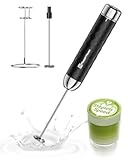
- 【Stepless Speed Control Design】Unlike traditional button-operated milk frother, this LunaFro 2.0 electric milk frother allows you to seamlessly adjust the frothing speed with unparalleled precision, ranging from 4500RPM to 10000RPM, simply by toggling the rotary switch. Experience the ultimate control as you craft the perfect froth for different beverages. Say goodbye to splashes and lackluster froth
- 【One Charging, 1440 Hours Ready】With a built-in 1200mAh lithium battery, this portable USB-C rechargeable milk frother provides up to 2 months of usage on a single charge(note: if use once per day). Fully charge the battery operated milk foam maker in just 2 hours with the included USB-C cable, eliminating the need for constant battery replacement
- 【Create Rich Creamy Foam in Seconds】Transform your morning coffee routine with our high-speed milk frother. Achieve smooth, creamy foam in just 10-15 seconds, perfect for busy mornings. Elevate your coffee experience with velvety milk foam every time
- 【Versatile for Various Beverages】 Beyond coffee, our LunaFro 2.0 milk frother excels at blending powdered supplements like protein into beverages and preparing mixed drinks. Its versatility makes it an essential tool for all your beverage-making needs, including Latte, Cappuccino, Matcha and cocoa powder
- 【Easy Cleaning and Storage】This Stepless Speed Control milk frother comes with two frothing whisks for easy replacement. Cleaning is straightforward—simply detach the whisk and wash it in water. The included compact stainless steel stand provides convenient storage and organization
4. Add Sweetener/Flavor (Optional): If you like a sweetened or flavored latte, add your sugar, syrup, or extract to the milk while it’s still warm or directly into your cup.
- What “good” looks like: Sweetener fully dissolved and evenly distributed.
- Common mistake: Adding sweetener to cold milk or after frothing. It might not dissolve properly. Do it while the milk is warm.
5. Pour Coffee into Mug: Measure out your desired amount of strong brewed coffee into your latte mug. A standard latte is often around 1/3 coffee to 2/3 milk.
- What “good” looks like: The right amount of coffee base for your mug size.
- Common mistake: Filling the mug too much with coffee. You need room for all that glorious milk.
6. Add Sweetener/Flavor to Coffee (Optional): If you didn’t add it to the milk, now’s the time to sweeten or flavor your coffee base.
- What “good” looks like: Flavor is well-mixed into the coffee.
- Common mistake: Forgetting to add it here if you didn’t do it in step 4.
7. Pour Milk: Gently pour the steamed milk into the mug with the coffee. Start with the milk, then spoon the foam on top.
- What “good” looks like: A good balance of liquid milk and fluffy foam.
- Common mistake: Dumping all the milk in at once. Pour the liquid milk first, then spoon the foam over the top for that classic latte look.
8. Sip and Enjoy: Taste your creation. Adjust if needed by adding a touch more sweetener or milk.
- What “good” looks like: A delicious, creamy coffee drink that hits the spot.
- Common mistake: Not tasting and adjusting. Your first attempt might not be perfect. Don’t be afraid to tweak it.
Common mistakes (and what happens if you ignore them)
| Mistake | What it causes | Fix |
|---|---|---|
| Using stale coffee beans | Flat, dull, or bitter taste | Use freshly roasted beans (within a few weeks of roast date). |
| Brewing coffee too weak | Latte tastes like milky coffee, lacks flavor | Increase coffee-to-water ratio or brew hotter. |
| Overheating milk | Burnt, scalded taste, poor foam | Heat milk gently, stop before it boils. Aim for 140-150°F. |
| Frothing milk too aggressively | Large, unstable bubbles (like dish soap foam) | Froth gently, incorporate air slowly, then swirl to break down larger bubbles. |
| Not cleaning the brewer regularly | Off-flavors, bitterness, stale coffee taste | Clean your brewer after every use. Descale periodically. |
| Using tap water with strong flavors | Unpleasant taste in the final drink | Use filtered water for brewing. |
| Incorrect grind size for brewer | Under/over-extraction, weak or bitter coffee | Match grind size to your brewer type (fine for espresso-like, coarse for French press). |
| Not tasting and adjusting | Unbalanced sweetness or flavor | Taste your latte before declaring it done and adjust as needed. |
| Using too much coffee | Overpowering, bitter, or too strong | Start with a standard ratio and adjust down if needed. |
| Not letting brewed coffee cool slightly | Can scald milk if poured immediately, affects taste | Let coffee cool for a minute or two before combining with milk. |
Decision rules (simple if/then)
- If your coffee tastes bitter, then check your grind size and water temperature because too fine a grind or water that’s too hot can over-extract.
- If your latte tastes weak, then try using more coffee grounds or less water for your brew because you need a strong coffee base.
- If your frothed milk has huge bubbles, then try frothing more gently or swirling the milk to break them down because you want a smooth, velvety texture.
- If your milk tastes burnt, then you overheated it, so heat it more gently next time and stop before it boils because burnt milk ruins the latte.
- If your latte doesn’t taste sweet enough, then add more sweetener or flavor syrup because it’s easier to add than take away.
- If your coffee tastes flat, then check the freshness of your beans because stale beans lack vibrant flavor.
- If your latte has an off-flavor, then clean your coffee maker because old coffee oils are the usual culprit.
- If you want a thicker, foamier latte, then consider using whole milk or a milk frother that incorporates more air because fat content and technique matter.
- If your latte is too hot to drink, then let it cool for a few minutes because patience is key to enjoying your brew.
- If you’re using an AeroPress, then a finer grind and shorter brew time can mimic espresso better for your latte base because it allows for quicker extraction.
FAQ
Can I use instant coffee for a latte?
You can, but it won’t taste as good. Instant coffee lacks the complex flavors of brewed coffee, and the result will be less satisfying. It’s better to brew some strong coffee if you can.
What kind of milk is best for frothing?
Whole milk generally froths the best, producing a rich, creamy foam. However, 2% milk can also work well. Non-dairy milks like oat or soy can froth, but the texture might vary.
How do I make latte art without an espresso machine?
True latte art is tricky without the microfoam from espresso. You can try spooning your frothed milk carefully onto the coffee surface. Sometimes, a steady hand and a slightly thicker foam can create simple shapes.
My latte is too hot. What should I do?
Let it sit for a few minutes to cool down. You can also stir it occasionally to help it cool faster. It’s better to have a latte that’s too hot and cools down than one that’s too cold.
Can I make a latte cold?
Absolutely. Brew strong coffee and let it cool completely. Then, pour it over ice, add cold milk, and sweetener if desired. This is often called an iced latte.
How much coffee should I use for the base?
Start with a ratio of about 1:15 to 1:18 coffee to water when brewing your base. For an 8 oz cup of coffee, that’s roughly 2 tablespoons of grounds. You can always adjust this for a stronger or weaker coffee flavor.
Is it really a latte if it doesn’t have crema?
Technically, a traditional latte is made with espresso, which has crema. Your homemade version won’t have that signature crema layer. It’s more of a coffee-and-milk beverage inspired by a latte.
What this page does NOT cover (and where to go next)
- Making true espresso at home (this requires specialized equipment).
- Advanced latte art techniques.
- Detailed comparisons of different milk types for frothing.
- Specific recipes for flavored syrups or homemade coffee liqueurs.
- Troubleshooting specific coffee maker issues beyond general cleanliness.