
Enjoy Nescafé Coffee Without Milk: Easy Preparation
Quick answer
- Use filtered water for the cleanest taste.
- Start with a clean brewer. Seriously, scrub it.
- Heat your water to just off the boil, around 200°F.
- Measure your Nescafé and water. Don’t guess.
- Stir thoroughly to dissolve all the granules.
- Taste and adjust your ratio if needed.
Who this is for
- Anyone who enjoys the straightforward taste of instant coffee.
- Folks looking for a quick caffeine fix without the fuss of brewing.
- People who prefer their coffee black and want to nail that perfect cup every time.
What to check first
Brewer type and filter type
Since we’re talking Nescafé, you’re likely using an instant coffee method. This means no fancy filters are usually involved, just your mug and a spoon. But hey, if you’ve got a specific instant coffee maker or a unique setup, make sure it’s clean and ready. The fewer variables, the better.
Water quality and temperature
This is huge for instant coffee. Stale tap water? It’ll taste stale. Use filtered water if you can. For temperature, you want it hot, but not boiling. Think just off the boil, around 195-205°F. Too hot, and you can scorch the coffee, making it taste bitter. Too cool, and it won’t dissolve right, leaving you with gritty bits.
Grind size and coffee freshness
With instant Nescafé, “grind size” isn’t really a thing. It’s already processed. The key here is the freshness of the granules. Keep your Nescafé jar sealed tight. Old, exposed granules can lose their flavor and pick up weird smells. Think of it like spices; they don’t last forever.
Coffee-to-water ratio
This is where you dial in your personal preference. A good starting point is usually 1-2 teaspoons of Nescafé per 6-8 ounces of hot water. But don’t be afraid to play around. Some like it strong, some like it weaker. It’s your cup, make it how you like it.
Cleanliness/descale status
Even with instant coffee, a clean mug is non-negotiable. Old coffee residue or soap scum can wreck your brew. If you’re using a kettle or any heating device, make sure it’s descaled too. Mineral buildup can affect water temperature and taste.
Step-by-step (brew workflow)
1. Gather your gear. Get your favorite mug, your Nescafé, a spoon, and your kettle or water source ready.
- What good looks like: Everything is within reach and clean.
- Common mistake: Realizing you’re out of coffee or your mug is dirty halfway through. Avoid this by prepping everything first.
Gather your gear, including your favorite coffee mug, to start your Nescafé preparation.
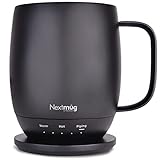
- ALWAYS THE PERFECT TEMPERATURE – The Nextmug will keep your hot coffee, tea or preferred beverage at the perfect temperature wherever you are. Simply select Warm (130° F), Hot (140° F), or Piping (150° F) and enjoy for hours.
- SMART MUG TECHNOLOGY – Long-lasting battery maintains your ideal temperature. LED lights display battery life & real-time temperature. Includes Spill-Resistant Lid & Charging Coaster.
- SUPER SIMPLE – On-board Control Button easily turns mug On/Off & sets the temperature. Takes only seconds to set the mug to your perfect temperature. No app required - no passwords, re-booting or security concerns.
- THE PERFECT GIFT - Give the gift for him and the gift for her that is certain to delight. Perfect for everyone on your list…moms, dads, grandmas, grandpas, teachers, birthdays, graduations and more!
- NEXTMUG CARES - Nextmug cares about our communities and our customers. We care by donating Nextmugs to teachers and first responders . We’re also committed to sustainable packaging by using 100% recyclable materials with all our products. Our dedicated customer service agents are based in the USA and always ready to help.
2. Heat your water. Fill your kettle with fresh, filtered water and heat it.
- What good looks like: Water is heated to the right temperature, around 195-205°F. If you don’t have a thermometer, just let it boil, then sit for 30-60 seconds.
- Common mistake: Using water that’s too hot or too cold. This can lead to bitter or weak coffee. Wait a beat after boiling.
3. Measure your Nescafé. Spoon your desired amount of Nescafé granules into your mug.
- What good looks like: You’ve measured consistently, maybe 1-2 teaspoons per 6-8 oz of water.
- Common mistake: Eyeballing it. This leads to inconsistent results. Use a measuring spoon for predictability.
To ensure consistency, use measuring spoons for your Nescafé granules, avoiding the common mistake of eyeballing it.

- Treat Yourself To A Set Worth Having - With single metal construction and heavy duty premium Stainless Steel, these measuring spoons were built with endurance in mind. No more worrying about rusting or bending. Get this set that looks beautiful, performs incredibly and will seemingly last forever.
- Magnetic For Easy Use And Storage - These magnetic spoons let you use one spoon at a time and then they nest together for easy storage. Quickly grab the spoon you need without having to fumble with opening and closing a ring. They even have U.S. and metric measurement markings that are easy to read and won't fade or rub off. You'll wonder how you ever lived without them.
- Save Time And Hassle With Your New Favorite Tool - Dual sided: The oval end is narrow to fit into most spice jars. You won't need to shake spices onto the spoon so you will save more and waste less of your expensive spices. The round end is perfect for liquids. The spoons also lay flat on the counter without spilling their contents. Save precious time too since they are dishwasher safe.
- Complete, Accurate Set To Help You Get Healthy, Measure Medicine And More - Precise quantity of ingredients is what you need to get great results with cooking and baking. It's even easier now with the included Leveler that helps you measure the exact amount required the first time.
- You can also make tasty recipes to help you lose weight with these amazing spoons. 7 spoons in Convenient Sizes: 1/8 tsp, 1/4 tsp, 1/2 tsp, 3/4 tsp, 1 tsp, 1/2 Tbsp, 1 Tbsp plus Leveler.
4. Add a splash of hot water. Pour just enough hot water into the mug to cover the Nescafé granules.
- What good looks like: A small amount of water that allows you to make a paste.
- Common mistake: Dumping all the water in at once. This can make it harder to dissolve the granules smoothly.
5. Stir into a paste. Use your spoon to stir the Nescafé and water into a smooth, thick paste.
- What good looks like: A uniform, lump-free paste. No dry granules left.
- Common mistake: Not stirring enough. This leaves undissolved clumps. Get it smooth.
6. Add the rest of the hot water. Slowly pour the remaining hot water into the mug.
- What good looks like: The water mixes evenly with the paste.
- Common mistake: Pouring too fast, which can create splashes or uneven mixing. Pour gently.
7. Stir thoroughly. Stir the entire mixture until all the Nescafé is fully dissolved and the coffee is uniform in color.
- What good looks like: No visible granules at the bottom or sides of the mug. A consistent liquid.
- Common mistake: Not stirring enough, leaving undissolved coffee at the bottom. Keep stirring until it’s all gone.
8. Taste and adjust. Take a sip. Is it too strong? Too weak?
- What good looks like: You’re happy with the flavor.
- Common mistake: Settling for a cup you don’t love. It takes seconds to add a tiny bit more water or a pinch more coffee.
9. Enjoy your brew. Sit back and savor your perfectly made Nescafé.
- What good looks like: Pure coffee enjoyment.
- Common mistake: Rushing through it. Take a moment to appreciate the simple things.
Common mistakes (and what happens if you ignore them)
| Mistake | What it causes | Fix |
|---|---|---|
| Using tap water | Off-flavors, metallic or chemical taste | Use filtered or bottled water. |
| Water too hot (boiling) | Bitter, scorched coffee taste | Let boiling water sit for 30-60 seconds before pouring. |
| Water too cool (<195°F) | Weak, underdeveloped flavor, gritty texture | Ensure water is near boiling point; check kettle’s temp settings. |
| Not measuring coffee | Inconsistent strength, too weak or too strong | Use measuring spoons for coffee granules. |
| Not measuring water | Inconsistent dilution, too strong or too weak | Use measuring cups or markings on your mug/kettle. |
| Not stirring enough (paste stage) | Undissolved clumps, gritty coffee | Stir into a smooth paste before adding all water. |
| Not stirring enough (final stage) | Granules settling at the bottom, uneven flavor | Stir until all granules are fully dissolved. |
| Using a dirty mug or spoon | Contaminated flavor, stale coffee taste | Wash mug and spoon thoroughly after each use. |
| Using old, exposed Nescafé | Stale, flavorless coffee, or odd smells | Keep Nescafé container tightly sealed; buy fresh. |
| Ignoring coffee-to-water ratio | Unbalanced taste, not to your preference | Experiment with ratios until you find your sweet spot. |
| Not letting the coffee bloom (optional) | Slightly less integrated flavor (minimal impact) | Some swear by letting the paste sit for 30 seconds before adding water. |
Decision rules (simple if/then)
- If your coffee tastes bitter, then try using slightly cooler water because boiling water can scorch the granules.
- If your coffee tastes weak, then add more Nescafé granules because you might be using too little coffee for the amount of water.
- If you see clumps at the bottom of your mug, then stir more vigorously because they are undissolved coffee granules.
- If your coffee has a metallic taste, then use filtered water because tap water impurities can affect flavor.
- If your coffee tastes stale, then check the freshness of your Nescafé and ensure the container is sealed tightly because old coffee loses its flavor.
- If you want a stronger coffee, then increase the amount of Nescafé granules you use because strength is primarily determined by the coffee-to-water ratio.
- If you want a milder coffee, then decrease the amount of Nescafé granules or add a little more hot water because this dilutes the existing coffee.
- If your brew has an odd aftertaste, then thoroughly clean your mug and spoon because residual flavors can transfer.
- If your kettle has visible mineral buildup, then descale it because this can affect water temperature and taste.
- If you’re not getting the flavor you expect, then re-evaluate your coffee-to-water ratio because this is the most significant factor in taste.
- If you notice a chalky texture, then ensure your water is hot enough and you’ve stirred sufficiently because undissolved solids cause this.
- If you’re in a hurry, then skip the elaborate steps and just stir well into hot water, but be aware consistency might suffer.
FAQ
Q: How much Nescafé should I use?
A: A good starting point is 1-2 teaspoons per 6-8 ounces of water. Adjust this based on how strong you like your coffee.
Q: Can I use cold water?
A: You can, but it’s not ideal. Cold water won’t dissolve the Nescafé granules properly, leaving you with a gritty drink. Hot water is best for instant coffee.
Q: What’s the best water temperature for Nescafé?
A: Aim for just off the boil, around 195-205°F. If you don’t have a thermometer, let your boiled water sit for about 30-60 seconds before pouring.
Q: Does the type of mug matter?
A: Not really, as long as it’s clean! Ceramic, glass, or even insulated mugs work fine. Just make sure it’s free of old coffee residue.
Q: How do I avoid a bitter taste?
A: Ensure your water isn’t boiling hot when you add it, and stir thoroughly to prevent scorching. Using quality Nescafé also helps.
Q: My coffee tastes weak. What did I do wrong?
A: You likely didn’t use enough Nescafé granules for the amount of water. Try increasing the coffee-to-water ratio next time.
Q: Is it okay to add sugar or other flavors?
A: Absolutely. While this guide focuses on black coffee, feel free to add sweeteners, spices, or other flavorings to your liking.
Q: How long does Nescafé last?
A: When stored properly in a sealed container, Nescafé can last for a very long time. However, its flavor will diminish over months. Keep it airtight for best results.
What this page does NOT cover (and where to go next)
- Advanced brewing techniques for ground coffee (e.g., pour-over, French press).
- Specific Nescafé product comparisons or reviews.
- The science behind coffee roasting and bean origins.
- Making espresso-based drinks from scratch.
- Detailed guides on milk frothing or dairy alternatives.