
How Coffee Makers Work: A Detailed Explanation
Quick answer
- Most home coffee makers heat water and then pass it over ground coffee.
- Gravity or pressure then extracts soluble compounds from the coffee.
- The resulting brew drips or is forced into a carafe or cup.
- Key elements include a water reservoir, heating element, brew basket, and carafe.
- Different types of coffee makers use varied methods for water delivery and extraction.
- The fundamental goal is to extract flavor and aroma from roasted coffee beans.
Key terms and definitions
- Brewing: The process of extracting flavor, aroma, and other compounds from ground coffee using hot water.
- Extraction: The act of dissolving soluble compounds from coffee grounds into water.
- Coffee grounds: Roasted coffee beans that have been pulverized into smaller particles.
- Heating element: An electrical component that converts electricity into heat, used to warm the water.
- Water reservoir: The container that holds the unheated water before it’s used for brewing.
- Brew basket: A perforated container that holds the coffee grounds during the brewing process.
- Carafe: A pitcher or pot, often made of glass or thermal material, that collects the brewed coffee.
- Drip coffee maker: A common type of coffee maker where hot water drips over coffee grounds.
- Pressure brewing: A method, like in espresso machines, where hot water is forced through grounds under high pressure.
- Bloom: The initial release of gases from fresh coffee grounds when they first come into contact with hot water.
For a common and convenient way to brew your morning cup, consider a drip coffee maker. These machines are user-friendly and produce consistent results.
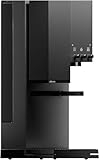
- 1. Three Levels of Automation for Any Skill Level: Choose from Autopilot, Copilot, or Free Solo mode. Autopilot handles the entire brewing process automatically. Copilot provides step-by-step guidance. Free Solo gives you full manual control. This coffee machine works for beginners and professional baristas alike.
- 2. Intuitive User Interface with Tactile Knobs and LED Matrix: The Studio features physical control knobs and a clear LED Matrix display. You can adjust grind size, water temperature, and flow rate in real time without navigating complicated touchscreen menus.
- 3. Full Customization via the xBloom App: Use the xBloom app to create, adjust, save, and share your favorite coffee recipes. Every brewing parameter can be fine-tuned and synced to the machine instantly. Your perfect cup is saved and repeatable.
- 4. Compostable xPod System for Minimal Waste and Maximum Flavor: Each xPod contains carefully selected whole beans and a built-in filter. Tap the recipe card, pour the beans into the grinder, place the pod into the dock, and press start. No capsules, no extra paper filters, no unnecessary waste.
- 5. What Is Included in the Box: The package includes the xBloom Studio, Omni Dripper 2 with Hyperflow Bottom, 10 paper filters, xPod Dock, Magnetic Dosing Cup, default recipe card, quick start guide, cleaning brush, universal power cord, and a 2-Year xbloom brand warranty. Everything you need is included—along with long-term peace of mind.
How your coffee maker works
- Water is poured into the reservoir, typically marked with measurement lines.
- The user adds ground coffee to the brew basket, often lined with a paper or permanent filter.
- When the coffee maker is turned on, a heating element begins to warm the water.
- For drip makers, the heated water is usually pumped up through a tube.
- The hot water then disperses over the coffee grounds in the brew basket.
- As water saturates the grounds, it extracts soluble coffee compounds.
- The brewed coffee then filters through the bottom of the brew basket.
- Finally, the extracted coffee drips into the waiting carafe below.
- Some coffee makers, like espresso machines, use a pump to force hot water through a compact “puck” of coffee grounds at high pressure.
- Other methods, such as French press, involve steeping grounds in hot water before pressing a plunger to separate them.
If you prefer a richer, full-bodied coffee and enjoy a more hands-on brewing experience, a French press is an excellent choice. It allows for steeping grounds directly in hot water before pressing.

- Wash in warm, soapy water before first use and dry thoroughly
- Not for stovetop use
- Turn lid to close spout
- Easy-to-clean glass carafe
What affects the result of your coffee maker
- Water quality: Filtered water free from impurities or strong odors (like chlorine) is crucial for optimal taste. Hard water can also lead to mineral buildup.
- Grind size: The fineness of the grind impacts extraction time. Coarser grinds are for longer contact (e.g., French press), finer for shorter (e.g., espresso).
- Coffee-to-water ratio: Too little coffee results in a weak, under-extracted brew; too much can lead to an overly strong or bitter taste. A common starting point is 1:16 (1 part coffee to 16 parts water).
- Water temperature: Ideal brewing temperature is typically between 195°F and 205°F. Water that’s too cool will under-extract; too hot can over-extract and burn the coffee.
- Brewing time: The duration hot water is in contact with coffee grounds. Too short, and the coffee will be weak; too long, and it can become bitter.
- Coffee freshness: Freshly roasted and freshly ground coffee yields the best flavor. Stale coffee loses much of its aromatic compounds.
- Brewer type: Different coffee makers (drip, pour-over, espresso, French press) employ distinct methods that inherently affect the final cup’s body and flavor profile.
- Filter type: Paper filters absorb some oils, resulting in a cleaner cup; metal filters allow more oils and fine particles through, leading to a fuller body.
- Cleanliness of the machine: Mineral buildup and old coffee oils can impart off-flavors to your brew, making regular cleaning essential.
Pros, cons, and when it matters for how coffee maker works
- Pros of understanding how coffee maker works: Allows for troubleshooting brewing issues, helps in selecting the right coffee maker for your needs, and enables fine-tuning variables for a better cup.
- Cons of not knowing: You might consistently produce sub-par coffee without knowing why, struggle with machine maintenance, or purchase a machine ill-suited to your preferences.
- When it matters for drip coffee makers: Critical for daily convenience and consistent results. Understanding the simple drip mechanism helps diagnose issues like slow brewing or weak coffee.
- When it matters for espresso machines: Essential for mastering the complex interplay of pressure, grind, and temperature to pull a quality shot.
- When it matters for pour-over: Understanding the flow rate and saturation process is key to achieving a balanced extraction.
- Understanding heat distribution: Knowing how the heating element functions can explain why some machines brew hotter or more consistently than others, impacting flavor.
- Understanding water path: Helps in identifying potential clogs or issues with water delivery within the machine.
- Understanding extraction mechanics: Explains why certain grind sizes are recommended for specific brewing methods, preventing over or under-extraction.
- Maintenance implications: Knowing how components work together highlights the importance of descaling and cleaning to maintain performance and machine longevity.
Common misconceptions about how coffee maker works
- Myth: More coffee means stronger coffee. While true to a point, too much coffee can lead to over-extraction and bitterness, not just strength. The correct ratio is key.
- Myth: All coffee makers brew at the same temperature. Not true. Cheaper machines often struggle to reach or maintain the ideal brewing temperature range (195-205°F), impacting flavor.
- Myth: You don’t need to clean your coffee maker if you only use water. Mineral deposits (limescale) and residual coffee oils can build up, affecting taste and machine performance.
- Myth: Espresso machines just make stronger coffee. Espresso is a brewing method that uses high pressure and fine grounds to create a concentrated shot, distinct from simply a very strong drip coffee.
- Myth: The more expensive the coffee maker, the better the coffee. While high-end machines offer more control and features, even an inexpensive machine can make good coffee with proper technique and fresh ingredients.
- Myth: Dark roast coffee has more caffeine. Generally, lighter roasts tend to have slightly more caffeine by weight than darker roasts, as some caffeine is burned off during the longer roasting process.
- Myth: Water doesn’t matter, just the coffee. Water makes up over 98% of your coffee; its quality significantly impacts the final taste.
- Myth: You can use any grind size in any machine. The grind size must match the brewing method for optimal extraction. Using too fine a grind in a drip maker can cause clogs and bitterness, while too coarse in an espresso machine will lead to weak, watery shots.
FAQ
Q: How does a coffee maker heat water?
A: Most coffee makers use an electrical heating element, often a coiled tube, to warm the water. This element is typically located beneath the water reservoir or around a tube that carries the water.
Q: Why does my coffee maker sometimes make weak coffee?
A: Weak coffee can result from several factors: using too little coffee, a grind that’s too coarse, water that isn’t hot enough, or a brewing time that’s too short. Check your coffee-to-water ratio and grind size.
Q: How often should I clean my coffee maker?
A: It’s generally recommended to clean your coffee maker, especially descaling, every 1-3 months, depending on your water hardness and usage frequency. The brew basket and carafe should be cleaned daily.
Q: What’s the difference between a drip coffee maker and an espresso machine?
A: A drip coffee maker slowly drips hot water over grounds under atmospheric pressure. An espresso machine forces hot water through finely ground, compacted coffee at high pressure (typically 9 bars) to create a concentrated shot.
Q: Can I use tap water in my coffee maker?
A: While you can, filtered water is usually preferred. Tap water often contains chlorine, minerals, or other impurities that can negatively affect the taste of your coffee and lead to mineral buildup in your machine.
Q: Why does my coffee taste bitter?
A: Bitterness often indicates over-extraction. This can be caused by water that’s too hot, a grind that’s too fine, too much coffee for the water, or brewing for too long. Stale coffee can also contribute to bitterness.
Q: What is “blooming” coffee?
A: Blooming is when hot water first contacts fresh coffee grounds, causing them to expand and release trapped carbon dioxide. This process is important for even extraction, especially in pour-over methods.
What this page does NOT cover (and where to go next)
- Specific brand models or product reviews (check consumer reports or product review sites).
- Detailed electrical or plumbing schematics of coffee makers (refer to manufacturer manuals or specialized repair guides).
- Advanced coffee chemistry or physics (explore academic papers or specialized coffee science resources).
- In-depth comparisons of every single brewing method (research specific brewing techniques like AeroPress, Chemex, etc.).
- Commercial-grade coffee equipment (look into professional barista training or commercial equipment suppliers).