
Grinding Coffee Beans The Night Before: Does It Matter?
Quick answer
- Grinding coffee beans the night before does make a difference, and generally not a positive one for your coffee’s flavor.
- Pre-ground coffee loses aroma and flavor compounds much faster than whole beans.
- Oxygen, light, and moisture are the primary enemies of fresh coffee.
- For the best cup, grind your beans immediately before brewing.
- If you must pre-grind, store it in an airtight, opaque container in a cool, dark place.
- The difference is more noticeable in pour-over and manual brewing methods.
Who this is for
- Busy individuals looking for ways to streamline their morning coffee routine.
- Coffee drinkers who have noticed a decline in their coffee’s taste but aren’t sure why.
- Anyone curious about the science behind coffee freshness and how grinding impacts it.
What to check first
Brewer type and filter type
The brewing method you use can influence how noticeable the effects of pre-grinding are. For instance, a drip machine with a paper filter might mask some of the flavor loss compared to a French press, where more of the coffee’s oils and finer particles are directly in contact with the water. Different filter types (paper, metal, cloth) also allow different amounts of oils and sediment through, which can interact with the flavor profile.
Water quality and temperature
Using filtered water can significantly improve your coffee’s taste, regardless of when you grind your beans. The ideal brewing temperature for most coffee makers is between 195°F and 205°F. Water that is too cool will result in under-extraction, leading to a weak and sour cup. Water that is too hot can scorch the grounds, causing a bitter taste.
Grind size and coffee freshness
This is where grinding the night before becomes a major factor. Coffee beans begin to stale significantly after grinding. The internal structure of the bean is broken down, exposing more surface area to oxygen, which causes rapid oxidation and the loss of volatile aromatic compounds. Freshly roasted coffee beans are crucial, and grinding them right before brewing preserves the most flavor.
Coffee-to-water ratio
A good starting point for most brewing methods is a ratio of 1:15 to 1:18 (coffee to water by weight). For example, 20 grams of coffee to 300-360 grams (or milliliters) of water. This ratio can be adjusted based on your preference for strength. An incorrect ratio can lead to over-extraction (too bitter) or under-extraction (too sour), regardless of grind freshness.
Cleanliness/descale status
A dirty coffee maker can impart stale, bitter, or even metallic flavors into your brew. Regularly cleaning your grinder and brewer, and descaling your machine according to the manufacturer’s instructions, is essential for good coffee. Buildup from old coffee oils can significantly degrade the taste of even freshly ground beans.
Step-by-step (brew workflow)
1. Measure your whole coffee beans.
- What “good” looks like: You have the exact amount of whole beans needed for your desired brew strength and volume. Using a scale is the most accurate method.
- Common mistake: Eyeballing the amount of coffee. This leads to inconsistent results.
- How to avoid: Use a kitchen scale to weigh your beans for precision.
2. Grind your coffee beans.
- What “good” looks like: You have a consistent grind size appropriate for your brewing method (e.g., coarse for French press, medium for drip, fine for espresso).
- Common mistake: Using a blade grinder that produces inconsistent particle sizes (boulders and dust).
- How to avoid: Invest in a burr grinder for a more uniform grind.
For a more uniform grind that preserves flavor, investing in a quality burr coffee bean grinder is highly recommended.
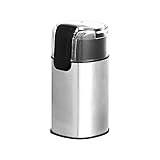
- Electric coffee bean grinder appliance for home use
- Can grind 30 grams/1 ounce of beans for drip coffee brewing in 10 seconds
- Grind coffee beans, herbs, spices, grains, nuts, and more
- Clear safety lid allows you to easily see the results in progress
- Heavy-duty stainless steel grind blade
3. Prepare your brewing equipment.
- What “good” looks like: Your brewer is clean, and any filters are properly placed and rinsed if necessary (e.g., paper filters to remove papery taste).
- Common mistake: Not rinsing paper filters, which can leave a papery aftertaste.
- How to avoid: Always rinse paper filters with hot water before adding coffee grounds.
4. Heat your water.
- What “good” looks like: Water is heated to the optimal brewing temperature, typically between 195°F and 205°F.
- Common mistake: Using boiling water, which can burn the coffee grounds.
- How to avoid: Let boiling water sit for 30-60 seconds or use a temperature-controlled kettle.
5. Add coffee grounds to the brewer.
- What “good” looks like: The grounds are evenly distributed in the filter or brewing chamber.
- Common mistake: Tamping grounds too hard in a portafilter (for espresso) or not leveling them in a drip basket.
- How to avoid: Gently tap the brewer to settle the grounds evenly.
6. Bloom the coffee (for pour-over/manual methods).
- What “good” looks like: A small amount of hot water (about twice the weight of the coffee) is poured over the grounds, and they expand and release CO2 for about 30 seconds.
- Common mistake: Skipping the bloom or pouring too much water initially.
- How to avoid: Pour just enough water to saturate all the grounds and wait for them to bubble.
7. Pour the remaining water.
- What “good” looks like: Water is added slowly and steadily, often in concentric circles for pour-over, ensuring all grounds are saturated.
- Common mistake: Pouring water too quickly or unevenly, leading to channeling and inconsistent extraction.
- How to avoid: Maintain a consistent pour rate and pattern.
8. Allow the coffee to brew/drip.
- What “good” looks like: The brewing process completes within the expected timeframe for your method (e.g., 4-5 minutes for French press, 5-8 minutes for drip).
- Common mistake: Letting the coffee sit in the grounds too long (French press) or stopping the drip too early.
- How to avoid: Adhere to recommended brew times for your chosen method.
9. Serve immediately.
- What “good” looks like: Your coffee is poured into a mug and enjoyed while fresh and hot.
- Common mistake: Letting brewed coffee sit on a hot plate for extended periods.
- How to avoid: Transfer brewed coffee to a thermal carafe or drink it promptly.
Common mistakes (and what happens if you ignore them)
| Mistake | What it causes | Fix |
|---|---|---|
| Grinding coffee beans the night before | Loss of volatile aromatics, stale flavor, muted aroma, less vibrant taste. | Grind beans immediately before brewing. |
| Using pre-ground coffee after a few days | Further degradation of flavor, increased staleness, less distinct coffee notes. | Buy whole beans and grind them fresh. |
| Storing whole beans in an opaque, airtight bag | Coffee can still lose freshness if exposed to light and air over time. | Store whole beans in an opaque, airtight container in a cool, dark place. |
| Using incorrect grind size | Under-extraction (sour, weak) or over-extraction (bitter, harsh). | Match grind size to brewing method (coarse for French press, medium for drip, fine for espresso). |
| Using stale coffee beans | Flat, dull, or cardboard-like flavors, even with fresh grinding. | Check the roast date and use beans within a few weeks of roasting. |
| Inconsistent water temperature | Under-extraction (too cool) or over-extraction (too hot, burnt flavor). | Use a thermometer or temperature-controlled kettle; aim for 195-205°F. |
| Dirty grinder or brewer | Off-flavors, bitterness, stale coffee taste, reduced aroma. | Clean your grinder and brewer regularly. |
| Incorrect coffee-to-water ratio | Weak, watery coffee (too little coffee) or overly strong, bitter coffee (too much). | Use a scale to measure coffee and water for consistent results (start with 1:15 to 1:18). |
| Not blooming coffee (for manual brews) | Uneven extraction, trapped CO2 can create channeling, less sweet cup. | Pour a small amount of water to saturate grounds and allow CO2 to escape for 30 seconds. |
| Leaving coffee on a hot plate | Coffee becomes burnt, bitter, and develops an unpleasant, stewed flavor. | Transfer brewed coffee to a thermal carafe or drink it immediately. |
Decision rules (simple if/then)
- If your coffee tastes flat or lacks aroma, then consider grinding your beans right before brewing because pre-ground coffee loses its volatile compounds rapidly.
- If you find your coffee is consistently bitter, then check your grind size; it might be too fine for your brewing method, causing over-extraction.
- If your coffee tastes sour, then your grind might be too coarse, or your water temperature is too low, leading to under-extraction.
- If you’re short on time in the morning, then pre-grinding can be a time-saver, but be aware of the flavor compromise and store it properly.
- If you’re using a French press or Aeropress, then grinding the night before will likely have a more noticeable negative impact because these methods retain more of the coffee’s oils and fines.
- If you notice a papery taste in your coffee, then you may not be rinsing your paper filter adequately before adding grounds.
- If your coffee tastes dull and lacks sweetness, then check the freshness of your beans; older beans lose their desirable flavor compounds.
- If you want to experiment with grinding the night before, then use an opaque, airtight container and store it in a cool, dark place to minimize degradation.
- If you’re making espresso, then grinding fresh is almost always non-negotiable because the precision required for espresso extraction is highly sensitive to grind consistency and freshness.
- If you’re brewing with a high-quality, single-origin bean, then grinding fresh will allow you to appreciate its nuanced flavors much more than using pre-ground coffee.
- If you’re using a basic drip machine and prefer convenience over peak flavor, then pre-grinding might be an acceptable trade-off, but still aim for within a few hours of brewing if possible.
FAQ
Does grinding coffee the night before ruin my coffee?
It doesn’t necessarily “ruin” it in the sense of making it undrinkable, but it significantly degrades the quality. You’ll lose a lot of the aromatic compounds that give coffee its complex flavors and pleasant aroma, resulting in a flatter, less vibrant cup.
How long does coffee stay fresh after grinding?
Once ground, coffee begins to lose its freshness rapidly. While whole beans can remain relatively fresh for weeks, ground coffee starts to stale within minutes. For optimal flavor, it’s best to use ground coffee within 15-30 minutes of grinding. Flavor quality continues to decline significantly after that.
What is the best way to store pre-ground coffee?
If you must store pre-ground coffee, use an airtight, opaque container. Keep it in a cool, dark place, like a pantry. Avoid the refrigerator or freezer, as condensation can introduce moisture and cause clumping and flavor loss.
Is it better to grind coffee the night before or morning of?
It is always better to grind your coffee beans in the morning, immediately before brewing. This preserves the maximum amount of volatile aromatic compounds and oils that contribute to the coffee’s flavor and aroma.
Will a good grinder make a difference if I grind the night before?
A good burr grinder will produce a more consistent grind than a blade grinder, which can help with more even extraction. However, even with a great grinder, the fundamental issue of rapid flavor loss after grinding still applies. It won’t prevent staling.
What are the signs of stale coffee?
Stale coffee often tastes flat, dull, or even cardboard-like. It may lack aroma, or the aroma might be weak and unpleasant. You might also notice a lack of sweetness and a more pronounced bitterness that doesn’t come from proper extraction.
Can I grind coffee a few hours before brewing?
Yes, grinding coffee a few hours before brewing is significantly better than grinding the night before. While not as ideal as grinding immediately before, the flavor degradation will be less severe. Try to minimize the time between grinding and brewing as much as possible.
Does the type of coffee bean matter for grinding freshness?
While all coffee beans degrade after grinding, lighter roasts and single-origin beans often have more delicate and complex flavor profiles that are more susceptible to being lost when pre-ground. Darker roasts might have some of their more robust flavors masked by the staleness more easily.
What this page does NOT cover (and where to go next)
- Specific recommendations for coffee bean origins or roast profiles.
- Detailed guides on advanced brewing techniques like siphon or cold brew.
- Comparisons of specific grinder brands or models.
- Information on coffee storage beyond general best practices.
- Troubleshooting for espresso machine-specific issues.