
Bourbon Infused Coffee Beans Recipe
Quick answer
- Infusing coffee beans with bourbon is a fun way to add a unique flavor.
- You’ll need quality green coffee beans, a good bourbon, and airtight containers.
- The process involves letting the beans absorb the bourbon’s aroma and flavor.
- Proper storage is key to prevent mold and ensure the best taste.
- Roasting the beans afterward is essential to lock in the flavor and make them brewable.
- This isn’t about making the beans alcoholic, but about adding a bourbon note.
Who this is for
- Home roasters looking to experiment with unique flavor profiles.
- Coffee enthusiasts who enjoy a hint of something special in their brew.
- Anyone curious about the craft of coffee bean infusion.
What to check first
Green Coffee Beans
You need unroasted beans for this. Think of it like marinating. Old, roasted beans won’t absorb flavor well. Fresh, good-quality green beans are your starting point.
Bourbon Quality
Don’t use your grandpa’s dusty bottle. A decent, drinkable bourbon is best. You want the flavor to be pleasant, not harsh. Something in the $20-$40 range usually works fine.
Airtight Containers
You’ll need jars or containers that seal up tight. This is crucial for the infusion process and for storing the beans afterward. Think Mason jars or similar.
Patience
This isn’t a speed run. Infusion takes time. You’re looking for the beans to absorb the aroma and essence of the bourbon, not to get soggy.
Step-by-step: How to Make Bourbon Infused Coffee Beans
This process is all about letting the beans soak up the smell and essence of the bourbon. It’s not about getting them wet.
1. Gather your supplies. You’ll need about 1 pound of green coffee beans, your chosen bourbon, and a large, airtight glass jar or container.
- What “good” looks like: Everything is clean and ready to go. No last-minute scrambling.
- Common mistake: Not having enough bourbon. You don’t need a whole bottle, but don’t skimp. Aim for enough to lightly coat the beans.
- Avoid it by: Measuring your beans and estimating the bourbon needed. A rough 1:10 ratio of bourbon to beans by volume is a good starting point.
2. Add green beans to the jar. Pour your green coffee beans into the airtight container.
- What “good” looks like: Beans are loose and can move around.
- Common mistake: Overfilling the jar. Beans need space to absorb the bourbon evenly.
- Avoid it by: Filling the jar no more than two-thirds full.
3. Add the bourbon. Pour the bourbon over the green beans. You want to coat them lightly, not drown them. The goal is for the beans to absorb the aroma, not become saturated and soggy.
- What “good” looks like: Beans are lightly moistened and have a sheen of bourbon. You should smell the bourbon immediately.
- Common mistake: Using too much bourbon. This can lead to mold and an overly strong, unbalanced flavor.
- Avoid it by: Starting with a smaller amount and adding more only if needed. You can always add, but you can’t take away.
4. Seal the jar tightly. Close the lid securely.
- What “good” looks like: A perfect seal. No air escaping.
- Common mistake: A loose lid. This allows the bourbon to evaporate and can let unwanted moisture in.
- Avoid it by: Checking the seal. If it’s not tight, try a different lid or container.
5. Shake gently. Give the jar a gentle shake to ensure all beans are exposed to the bourbon.
- What “good” looks like: Beans are evenly coated.
- Common mistake: Shaking too vigorously. You don’t want to damage the beans.
- Avoid it by: A few gentle rotations or inversions are all you need.
6. Let it infuse. Store the jar in a cool, dark place for 24-72 hours. The exact time depends on how strong you want the flavor.
- What “good” looks like: You can smell the bourbon’s aroma when you open the jar. The beans should look normal, not wet.
- Common mistake: Infusing for too long. This can make the beans too potent or even lead to issues.
- Avoid it by: Checking the aroma daily. Once it smells right, it’s probably time to move on.
7. Dry the beans. This is a critical step. Spread the beans on a clean baking sheet or tray in a single layer. Let them air dry in a well-ventilated area, away from direct sunlight, for at least 24-48 hours. You can also use a food dehydrator on a low setting.
- What “good” looks like: Beans are completely dry to the touch. They should feel like regular green beans, not sticky or damp.
- Common mistake: Not drying thoroughly. This is the fastest way to invite mold and ruin your beans.
- Avoid it by: Touching them. If they feel even slightly damp, they need more drying time.
8. Roast the beans. Once dry, roast them as you normally would. The bourbon aroma will be much more subtle after roasting, but it will contribute a unique flavor note to the final cup.
- What “good” looks like: Beans roast evenly, and you get a nice aroma during the roasting process.
- Common mistake: Roasting too dark. This can burn off the delicate infused flavors.
- Avoid it by: Roasting to your preferred level, but maybe a shade lighter than you usually do, to preserve the infused notes.
Once your beans are dry, you’ll need to roast them. For home roasters, a dedicated coffee bean roaster can provide consistent results and help you achieve the perfect roast profile for your infused beans.
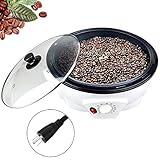
- 【Premium Quality】Operating at 110V and 800W, this electric coffee bean roaster features a non-stick chassis for easy cleaning. Equipped with a stirring rod, it ensures even roasting by continuously agitating the beans during the process. The professional thermostat provides automatic, constant temperature heating, and allows for adjustable temperature settings, enabling you to roast a variety of cereals to perfection.
- 【Honeycomb Non-Stick Bottom】The roasting chamber features a honeycomb-shaped design with a black food-grade Teflon coating. This ensures safe, easy cleaning and provides even, uniform heating for consistently perfect roasts.
- 【Professionally designed】The roaster features a heat-resistant, durable transparent cover with a four-hole ventilation system. This allows you to monitor the roasting process and observe changes in the coffee beans effortlessly while maintaining optimal ventilation.
- 【Large Capacity】Featuring an 800g tank, this roaster can accommodate a substantial amount of coffee beans, allowing you to roast in larger batches quickly and conveniently. For optimal results, we recommend roasting between 300g and 500g of beans at a time.
- 【Multifunction Use】This versatile machine is not only perfect for roasting coffee beans but also for baking a variety of other items, including beans, peanuts, chestnuts, barley, dried fruit, and popcorn. Ideal for home use, coffee shops, or restaurants, it allows you to craft and customize your unique coffee flavors to your preference.
9. Let them degas. After roasting, let the beans degas for at least 24-48 hours, just like regular roasted coffee.
- What “good” looks like: Beans are ready for grinding and brewing.
- Common mistake: Brewing too soon. Degassing allows the coffee to develop its full flavor.
- Avoid it by: Sticking to the standard degassing schedule.
10. Brew and enjoy. Grind your bourbon-infused beans and brew your coffee. Taste the difference!
- What “good” looks like: A delicious cup of coffee with a subtle, unique bourbon character.
- Common mistake: Expecting an alcoholic drink. This is about flavor, not spirits.
- Avoid it by: Managing your expectations. It’s a hint, not a shot.
Common mistakes (and what happens if you ignore them)
| Mistake | What it causes | Fix |
|---|---|---|
| Using roasted coffee beans | Poor flavor absorption; beans may become mushy. | Start with fresh, green coffee beans. |
| Using too much bourbon | Beans become waterlogged, mold risk increases, overpowering flavor. | Use bourbon sparingly; aim for light coating, not saturation. |
| Insufficient drying after infusion | Mold growth, off-flavors, potential spoilage. | Air dry thoroughly for 24-48 hours or use a dehydrator on low. Beans must be completely dry to the touch. |
| Not sealing the infusion container well | Bourbon evaporates, aroma is lost, potential for contamination. | Use a truly airtight container and check the seal. |
| Infusing for too short a time | Weak or undetectable bourbon flavor. | Infuse for at least 24 hours, checking aroma periodically. |
| Infusing for too long | Overpowering, potentially unpleasant bourbon flavor; risk of bean degradation. | Infuse for 24-72 hours max, depending on desired intensity. |
| Roasting too dark after infusion | Burns off the delicate infused flavors. | Roast to a medium or lighter roast to preserve the nuanced bourbon notes. |
| Not allowing beans to degas post-roast | Flat, underdeveloped flavor in the brewed coffee. | Let roasted beans degas for at least 24-48 hours before grinding and brewing. |
| Using low-quality bourbon | Harsh or unpleasant flavors that don’t complement the coffee. | Use a decent, drinkable bourbon for a cleaner, more enjoyable infusion. |
| Storing infused beans improperly before roasting | Mold development or spoilage if not fully dried. | Ensure beans are completely dry before storing, then roast within a reasonable timeframe. |
Decision rules (simple if/then)
- If the beans look wet or feel sticky after drying, then continue drying them because moisture is the enemy of dry beans and leads to mold.
- If you can’t smell any bourbon after 24 hours, then add a tiny bit more bourbon and reseal because the beans might need a little more to absorb the aroma.
- If the bourbon smell is overwhelmingly strong after 48 hours, then stop the infusion process and proceed to drying because you’ve likely achieved maximum flavor absorption.
- If you plan to roast within a week, then you can infuse now because the beans will dry and be ready for roasting soon.
- If you can’t roast immediately after drying, then consider waiting to infuse until you’re ready to roast because storing infused green beans long-term before roasting can be risky.
- If your goal is a subtle bourbon note, then infuse for closer to 24-36 hours because longer infusions can become too intense.
- If you want a more pronounced bourbon flavor, then infuse for 48-72 hours, but monitor closely for any signs of excess moisture.
- If you are new to this, then start with a smaller batch of beans because it’s easier to control and learn the process.
- If you notice any discoloration or fuzzy spots on the beans during drying, then discard the batch immediately because that’s a sign of mold.
- If you want to experiment with different spirits, then try whiskey or rum, but always start with a good quality spirit for best results.
FAQ
Can I use regular whiskey instead of bourbon?
Yes, you can. Different spirits will impart different flavor profiles. Whiskey, rum, or even brandy can be used, but always choose a quality spirit.
Will the coffee beans become alcoholic?
No, the beans will not become alcoholic. The roasting process burns off most of the alcohol, leaving behind the aromatic compounds and flavor notes.
How long can I store the infused green beans before roasting?
It’s best to roast them within a few weeks of infusion and drying. Prolonged storage can increase the risk of spoilage or flavor degradation.
What kind of bourbon should I use?
A decent, drinkable bourbon in the $20-$40 range is usually sufficient. You don’t need top-shelf, but avoid the cheapest options.
Can I infuse already roasted beans?
It’s not recommended. Roasted beans are dry and brittle; they won’t absorb flavors well and are prone to breaking or becoming bitter.
How do I know if the beans are dry enough?
They should feel completely dry to the touch, just like regular green coffee beans. There should be no stickiness or dampness.
What if I don’t have a food dehydrator?
Air drying on a clean tray in a well-ventilated area for 24-48 hours usually does the trick. Just make sure it’s not humid.
Will the bourbon flavor be very strong in the final cup?
Typically, it’s a subtle note. The roasting process mellows the flavor considerably, leaving a nuanced aroma and taste rather than an overpowering spirit flavor.
What this page does NOT cover (and where to go next)
- Specific roasting profiles for infused beans. (Next: Explore roast profiles for lighter roasts).
- Advanced infusion techniques like vacuum sealing. (Next: Research advanced coffee infusion methods).
- Detailed chemical analysis of flavor compounds. (Next: Look into coffee science resources).
- Commercial-scale infusion processes. (Next: Consult industrial coffee processing guides).