
Enhance Your Coffee With A Touch Of Vanilla Extract
Quick answer
- Add a tiny splash of pure vanilla extract to your brewed coffee.
- Start with just a drop or two; you can always add more.
- Pure vanilla extract works best; avoid imitation.
- Stir it in well after brewing.
- Taste and adjust. It’s easy to overdo it.
- Consider adding it to milk or creamer first for a smoother blend.
Who this is for
- Coffee drinkers who want a simple flavor boost.
- Anyone looking to elevate their morning cup without complex steps.
- Home baristas experimenting with easy flavor additions.
What to check first
This section is more about your coffee brewing setup than the vanilla itself. If your coffee tastes off before you even think about vanilla, we need to fix that first.
Brewer type and filter type
Your coffee maker matters. Drip, pour-over, French press – they all have their quirks. The filter, whether paper, metal, or cloth, also affects the final taste. A clean brewer and the right filter mean a clean slate for that vanilla goodness.
Water quality and temperature
Bad water makes bad coffee. Period. If your tap water tastes funky, your coffee will too. Filtered water is your friend. And that temperature? Too cool, and you won’t extract properly. Too hot, and you can scorch the grounds. Aim for 195-205°F for most brewing methods.
Grind size and coffee freshness
This is huge. Coffee loses its magic fast after grinding. Use whole beans and grind them right before you brew. The grind size needs to match your brewer. Too fine for a drip machine clogs it up. Too coarse for espresso? Weak sauce. Fresh beans are key to a vibrant base for vanilla.
Coffee-to-water ratio
Get this wrong, and you’re fighting an uphill battle. A good starting point for most brewing is around 1:15 to 1:18 (coffee to water by weight). So, for 10 oz of water, you’re looking at roughly 0.6 to 0.7 oz of coffee beans. Measure it out. Don’t guess.
Cleanliness/descale status
Seriously, clean your gear. Old coffee oils go rancid and make everything taste bitter. Descale your machine regularly, especially if you have hard water. A clean brewer is essential for letting the vanilla shine.
Step-by-step (brew workflow)
Let’s get that vanilla-infused cup brewing. This assumes you’ve got your basic coffee brewing down.
1. Grind your beans.
- What to do: Grind fresh, whole beans to the appropriate size for your brewer.
- What “good” looks like: A consistent grind, not too powdery and not too chunky.
- Common mistake: Using pre-ground coffee that’s been sitting around. Avoid this by grinding just before brewing.
2. Heat your water.
- What to do: Heat filtered water to the ideal brewing temperature (195-205°F).
- What “good” looks like: Water that’s hot enough to extract but not boiling violently.
- Common mistake: Using boiling water straight from the kettle, which can scorch the coffee. Let it sit for 30 seconds off the boil.
3. Prepare your brewer.
- What to do: Insert your filter (if using) and rinse it with hot water. Discard the rinse water.
- What “good” looks like: A clean, pre-heated brewer ready for coffee grounds.
- Common mistake: Forgetting to rinse paper filters, which can impart a papery taste.
4. Add coffee grounds.
- What to do: Add your measured, freshly ground coffee to the brewer.
- What “good” looks like: An even bed of grounds, ready for the water.
- Common mistake: Tamping down the grounds too much, which can lead to over-extraction. Just level them gently.
5. Bloom the coffee (for pour-over/drip).
- What to do: Pour just enough hot water to saturate the grounds, then wait 30 seconds.
- What “good” looks like: The grounds puff up and release CO2, a sign of freshness.
- Common mistake: Skipping the bloom. It helps release trapped gases for better flavor.
6. Complete the brew.
- What to do: Continue pouring water according to your brewer’s method, maintaining a steady flow.
- What “good” looks like: A steady drip or flow of brewed coffee, extracting evenly.
- Common mistake: Pouring too fast or too slow, which can lead to under or over-extraction. Be patient.
7. Add vanilla extract.
- What to do: After brewing is complete, add 1-2 drops of pure vanilla extract to your brewed coffee.
- What “good” looks like: A subtle aroma of vanilla, not an overpowering chemical smell.
- Common mistake: Adding too much vanilla. It’s potent stuff. You can always add more, but you can’t take it out.
After brewing is complete, add 1-2 drops of pure vanilla extract or a tiny amount of vanilla bean paste to your brewed coffee. Vanilla bean paste will give you tiny flecks of vanilla bean in your coffee, offering a slightly different visual and potentially a richer flavor.
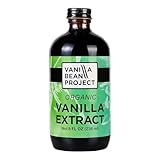
- Premium Flavor Profile: Our Pure Vanilla Extract boasts a classic, versatile flavor – rich and mellow with delightful sweet after-tones, making it the perfect all-purpose vanilla for any recipe.
- Quality and Legacy: We are a family-owned business, trusted by Michelin-Starred chefs and home cooks alike. Our commitment lies in delivering true-to-bean taste, top-tier quality, and actively supporting our vanilla farming communities.
- Exceptional Manufacturing Process: Vanilla Bean Project pure vanilla extract is made using a slow and gentle process to draw out the unique flavor profiles of vanilla beans.
- All-Natural and Certified Quality: Our Vanilla Extract is All-Natural, Allergen-Free, and Non-GMO Project Verified. Kosher and Gluten-Free. It is manufactured without any Artificial Colors or Flavors and is free from Corn Syrup.
- Aromatic and High Quality Ingredients: Our extract is marked by a potent, unique flavor and sweet fragrance, making it strongly aromatic with warm, floral notes. The high-quality ingredients include vanilla bean extractives in water, and organic alcohol.
8. Stir well.
- What to do: Stir the coffee gently to fully incorporate the vanilla extract.
- What “good” looks like: The vanilla is evenly distributed, not just sitting in one spot.
- Common mistake: Not stirring enough, leading to uneven flavor distribution.
9. Taste and adjust.
- What to do: Take a sip. If you want more vanilla, add another tiny drop and stir again.
- What “good” looks like: A balanced, pleasant vanilla note that complements the coffee.
- Common mistake: Rushing the tasting and adding too much at once. Go slow.
10. Serve and enjoy.
- What to do: Pour your vanilla-kissed coffee into your favorite mug.
- What “good” looks like: A delicious, aromatic cup of coffee.
- Common mistake: Letting it get cold. Drink it fresh!
Common mistakes (and what happens if you ignore them)
| Mistake | What it causes | Fix |
|---|---|---|
| Using imitation vanilla extract | Artificial, chemical taste that overpowers coffee. | Always opt for <em>pure</em> vanilla extract. |
| Adding too much vanilla | Overpowering, syrupy sweetness; masks coffee flavor. | Start with 1-2 drops. Taste before adding more. |
| Not stirring thoroughly | Uneven flavor; pockets of strong vanilla, then none. | Stir well after adding extract until fully blended. |
| Adding vanilla to grounds before brewing | Can lead to uneven extraction and burnt flavor notes. | Add vanilla <em>after</em> brewing to the finished coffee. |
| Using stale coffee beans | Flat, dull coffee base that vanilla can’t save. | Use freshly roasted whole beans and grind just before brewing. |
| Incorrect grind size | Under-extracted (sour) or over-extracted (bitter) coffee. | Match grind size to your brewing method (e.g., fine for espresso). |
| Using poor quality water | Off-flavors in the coffee that clash with vanilla. | Use filtered or bottled water. |
| Dirty brewing equipment | Bitter, stale coffee oils that ruin the flavor profile. | Clean your brewer and grinder regularly. Descale as needed. |
| Adding vanilla to cold coffee | Vanilla won’t disperse well; flavor is muted. | Add to hot, freshly brewed coffee for best results. |
| Expecting it to taste like a latte | Vanilla extract is concentrated; it’s a subtle flavor. | It’s an enhancement, not a full flavor replacement. |
Decision rules (simple if/then)
- If your coffee tastes bitter, then check your grind size and brew time, because these are common causes of bitterness.
- If your coffee tastes sour, then check your grind size and water temperature, because these often lead to under-extraction.
- If you can’t smell the vanilla at all, then add one more drop and stir again, because it’s likely you just started with too little.
- If the vanilla flavor is too strong, then dilute it by brewing a fresh, unflavored cup and mixing them, because you can’t remove it from the original cup.
- If you’re using a French press, then stir the vanilla in gently after pressing the plunger, because you want to integrate it without disturbing the grounds too much.
- If you’re adding vanilla to a pour-over, then add it to the carafe after the coffee has finished dripping, because it ensures even distribution.
- If you notice an odd chemical smell, then you might be using imitation vanilla, so switch to pure extract next time.
- If your brewed coffee is weak, then check your coffee-to-water ratio and grind size, because these are the most likely culprits.
- If you want a stronger vanilla flavor, then consider adding a splash of vanilla-infused simple syrup instead of extract, because it adds sweetness and a more mellow vanilla note.
- If you’re sensitive to strong flavors, then add the vanilla to your milk or creamer first, because this will temper the intensity before it hits your coffee.
FAQ
Can I add vanilla extract directly to the coffee grounds?
It’s generally best to add vanilla extract after brewing. Adding it to dry grounds can lead to uneven extraction and potentially a burnt flavor. The heat and water work best to disperse the flavor when added to the liquid coffee.
How much vanilla extract should I use?
Start with just one or two drops. Pure vanilla extract is very potent. You can always add more if needed, but it’s hard to correct if you add too much.
What’s the difference between pure and imitation vanilla extract?
Pure vanilla extract is made from vanilla beans. Imitation extract is chemically produced and often has a harsher, less complex flavor that can taste artificial in coffee. Always go for pure.
Can I add vanilla to iced coffee?
Absolutely. Add your drops of vanilla extract to the brewed coffee before you pour it over ice. Stir it well to ensure it disperses properly in the cooler liquid.
Will vanilla extract make my coffee sweet?
Pure vanilla extract itself doesn’t add significant sweetness. It adds flavor and aroma. If you want sweetness, you’ll need to add sugar, syrup, or a sweetener separately.
Is it okay to add vanilla to my coffee maker’s water reservoir?
No, this is a bad idea. Adding extract to the water reservoir can damage your machine and won’t result in good flavor. Stick to adding it to the brewed coffee.
What if my coffee still tastes bland even with vanilla?
Your base coffee might be the issue. Ensure you’re using fresh beans, the correct grind size, and the right coffee-to-water ratio. Vanilla can enhance good coffee, but it can’t fix fundamentally bad brewing.
Can I use vanilla bean paste instead of extract?
Yes, you can. Vanilla bean paste will give you tiny flecks of vanilla bean in your coffee, offering a slightly different visual and potentially a richer flavor. Use it sparingly, similar to extract.
What this page does NOT cover (and where to go next)
- Detailed guides for specific brewing methods (like espresso or Aeropress).
- The science of coffee extraction and bean varietals.
- Recipes for complex coffee drinks or syrups.
- Comparisons of different coffee bean brands or origins.
- Advanced techniques like latte art or water chemistry.