
Does Drinking Too Much Coffee Lead To Weight Gain?
Quick answer
- For most folks, coffee itself doesn’t directly cause weight gain.
- The caffeine in coffee can actually boost your metabolism a bit.
- Weight gain usually comes from what you add to your coffee.
- Excessive caffeine can mess with sleep, which can impact weight.
- Listen to your body. If you’re feeling jittery or off, you might be having too much.
Key terms and definitions
- Calorie: A unit of energy, found in food and drinks. Weight gain happens when you consume more calories than you burn.
- Caffeine: The natural stimulant in coffee. It affects the central nervous system.
- Metabolism: The process your body uses to convert food and drinks into energy.
- Cortisol: A stress hormone. Too much can sometimes lead to increased appetite and fat storage.
- Insulin: A hormone that regulates blood sugar. Its sensitivity can be affected by sleep and stress.
- Empty Calories: Calories from foods or drinks that offer little nutritional value. Think sugary syrups.
- Thermogenesis: The process by which your body burns calories to produce heat. Caffeine can slightly increase this.
- Sleep Deprivation: Not getting enough quality sleep. It can disrupt hormones that control hunger.
- Hydration: Drinking enough water. Sometimes thirst is mistaken for hunger.
- Adrenal Fatigue: A controversial concept suggesting prolonged stress can “exhaust” adrenal glands. Often linked to caffeine intake.
How it works
- Coffee beans contain caffeine, a natural stimulant.
- When you drink coffee, caffeine enters your bloodstream and travels to your brain.
- It blocks adenosine, a neurotransmitter that makes you feel tired.
- This blocking effect can make you feel more alert and energized.
- Caffeine also signals your adrenal glands to release adrenaline.
- Adrenaline can tell your fat cells to break down fat.
- This released fat enters your bloodstream as free fatty acids, available as fuel.
- This is the basis of how coffee might help with fat burning, not weight gain.
- However, the effect is generally small and temporary.
- Your body can also build a tolerance to caffeine over time.
What affects the result
- What you add: Cream, sugar, syrups, whipped cream – these are calorie bombs. A fancy latte can pack more calories than a donut.
- Your coffee habit: Are you having one cup black, or four with all the fixings? Quantity matters.
- Your personal metabolism: Everyone’s body is different. What affects one person might not affect another.
- Your sleep quality: Too much caffeine, especially late in the day, can wreck your sleep. Poor sleep messes with hunger hormones.
- Your stress levels: For some, caffeine can increase cortisol. High cortisol can lead to cravings and fat storage.
- Your activity level: If you’re burning more calories, the impact of a few extra from coffee is less significant.
- Your genetics: Some people are more sensitive to caffeine than others.
- The type of coffee: Espresso, drip, cold brew – the brewing method can slightly alter the chemical makeup.
- The freshness of the beans: While not directly about weight gain, fresher beans make better-tasting coffee, so you might need fewer additions.
- Your overall diet: Coffee is just one piece of the puzzle. What else are you eating and drinking?
- How your body processes caffeine: Some people metabolize it faster than others.
For the freshest and best-tasting coffee, consider grinding your own beans. A good coffee bean grinder can make a noticeable difference in flavor.
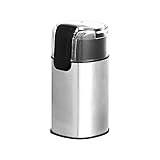
- Electric coffee bean grinder appliance for home use
- Can grind 30 grams/1 ounce of beans for drip coffee brewing in 10 seconds
- Grind coffee beans, herbs, spices, grains, nuts, and more
- Clear safety lid allows you to easily see the results in progress
- Heavy-duty stainless steel grind blade
Pros, cons, and when it matters
- Pro: Black coffee has virtually zero calories. A good way to start the day.
- Con: Sugary coffee drinks can add hundreds of calories, leading to weight gain. This is the main culprit.
- Pro: Caffeine can temporarily boost metabolism. Might help a little with calorie burning.
- Con: Too much caffeine can disrupt sleep. Poor sleep is linked to weight gain and increased appetite.
- Pro: Coffee can improve focus and energy. Good for getting through a tough workout.
- Con: For some, caffeine can spike cortisol. This can increase appetite and cravings for unhealthy foods.
- Pro: Coffee is rich in antioxidants. Good for your overall health.
- Con: If you add lots of milk and sugar, you’re consuming less nutritious calories.
- Pro: Coffee can be a ritual that helps you feel more in control of your day.
- Con: If you rely on coffee to mask fatigue from lack of sleep, you’re not addressing the root problem.
- Pro: Moderate caffeine intake is generally safe for most adults.
- Con: Excessive intake can lead to jitters, anxiety, and digestive issues, which aren’t conducive to healthy habits.
- Pro: Coffee can be part of a balanced diet.
- Con: If your diet is already high in processed foods and sugar, adding sugary coffee drinks makes it worse.
- Pro: The fat-burning effect, though small, is a positive.
- Con: It’s not a magic bullet for weight loss. Don’t expect miracles.
If you’re often on the go, using reusable coffee cups can help you avoid calorie-laden specialty drinks and stick to healthier choices.
![Karat 16 oz Paper Hot Coffee Cups [1000 ct] Disposable, Leak-Resistant Double Poly-Lined Cups for Hot Beverages, 90mm (C-K516)](https://m.media-amazon.com/images/I/31rRGtP8ehL._SL160_.jpg)
- Karat Paper Hot Cup, 16 oz, Stock Print (Case of 1000)
- Size: 16oz
- Print: Coffee
- Diameter: 90mm
- Available Sizes: 8oz, 10oz, 12oz, 16oz, 20oz, and 24oz
Common misconceptions
- Myth: Coffee makes you gain weight directly. Truth: The coffee itself, especially black, is very low in calories.
- Myth: Caffeine is a powerful fat burner. Truth: It offers a small, temporary boost, not a significant weight loss tool.
- Myth: You need coffee to have energy. Truth: While it helps, good sleep and nutrition are the foundation of energy.
- Myth: All coffee drinks are healthy. Truth: Many specialty drinks are loaded with sugar and fat.
- Myth: Coffee dehydrates you. Truth: While it has a mild diuretic effect, the water in coffee usually offsets it. Stay hydrated overall.
- Myth: If you feel jittery, you’re burning more fat. Truth: Jitters are a sign of too much caffeine, not necessarily fat loss.
- Myth: You should avoid coffee if you want to lose weight. Truth: Black coffee can be a helpful part of a weight loss plan.
- Myth: Cold brew coffee has no calories. Truth: The brewing method doesn’t change the calorie count; it’s still zero if it’s just coffee and water.
- Myth: Coffee can replace a good night’s sleep. Truth: It can mask fatigue but doesn’t provide the restorative benefits of sleep.
FAQ
Q: Can black coffee make me gain weight?
A: No, black coffee has virtually zero calories. It’s highly unlikely to cause weight gain on its own.
Q: What’s the biggest cause of weight gain from coffee?
A: It’s almost always the additions: sugar, cream, syrups, whipped cream. These add significant calories.
Q: How much caffeine is too much for weight gain?
A: There’s no specific “too much” for weight gain directly from caffeine. It’s more about how it affects your sleep, stress, and what you add to your drink.
Q: Does coffee affect my appetite?
A: For some, caffeine can temporarily suppress appetite. For others, especially with stress, it might increase cravings.
Q: Is it okay to drink coffee before a workout for fat burning?
A: A moderate amount of coffee before exercise might slightly increase fat mobilization. Just don’t overdo it.
Q: Can I drink coffee if I’m trying to lose weight?
A: Absolutely. Stick to black coffee or use minimal, low-calorie additions. It can even be helpful.
Q: What about decaf coffee and weight?
A: Decaf coffee has minimal caffeine, so its direct impact on metabolism or sleep is negligible. Weight gain would still come from additions.
Q: How does coffee affect my hormones related to weight?
A: Caffeine can influence cortisol (stress hormone) and, by affecting sleep, can disrupt hormones like ghrelin and leptin (hunger/satiety hormones).
What this page does NOT cover (and where to go next)
- Specific health benefits or risks of coffee consumption beyond weight.
- Detailed explanations of individual hormone responses to caffeine.
- Recipes for low-calorie coffee drinks.
- The precise scientific mechanisms of thermogenesis in relation to coffee.
- Recommendations for specific daily caffeine limits for different individuals.