
Creating Perfect Foam For Your Iced Coffee
Quick answer
- Use cold, whole milk for the best foam.
- Froth with a handheld frother, French press, or mason jar.
- Chill your glass and coffee before adding foam.
- Don’t overfill your frothing container.
- Aim for microfoam, not big bubbles.
- Serve immediately for the freshest foam.
Who this is for
- Home baristas looking to elevate their iced coffee game.
- Anyone who loves a creamy, luxurious texture in their cold drinks.
- Folks who want to ditch the expensive coffee shop drinks for a homemade treat.
What to check first
Brewer type and filter type
Your iced coffee base matters. Whether you brewed it hot and chilled it, or went for a cold brew method, the flavor profile is set. A good base makes a good canvas for your foam. No special filter needed for the foam itself, but the coffee base should be to your liking.
Water quality and temperature
For the coffee base, good water is key. If your tap water tastes off, your coffee will too. For the foam, you’re working with milk, so water quality isn’t a direct factor here, but the temperature of your milk is crucial.
Grind size and coffee freshness
This applies to your coffee base. Freshly ground beans make a world of difference in flavor. For iced coffee, you can use any grind size depending on your brew method – coarse for cold brew, medium for drip, fine for espresso. Freshness counts for that rich coffee flavor.
Coffee-to-water ratio
Again, this is for your coffee base. A common ratio for hot brew is 1:15 to 1:18 (coffee to water by weight). For cold brew, it’s often stronger, like 1:4 to 1:8. Adjust to your taste. Too weak, and it won’t stand up to the foam.
Cleanliness/descale status
Make sure your coffee maker is clean. A clean brewer means clean coffee flavor. For frothing, ensure your tools are spotless. Any residue can affect the taste and texture of your milk foam.
Step-by-step (brew workflow)
Step 1: Brew Your Coffee
What to do: Brew your favorite iced coffee. This could be hot coffee chilled, cold brew, or even espresso poured over ice.
What “good” looks like: A rich, flavorful coffee base that’s already chilled or ready to be chilled.
Common mistake: Brewing it hot and pouring it directly over ice. This dilutes the coffee too much.
How to avoid it: Brew ahead and chill in the fridge, or brew directly over ice if you like a slightly weaker, but instantly cold, drink.
To ensure you have a perfect base for your foam, consider using a dedicated iced coffee maker. This model is designed to brew directly over ice for optimal flavor.

- BREW BY THE CUP OR CARAFE: Brews both K-Cup pods and coffee grounds.
- MULTISTREAM TECHNOLOGY: Saturates the grounds evenly to extract full flavor and aroma in every cup, hot or cold.
- BREW OVER ICE: Adjusts temperature for maximum flavor and less ice melt for single-cup iced coffees and teas.
- STRONG BREW & EXTRA HOT FUNCTIONALITY: Brews a stronger, more intense-flavored cup and the extra hot feature brews a hotter single cup.
- MULTIPLE BREW SIZES: Brew 6, 8, 10, or 12oz single cups or 6, 8, 10, or 12-cup carafes. 12-cup glass carafe specially designed to limit dripping.
Step 2: Chill Your Glass
What to do: Place your serving glass in the freezer for at least 10-15 minutes.
What “good” looks like: A frosty glass that will keep your iced coffee and foam colder for longer.
Common mistake: Skipping this step.
How to avoid it: Seriously, just pop it in the freezer while you do the other steps. It’s worth it.
Step 3: Prepare Your Milk
What to do: Pour cold, whole milk into your chosen frothing device. Don’t fill it more than halfway, especially for mason jars or French presses.
What “good” looks like: Cold milk ready to be agitated. Whole milk gives the creamiest texture.
Common mistake: Using skim or non-dairy milk. They don’t froth as well.
How to avoid it: Stick with whole milk for the best results. If you must use alternatives, look for ones specifically designed for frothing.
Step 4: Froth the Milk (Method 1: Handheld Frother)
What to do: Submerge the whisk end of a handheld frother into the milk and turn it on. Move it up and down to incorporate air.
What “good” looks like: The milk will start to thicken and increase in volume, creating small bubbles.
Common mistake: Holding the frother too deep, which creates big, airy bubbles instead of microfoam.
How to avoid it: Start with the whisk just below the surface, then gradually lower it as foam forms.
For the best results with a handheld frother, consider investing in a quality model like this one. It makes achieving that perfect microfoam a breeze.
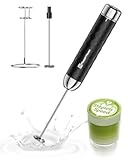
- 【Stepless Speed Control Design】Unlike traditional button-operated milk frother, this LunaFro 2.0 electric milk frother allows you to seamlessly adjust the frothing speed with unparalleled precision, ranging from 4500RPM to 10000RPM, simply by toggling the rotary switch. Experience the ultimate control as you craft the perfect froth for different beverages. Say goodbye to splashes and lackluster froth
- 【One Charging, 1440 Hours Ready】With a built-in 1200mAh lithium battery, this portable USB-C rechargeable milk frother provides up to 2 months of usage on a single charge(note: if use once per day). Fully charge the battery operated milk foam maker in just 2 hours with the included USB-C cable, eliminating the need for constant battery replacement
- 【Create Rich Creamy Foam in Seconds】Transform your morning coffee routine with our high-speed milk frother. Achieve smooth, creamy foam in just 10-15 seconds, perfect for busy mornings. Elevate your coffee experience with velvety milk foam every time
- 【Versatile for Various Beverages】 Beyond coffee, our LunaFro 2.0 milk frother excels at blending powdered supplements like protein into beverages and preparing mixed drinks. Its versatility makes it an essential tool for all your beverage-making needs, including Latte, Cappuccino, Matcha and cocoa powder
- 【Easy Cleaning and Storage】This Stepless Speed Control milk frother comes with two frothing whisks for easy replacement. Cleaning is straightforward—simply detach the whisk and wash it in water. The included compact stainless steel stand provides convenient storage and organization
Step 5: Froth the Milk (Method 2: French Press)
What to do: Pour cold milk into the French press. Pump the plunger vigorously up and down for 30-60 seconds.
What “good” looks like: The milk will become foamy and increase in volume.
Common mistake: Not pumping fast or long enough.
How to avoid it: Be energetic with the plunger. You’re basically agitating the milk to create foam.
If you don’t have a dedicated frother, a French press is a surprisingly effective tool. This classic French press is a great option for frothing milk.

- Wash in warm, soapy water before first use and dry thoroughly
- Not for stovetop use
- Turn lid to close spout
- Easy-to-clean glass carafe
Step 6: Froth the Milk (Method 3: Mason Jar)
What to do: Screw the lid on tightly and shake the jar vigorously for 30-60 seconds.
What “good” looks like: The milk will get frothy and increase in volume.
Common mistake: Not shaking hard enough.
How to avoid it: Put some muscle into it! It’s a good workout.
Step 7: Let it Settle
What to do: After frothing, let the milk sit for about 30 seconds to a minute. This allows the larger bubbles to dissipate and the foam to stabilize.
What “good” looks like: The foam will become smoother and more integrated with the liquid milk.
Common mistake: Pouring immediately after frothing.
How to avoid it: Patience, grasshopper. A short rest makes for better foam.
Step 8: Assemble Your Drink
What to do: Pour your chilled coffee into your chilled glass. Then, gently pour the foamed milk over the coffee.
What “good” looks like: A layered drink with coffee at the bottom and a creamy layer of foam on top.
Common mistake: Pouring too aggressively, which mixes the foam and coffee too much.
How to avoid it: Tilt the glass and pour slowly. You can even use a spoon to hold back the foam initially, then spoon it on top.
Step 9: Garnish (Optional)
What to do: Add a sprinkle of cocoa powder, cinnamon, or a drizzle of caramel sauce.
What “good” looks like: A beautifully presented iced coffee that’s ready to enjoy.
Common mistake: Overdoing the toppings.
How to avoid it: Less is often more. A light dusting or drizzle is usually enough.
Common mistakes (and what happens if you ignore them)
| Mistake | What it causes | Fix |
|---|---|---|
| Using skim or non-fat milk | Thin, bubbly foam that dissipates quickly. | Switch to whole milk. |
| Overfilling frothing container | Milk overflowing and making a mess. | Fill container no more than halfway. |
| Frothing hot milk | Foam won’t form properly; milk can scald. | Always use cold milk. |
| Creating large bubbles | Foam is airy and unstable, collapses fast. | Gently tap container and swirl, or use a spoon to break large bubbles. |
| Not chilling the glass | Drink warms up too quickly, ice melts faster. | Chill glass in freezer for at least 10 minutes. |
| Using stale coffee beans | Flat, uninspired coffee base that doesn’t complement foam. | Use freshly roasted and ground beans. |
| Pouring foam too fast | Foam and coffee mix prematurely, losing the layered effect. | Pour gently and slowly, tilt the glass. |
| Not cleaning frothing tools | Off-flavors in your foam, potential for bacteria. | Wash frothing tools immediately after use. |
| Using too much coffee for cold brew | Coffee is too concentrated, can taste bitter. | Adjust coffee-to-water ratio for cold brew. |
| Adding foam to hot coffee | Foam will likely dissipate into the hot liquid. | Foam is best for iced drinks. |
Decision rules (simple if/then)
- If you want the creamiest foam, then use whole milk because its fat content creates stable microfoam.
- If your frother is creating big bubbles, then try lowering the frother deeper into the milk because this helps break them up.
- If your foam is collapsing too quickly, then let the milk settle for an extra minute after frothing because this allows the foam to stabilize.
- If your iced coffee tastes weak, then try using a stronger coffee base or less ice because the coffee needs to stand up to the milk.
- If you don’t have a frother, then a mason jar and vigorous shaking will work because agitation is the key.
- If your milk is frothing but not getting thick, then ensure it’s cold enough because warmer milk won’t froth as well.
- If you’re making cold brew and it tastes bitter, then you might be using too much coffee or a grind that’s too fine because this can lead to over-extraction.
- If you’re aiming for latte art, then you need to focus on creating fine microfoam, not just airy bubbles, because that’s what allows for pouring patterns.
- If your iced coffee is already melted ice water, then add more ice and pour your foam on top gently because it will still provide a nice texture.
- If you’re using a non-dairy milk and it’s not frothing, then try a barista-blend version because those are formulated for better foam.
FAQ
What’s the best type of milk for iced coffee foam?
Whole milk is generally the best because its fat content helps create a rich, stable microfoam. It’s the classic choice for a reason.
Can I make foam without a special frothing tool?
Absolutely. A French press or a mason jar with a tight lid can work wonders. Vigorous shaking or plunging creates the agitation needed for foam.
Why is my iced coffee foam disappearing so fast?
This usually happens if you used skim milk, frothed too aggressively creating big bubbles, or didn’t let the foam settle. Cold, whole milk and a bit of patience are your friends.
How do I get that smooth, microfoam texture?
The key is incorporating air without creating huge bubbles. For handheld frothers, start just below the surface and move around. For French presses, pump steadily. Tapping the container gently afterwards can help break up larger bubbles.
Can I use leftover hot milk to make foam?
No, you really need cold milk. Hot milk won’t froth properly and can even scald, which affects the taste. Always start with chilled milk.
Does the temperature of my coffee matter for the foam?
Yes, for iced coffee, your coffee base should be cold. Pouring foam over hot coffee will cause it to dissipate almost instantly.
What if I want to make iced coffee foam with non-dairy milk?
It’s possible, but not all non-dairy milks froth well. Look for “barista blend” versions of oat, almond, or soy milk, as they are formulated to foam better. Results can vary.
How much foam should I add to my iced coffee?
That’s totally up to you! Some people like just a cap of foam, while others prefer a generous layer. Experiment to find your perfect ratio.
What this page does NOT cover (and where to go next)
- Specific recipes for flavored iced coffees.
- Detailed guides to latte art pouring techniques.
- Comparisons of different types of electric milk frothers.
- Troubleshooting advanced espresso machine steaming issues.
- The science behind milk protein denaturation and foam stability.