
How To Make Refreshing Cappuccino Iced Coffee
Quick answer
- Use cold brew concentrate or strong espresso for the coffee base.
- Froth cold milk (dairy or non-dairy) for that signature cappuccino foam.
- Sweeten and flavor your milk before or after frothing.
- Combine coffee, frothed milk, and ice.
- Top with a dollop of that creamy foam.
- Adjust sweetness and strength to your liking.
Who this is for
- Anyone craving a cool, creamy coffee treat without a trip to the cafe.
- Home baristas looking to elevate their iced coffee game.
- Folks who love the texture and taste of a cappuccino but want it chilled.
What to check first
Brewer type and filter type
Your coffee base is key. Are you using an espresso machine, a pour-over, or a cold brew maker? Each gives a different flavor profile. Espresso is classic for cappuccino, but a strong cold brew can work wonders for iced versions. Make sure your filter is clean and suitable for your brew method. A paper filter for pour-over, a metal filter for French press, or just letting the grounds settle for cold brew.
Water quality and temperature
Good coffee starts with good water. If your tap water tastes funky, your coffee will too. Filtered water is your best bet. For iced coffee, especially if you’re not using cold brew, the temperature of your initial coffee brew matters. You want it hot enough to extract flavor properly, but you’ll be chilling it down anyway. For cold brew, it’s just room temperature or cold water for a long steep.
Grind size and coffee freshness
This is a biggie. Espresso needs a fine grind, pour-over a medium, and French press a coarse. Cold brew can handle a coarse grind too. Freshly roasted and freshly ground beans make a world of difference. Pre-ground coffee loses its punch fast. Grind right before you brew, seriously.
Coffee-to-water ratio
Too little coffee and you get weak, watery disappointment. Too much and it’s bitter and overwhelming. For a strong iced coffee base, aim for a higher coffee-to-water ratio than you might for hot coffee. Think 1:15 or even 1:12 for a concentrate. For espresso, it’s usually around 1:2 for a double shot.
Cleanliness/descale status
Your equipment needs to be clean. Old coffee oils go rancid and make your fresh brew taste like stale regrets. Give your brewer, grinder, and any frothing tools a good wash. If you have a machine that requires descaling, do it. It’s not just about taste; it’s about performance.
Step-by-step (brew workflow)
1. Brew your coffee base.
- What to do: Make a strong batch of coffee. Espresso shots (double or triple) or a concentrated cold brew are ideal. If using a drip machine, use less water than usual for a stronger brew.
- What “good” looks like: A rich, dark liquid that smells amazing. You want it potent because the ice and milk will dilute it.
- Common mistake and how to avoid it: Brewing weak coffee. Use more grounds or less water than your usual hot coffee recipe.
2. Chill the coffee base.
- What to do: Let your hot-brewed coffee cool to room temperature, then refrigerate it until thoroughly chilled. Cold brew is already cold.
- What “good” looks like: A cold, concentrated coffee liquid, ready to be poured over ice.
- Common mistake and how to avoid it: Pouring hot coffee directly over ice. This melts the ice too fast and dilutes your drink. Patience is key here.
3. Prepare your milk.
- What to do: Pour your desired amount of cold milk (dairy or non-dairy) into a frothing pitcher or jar. Add sweetener (sugar, syrup) and any flavorings (vanilla extract, cocoa powder) now if you prefer.
- What “good” looks like: Cold milk, ready to be frothed. Sweeteners should be dissolved if possible.
- Common mistake and how to avoid it: Using warm milk. Cold milk froths better and creates a more stable foam.
4. Froth the milk.
- What to do: Use a handheld frother, an espresso machine’s steam wand, or shake vigorously in a sealed jar until foamy. Aim for microfoam, which is small, velvety bubbles.
- What “good” looks like: A pitcher of light, airy, creamy foam with minimal large bubbles. It should hold its shape.
- Common mistake and how to avoid it: Over-frothing or under-frothing. Too much air creates huge, unstable bubbles. Not enough air results in just warm milk.
5. Add ice to your serving glass.
- What to do: Fill a tall glass generously with ice cubes.
- What “good” looks like: A glass packed with ice, ready to keep your drink cold.
- Common mistake and how to avoid it: Not using enough ice. Your drink will warm up too quickly.
For the best presentation and to keep your drink colder for longer, consider using specialized iced coffee glasses.
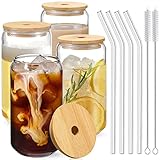
- PRODUCT CONFIGURATION: Drinking glass set includes 4 glass cups [ Diameter - 3 inches, Height - 5.6 inches ],4 nature bamboo lids, 4 reusable glass straws and 2 cleaning brushes, Classic design tumbler
- DURABLE and SAFE: The glasses are made of high-quality durable clear glass, Lead-free and BPA-free. It can be used safely for a long time. This thick clear glass can withstand the sudden changes in the temperature difference between -68°F to 212°F, making them dishwasher safe. If you want to decorate this glass, you can do DIY easily without breakage
- MULTI-PURPOSE: The glassware Great for any Occasion, any hot and cold drinks, home essentials. It is widely loved by families, kitchen, breweries, cafes, bars and restaurants. You can use it to make perfect tea, bubble Pearl Milk Tea, soda, water, iced coffee, smoothie, fruit juice or any other interesting holiday drinks
- AMAZING GIFT: This jar is very fashionable, aesthetic and characteristic. Excellent workmanship. Perfect Gifts for Women, House warming gifts, Tea mug Sets, Highball Glasses, Home Bar Accessories, Birthdays, Graduation, Weddings and Christmas Gifts
- SATISFIED SERVICE: This glass set is packaged in the heavy bubble holder and thick carton box to prevent damage while in transport. If the glass set you received was damaged or imperfect or you are not satisfied, we will offer a satisfactory solution
6. Pour coffee over ice.
- What to do: Pour your chilled, concentrated coffee base over the ice.
- What “good” looks like: A glass filled with dark coffee and ice.
- Common mistake and how to avoid it: Not leaving enough room for milk and foam. Gauge how much coffee you’re pouring.
7. Add remaining milk (optional).
- What to do: If you want more milky coffee beyond the foam, pour some of the un-frothed cold milk into the glass now.
- What “good” looks like: A layered or blended look, depending on how you pour.
- Common mistake and how to avoid it: Adding too much milk and not leaving space for the foam.
8. Spoon on the foam.
- What to do: Gently spoon the frothed milk and foam from your pitcher onto the top of the coffee and milk mixture.
- What “good” looks like: A fluffy cap of foam sitting on top of your drink.
- Common mistake and how to avoid it: Pouring the foam too aggressively. This can cause it to break up and mix in too much.
9. Garnish (optional).
- What to do: Dust with cocoa powder, cinnamon, or drizzle with chocolate syrup.
- What “good” looks like: A visually appealing drink that’s ready to be enjoyed.
- Common mistake and how to avoid it: Overdoing the toppings. Keep it simple to let the coffee and milk flavors shine.
Common mistakes (and what happens if you ignore them)
| Mistake | What it causes | Fix |
|---|---|---|
| Using stale coffee beans | Flat, bitter, or papery taste | Use freshly roasted beans and grind them just before brewing. |
| Incorrect grind size | Under-extraction (sour) or over-extraction (bitter) | Match grind size to your brewing method (fine for espresso, coarse for cold brew). |
| Too much ice | Over-diluted, weak coffee | Use enough ice to chill, but don’t drown the coffee. |
| Not chilling coffee base | Melted ice, watery drink | Let hot coffee cool, then refrigerate before serving over ice. |
| Using warm milk for frothing | Poor foam quality, unstable bubbles | Always use cold milk for the best froth. |
| Over-steeping cold brew | Bitter, astringent flavor | Stick to recommended brew times (12-24 hours) and then strain. |
| Not cleaning equipment | Off-flavors, buildup, poor performance | Clean your brewer, grinder, and frother regularly. Descale as needed. |
| Incorrect coffee-to-water ratio | Weak or overly strong coffee | Start with a ratio around 1:15 for strong coffee and adjust to taste. |
| Using tap water with off-flavors | Unpleasant taste in the final drink | Use filtered water for a cleaner, brighter coffee flavor. |
| Pouring hot coffee directly into a glass with ice | Rapidly melting ice, diluting the coffee too soon | Let hot coffee cool down before pouring over ice. |
Decision rules (simple if/then)
- If your coffee tastes sour, then try a finer grind because a finer grind increases extraction.
- If your coffee tastes bitter, then try a coarser grind because a coarser grind decreases extraction.
- If your cold brew tastes weak, then use more coffee grounds or steep for longer because more coffee or longer contact time increases strength.
- If your frothed milk has large, unstable bubbles, then try frothing at a colder temperature or for a shorter time because colder milk and less aeration create finer foam.
- If your iced coffee isn’t cold enough, then use more ice or chill your coffee base longer because more cold mass or a colder starting point keeps it cooler.
- If you prefer a sweeter drink, then add your sweetener to the milk before frothing because it dissolves better and incorporates evenly.
- If you’re using a non-dairy milk and it’s not frothing well, then try a different brand or type (like oat or soy) because some non-dairy milks froth better than others.
- If your espresso shots are pulling too fast, then grind finer because a finer grind offers more resistance to water flow.
- If your espresso shots are pulling too slow, then grind coarser because a coarser grind allows water to pass through more quickly.
- If you want a stronger coffee flavor without more caffeine, then consider brewing a more concentrated coffee base rather than adding more espresso shots.
- If your cappuccino foam is collapsing too quickly, then ensure your milk was very cold before frothing and that you didn’t over-aerate it.
FAQ
What’s the best coffee to use for iced cappuccino?
Espresso is traditional for a cappuccino base, so double or triple shots work great. A very strong cold brew concentrate is also an excellent option for a smoother, less acidic iced version.
Can I use any kind of milk?
Yes, you can use dairy milk (whole, 2%, skim) or non-dairy alternatives like oat, almond, soy, or cashew milk. Whole milk generally froths the best, but many non-dairy options can produce good foam too.
How do I get that nice foam on top?
The key is very cold milk and using a frothing tool (handheld wand, steam wand on an espresso machine, or even a jar to shake vigorously). You want to introduce air while keeping the milk cold to create microfoam.
Do I need an espresso machine?
Not necessarily! While espresso is ideal, you can make a strong coffee concentrate with other methods like a Moka pot, Aeropress, or even a very strong drip coffee. Cold brew concentrate is also a fantastic base.
How can I sweeten my iced cappuccino?
You can add sugar, simple syrup, or flavored syrups directly to the coffee base, the milk before frothing, or even stir it into the finished drink. Simple syrup dissolves best in cold liquids.
Is there a difference between iced latte and iced cappuccino?
Yes. An iced cappuccino typically has more foam and a higher ratio of foam to milk compared to an iced latte, which is mostly milk and a shot of espresso. The texture is the main differentiator.
How do I make it less watery?
Use a concentrated coffee base (stronger brew or cold brew concentrate) and ensure you’re using plenty of ice. Chilling your coffee base thoroughly in the fridge before pouring over ice also helps prevent rapid melting.
Can I add flavors to my iced cappuccino?
Absolutely! Vanilla extract, caramel syrup, chocolate syrup, or even a pinch of cinnamon or nutmeg can add delicious complexity. Add them to your milk before frothing for the best integration.
What this page does NOT cover (and where to go next)
- Detailed guides on specific brewing methods (e.g., “How to Dial In Espresso”).
- Advanced milk steaming techniques and latte art.
- The science behind coffee extraction and flavor compounds.
- Comparisons of different coffee bean origins and roast profiles.
- Recipes for specific flavored syrups or homemade toppings.