
Coffee And Tea Blend Recipe
Quick Answer
- When blending coffee and tea, aim for a ratio of 70-80% coffee to 20-30% tea for a balanced flavor.
- Start with lighter roasts of coffee and delicate teas like green or white tea to avoid overpowering notes.
- Grind coffee beans to your usual preference, but consider a slightly coarser grind for the tea component if brewing together.
- Brew the blend using your preferred method, adjusting steep/brew times to accommodate both coffee and tea.
- Taste and adjust the ratio incrementally in subsequent brews until you achieve your desired flavor profile.
- Consider brewing components separately and then combining to have more control over each element.
Who This Is For
- Adventurous home baristas and tea enthusiasts looking to experiment with novel beverage combinations.
- Individuals who enjoy exploring unique flavor profiles and are not afraid to deviate from traditional brewing methods.
- Those who have a surplus of coffee beans or tea leaves and want to find creative ways to use them.
What to Check First
- Coffee and Tea Types:
- Brewer Type and Filter Type: Ensure your chosen brewing method can accommodate both coffee grounds and tea leaves, or plan for separate brewing. For example, a French press can handle both if you’re careful with the press. A drip machine might require a specialized filter or separate brewing. Paper filters are generally fine for coffee, but some delicate teas may benefit from a metal or cloth filter.
- Coffee and Tea Freshness: Stale coffee or tea will result in a flat, uninspired blend. Check roast dates for coffee and packaging dates for tea. Aim for coffee roasted within the last 2-4 weeks and tea within the last 6-12 months, depending on the type.
- Water Quality and Temperature:
- Water Quality: Just as with single-origin brews, the quality of your water significantly impacts the final taste. Use filtered water if your tap water has a strong mineral taste or odor. Avoid distilled water, as it lacks the minerals that help extract flavor.
- Water Temperature: Different teas and coffees have optimal brewing temperatures. Generally, coffee brews best between 195-205°F (90-96°C). Delicate teas, like green or white, prefer cooler temperatures (160-180°F or 71-82°C), while black teas can handle hotter water (185-205°F or 85-96°C). If brewing together, you’ll need to find a compromise or brew separately.
- Grind Size and Coffee Freshness:
- Grind Size: For coffee, grind to your usual preference for your brewing method (e.g., medium for drip, coarse for French press). If adding tea leaves to the coffee grind, consider if they are whole leaf or broken. Whole leaves might require a slightly coarser grind overall to ensure proper extraction without over-extracting finer particles.
- Coffee Freshness: Grinding coffee beans just before brewing is crucial for capturing their aromatic oils and vibrant flavors. Pre-ground coffee loses its potency much faster.
- Coffee-to-Water Ratio:
- Ratio: A common starting point for coffee is a ratio of 1:15 to 1:18 (e.g., 1 gram of coffee to 15-18 grams of water). For a blend, you’ll need to adjust this to account for the tea. A good starting point for a coffee-tea blend might be 70-80% coffee and 20-30% tea by weight. For example, if you typically use 20 grams of coffee, try 16 grams of coffee and 4 grams of tea.
- Cleanliness/Descale Status:
- Cleanliness: Residue from previous brews, whether coffee oils or tea tannins, can impart off-flavors. Ensure your brewer, grinder, and any vessels are thoroughly cleaned before starting.
- Descale Status: Mineral buildup (scale) can affect water temperature and flow, impacting extraction and potentially adding a chalky taste. Descale your coffee maker regularly according to the manufacturer’s instructions.
Step-by-Step: Brewing Your Coffee and Tea Blend
1. Select Your Coffee and Tea: Choose a coffee roast and tea type that you believe will complement each other. For instance, a medium-roast coffee with a mild black tea or a light roast with a green tea.
- What “good” looks like: Visually appealing components that don’t appear to clash in terms of leaf size or color.
- Common mistake: Choosing two very strong, dominant flavors that will compete rather than harmonize.
- How to avoid: Start with milder options and build complexity.
2. Measure Your Coffee and Tea: Weigh your coffee beans and tea leaves according to your chosen ratio. A good starting point is 75% coffee and 25% tea by weight.
- What “good” looks like: Precise measurements for consistency.
- Common mistake: Eyeballing quantities, leading to unpredictable results.
- How to avoid: Use a digital scale.
3. Grind Your Coffee: Grind your coffee beans to the appropriate coarseness for your brewing method. If you’re combining tea leaves, consider their size and adjust the coffee grind slightly if needed, perhaps a touch coarser if using whole tea leaves.
- What “good” looks like: Evenly sized coffee grounds with no excessive fines or boulders.
- Common mistake: Grinding too fine, which can lead to over-extraction and bitterness.
- How to avoid: Use a quality burr grinder and experiment with settings.
4. Prepare Your Brewer: Ensure your brewing device is clean and preheated. If using a pour-over, rinse your paper filter with hot water to remove any papery taste and warm the brewing vessel.
- What “good” looks like: A clean brewer and a warmed brewing cone/carafe.
- Common mistake: Forgetting to preheat, which can shock the coffee and tea, affecting extraction.
- How to avoid: Run hot water through the brewer before adding grounds.
5. Add Coffee and Tea to Brewer: If brewing together, add your pre-measured and ground coffee and tea to the filter or brewing chamber. Distribute them evenly.
- What “good” looks like: A uniform bed of coffee and tea.
- Common mistake: Clumping or uneven distribution, which can lead to channeling and uneven extraction.
- How to avoid: Gently shake or tap the brewer to settle the grounds.
6. Heat Your Water: Heat your filtered water to the optimal temperature. If brewing a blend with different requirements, aim for a compromise temperature (e.g., 190-195°F or 88-90°C) or brew separately.
- What “good” looks like: Water at the target temperature, ideally measured with a thermometer.
- Common mistake: Using water that is too hot or too cool, significantly impacting flavor.
- How to avoid: Use a temperature-controlled kettle or a thermometer.
7. Bloom (if applicable): For methods like pour-over or French press, pour just enough hot water to saturate the coffee and tea, then let it sit for 30-45 seconds. This allows gases to escape.
- What “good” looks like: A gentle bubbling and expansion of the coffee and tea bed.
- Common mistake: Skipping the bloom, which can result in a less flavorful and potentially bitter cup.
- How to avoid: Ensure all grounds are wet and allow adequate time for degassing.
8. Brew the Blend: Continue pouring water over the coffee and tea according to your brewing method’s standard procedure. For pour-over, this might be a slow, circular motion. For French press, it’s a steady pour followed by steeping.
- What “good” looks like: A steady flow of liquid and a consistent extraction process.
- Common mistake: Pouring too quickly or unevenly, causing water to bypass parts of the coffee and tea.
- How to avoid: Maintain a consistent pour rate and pattern.
9. Steep/Finish Brewing: Allow the coffee and tea to steep or drip for the appropriate amount of time. This will be a balance, as tea often requires less time than coffee. A total brew time of 3-5 minutes is common for many methods.
- What “good” looks like: The brewing process completes within the expected timeframe.
- Common mistake: Over-steeping, which can lead to bitterness from both coffee and tea.
- How to avoid: Time your brew carefully and stop the process promptly.
10. Separate and Serve: Once brewing is complete, separate the liquid from the grounds and tea leaves. For French press, press the plunger down slowly. For pour-over, remove the filter.
- What “good” looks like: A clear separation with no grounds or leaves in the final beverage.
- Common mistake: Pressing the French press too hard, forcing fines into the cup.
- How to avoid: Press the plunger gently and steadily.
11. Taste and Adjust: Sample your blend. Note the balance of flavors, aroma, and body.
- What “good” looks like: A pleasant, harmonious taste that is greater than the sum of its parts.
- Common mistake: Not tasting critically or making notes for future adjustments.
- How to avoid: Use a tasting journal to record your observations.
12. Refine for Next Brew: Based on your tasting notes, adjust the coffee-to-tea ratio, water temperature, or grind size for your next attempt.
- What “good” looks like: A plan for improvement based on feedback.
- Common mistake: Not making any changes, leading to the same results.
- How to avoid: Systematically tweak one variable at a time.
Common Mistakes (and What Happens If You Ignore Them)
| Mistake | What It Causes | Fix |
|---|---|---|
| Using stale coffee or tea | Flat, dull, or off-flavors; lack of aroma. | Use freshly roasted coffee and properly stored tea. Check dates and buy in smaller quantities. |
| Incorrect water temperature | Under-extraction (sour, weak) or over-extraction (bitter, harsh). | Use a thermometer or temperature-controlled kettle. Aim for 195-205°F for coffee, cooler for delicate teas. |
| Wrong grind size | Under-extraction (too coarse) or over-extraction (too fine). | Use a burr grinder and adjust based on your brew method and the blend’s components. |
| Uneven coffee/tea distribution | Channeling, leading to uneven extraction and inconsistent flavor. | Gently shake or tap the brewer to create an even bed of grounds. |
| Over-extraction (too long a brew time) | Bitter, astringent, and unpleasant taste from both coffee and tea. | Time your brew carefully. For blends, err on the side of shorter extraction times initially. |
| Using poor quality water | Off-flavors, masking the nuances of the coffee and tea. | Use filtered water. Avoid tap water with strong odors or tastes, and distilled water. |
| Not cleaning brewing equipment | Lingering flavors from previous brews that contaminate the new blend. | Clean all brewing equipment thoroughly after each use. Descale regularly. |
| Incorrect coffee-to-tea ratio | One component overpowers the other, or the blend tastes unbalanced. | Start with a 70-80% coffee, 20-30% tea ratio and adjust incrementally based on taste. |
| Brewing components separately | Loss of potential synergy between coffee and tea flavors if not done correctly. | If brewing separately, ensure each component is brewed optimally before combining. |
| Not blooming the coffee/tea | Gassy coffee/tea can lead to uneven extraction and a less developed flavor. | Allow a 30-45 second bloom with a small amount of hot water before continuing the brew. |
Decision Rules
- If your coffee tastes too bitter, then reduce the coffee-to-tea ratio slightly or shorten the brew time because over-extraction is likely.
- If your blend tastes weak or sour, then increase the coffee-to-tea ratio or try a slightly finer grind because under-extraction is likely.
- If you are using a delicate green tea, then use water between 160-180°F (71-82°C) because hotter water will scorch the leaves and create bitterness.
- If you are using a robust black tea, then you can use hotter water, closer to coffee brewing temperatures (185-205°F or 85-96°C), because it can handle the heat.
- If your blend has an unpleasant, chalky taste, then check your water quality and consider using filtered water because mineral buildup or impurities can cause this.
- If you want to highlight the floral notes of a specific tea, then pair it with a light-roast coffee because darker roasts can overpower delicate aromatics.
- If you are unsure about the ideal brew time for a blend, then start with the shorter end of the typical range for coffee (around 3-4 minutes) and adjust upwards if needed because over-extraction is a common pitfall.
- If you are using whole tea leaves with coffee grounds, then consider a slightly coarser coffee grind to ensure even extraction of both components.
- If you want maximum control over each element’s flavor profile, then brew the coffee and tea separately and combine them to taste.
- If you notice sediment in your cup after using a French press, then press the plunger more slowly and gently next time because excessive force can push fine particles through the filter.
- If the aroma of your blend is muted, then ensure both your coffee and tea are fresh and that you are grinding coffee just before brewing.
- If you are experimenting with a new blend and the first attempt isn’t perfect, then don’t be discouraged; adjust one variable (like ratio or grind) and try again.
FAQ
- Can I just put tea leaves in my coffee maker?
While you can technically add tea leaves to a coffee maker, it’s not ideal for optimal flavor. Coffee makers are designed for coffee’s brewing characteristics. For best results, consider a separate brewing method for the tea or a brewer that can handle both, like a French press.
If you’re looking for a convenient way to brew tea separately or within a coffee maker’s basket, a good tea infuser can be a game-changer. This allows you to control the tea’s steeping time precisely.
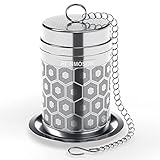
- Upgraded Micron Mesh: loose leaf tea steeper is Ideal to hold tea leaves, particles, or ground coffee. Compared to traditional tea strainer, our tea ball features 50% more ultra fine, half-sized holes for optimal tea flavor and minimal sediment leak. Ideal for rooibos, herbs, green tea, Chai, ground coffee, small tea leaves and etc.
- High-Quality Materials: Made of 304 food-grade stainless steel, tea ball infuser for loose tea is easier to be cleaned. Besides, loose tea steeper ensures no metallic taste on your tea or coffee and never rust for years of use. Money-saving and eco-friendly alternative to disposable tea bags and paper filters.
- Easy to Open and Close: With the design of thread top, the lids screw easily and are much more secure than the traditional twist lid, so the tea leaves will be held tightly and the lid never escapes during the process of brewing.
- Wide Application: tea steeper is not only for loose tea leaves but also a spice filter, infusing spices, herbs, and seasonings in soups, sauce, broths, and stews. Extended 4.3” chain with S-handle makes tea infusers can catch securely on any rim of mugs, cups, teapots, kettles, bottles, and pitchers.
- Package: Comes with 1.5” diameter and 2.2” high tea balls for loose tea and 1 saucer. The saucer is helpful for avoiding making a mess when you take out the loose leaf tea infusers after brewing.
- What’s the best way to combine coffee and tea flavors?
The best approach is often to find complementary flavors. For example, chocolatey coffee notes might pair well with a malty black tea, or citrusy coffee notes with a bright green tea. Experimentation is key.
- Should I grind the tea leaves with the coffee beans?
It depends on the tea. Whole tea leaves might be best left whole or lightly crushed, while smaller tea fragments might be ground finer. If grinding together, a slightly coarser coffee grind might be beneficial to avoid over-extracting finer tea particles.
- How much tea should I add to my coffee?
A good starting point is a ratio of 70-80% coffee to 20-30% tea by weight. This allows the coffee to be the primary flavor while the tea adds complexity. Adjust this ratio based on your personal preference.
- What kind of coffee beans work best for blending with tea?
Lighter to medium roasts generally work best, as they have more nuanced flavors that can complement tea without being overly bitter or dominant. Dark roasts can sometimes overpower delicate tea notes.
- What teas pair well with coffee?
Mild black teas (like Assam or Ceylon), oolong teas, and even some green teas can work well. Avoid teas with very strong or unusual flavors initially, as they can be challenging to balance with coffee.
- Is it better to brew coffee and tea together or separately?
Brewing them together can create a unique synergy, but it can be challenging to optimize extraction for both. Brewing separately offers more control over each component’s flavor profile before combining them to taste.
- What happens if I over-extract my coffee and tea blend?
Over-extraction leads to a bitter, astringent, and generally unpleasant taste. This can happen if the water is too hot, the grind is too fine, or the brew time is too long for either the coffee or the tea.
What This Page Does Not Cover (and Where to Go Next)
- Specific brand recommendations for coffee beans or tea leaves.
- Next steps: Explore specialty coffee roasters and reputable tea purveyors to find high-quality ingredients.
- Detailed chemical interactions between coffee and tea compounds during brewing.
- Next steps: Research the science of extraction and flavor compounds in coffee and tea for a deeper understanding.
- Advanced blending techniques, such as using extracts or pre-mixed flavorings.
- Next steps: Investigate resources on flavor pairing and culinary arts for inspiration on creating complex taste profiles.