
Coffee and Memory: Does It Affect Forgetfulness?
Quick Answer
- Studies on coffee’s effect on memory are mixed, with some suggesting benefits and others showing no significant impact on forgetfulness.
- Caffeine, the main active compound in coffee, is a stimulant that can improve alertness and focus in the short term.
- Long-term effects on cognitive decline and memory are still being researched, with varying results.
- For most people, moderate coffee consumption is unlikely to cause significant forgetfulness.
- Individual responses to caffeine can differ greatly.
- More research is needed to definitively link coffee consumption to memory impairment or enhancement.
Key Terms and Definitions
- Cognition: The mental processes involved in gaining knowledge and comprehension. This includes thinking, knowing, remembering, judging, and problem-solving.
- Neurotransmitters: Chemical messengers that transmit signals from a nerve cell across a synapse to a target cell. Examples include dopamine and acetylcholine.
- Adenosine: A neurotransmitter that promotes relaxation and sleepiness. Caffeine blocks its receptors.
- Dopamine: A neurotransmitter associated with pleasure, motivation, and reward. Caffeine can indirectly increase dopamine levels.
- Acetylcholine: A neurotransmitter important for learning and memory.
- Antioxidants: Compounds that inhibit oxidation, potentially protecting cells from damage. Coffee is a rich source.
- Placebo Effect: A beneficial effect produced by a placebo drug or treatment, which cannot be attributed to the properties of the placebo itself, and must therefore be due to the patient’s belief in that treatment.
- Cognitive Decline: A general term for a decrease in mental abilities, including memory, thinking, and reasoning.
- Short-Term Memory: The ability to retain information for a brief period.
- Long-Term Memory: The ability to retain information for extended periods, from days to a lifetime.
How Coffee Affects Your Brain
- When you drink coffee, caffeine enters your bloodstream and travels to your brain.
- Caffeine primarily works by blocking adenosine, a chemical that makes you feel tired.
- By blocking adenosine, caffeine increases alertness and reduces fatigue.
- This can also lead to a boost in other neurotransmitters like dopamine and norepinephrine.
- Dopamine plays a role in mood and motivation.
- Norepinephrine can increase attention and arousal.
- These stimulant effects can temporarily improve focus and reaction time.
- The antioxidants in coffee may also offer some protective benefits to brain cells over time.
- However, the exact mechanisms by which these effects translate to long-term memory or forgetfulness are complex and still debated.
Caffeine, the primary active compound in coffee, works by blocking adenosine, a chemical that makes you feel tired, leading to increased alertness and reduced fatigue. For those seeking a direct caffeine boost without coffee, caffeine supplements are an option.
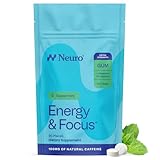
Neuro Energy & Focus Gum, Extra Strength - 100mg Natural Caffeine Gum & Nootropic Energy Supplement with L-Theanine & B Vitamins - Sugar Free, Vegan - Spearmint, 90ct
- Fast-Acting Nootropic - Our energy supplements deliver an extra boost of energy and clarity with a blend of natural caffeine, L-theanine, and vitamin b6 & b12. Your go-to chewing gum for work, exercise, and daily focus!
- Clean Energy - Each piece of our sugar free gum delivers 100mg of natural caffeine from green coffee beans for a smooth energy boost without crashes or jitters.
- The Perfect Balance - With 60mg of L-theanine per piece, our energy and focus formula promotes enhanced focus and stress reduction to smooth energy boosts.
- How to Use - Chew one piece of the caffeine gum whenever focus or energy is lacking. Ideal for mornings, pre-workout, or afternoon slumps. Effects typically kick in within minutes thanks to optimal absorption through the mouth.
- Made by Neuro, Backed by Science - At Neuro, we combine neuroscience with clean, science backed ingredients to help you do more, think better, and feel your best every single day.
What Affects Coffee’s Impact on Memory
- Caffeine Dosage: How much caffeine you consume is a big factor. Too much can lead to jitters and anxiety, which aren’t good for focus.
- Individual Sensitivity: People metabolize caffeine differently. Some are wired by a single cup, others can drink a pot and sleep.
- Genetics: Your genes can influence how your body processes caffeine and how your brain responds to it.
- Frequency of Consumption: Regular coffee drinkers might develop a tolerance to some of caffeine’s effects.
- Timing of Consumption: Drinking coffee too late in the day can disrupt sleep, which is crucial for memory consolidation.
- Quality of Coffee Beans: While not directly tied to forgetfulness, good beans make for a better experience.
- Brewing Method: Different methods extract different compounds, though the impact on memory is likely minimal compared to other factors.
- Hydration Levels: Dehydration can impair cognitive function, so make sure you’re drinking enough water alongside your coffee.
- Sleep Quality: Poor sleep is a major contributor to forgetfulness. Coffee can’t fix a sleep deficit.
- Overall Diet: A balanced diet supports brain health. Coffee is just one piece of the puzzle.
- Existing Health Conditions: Certain medical conditions can affect memory and how you react to stimulants.
- Age: Cognitive function naturally changes with age, and how coffee interacts with this process is still being studied.
Pros, Cons, and When It Matters
- Pro: Short-term boost in alertness and focus. Great for that morning push or an afternoon slump.
- Con: Can lead to anxiety or jitters in some individuals, hindering concentration.
- Pro: May improve performance on certain memory tasks in the short term. Think recalling a list or a task.
- Con: Disrupting sleep is a major con. Bad sleep directly impacts memory.
- Pro: Rich in antioxidants, which are good for overall health and may protect brain cells.
- Con: Withdrawal symptoms like headaches and fatigue can occur if you stop suddenly, affecting your mood and focus.
- Pro: For some, coffee is a cherished ritual that enhances mood and productivity.
- Con: Over-reliance can mask underlying fatigue, preventing you from addressing the real cause.
- Pro: Research suggests a potential link between moderate coffee intake and a reduced risk of certain neurodegenerative diseases. This is a big one for long-term brain health.
- Con: High doses can lead to increased heart rate and blood pressure, which isn’t ideal for everyone.
- Pro: Can be a social lubricant and a pleasant part of many people’s day.
- Con: The effects are temporary. Don’t expect coffee to be a permanent memory fix.
- Matters When: You need to be sharp for a specific task, like a presentation or a demanding workout.
- Matters When: You’re feeling chronically tired and relying on coffee to get through the day, as it might be masking a deeper issue.
- Matters When: You’re considering significant changes to your diet or lifestyle and want to understand all contributing factors.
Common Misconceptions
- Myth: Coffee directly causes Alzheimer’s or dementia.
- Reality: Most research points to the opposite or no significant link, with some studies suggesting a protective effect.
- Myth: You’ll become forgetful if you drink coffee every day.
- Reality: For most, moderate consumption doesn’t lead to long-term memory loss. Tolerance often develops.
- Myth: Coffee “burns out” your brain cells.
- Reality: Caffeine is a stimulant, not a neurotoxin. Antioxidants may even protect cells.
- Myth: Any amount of coffee is bad for your memory.
- Reality: Moderate intake is generally considered safe, and some studies show benefits.
- Myth: Coffee makes you smarter.
- Reality: It enhances alertness and focus temporarily, which can improve performance, but doesn’t fundamentally increase intelligence.
- Myth: Black coffee has different effects on memory than coffee with cream and sugar.
- Reality: The primary active compound is caffeine. Additives might affect overall health but not the direct caffeine-memory interaction much.
- Myth: Cold brew coffee is less potent than hot brewed coffee.
- Reality: Potency depends on the coffee-to-water ratio and brew time, not just temperature.
- Myth: If you feel jittery, it means coffee is bad for your brain.
- Reality: Jitters are usually a sign of too much caffeine for your system, not necessarily long-term brain damage.
- Myth: Coffee instantly improves all aspects of memory.
- Reality: Effects are usually short-lived and most pronounced on attention and alertness, which indirectly aid recall.
FAQ
- Can drinking coffee make me forgetful in the short term?
- Generally, no. In fact, caffeine can temporarily boost alertness and focus, which might help you remember things better in the moment. However, excessive caffeine can cause anxiety, which can hinder cognitive performance.
- Does long-term coffee consumption lead to memory loss?
- The current scientific consensus is that moderate, long-term coffee consumption does not cause memory loss. Some research even suggests it might be protective against cognitive decline.
- Is there a link between caffeine and specific memory functions like learning?
- Caffeine can enhance attention and working memory, which are important for learning. However, it’s not a direct enhancer of memory formation itself, but rather supports the processes involved.
- What is the recommended daily intake of coffee for brain health?
- For most healthy adults, up to 400 milligrams of caffeine per day (about 3-4 cups of brewed coffee) is considered safe and potentially beneficial. Individual tolerance varies widely.
- Can coffee interact with medications that affect memory?
- Caffeine can interact with certain medications. If you’re taking prescription drugs, especially those for neurological conditions, it’s best to consult your doctor about coffee consumption.
- Does decaf coffee have any effect on memory?
- Decaf coffee still contains small amounts of caffeine and antioxidants. While its stimulant effects are minimal, the antioxidants might still offer some general brain health benefits.
- What should I do if I feel my coffee intake is affecting my focus or memory?
- Try reducing your intake, switching to decaf, or ensuring you’re getting enough sleep and staying hydrated. If concerns persist, talk to a healthcare professional.
What This Page Does Not Cover (and Where to Go Next)
- Specific neurological conditions and their interaction with caffeine. (Explore resources on neurology and pharmacology.)
- Detailed analysis of coffee’s chemical compounds beyond caffeine and antioxidants. (Look into food science and chemistry resources.)
- The precise brewing parameters for optimal caffeine extraction. (Check out coffee brewing guides and enthusiast forums.)
- Personalized dietary recommendations for cognitive health. (Consult with a registered dietitian or nutritionist.)