
Caramel Sauce For Coffee Without Corn Syrup
Quick Answer
- Use sugar, butter, and cream for a classic caramel.
- Avoid corn syrup by focusing on the sugar’s melting point.
- A candy thermometer is your best friend here.
- Don’t rush the process; patience is key.
- Stirring too much can cause crystallization.
- Store it in a sealed container in the fridge.
Who This Is For
- Home baristas who want to elevate their coffee game.
- Folks avoiding corn syrup for dietary reasons or preference.
- Anyone who loves that sweet, buttery caramel flavor in their latte or drip.
What to Check First
Before you even think about melting sugar, let’s get a few things straight. Making good caramel without corn syrup is totally doable, but it needs a little respect.
Your Ingredients
- Sugar: Granulated white sugar is the standard. Brown sugar adds a deeper, molasses-y flavor, which is also great. Just know it can make the color darker and the flavor more complex.
- Butter: Unsalted is usually best so you control the saltiness. It adds richness and a smooth texture.
- Cream: Heavy cream or whipping cream (at least 30% fat) is what you want. It stops the cooking and adds that luxurious finish. Don’t use milk; it’s too thin.
- Vanilla Extract: A splash at the end adds a nice aromatic boost.
For the best results, start with high-quality granulated sugar. This will be the foundation of your delicious caramel.

- MEET ORGANIC DOLCA SLIM. Organic cane sugar infused with prebiotic fiber for the same taste and texture you love—now with 25% fiber and fewer calories per serving for a smarter everyday choice. EASY 1:1 SWAP: Use it 1:1 anywhere you use sugar—coffee, tea, smoothies, oatmeal, baking, and cooking—no recipe changes needed. REAL SUGAR PERFORMANCE: It dissolves, bakes, and browns like real sugar, so your favorite recipes keep the results you expect. CLEAN SWEETNESS: No artificial sweeteners or sugar alcohols—just a better way to sweeten your day.
- 1:1 SUGAR REPLACEMENT: Swap 1:1 in coffee, tea, baking, and cooking—no recipe changes needed.
- BAKES & BROWNS LIKE REAL SUGAR: Performs like traditional sugar in cookies, cakes, and everyday recipes—dissolves, bakes, and browns as expected.
- 25% FIBER & FEWER CALORIES PER SERVING: A smarter everyday sweetener with added fiber per serving and fewer calories than standard sugar.
- NO ARTIFICIAL SWEETENERS OR SUGAR ALCOHOLS: Clean sweetness without artificial sweeteners or sugar alcohols.
Your Equipment
- Heavy-Bottomed Saucepan: This is crucial. It distributes heat evenly, preventing scorching. A thin pan will make your life difficult.
- Whisk or Heat-Resistant Spatula: For stirring and incorporating ingredients.
- Candy Thermometer: Seriously, get one. It takes the guesswork out of reaching the right temperature.
- Jar or Container: For storage. Make sure it’s clean and has a tight-fitting lid.
A reliable candy thermometer is an invaluable tool for perfect caramel every time. It takes the guesswork out of reaching the ideal temperature.
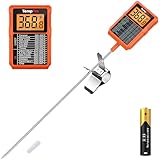
- 【Backlit 90° Rotating Display】The large 90-degree rotating screen enables effortless angle adjustment for optimal visibility, while the backlight ensures precise food temperature readings even in dimly lit environment
- 【More Accurate Reading】Food thermometer delivers precise temperature readings in 1 second with an accuracy of ±0.9 ℉, making it much faster and more reliable than traditional analog thermometers
- 【Easier to Clean】With IPX5 rated waterproof design, this kitchen thermometer probe cleans up in seconds, just rinse it under running water with no worries
- 【Durable to Use】Candy thermometer digital includes 1 AAA battery, made of sturdy plastic and food-grade stainless steel, features large capacity that enables long-lasting usage without requiring frequent battery replacement
- 【Temperature Chart】Featuring a printed temperature reference chart, this cooking thermometer covers a wide range from -58°F to 572°F, making it ideal for candy making, frying oil, meat, baking and liquids
Your Setup
- Clean Workspace: Make sure your counter is clear. You don’t want to be fumbling for things when the sugar is at its peak.
- Mise en Place: Have all your ingredients measured out and ready to go before you start. Caramel waits for no one.
Step-by-Step: How to Make Caramel for Coffee Without Corn Syrup
Alright, let’s get this done. This is for a basic, rich caramel sauce.
1. Measure Your Ingredients: Get your sugar, butter, and cream measured precisely. Having everything ready is half the battle.
- Good looks like: All your ingredients are in separate bowls or cups, ready to be added.
- Common mistake: Measuring as you go. This leads to rushed additions and potential burning. Have it all prepped.
2. Melt the Sugar: Pour your granulated sugar into the heavy-bottomed saucepan. Place it over medium heat. Don’t add water unless the recipe specifically calls for it (and we’re not doing that here for simplicity).
- Good looks like: The sugar starts to melt around the edges, turning a pale amber.
- Common mistake: Using high heat. This will burn the sugar before it can properly melt and caramelize. Keep it medium.
3. Watch and Swirl: Let the sugar melt undisturbed for a minute or two. Once it starts liquefying, you can gently swirl the pan to help it melt evenly. Avoid stirring with a utensil at this stage if possible.
- Good looks like: The sugar is mostly melted into a smooth, clear liquid.
- Common mistake: Stirring too early or too vigorously. This can cause the sugar crystals to clump up and not melt properly, leading to a gritty sauce.
4. Caramelize the Sugar: Continue heating and swirling until the sugar turns a deep amber color. This is where the flavor develops. Aim for the color of a copper penny or dark honey.
- Good looks like: A consistent, rich amber color throughout the liquid sugar.
- Common mistake: Overcooking. If it gets too dark, it will taste burnt and bitter, no matter what you do. Watch it like a hawk.
5. Add the Butter: Once the sugar is the perfect amber, carefully add your cubed butter. It will bubble up vigorously. Whisk constantly until the butter is fully melted and incorporated.
- Good looks like: The bubbling subsides, and the butter is smoothly blended into the caramel.
- Common mistake: Not whisking fast enough. The hot sugar can seize up if the butter isn’t incorporated quickly.
6. Incorporate the Cream: Slowly and carefully pour in the heavy cream while whisking continuously. The mixture will bubble up again, possibly even more intensely than with the butter. Keep whisking until it’s smooth.
- Good looks like: A smooth, thick, glossy sauce that coats the back of a spoon.
- Common mistake: Adding the cream too fast. This can cause a violent reaction and splattering. Pour it in a thin, steady stream.
7. Cook to Temperature (Optional but Recommended): If you’re using a candy thermometer, continue to cook the sauce, stirring gently, until it reaches about 230-235°F (110-113°C). This creates a thicker, more stable sauce.
- Good looks like: The thermometer reads within the target range, and the sauce has thickened considerably.
- Common mistake: Skipping the thermometer. You might end up with a sauce that’s too thin or too thick. It’s a game-changer for consistency.
8. Add Vanilla (Optional): Remove the pan from the heat. Stir in the vanilla extract.
- Good looks like: The vanilla is evenly distributed, adding a nice aroma.
- Common mistake: Adding vanilla while the caramel is still on high heat. You’ll cook off the delicate vanilla flavor.
9. Cool and Store: Let the caramel sauce cool in the saucepan for about 5-10 minutes. Then, carefully pour it into your clean jar or container. It will thicken as it cools.
- Good looks like: The sauce has a pourable but substantial consistency.
- Common mistake: Pouring the piping hot caramel directly into a cold container. This can cause thermal shock and potentially crack glass. Let it cool a bit first.
Common Mistakes (and What Happens If You Ignore Them)
| Mistake | What It Causes | Fix |
|---|---|---|
| Using a thin-bottomed saucepan | Uneven heating, burnt sugar, inconsistent caramel. | Use a heavy-bottomed saucepan. It distributes heat evenly. |
| High heat during sugar melting | Sugar burns before it melts properly, resulting in a bitter, acrid taste. | Start on medium heat and be patient. Let the sugar melt gradually. |
| Stirring sugar too early or too much | Sugar crystallizes, leading to a gritty texture instead of a smooth sauce. | Swirl the pan gently. Only stir once the sugar starts melting and after adding butter/cream. |
| Overcooking the caramel | Bitter, burnt flavor. Sauce can become too hard when cooled. | Watch the color closely. Use a candy thermometer to hit the target temperature range (230-235°F). |
| Adding butter or cream too quickly | Violent bubbling, splattering, potential burns. Can cause sugar to seize. | Add butter and cream slowly and in stages, whisking constantly. Step back when adding cream. |
| Using low-fat dairy | Sauce will be too thin, won’t emulsify properly, and may separate. | Use heavy cream or whipping cream (at least 30% fat). |
| Not having ingredients prepped (mise en place) | Rushing, potential for burning or incorrect additions. | Measure everything out before you start cooking. Caramel waits for no one. |
| Storing hot caramel in a cold container | Risk of breaking glass containers due to thermal shock. | Let the caramel cool in the saucepan for a few minutes before transferring to a clean, room-temperature container. |
| Not cleaning equipment properly | Leftover caramel can burn and affect future batches. | Wash all equipment thoroughly after use. |
| Incorrect sugar-to-liquid ratio | Sauce is too thin or too thick. | Follow a trusted recipe, especially when starting out. Adjustments can be made later based on preference. |
Decision Rules
- If your sugar is clumping and not melting, then reduce the heat slightly and gently swirl the pan. This might save it from crystallization.
- If the caramel starts to smell burnt, then immediately remove it from the heat and discard it. There’s no coming back from burnt sugar.
- If you want a thicker sauce that holds up better, then use a candy thermometer and aim for 235°F.
- If you prefer a slightly thinner, more pourable sauce, then aim for around 230°F or simply rely on visual cues and cooling time.
- If you don’t have heavy cream, then don’t substitute with milk or half-and-half; the sauce won’t turn out right. Find some heavy cream.
- If you want a richer, deeper flavor, then consider using a mix of granulated and brown sugar.
- If you’re worried about splattering, then step back from the stove when adding the cream and whisk slowly.
- If your caramel sauce seems too thin after cooling, then you can gently reheat it and simmer for a few more minutes to evaporate more liquid.
- If your caramel sauce seems too thick, then gently reheat it and whisk in a tablespoon or two of cream or milk until it reaches your desired consistency.
- If you want to add flavorings like spices, then add them with the vanilla extract at the end, off the heat.
FAQ
Q: Can I use brown sugar instead of white sugar?
A: Yes, you can. Brown sugar adds a deeper, molasses-like flavor and a darker color. It might affect the final texture slightly, making it a bit chewier.
Q: My caramel sauce is lumpy. What did I do wrong?
A: This usually happens if you stir the sugar too much before it’s fully melted, or if the heat is too high and causes it to crystallize. Gentle swirling is key in the beginning.
Q: How long will homemade caramel sauce last?
A: Stored in an airtight container in the refrigerator, it should last for about 2-3 weeks.
Q: Can I make caramel sauce ahead of time?
A: Absolutely. It’s best made ahead so it can cool completely before you use it in your coffee.
Q: My caramel sauce hardened too much when it cooled. How do I fix it?
A: Gently reheat the sauce in a saucepan over low heat, whisking in a tablespoon of cream or milk at a time until it softens to your desired consistency.
Q: Is it safe to make caramel? It looks dangerous.
A: It can be. Hot sugar is very hot. Always use a heavy-bottomed pot, have your ingredients ready, and be mindful of splattering, especially when adding dairy. A candy thermometer helps avoid overcooking.
Q: What’s the difference between caramel sauce and caramel candy?
A: The main difference is the final temperature reached during cooking. Caramel candy is cooked to a higher temperature (around 300-310°F) to become hard and brittle, while caramel sauce is cooked to a lower temperature (around 230-235°F) to remain soft and pourable.
Q: Can I add salt to make salted caramel?
A: Yes! Add about 1/4 to 1/2 teaspoon of sea salt or kosher salt along with the vanilla extract at the end. Taste and adjust as needed.
What This Page Does Not Cover (And Where to Go Next)
- Advanced caramel techniques like using glucose or invert sugar.
- Specific flavor infusions beyond basic vanilla or salt.
- Troubleshooting very specific texture issues beyond common fixes.
- Using caramel sauce in baking or other dessert applications.
Next, you might want to explore making flavored syrups for coffee, or perhaps delve into other homemade coffee additions like whipped cream recipes.