
Can Coffee Urns Brew Good Quality Coffee?
Quick answer
- Coffee urns can brew a large volume of coffee, making them ideal for events and gatherings.
- The brewing method in most urns is simple immersion, similar to a French press but with less control.
- Quality can be a mixed bag; while they can produce drinkable coffee, they often lack the nuance of other brewing methods.
- Factors like coffee freshness, water quality, and cleaning significantly impact the final taste.
- For consistently high-quality coffee, especially for smaller batches, dedicated coffee makers or manual brewing methods often offer better results.
- If you need to serve many people and convenience is key, a well-maintained urn can be a viable option for decent coffee.
Key terms and definitions
- Immersion Brewing: A coffee brewing method where coffee grounds are fully submerged in hot water for a set period before being separated.
- Percolation: A brewing method where hot water repeatedly cycles through coffee grounds, often found in older stovetop percolators.
- Batch Brewing: Brewing a large quantity of coffee at once, which is the primary function of a coffee urn.
- Solubility: The process by which soluble compounds in coffee grounds dissolve into hot water, creating the coffee beverage.
- Extraction: The process of dissolving coffee solubles into water. Inconsistent extraction can lead to bitter or weak coffee.
- Degassing: The release of carbon dioxide from freshly roasted coffee beans. This process affects flavor.
- Sediment: Fine coffee particles that can pass through filters, leading to a gritty texture in the coffee.
- Carafe: A container, often glass or thermal, used to hold brewed coffee, typically associated with drip coffee makers.
- Brew Basket: The component in many coffee makers that holds the coffee grounds and allows water to pass through.
- Infusion: The process of steeping coffee grounds in water to extract flavor, a core principle in immersion brewing.
How it works
- Coffee urns typically employ a simple immersion brewing process.
- A central tube extends from the bottom of the urn to near the top.
- A brew basket containing coffee grounds is placed above the water level, often around the middle of the urn.
- Water at the bottom of the urn is heated, often by an electric heating element.
- As the water heats, it rises through the central tube.
- The hot water then flows over the coffee grounds in the brew basket.
- In some older models, this process can be a form of percolation, where water cycles repeatedly.
- The brewed coffee then drips back down into the main body of water in the urn.
- This cycle continues until the coffee is ready or the heating element cycles off.
- The result is a large batch of coffee steeped in hot water.
What affects the result
- Coffee Freshness: Stale coffee grounds lose their aromatic compounds and oils, leading to a flat, uninspired taste. Ideally, use beans roasted within the last few weeks.
- Grind Size: For urns that use a brew basket, a medium to coarse grind is generally recommended to prevent grounds from passing through and to ensure proper extraction. Too fine a grind can lead to over-extraction and bitterness.
- Coffee-to-Water Ratio: The amount of coffee grounds used relative to the amount of water is crucial. Too little coffee results in weak, watery brew, while too much can lead to bitterness. A common starting point is about 1-2 tablespoons of coffee per 6 oz of water, but this can be adjusted.
- Water Quality: Using filtered or good-tasting tap water is essential. Water with off-flavors or excessive minerals can negatively impact the coffee’s taste.
- Water Temperature: While urns don’t offer precise temperature control, the water should be hot enough for extraction, ideally between 195°F and 205°F. If the water isn’t hot enough, extraction will be poor.
- Brew Time: The duration the coffee grounds are in contact with hot water affects extraction. Urns, especially those with a continuous cycling mechanism, can sometimes lead to over-extraction if left on too long.
- Cleanliness of the Urn: Residue from old coffee oils can build up and impart a rancid or bitter taste to fresh batches. Regular and thorough cleaning is vital.
- Type of Urn Mechanism: Some urns are true immersion brewers, while others might operate more like percolators. The mechanism influences how evenly the water interacts with the grounds.
- Type of Coffee Used: The inherent quality and roast level of the coffee beans themselves will, of course, be a primary determinant of the final flavor.
Pros, cons, and when it matters
- Pro: Large Capacity: Urns are designed to brew many cups of coffee at once, making them excellent for parties, meetings, or any event with a crowd.
- Con: Limited Control: Most coffee urns offer very little control over brewing variables like water temperature, grind size interaction, or precise brew time.
- Pro: Simplicity of Operation: Once set up, many urns are relatively hands-off, requiring minimal user intervention during the brewing cycle.
- Con: Potential for Stale Coffee: If coffee is brewed too far in advance or kept on a constant heat source, it can develop a burnt or stale flavor.
- Pro: Cost-Effective for Volume: For serving large numbers of people, an urn can be more economical than multiple smaller coffee makers.
- Con: Variable Coffee Quality: The brewing method can lead to inconsistent extraction, often resulting in coffee that is either too weak or too bitter, lacking the complexity of carefully brewed coffee.
- Pro: Portability (for some models): Many electric urns are self-contained and can be easily transported to different locations.
- Con: Cleaning Can Be Cumbersome: Due to their size and internal components, thorough cleaning can be a time-consuming task.
- When it matters: Urns matter when the priority is serving a large number of people quickly and conveniently, and the absolute highest level of coffee nuance is not the primary concern. They are ideal for catering, office break rooms, or large family gatherings. They matter less when brewing for one or two people, or when seeking a specific flavor profile that requires precise control over brewing parameters.
If you’re looking for a reliable way to serve large groups, a commercial coffee urn is designed for exactly that purpose. They excel at brewing large volumes, making them ideal for events and gatherings.
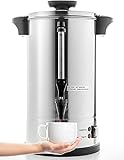
- ✪ COMMERCIAL USE--Brew 100 cups (16 Liter / 4.2 Gallon) in 60 minutes. Built for catering service, ideal for caterers, restaurants, churches, schools, health care facilities, offices, and shops.
- ✪ DURABLE--Food grade 304 S/S body resists dents and maintains lustre over time. High quality spigot dispenser is installed for heavy duty usage.
- ✪ Easy TO FILL-- Coffee level markings in the urn’s interior make measuring water A snap. And easy for you to know when it is time for another refill. ✪ NO PAPER FILTER NEEDED--304 stainless steel filter basket is durable and easy to clean, no paper filter needed.
- ✪ ETL CERTIFIED--All parts are ETL Intertek certified. Safety and quality certified. Use under 110-120 voltage. ✪ SAFE TO USE--Automatic shut-off and keep warm function. Includes an easy-to-read “heat and keep-warm” indicator light that illuminates whenever coffee is ready to serve.
- ✪ 2 YEARS NEW REPLACEMENT WARRANTY--Buy with confidence, as we offer 30-days refund/replacement and 2 years new replacement warranty.
Common misconceptions
- Misconception: All coffee urns are the same. In reality, there are variations in design and brewing mechanisms, affecting the outcome. Some may be closer to immersion brewers, while others might lean towards percolation.
- Misconception: Coffee urns inherently make bad coffee. While they don’t offer the precision of other methods, good quality coffee can be made with attention to the basics like fresh beans, proper grind, and clean equipment.
- Misconception: You can just dump any coffee in and it will work. The type of grind and the freshness of the coffee beans significantly impact the flavor, even in an urn.
- Misconception: Leaving the urn on keeps the coffee hot and fresh. Prolonged heating can actually “cook” the coffee, leading to a burnt or bitter taste.
- Misconception: Urns are only for weak, watery coffee. This is often a result of incorrect ratios or stale coffee, not an inherent flaw of the brewing method itself.
- Misconception: Cleaning an urn is unnecessary if it looks clean. Coffee oils can build up invisibly and impart off-flavors. Regular descaling and washing are important.
- Misconception: Urns are a modern brewing technology. While electric urns are common, the concept of brewing large batches of coffee in a vessel dates back much further.
- Misconception: The central tube is just for decoration. This tube is a critical component, facilitating the circulation of water in many urn designs.
FAQ
Q: Can I use pre-ground coffee in a coffee urn?
A: Yes, you can, but using freshly ground beans will generally yield a better flavor. If using pre-ground, opt for a medium to coarse grind suitable for immersion or drip brewing.
Q: How do I prevent my coffee from tasting bitter when using an urn?
A: Ensure you are using a coarse enough grind, do not over-extract by leaving the coffee brewing for too long, and make sure the urn is thoroughly cleaned to remove old coffee oils.
Q: How much coffee should I use per gallon of water in an urn?
A: A common starting point is around 1 pound of coffee for 1 gallon of water, but this can be adjusted based on your preference for strength. Always check the manufacturer’s recommendations if available.
Q: Is it okay to leave coffee in an urn all day?
A: It’s generally not recommended for optimal flavor. Coffee brewed in an urn, especially if kept on a heat source, can quickly develop a burnt or stale taste. It’s best to brew only what you expect to consume within a couple of hours.
Q: Can coffee urns be used for tea?
A: Some coffee urns can be used to heat water for tea, but it’s not recommended to brew tea directly in a coffee urn due to residual coffee oils that can affect the tea’s flavor. Always ensure the urn is clean before heating water for any beverage.
Q: What is the best way to clean a coffee urn?
A: Most urns can be cleaned with hot, soapy water and a soft cloth or sponge. For stubborn stains or mineral buildup, a descaling solution specifically designed for coffee makers can be used, followed by thorough rinsing.
What this page does NOT cover (and where to go next)
- Specific brand comparisons and performance reviews of coffee urns.
- Detailed instructions for repairing coffee urns.
- Advanced brewing techniques for achieving specific flavor profiles with urns.
- Information on commercial-grade coffee urns and their operational differences.
- The history of coffee brewing methods beyond the scope of urns.