
Brewing Coffee In A Large Coffee Urn
Quick Answer: How to Make Coffee In An Urn
- Ensure your urn is clean and descaled before brewing.
- Use fresh, coarsely ground coffee for best results.
- Measure coffee and water precisely using a 1:15 to 1:17 ratio (e.g., 1 oz coffee to 15-17 oz water).
- Add coffee to the filter basket and water to the main chamber, then close the lid.
- Turn on the urn and allow it to heat and brew undisturbed.
- Serve promptly after brewing is complete to maintain optimal flavor.
- Keep the urn on a stable, heat-resistant surface and unplug when not in use.
Who This Is For
- Event organizers and hosts: Anyone preparing coffee for gatherings of 10 or more people, such as parties, meetings, or church events.
- Office managers and workplace administrators: Individuals responsible for providing coffee for employees in a shared kitchen or breakroom.
- Home entertainers: Those who frequently host larger groups and need a reliable way to brew substantial amounts of coffee.
If you’re frequently hosting large gatherings or managing a busy office kitchen, a reliable commercial coffee urn is an excellent investment for brewing ample amounts of coffee with ease.
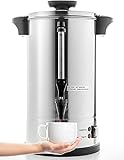
- ✪ COMMERCIAL USE--Brew 100 cups (16 Liter / 4.2 Gallon) in 60 minutes. Built for catering service, ideal for caterers, restaurants, churches, schools, health care facilities, offices, and shops.
- ✪ DURABLE--Food grade 304 S/S body resists dents and maintains lustre over time. High quality spigot dispenser is installed for heavy duty usage.
- ✪ Easy TO FILL-- Coffee level markings in the urn’s interior make measuring water A snap. And easy for you to know when it is time for another refill. ✪ NO PAPER FILTER NEEDED--304 stainless steel filter basket is durable and easy to clean, no paper filter needed.
- ✪ ETL CERTIFIED--All parts are ETL Intertek certified. Safety and quality certified. Use under 110-120 voltage. ✪ SAFE TO USE--Automatic shut-off and keep warm function. Includes an easy-to-read “heat and keep-warm” indicator light that illuminates whenever coffee is ready to serve.
- ✪ 2 YEARS NEW REPLACEMENT WARRANTY--Buy with confidence, as we offer 30-days refund/replacement and 2 years new replacement warranty.
What to Check First for Urn Coffee Brewing
Brewer Type and Filter Type
Most large coffee urns operate on a simple principle: heating water and circulating it through coffee grounds. The filter type is crucial. Many urns use a permanent, fine-mesh metal filter basket. Others might require disposable paper filters, often cone-shaped or basket-style, that fit within the urn’s basket.
- Check: Does your urn have a permanent filter or require disposable ones? If disposable, what size and shape are needed?
- Good: A clean, intact permanent filter or the correct type and size of disposable filters are ready.
- Mistake: Using the wrong filter type can lead to grounds in your coffee or improper water flow. Using a damaged permanent filter can also cause issues.
Water Quality and Temperature
The foundation of good coffee is good water. Tap water can contain minerals and chlorine that affect taste. For urns, using filtered water is highly recommended. The urn itself will heat the water to the appropriate brewing temperature, typically around 195-205°F.
- Check: Are you using filtered water? Is the urn’s heating element functioning correctly?
- Good: Filtered water is used, and the urn heats water efficiently.
- Mistake: Using hard or chlorinated tap water can result in bitter or off-tasting coffee. An urn that doesn’t heat water sufficiently will produce weak, under-extracted coffee.
Grind Size and Coffee Freshness
For urns, a coarse grind is generally preferred. This is because the water passes through the grounds for a longer period compared to other brewing methods, and a finer grind can lead to over-extraction and bitterness, as well as potential clogging. Freshly roasted and ground coffee makes a significant difference in flavor.
- Check: Is your coffee coarsely ground, similar to sea salt? Is it freshly roasted and ground?
- Good: Coffee is ground just before brewing and has a coarse consistency.
- Mistake: Using pre-ground coffee that has been sitting for weeks, or using a fine grind, will result in stale, weak, or bitter coffee.
Coffee-to-Water Ratio
The ratio of coffee to water is one of the most critical factors in flavor. A common starting point for urns is a ratio between 1:15 and 1:17 (coffee weight to water weight). For example, for a 100-cup urn (which is typically around 150 oz of water), you might use about 9-10 oz of coffee grounds. Using a scale for accuracy is best, but consistent measuring cups can work.
- Check: Do you have a reliable way to measure both coffee and water?
- Good: You are using a consistent ratio, aiming for roughly 1 oz of coffee per 15-17 oz of water.
- Mistake: Guessing the amount of coffee or water leads to inconsistent results, either too weak or too strong.
Cleanliness/Descale Status
Coffee oils and mineral buildup (scale) can accumulate in an urn over time, impacting flavor and brewing efficiency. Regular cleaning and descaling are essential for producing great-tasting coffee.
- Check: When was the urn last thoroughly cleaned and descaled?
- Good: The urn is free of coffee residue and mineral deposits.
- Mistake: Brewing in a dirty urn will impart stale, bitter flavors and can even cause brewing malfunctions.
Step-by-Step: How to Make Coffee In An Urn
1. Inspect and Clean the Urn:
- What to do: Visually inspect the urn, filter basket, and lid for any residue. Wash all removable parts with warm, soapy water and rinse thoroughly. If needed, descale according to the manufacturer’s instructions.
- What “good” looks like: The urn is sparkling clean, with no visible coffee oils or mineral buildup.
- Common mistake: Skipping cleaning or descaling. This leads to bitter, stale coffee.
To ensure the best flavor and brewing efficiency, it’s crucial to keep your urn sparkling clean. If you notice any mineral buildup, a dedicated coffee urn cleaner can make the descaling process much easier.

- Tabz tablets offer one step cleaning for coffee brewers and servers
- Optimizes portion control and cleaning
- Contains blue dye to ensure proper rinsing
- Tablet format elimanates dust, waste and operator error
- Tabz can also be used for back flushing espresso machines
2. Add Water:
- What to do: Fill the main urn chamber with cold, filtered water to the desired level. Avoid overfilling beyond the maximum fill line.
- What “good” looks like: The water level is clearly visible and within the recommended range.
- Common mistake: Overfilling the urn, which can cause overflow during brewing.
3. Prepare the Filter Basket:
- What to do: If using a permanent filter, ensure it’s clean and properly seated in its holder. If using disposable filters, place the correct size and type into the basket.
- What “good” looks like: The filter is securely in place and ready to hold coffee grounds.
- Common mistake: Not seating the filter basket correctly, leading to grounds bypassing the filter.
4. Measure and Add Coffee Grounds:
- What to do: Using your chosen ratio (e.g., 1:15 to 1:17), measure the coarsely ground coffee. Add the measured coffee into the filter basket.
- What “good” looks like: The coffee is evenly distributed in the basket, and the amount is consistent with your desired strength.
- Common mistake: Using a fine grind or an inconsistent amount of coffee.
5. Assemble the Urn:
- What to do: Carefully place the coffee-filled filter basket back into the urn. Secure the lid on top of the urn.
- What “good” looks like: All components are properly aligned and secured.
- Common mistake: Forgetting to put the filter basket in or not closing the lid properly.
6. Connect to Power:
- What to do: Ensure the urn is placed on a stable, heat-resistant surface. Plug the power cord into a grounded electrical outlet.
- What “good” looks like: The urn is safely positioned and plugged in.
- Common mistake: Plugging in the urn before assembly is complete, or placing it on an unstable surface.
7. Start the Brewing Cycle:
- What to do: Turn on the urn’s heating element or switch. Most urns have a simple on/off control.
- What “good” looks like: The indicator light (if present) illuminates, and you may hear the heating element begin to work.
- Common mistake: Forgetting to turn the urn on.
8. Monitor Brewing (Optional):
- What to do: For most urns, you simply let them run their course. Some models may have indicators for brewing completion.
- What “good” looks like: The urn is heating and circulating water, and coffee is beginning to drip into the main chamber.
- Common mistake: Trying to open the lid during the brewing cycle, which can release steam and heat.
9. Brewing Completion:
- What to do: The brewing cycle is complete when the urn stops actively heating or when the coffee level reaches its maximum. Many urns have a “keep warm” function that activates automatically.
- What “good” looks like: Coffee is ready and hot in the main chamber.
- Common mistake: Leaving the urn on the “brew” setting indefinitely, which can scorch the coffee.
10. Serve Coffee:
- What to do: Carefully dispense coffee from the spigot into cups or carafes.
- What “good” looks like: Hot, delicious coffee is being served.
- Common mistake: Dispensing coffee too quickly or too slowly, or allowing the urn to sit on “brew” too long.
11. Turn Off and Unplug:
- What to do: Once brewing is complete and you are finished serving, turn off the urn and unplug it from the electrical outlet.
- What “good” looks like: The urn is powered off and safely disconnected.
- Common mistake: Leaving the urn plugged in and on the “keep warm” setting for extended periods after serving.
12. Clean After Use:
- What to do: Allow the urn to cool completely. Discard used coffee grounds and rinse all parts. Follow manufacturer instructions for a more thorough cleaning.
- What “good” looks like: The urn is clean and ready for its next use.
- Common mistake: Delaying cleaning, allowing coffee oils to harden and become difficult to remove.
Common Mistakes (and What Happens If You Ignore Them)
| Mistake | What It Causes | Fix |
|---|---|---|
| Using pre-ground or stale coffee | Weak, dull, or bitter coffee; lack of aroma and flavor. | Use freshly roasted beans and grind them just before brewing. |
| Using a fine coffee grind | Bitter, muddy coffee; potential clogging of the filter basket. | Use a coarse grind, similar to sea salt. |
| Incorrect coffee-to-water ratio | Coffee too weak (too little coffee) or too strong/bitter (too much coffee). | Measure coffee and water precisely, aiming for a 1:15 to 1:17 ratio. |
| Brewing in a dirty or un-descaled urn | Stale, oily, or metallic-tasting coffee; reduced brewing efficiency. | Clean and descale the urn regularly according to manufacturer instructions. |
| Not seating the filter basket correctly | Coffee grounds bypass the filter, resulting in sediment in the coffee. | Ensure the filter basket is properly aligned and seated in its holder before adding coffee. |
| Overfilling the urn with water | Coffee can overflow the urn during the brewing cycle, creating a mess. | Always stay within the maximum fill line indicated on the urn. |
| Opening the lid during the brew cycle | Can disrupt water flow and release valuable heat and steam. | Keep the lid closed until brewing is complete. |
| Leaving the urn on “brew” after completion | Coffee can scorch and develop a burnt, bitter flavor. | Switch to “keep warm” mode if available, or turn off and unplug the urn after brewing. |
| Using tap water with high mineral content | Coffee can taste flat, dull, or even slightly metallic. | Use filtered or spring water for a cleaner, more vibrant coffee flavor. |
| Placing the urn on an unstable surface | Risk of the urn tipping over, causing burns or damage. | Always place the urn on a flat, stable, and heat-resistant surface. |
Decision Rules for Urn Coffee
- If your coffee tastes weak and watery, then increase the amount of coffee grounds or decrease the water volume because the coffee-to-water ratio is too low.
- If your coffee tastes bitter and harsh, then use a coarser grind or decrease the amount of coffee grounds because it’s likely over-extracted.
- If you see grounds in your coffee cup, then check that the filter basket is properly seated and that you are using the correct filter type because grounds are escaping the basket.
- If the urn is slow to heat or brew, then it likely needs descaling because mineral buildup is impeding the heating element.
- If the coffee has an off-flavor (stale, metallic, oily), then thoroughly clean the urn and filter basket because residue is impacting the taste.
- If you are brewing for a small group (under 10 people), then consider a smaller brewer because an urn might be overkill and harder to manage for small batches.
- If you are using a permanent metal filter, then ensure it’s cleaned meticulously after each use because coffee oils can quickly build up.
- If you are unsure about the urn’s capacity, then check the manufacturer’s label or manual because it will indicate the maximum number of cups it can brew.
- If the coffee tastes dull, then try using freshly roasted beans and grinding them immediately before brewing because freshness is key to flavor.
- If you are serving coffee for an extended period, then use the “keep warm” function judiciously, as prolonged heating can degrade flavor.
- If you notice a burning smell, then immediately turn off and unplug the urn because something may be overheating or burning.
FAQ
How many cups does a coffee urn make?
The capacity of a coffee urn is typically measured in “cups,” but these are usually smaller, 5-6 oz “coffee cups” rather than standard 8 oz measuring cups. A 100-cup urn, for example, might hold around 150 oz of liquid. Always check the manufacturer’s specifications for your specific urn.
Can I use pre-ground coffee in an urn?
While you can use pre-ground coffee, it’s not ideal for the best flavor. Pre-ground coffee loses its freshness and aroma much faster than whole beans. If you must use pre-ground, opt for a coarse grind and use it as soon as possible after opening the bag.
How do I prevent sediment in my urn coffee?
Sediment is usually caused by a fine coffee grind or a filter issue. Ensure you’re using a coarse grind. Also, double-check that the filter basket is correctly placed and that any disposable filters are the right size and type for your urn.
How often should I descale my coffee urn?
The frequency of descaling depends on your water hardness and how often you use the urn. A good rule of thumb is to descale every 1-3 months. If you notice slower brewing times or mineral buildup, it’s time to descale.
What is the best ratio of coffee to water for an urn?
A common starting point for urn brewing is a ratio of 1:15 to 1:17 (coffee weight to water weight). This means for every 15-17 ounces of water, you use 1 ounce of coffee. You can adjust this based on your preference for stronger or weaker coffee.
Can I leave coffee in the urn overnight?
It’s not recommended to leave brewed coffee in the urn overnight. While many urns have a “keep warm” function, prolonged heating can cause the coffee to develop a burnt or stale taste. It’s best to brew what you need and then turn off and clean the urn.
Is it safe to use a coffee urn on a countertop?
Yes, coffee urns are designed for countertop use. However, always ensure the countertop is heat-resistant and stable. Avoid placing it directly on laminate or plastic surfaces that could warp or melt from the heat.
What This Page Does Not Cover (and Where to Go Next)
- Specific troubleshooting for unique urn models or brands. (Refer to your urn’s user manual for detailed model-specific solutions.)
- Advanced coffee science and flavor profiling. (Explore resources on coffee bean origins, roasting profiles, and extraction theory.)
- Comparison of urns to other large-batch brewing methods like percolators or commercial drip machines. (Research articles comparing different large-scale coffee brewing equipment.)
- Detailed cleaning and descaling chemical formulations. (Consult cleaning product instructions or specialized coffee equipment maintenance guides.)