
Calculating Coffee Grounds Needed For 30 Cups Of Coffee
Quick answer
- A standard 6-ounce coffee cup requires approximately 0.38 to 0.45 ounces (10.6 to 12.8 grams) of whole bean coffee.
- For 30 cups, you’ll need roughly 11.4 to 13.5 ounces of whole bean coffee.
- This translates to about 320 to 380 grams of coffee.
- Use a kitchen scale for precise measurement to ensure consistent brewing.
- Adjust based on your preferred strength and the specific coffee bean.
- Always measure by weight, not volume, for accuracy.
- Consider your brewer’s capacity and recommended ratios.
Who this is for
- Home brewers looking to scale up their coffee preparation for larger gatherings.
- Anyone struggling with inconsistent coffee strength when making multiple servings.
- Those who want to understand the science behind coffee-to-water ratios for optimal flavor.
What to check first
Brewer type and filter type
The type of brewer you use (drip, pour-over, French press) and its filter can influence extraction. Drip brewers are common for large batches. Paper filters absorb some oils, leading to a cleaner cup, while metal filters allow more fines and oils through.
- Drip coffee makers: These are designed for batch brewing and often come with a carafe marked for cups. Ensure your brewer has sufficient capacity for 30 cups (typically a 15-cup brewer can make 90 ounces, so you might need two rounds or a larger commercial-style brewer).
- Filter type: Paper filters (cone or basket) are standard for drip machines. Make sure you have the correct size and quantity.
For brewing large batches like 30 cups, a reliable drip coffee maker is essential. Consider investing in a model with a larger capacity or one designed for commercial use if you frequently entertain.
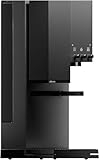
- 1. Three Levels of Automation for Any Skill Level: Choose from Autopilot, Copilot, or Free Solo mode. Autopilot handles the entire brewing process automatically. Copilot provides step-by-step guidance. Free Solo gives you full manual control. This coffee machine works for beginners and professional baristas alike.
- 2. Intuitive User Interface with Tactile Knobs and LED Matrix: The Studio features physical control knobs and a clear LED Matrix display. You can adjust grind size, water temperature, and flow rate in real time without navigating complicated touchscreen menus.
- 3. Full Customization via the xBloom App: Use the xBloom app to create, adjust, save, and share your favorite coffee recipes. Every brewing parameter can be fine-tuned and synced to the machine instantly. Your perfect cup is saved and repeatable.
- 4. Compostable xPod System for Minimal Waste and Maximum Flavor: Each xPod contains carefully selected whole beans and a built-in filter. Tap the recipe card, pour the beans into the grinder, place the pod into the dock, and press start. No capsules, no extra paper filters, no unnecessary waste.
- 5. What Is Included in the Box: The package includes the xBloom Studio, Omni Dripper 2 with Hyperflow Bottom, 10 paper filters, xPod Dock, Magnetic Dosing Cup, default recipe card, quick start guide, cleaning brush, and universal power cord. Everything you need is included.
Water quality and temperature
Good coffee starts with good water. Filtered water free of off-tastes is crucial. The brewing temperature also significantly impacts extraction.
- Water quality: Use filtered water. Tap water with high mineral content or chlorine can negatively affect taste.
- Temperature: For most brewers, water should be between 195°F and 205°F for optimal extraction. Check your brewer’s specifications to see if it reaches this range.
Grind size and coffee freshness
The grind size needs to match your brewing method. Too fine, and your coffee will be over-extracted and bitter; too coarse, and it will be under-extracted and weak. Freshly ground coffee is always best.
- Grind size: For drip coffee makers, a medium grind, resembling coarse sand, is usually ideal. Adjust slightly based on brew time; longer brew times may require a slightly coarser grind.
- Coffee freshness: Use whole bean coffee ground just before brewing. Pre-ground coffee loses flavor rapidly. Check the roast date; coffee is best within a few weeks of roasting.
Coffee-to-water ratio
This is the most critical factor for strength. A standard ratio is 1:15 to 1:18 coffee to water by weight.
- Golden ratio: A common starting point is the “golden ratio” of 1:17 (coffee to water). For every 1 gram of coffee, use 17 grams of water.
- Adjust to taste: This ratio can be adjusted slightly to suit personal preference. More coffee for stronger brew, less for lighter.
Cleanliness/descale status
A clean brewer ensures pure coffee flavor. Mineral buildup (scale) can impede heating and water flow, affecting extraction.
- Regular cleaning: Wash carafe, filter basket, and showerhead after each use.
- Descaling: Descale your brewer regularly, especially if you have hard water. Follow manufacturer instructions, typically using a vinegar solution or descaling agent.
Step-by-step (brew workflow for how much coffee needed to make 30 cups)
1. Measure Water Accurately:
- What to do: Use a liquid measuring cup or a scale to measure 180 ounces (approximately 22.5 standard 8-oz cups or 30 6-oz coffee cups) of filtered water.
- What “good” looks like: Water is precisely measured to match your desired coffee-to-water ratio.
- Common mistake and how to avoid it: Guessing water volume leads to inconsistent strength. Always measure.
2. Heat Water (if using a manual method or separate kettle):
- What to do: If your brewer doesn’t heat water to temperature, heat the measured water to between 195°F and 205°F.
- What “good” looks like: Water reaches the optimal brewing temperature range.
- Common mistake and how to avoid it: Using water that’s too hot or too cold results in over- or under-extraction. Use a thermometer.
3. Weigh Coffee Beans:
- What to do: Place your coffee beans on a kitchen scale. For 30 6-ounce cups, aim for 11.4 to 13.5 ounces (320 to 380 grams) of whole beans.
- What “good” looks like: Coffee is weighed precisely, allowing for accurate ratio calculation.
- Common mistake and how to avoid it: Measuring by volume (scoops) is inaccurate due to varying bean density. Always weigh your coffee.
4. Grind Coffee Beans:
- What to do: Grind the weighed coffee beans to a medium consistency, similar to coarse sand.
- What “good” looks like: The grind is uniform and appropriate for your drip coffee maker.
- Common mistake and how to avoid it: Grinding too fine or too coarse, or unevenly, leads to poor extraction. Use a burr grinder and adjust settings as needed.
5. Prepare the Brewer:
- What to do: Insert a clean paper filter into the filter basket of your drip coffee maker. If desired, rinse the paper filter with a small amount of hot water to remove paper taste, then discard the rinse water.
- What “good” looks like: The filter is properly seated, and any paper taste is minimized.
- Common mistake and how to avoid it: Forgetting to rinse the filter can impart a papery taste to your coffee. Don’t skip this step if you’re sensitive to it.
6. Add Ground Coffee:
- What to do: Pour the freshly ground coffee evenly into the prepared filter basket.
- What “good” looks like: Grounds are level in the basket, ready for even water distribution.
- Common mistake and how to avoid it: Tapping or compressing the grounds can lead to uneven extraction. Let them settle naturally.
7. Add Water to Reservoir:
- What to do: Carefully pour the measured, heated water into the coffee maker’s water reservoir.
- What “good” looks like: Water is added without spilling, and the reservoir is filled to the correct level.
- Common mistake and how to avoid it: Overfilling the reservoir can lead to leaks or diluted coffee. Adhere to the brewer’s maximum fill line.
8. Initiate Brewing:
- What to do: Turn on your coffee maker and allow the brewing cycle to complete fully.
- What “good” looks like: The machine brews at a consistent pace, and the coffee drips steadily into the carafe.
- Common mistake and how to avoid it: Stopping the brew cycle early can result in under-extracted coffee. Let the machine finish its process.
9. Serve and Enjoy:
- What to do: Once brewing is complete, remove the filter basket and serve the coffee immediately.
- What “good” looks like: The coffee is hot, aromatic, and ready to drink.
- Common mistake and how to avoid it: Leaving coffee on a hot plate for too long can “cook” it and develop a burnt taste. Serve promptly or transfer to a thermal carafe.
Common mistakes (and what happens if you ignore them)
| Mistake | What it causes | Fix |
|---|---|---|
| Using volumetric scoops instead of a scale | Inconsistent strength, either too weak or too strong, due to varying bean density. | Always weigh your coffee beans and water using a kitchen scale. |
| Using pre-ground coffee | Stale, flat, and less aromatic coffee due as flavors dissipate quickly. | Grind whole beans just before brewing for maximum freshness and flavor. |
| Incorrect grind size for the brewer | Over-extraction (bitter) if too fine, under-extraction (weak, sour) if too coarse. | Adjust your burr grinder to a medium setting for drip brewers; experiment to fine-tune. |
| Using tap water directly | Off-flavors (chlorine, minerals) that mask the coffee’s true taste. | Use filtered water to ensure a clean, pure coffee flavor. |
| Incorrect coffee-to-water ratio | Coffee is either too weak and watery or too strong and intense. | Stick to a ratio of 1:15 to 1:18 (coffee to water by weight) as a starting point. |
| Not cleaning the brewer regularly | Mineral buildup affects heating element and water flow, leading to poor extraction and off-tastes. | Descale monthly or quarterly with a descaling solution or vinegar; clean components after each use. |
| Brewing with water that’s too cold | Under-extraction, resulting in a sour, weak, and underdeveloped coffee. | Ensure your brewer heats water to 195-205°F; pre-heat water if necessary. |
| Brewing with water that’s too hot | Over-extraction, leading to bitter, burnt-tasting coffee. | Ensure water temperature stays within the 195-205°F range. |
| Leaving coffee on a hot plate for extended periods | “Cooks” the coffee, giving it a burnt, metallic, or stewed flavor. | Serve immediately or transfer to a pre-heated thermal carafe to maintain temperature without further heating. |
| Not pre-wetting paper filters | Imparts a papery taste to the final brew. | Rinse paper filters with hot water before adding coffee grounds, then discard the rinse water. |
Decision rules (simple if/then)
- If your coffee tastes weak and sour, then use a finer grind or increase the amount of coffee because it’s likely under-extracted.
- If your coffee tastes bitter and astringent, then use a coarser grind or decrease the amount of coffee because it’s likely over-extracted.
- If your coffee has a papery taste, then rinse your paper filter with hot water before brewing because it removes cellulose particles.
- If your coffee tastes flat and lacks aroma, then check the roast date of your beans and grind them just before brewing because freshness is key.
- If your coffee has an off-flavor you can’t identify, then switch to filtered water because tap water impurities can ruin the taste.
- If your brewer takes a long time to brew or makes a lot of noise, then descale it because mineral buildup is impeding its function.
- If you’re consistently getting inconsistent results, then start weighing your coffee and water because volumetric measurements are unreliable.
- If you’re brewing for a crowd and don’t have a large enough machine, then consider brewing in batches or investing in a larger capacity brewer because trying to force too much coffee through a small machine can lead to poor quality.
- If your brewed coffee cools down too quickly, then pre-heat your carafe with hot water before brewing because it helps maintain temperature.
- If you want a stronger cup without bitterness, then increase your coffee-to-water ratio slightly (e.g., from 1:17 to 1:16) because it adds strength without changing extraction time.
FAQ
Q: How many ounces are in a “cup” of coffee for brewing calculations?
A: For brewing purposes, a “cup” often refers to 5-6 fluid ounces, not the standard 8-ounce measuring cup. Most coffee makers use 5 fluid ounces per “cup” mark.
Q: Can I use pre-ground coffee for 30 cups?
A: While you can, it’s highly recommended to use freshly ground whole beans for the best flavor, especially when making such a large batch. Pre-ground coffee quickly loses its aroma and taste.
Q: What’s the best way to keep 30 cups of coffee hot without burning it?
A: A thermal carafe is ideal. Transfer the brewed coffee immediately after brewing to a pre-heated insulated carafe to maintain temperature without a hot plate.
Q: Is there a quick rule of thumb for how much coffee needed to make 30 cups?
A: A common rule of thumb is 2 tablespoons of ground coffee per 6 ounces of water. For 30 cups (180 oz total), that would be 60 tablespoons. However, weighing is always more accurate.
Q: My coffee maker only makes 12 cups. How can I brew 30?
A: You’ll need to brew in multiple batches. For example, you could brew two 12-cup batches and one 6-cup batch, ensuring you re-measure ingredients for each round.
Q: Does the type of coffee bean affect how much I should use?
A: Yes, to some extent. Denser beans (often lighter roasts) might require a slightly finer grind or a touch more coffee to achieve the same strength as less dense (darker roast) beans.
What this page does NOT cover (and where to go next)
- Advanced pour-over techniques for single servings
- Specific brand recommendations for coffee makers or grinders
- Detailed chemistry of coffee extraction
- Espresso brewing methods and calculations
- Cold brew preparation methods and ratios