
1kg Coffee Beans to Cups: Complete Conversion Chart by Brew Method
Quick answer
- A kilogram of coffee beans typically yields between 110-140 standard 6-ounce cups of brewed coffee.
- The exact number depends on your preferred brew ratio and the coffee’s density.
- Espresso will produce fewer, smaller servings compared to drip or pour-over.
- A common brew ratio is 1:16 (coffee to water), meaning 1 gram of coffee for every 16 grams of water.
- Grind size and brewing method significantly influence how much coffee you use.
- Storage and freshness can impact the flavor but not the total yield in terms of cups.
Key terms and definitions
- Kilogram (kg): A unit of mass, approximately 2.2 pounds.
- Brew Ratio: The proportion of coffee grounds to water used for brewing, often expressed as X:Y.
- Coffee Yield: The total amount of brewed coffee produced from a given quantity of beans.
- Standard Cup: Often refers to a 6-ounce (about 180 ml) serving size in coffee contexts.
- Dosing: The act of measuring out the specific amount of coffee grounds for brewing.
- Extraction: The process by which water dissolves soluble compounds from coffee grounds.
- Grounds: Coffee beans that have been milled into particles.
- Whole Bean: Coffee in its unground, roasted form.
- Density: The mass per unit volume of the coffee beans, which can vary.
- Brewing Method: The technique used to make coffee (e.g., drip, French press, espresso).
How it works
- You start with whole coffee beans, typically purchased by weight (e.g., a 1 kg bag).
- These beans are then ground to a specific size, depending on your brewing method.
- A measured amount of these grounds (your “dose”) is then combined with hot water.
- The water extracts flavor, aroma, and other compounds from the coffee grounds.
- The brew ratio dictates how much coffee you use relative to the water volume.
- For example, a 1:16 ratio means for every 1 gram of coffee, you use 16 grams (or ml) of water.
- After brewing, the spent grounds are separated, leaving you with brewed coffee.
- To calculate how much coffee does 1kg of beans make, you divide the total grams of beans (1000g) by the grams of coffee used per serving.
- Then, you convert the water used per serving into standard cup sizes.
- Different brewing methods require different amounts of coffee grounds for optimal extraction.
When you’re ready to start measuring, a quality 1kg bag of coffee beans is your starting point for all these calculations. For more details, see our How Many Cups of Coffee from 1kg of Beans. For more details, see our What Do You Call Someone Who Makes Coffee. For more details, see our Who Makes 7. Starbucks Refill Policy.
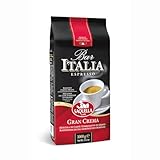
Saquella Bar Italia Gran Crema Espresso Coffee Beans, 1kg (2.2 lb) | Authentic Italian Roast | Full-Bodied, Velvety Crema & Rich Aroma | Perfect for Espresso, Cappuccino & Latte
- AUTHENTIC ITALIAN ESPRESSO EXPERIENCE: From Saquella Caffè, family coffee roasters in Italy since 1856 — blending heritage, passion, and quality in every bean.
- FULL-BODIED & CREAMY FLAVOR: A signature Arabica and Robusta blend that delivers a bold espresso with a thick, velvety crema and lingering chocolate notes.
- MEDIUM-DARK ROAST: Carefully roasted for a rich aroma and balanced taste — smooth yet intense, ideal for espresso, cappuccino, or macchiato.
- CONSISTENT QUALITY: Beans are slow-roasted and expertly blended to ensure uniform extraction and a true Italian café-style experience at home.
- MADE IN ITALY: Imported directly from Italy — Saquella Bar Italia Gran Crema is the choice of professional baristas and espresso lovers worldwide.
What affects the result
- Brew Ratio: This is the primary factor. A stronger brew (e.g., 1:15) uses more coffee per cup, yielding fewer cups from 1 kg. A weaker brew (e.g., 1:18) uses less coffee, yielding more cups.
- Desired Strength: Personal preference for how strong you like your coffee directly impacts the brew ratio you choose.
- Serving Size: A “cup” can vary. A standard coffee cup is often 6 fl oz, but many mugs hold 8-12 fl oz or more.
- Coffee Type: While 1 kg is 1 kg, some very dense beans might take up slightly less volume, but this rarely impacts the final cup count significantly if measuring by weight.
- Brewing Method:
- Drip/Pour-over: Often uses ratios around 1:15 to 1:17.
- French Press: Can use slightly coarser grinds and ratios from 1:12 to 1:16.
- Espresso: Uses a much higher concentration (e.g., 1:2 to 1:3 ratio of coffee to liquid espresso shot), but each shot is a much smaller volume (1-2 fl oz).
- Grind Size: While it doesn’t change the mass of coffee, an incorrect grind size can lead to poor extraction, making you feel like you need more coffee for flavor.
- Water Quality: Affects flavor, but not the number of cups derived from 1 kg of beans.
- Temperature: Brewing temperature affects extraction efficiency, but not the raw yield calculation.
- Freshness: Stale coffee might require a slightly higher dose to achieve desirable flavor, potentially reducing your total cup count.
- Measurement Accuracy: Using a scale for coffee and water ensures consistent results and accurate calculation of how much coffee 1kg of beans makes.
Measurement accuracy is key to understanding your yield; using a coffee scale ensures consistent results and accurate calculations.

Greater Goods Coffee Scale with Timer, 0.1g Precision Digital Espresso & Pour Over Scale for Chemex, V60, Drip & Matcha Weighing, Waterproof Silicone Cover, 6.6lb Barista Brew Capacity (Birch White)
- Barista-Level Precision: A 0.1g high-precision sensor with a rapid refresh rate responds instantly to changes in weight, helping you achieve consistent results across espresso, pour over, drip coffee, Chemex, V60, and filter coffee brewing.
- Integrated Brew Timer: A built-in count-up and count-down timer tracks bloom, extraction, and espresso shots. Ideal for dialing in espresso, timing Chemex and V60 pour over recipes, or steeping tea. Auto-shutoff helps preserve battery life between brews.
- Durable Waterproof Silicone Cover: The heat-resistant, dishwasher-safe silicone cover helps protect the coffee scale’s spacious 5.25″ x 5.25″ weighing surface from splashes, spills, and hot equipment. The grooved surface provides added stability and makes cleanup quick and easy.
- Versatile Measurement Options: Quick-tare and 6 unit options make it easy to weigh coffee beans, espresso shots, matcha portions, and more. Choose from g, ml, lb, lb:oz, oz, and fl oz for added flexibility in the kitchen and coffee bar.
- Intuitive Design: A bright dual-color LCD display clearly separates weight and timer readings, while simple controls make daily brewing easy. Includes 3 AAA batteries and is backed by 5 years of coverage, with support from our St. Louis-based team whenever you need a hand.
Pros, cons, and when it matters
- Pros of knowing the yield:
- Budgeting: Helps estimate how long a bag of coffee will last and plan purchases.
- Consistency: Understanding your typical usage helps maintain a consistent coffee supply.
- Sustainability: Reduces waste by ensuring you buy appropriate amounts.
- Comparison: Allows for better comparison of value across different coffee brands or roasts.
- Cons of focusing too much on yield:
- Sacrificing Quality: Over-focusing on maximizing cups can lead to under-dosing and weak, unpleasant coffee.
- Ignoring Taste: The “best” ratio is subjective and based on taste, not just volume.
- When it matters:
- Bulk Buying: When deciding whether to buy larger bags of coffee.
- Cafe Owners/High Volume Users: Essential for cost control and inventory management.
- New Brewers: Helps establish a baseline for how much coffee to use.
- Travelers: When packing coffee for a trip, knowing how much you’ll need.
- Experimentation: When trying new brew ratios, it helps track the impact on yield.
- Gift-giving: Estimating how long a coffee gift will last for the recipient.
Common misconceptions
- “More coffee means stronger coffee.” Not always. Too much coffee can lead to under-extraction if not brewed correctly, resulting in a weak or sour taste. Proper extraction is key.
- “A scoop is accurate enough.” Scoops vary widely in size and how much coffee they hold, especially with different grind sizes. Weighing coffee is far more accurate for consistent results and calculating total yield.
- “All coffee beans are the same density.” While the difference isn’t huge, darker roasts tend to be slightly less dense than lighter roasts. This means a scoop of dark roast might weigh less than a scoop of light roast, even if they occupy the same volume. Always weigh.
- “Brewing method doesn’t change the total cups from 1 kg.” It absolutely does. Espresso uses a high concentration but small serving size, while drip coffee uses less coffee per ounce of liquid, yielding many more standard “cups.”
- “Kilograms and pounds are interchangeable for coffee yield.” No, 1 kg is 2.2 pounds. Calculations must be consistent with the unit of measure.
- “You can get an exact, universal number of cups.” Due to varying brew ratios, serving sizes, and personal preferences, there’s always a range, not a single fixed number.
- “The water absorbed by grounds counts towards the cup yield.” The water absorbed by the spent grounds (typically about twice the weight of the dry grounds) is not part of the brewed coffee volume.
FAQ
How many grams of coffee are in one kilogram?
There are 1000 grams in one kilogram. This is the starting point for all calculations regarding how much coffee 1kg of beans makes.
What’s a common brew ratio for drip coffee?
A widely recommended starting point for drip coffee is a 1:16 ratio (1 gram of coffee to 16 grams of water). Some prefer 1:15 for a stronger brew, or 1:17 for a lighter one.
If I use 20 grams of coffee per 12-ounce mug, how many mugs will 1 kg of beans make?
First, convert 1 kg to grams (1000g). Then divide 1000g by 20g (your dose per mug), which equals 50 mugs.
Does grind size affect how many cups I get from 1 kg of beans?
No, grind size doesn’t change the total mass of the beans. However, it significantly impacts extraction. An incorrect grind might lead you to adjust your dose to compensate for flavor, indirectly affecting your yield.
How does espresso yield compare to drip coffee from 1 kg of beans?
Espresso will yield many more “shots” but far fewer standard 6-ounce “cups.” A single espresso shot is typically 1-2 ounces, using 18-20 grams of coffee. A kilogram could produce around 50-55 double espresso shots, but these are not comparable to a 6 oz drip coffee cup.
Understanding different coffee brewing methods is crucial, as espresso yields will differ significantly from drip coffee when calculating from 1 kg of beans.

Bodum 34oz Pour Over Coffee Maker, High-Heat Borosilicate Glass with Reusable Stainless Steel Filter and Cork Grip – Made in Portugal
- Pour Over Coffee: Manual Pour Over Coffee Maker allows you to brew an excellent cup of Coffee in minutes
- Stainless steel: Includes a new and improved permanent, stainless steel mesh filter that helps extract your coffee’s aromatic oils and subtle flavors instead of being absorbed by a paper filter
- Coffee Carafe: Made of durable, heat-resistant borosilicate glass with Cork Band detailing that is both functional and elegant; single wall
- Quick and Easy: Simply add coarse ground Coffee to filter, pour a small amount of water in a circular motion over ground Coffee until soaked then add the remaining water and let drip
- Servings: Pour Over Coffee Maker makes 8 cups of Coffee, 4 oz each; dishwasher safe
Is it better to measure coffee by weight or by volume (scoops)?
Always measure by weight for consistency and accuracy. The density of coffee beans varies, and scoops are highly inaccurate, leading to inconsistent brewing and difficulty in calculating your true yield from 1 kg.
What is the “golden ratio” for coffee brewing?
The “golden ratio” often refers to the Specialty Coffee Association’s recommendation of 55 grams of coffee per liter of water, which is approximately a 1:18 ratio. However, many home brewers find a 1:16 or 1:17 ratio more to their taste.
What this page does NOT cover (and where to go next)
- Specific coffee bean origins or roast levels (explore regional differences and their flavor profiles).
- Detailed brewing techniques for various coffee makers (look into guides for pour-over, French press, AeroPress, etc.).
- In-depth water chemistry for coffee (research water filtration and mineral content for optimal brewing).
- Grinder types and their impact on flavor (learn about burr vs. blade grinders and different grind settings).
- Advanced coffee tasting notes or sensory evaluation (delve into flavor wheels and professional cupping techniques).
- The history of coffee or its cultural significance (explore the journey of coffee from bean to cup).