
How Many Cups of Coffee From 1kg Beans? [Calculator + Chart]
Quick answer
- A 1kg bag of coffee beans can yield a significant number of cups, typically ranging from 100 to 140.
- The exact number depends heavily on your brewing method and preferred coffee strength.
- Espresso uses more coffee per serving than drip or pour-over.
- A standard “cup” of coffee in the US is often considered 5-6 fluid ounces.
- Adjusting your coffee-to-water ratio will directly impact your yield.
- Grind size also plays a role, as finer grinds often extract more efficiently, potentially allowing for slightly less coffee per cup.
If you’re looking to maximize your coffee enjoyment, a 1kg bag of quality coffee beans is a great starting point for consistent brewing at home. For more details, see our How Many Cups of Coffee from 1kg of Beans. For more details, see our What Do You Call Someone Who Makes Coffee. Starbucks Refill Policy.
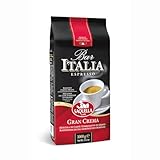
Saquella Bar Italia Gran Crema Espresso Coffee Beans, 1kg (2.2 lb) | Authentic Italian Roast | Full-Bodied, Velvety Crema & Rich Aroma | Perfect for Espresso, Cappuccino & Latte
- AUTHENTIC ITALIAN ESPRESSO EXPERIENCE: From Saquella Caffè, family coffee roasters in Italy since 1856 — blending heritage, passion, and quality in every bean.
- FULL-BODIED & CREAMY FLAVOR: A signature Arabica and Robusta blend that delivers a bold espresso with a thick, velvety crema and lingering chocolate notes.
- MEDIUM-DARK ROAST: Carefully roasted for a rich aroma and balanced taste — smooth yet intense, ideal for espresso, cappuccino, or macchiato.
- CONSISTENT QUALITY: Beans are slow-roasted and expertly blended to ensure uniform extraction and a true Italian café-style experience at home.
- MADE IN ITALY: Imported directly from Italy — Saquella Bar Italia Gran Crema is the choice of professional baristas and espresso lovers worldwide.
Key terms and definitions
- Coffee-to-water ratio: The proportion of ground coffee used relative to the amount of water. Often expressed as a ratio (e.g., 1:15) or grams of coffee per ml/oz of water.
- Brewing method: The specific process used to extract coffee from grounds (e.g., drip, pour-over, French press, espresso).
- Dose: The amount of ground coffee used for a single serving or brew cycle.
- Extraction: The process of dissolving desirable flavors and compounds from coffee grounds into water.
- Yield: The amount of brewed coffee produced from a given quantity of beans.
- Standard cup: In coffee contexts, often refers to a 5-6 fl oz serving, though actual mug sizes vary widely.
- Kilogram (kg): A unit of mass equal to approximately 2.2 pounds.
- Gram (g): A unit of mass, with 1000 grams in 1 kilogram.
- Brew strength: How concentrated the brewed coffee is, influenced by the coffee-to-water ratio and extraction.
How many cups does 1kg coffee beans make?
Understanding how many cups you can get from 1kg of coffee beans involves a simple calculation once you determine your ideal coffee-to-water ratio and serving size.
- First, convert 1 kilogram to grams: 1 kg = 1000 grams.
- Determine your preferred coffee-to-water ratio. A common starting point for drip coffee is 1:15 to 1:18 (coffee to water by weight).
- For example, if you use a 1:16 ratio, for every 16 grams of water, you use 1 gram of coffee.
- A typical single serving of coffee might use 15-20 grams of ground coffee.
- If you use 15 grams of coffee per cup, 1000 grams / 15 grams/cup = approximately 66.6 cups.
- If you use 20 grams of coffee per cup, 1000 grams / 20 grams/cup = 50 cups.
- However, these calculations are based on the dose of coffee. A “cup” often refers to a volume of brewed coffee.
- A common “cup” in US coffee makers is 5 fluid ounces (about 150 ml).
- If you brew 8 fluid ounces (about 240 ml) and use 15 grams of coffee, you’ll get fewer servings from your beans than if you brew 5 fluid ounces.
- Espresso, for instance, uses a much higher dose per serving (typically 18-22 grams for a double shot) but produces a much smaller volume (around 2 fl oz).
- Therefore, a 1kg bag will yield significantly fewer espresso shots than standard drip coffee cups.
What affects the result
Several factors influence how many cups you’ll get from 1kg of coffee beans:
- Coffee-to-water ratio: This is the most significant factor. A stronger brew (more coffee per water) means fewer cups. A weaker brew means more cups.
- Brewing method: Different methods have different ideal ratios and serving sizes. Espresso uses more coffee per serving than pour-over.
- Desired strength: Personal preference dictates how much coffee you use. Some prefer a very bold cup, others a milder one.
- Grind size: While not directly changing the coffee-to-water ratio, an optimized grind can lead to better extraction, potentially allowing you to use slightly less coffee for the same perceived strength.
- Serving size: Are you drinking 5 oz “cups” or 12 oz mugs? The volume of your final beverage impacts the count.
- Bean roast level: Darker roasts are less dense, so a scoop might weigh less than a scoop of light roast. Weighing your coffee is always recommended.
- Freshness of beans: Stale beans may require more coffee to achieve desired flavor and strength due to loss of aromatic compounds.
- Water quality: Good water quality can improve extraction efficiency, potentially allowing for a slightly lower coffee dose.
- Equipment efficiency: Some brewers are more efficient at extraction than others, which might subtly influence how much coffee you need.
- Waste: Any coffee spilled, left in the grinder, or imperfectly brewed reduces the total yield.
Pros, cons, and when it matters
Understanding how many cups you get from 1kg of beans has practical implications for home brewers.
- Pro: Budget planning: Knowing your yield helps you estimate how long a bag of coffee will last and plan your coffee purchases.
- Pro: Consistent brewing: By measuring your coffee dose, you ensure consistency in your daily brew, regardless of the bean or method.
- Pro: Reduced waste: Optimizing your coffee usage can prevent using too much coffee, saving money and resources.
- Con: Initial effort: Requires weighing beans and potentially adjusting ratios, which can be more effort than just using a scoop.
- Con: Variability: The “perfect” ratio and serving size are subjective, leading to variations in yield even among experienced brewers.
- When it matters: High consumption: If you drink a lot of coffee, understanding your yield helps with bulk buying and storage planning.
- When it matters: Trying new beans: Helps you determine the ideal starting point for a new coffee without wasting too much.
- When it matters: Different brew methods: Essential for switching between methods like espresso, French press, and drip, which have different coffee requirements.
- When it matters: Cost analysis: For those tracking their coffee expenses, this information is crucial.
- When it matters: Gifting coffee: Helps you advise recipients on how long a bag might last them.
- When it matters: Environmental impact: Using coffee efficiently reduces overall consumption and waste.
Common misconceptions
There are several common misunderstandings when calculating how many cups does 1kg coffee beans make.
- “A scoop is a scoop”: Coffee scoops vary widely in size, and different roasts or grinds will weigh differently in the same scoop. Always weigh your coffee for accuracy.
- “All cups are the same size”: A “cup” on a coffee maker often refers to 5 fluid ounces, but a standard mug can hold 8-12 ounces or more.
- “More coffee always means stronger coffee”: While generally true, simply adding more coffee without adjusting other variables (like grind or water temperature) can lead to over-extraction and bitterness, not just more strength.
- “Espresso uses less coffee because it’s a small shot”: Espresso actually uses a much higher coffee-to-water ratio and more grams of coffee per serving than most filter methods, despite the small output volume.
- “The number of beans matters”: It’s the weight of the coffee that matters, not the count of individual beans, as bean size and density vary.
- “Dark roasts are stronger”: Dark roasts often have a bolder flavor profile, but “strength” (concentration of dissolved solids) is primarily determined by the coffee-to-water ratio and extraction, not roast level.
- “You can’t get good coffee with less coffee”: With proper technique and a good grinder, you can often achieve excellent results with a moderate coffee dose, especially for filter methods.
FAQ
Q: What is a typical coffee-to-water ratio for drip coffee?
A: A common starting point for drip coffee is a 1:15 to 1:18 ratio (grams of coffee to grams of water). For example, 16 grams of coffee to 256 grams (or ml) of water.
Q: How much coffee should I use for a single cup?
A: For an 8-ounce mug of drip coffee, a good starting point is 15-20 grams of whole bean coffee, depending on your preferred strength.
Q: Does the type of coffee maker affect how many cups I get?
A: Yes, indirectly. Different coffee makers (drip, French press, espresso) have different ideal coffee-to-water ratios and typical serving sizes, which will impact your total yield from 1kg of beans.
Q: Can I use less coffee to make my bag last longer?
A: You can, but reducing the coffee dose too much can lead to a weak, under-extracted, or sour-tasting brew. It’s often better to optimize your ratio for taste and then manage consumption.
Q: Is it better to measure coffee by scoops or by weight?
A: Measuring by weight (grams) is far more accurate and consistent than using scoops, as bean density and scoop sizes vary. A digital kitchen scale is highly recommended.
Q: How many espresso shots can I get from 1kg of beans?
A: For a double espresso shot, you typically use 18-22 grams of coffee. This means 1kg (1000g) could yield approximately 45-55 double espresso shots.
See also: 1kg Coffee Beans to Cups: Complete Conversion Chart by Brew Method — our most popular guide on this topic.
What this page does NOT cover (and where to go next)
- Specific recipes for different brewing methods (e.g., how to make the perfect pour-over).
- Detailed guides on grinder types and grind size settings for various brewers.
- The science of coffee extraction and flavor compounds.
- How to store coffee beans to maintain freshness over time.
- In-depth reviews or recommendations for specific coffee brands or equipment.
- Advanced techniques for coffee tasting and flavor identification.