
Bunn Brand Information: Do They Produce Their Own Coffee?
Quick answer
- Bunn is primarily known as a manufacturer of coffee brewing equipment, not as a coffee producer.
- The company designs, manufactures, and sells a wide range of coffee makers, from home units to commercial-grade machines.
- Bunn has been in business for over 60 years, focusing on the technology and engineering behind coffee brewing.
- While Bunn does not produce its own coffee beans, they often partner with or recommend specific coffee roasters for optimal performance with their brewers.
- The brand’s reputation is built on the durability, speed, and consistent brewing quality of their machines.
Key terms and definitions
- Coffee Brewer: A device used to extract flavor from roasted coffee beans by steeping them in hot water.
- Commercial Coffee Maker: Coffee brewing equipment designed for high-volume use in businesses like restaurants, offices, and cafes.
- Home Coffee Maker: Coffee brewing equipment designed for use in a residential setting, typically with lower brewing capacity.
- Carafe: A container, usually glass or thermal, used to hold brewed coffee.
- Water Reservoir: The compartment in a coffee maker where water is stored before brewing.
- Spray Head: A component in a coffee maker that distributes hot water evenly over the coffee grounds.
- Brewing Cycle: The complete process a coffee maker goes through from heating water to dispensing brewed coffee.
- Pre-infusion: A brewing technique where a small amount of water is first applied to the coffee grounds to allow them to bloom before the main brewing process begins.
- Thermal Carafe: A carafe designed with double-wall insulation to keep coffee hot for extended periods without a heating plate.
- Drip Coffee: A common brewing method where hot water passes through coffee grounds held in a filter, dripping into a carafe below.
How it works
- Bunn coffee makers, particularly their drip models, utilize a gravity-fed system for brewing.
- Water is typically heated in an internal tank, maintaining a consistent temperature ready for brewing.
- Once activated, hot water is released from the tank and flows through a tube to the brew basket.
- The hot water then passes through a specially designed spray head, ensuring even saturation of the coffee grounds.
- As the water extracts flavor from the grounds, the brewed coffee drips through a filter into the carafe.
- Many Bunn machines feature a “brew-pause” mechanism, allowing you to remove the carafe mid-brew for a quick pour.
- For commercial models, the emphasis is often on speed and volume, with larger reservoirs and faster brewing cycles.
- Home models may offer features like programmable timers and different brew strengths.
- The design aims to deliver hot coffee quickly and consistently with each brew.
- The internal components are engineered for durability and ease of use in both home and professional environments.
Bunn coffee makers, particularly their drip models, utilize a gravity-fed system for brewing. If you’re in the market for a reliable drip coffee maker, Bunn offers excellent options known for their speed and consistency.
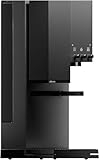
- 1. Three Levels of Automation for Any Skill Level: Choose from Autopilot, Copilot, or Free Solo mode. Autopilot handles the entire brewing process automatically. Copilot provides step-by-step guidance. Free Solo gives you full manual control. This coffee machine works for beginners and professional baristas alike.
- 2. Intuitive User Interface with Tactile Knobs and LED Matrix: The Studio features physical control knobs and a clear LED Matrix display. You can adjust grind size, water temperature, and flow rate in real time without navigating complicated touchscreen menus.
- 3. Full Customization via the xBloom App: Use the xBloom app to create, adjust, save, and share your favorite coffee recipes. Every brewing parameter can be fine-tuned and synced to the machine instantly. Your perfect cup is saved and repeatable.
- 4. Compostable xPod System for Minimal Waste and Maximum Flavor: Each xPod contains carefully selected whole beans and a built-in filter. Tap the recipe card, pour the beans into the grinder, place the pod into the dock, and press start. No capsules, no extra paper filters, no unnecessary waste.
- 5. What Is Included in the Box: The package includes the xBloom Studio, Omni Dripper 2 with Hyperflow Bottom, 10 paper filters, xPod Dock, Magnetic Dosing Cup, default recipe card, quick start guide, cleaning brush, and universal power cord. Everything you need is included.
What affects the result
- Water Quality: Using filtered or bottled water can significantly improve taste by removing impurities that might affect flavor.
- Coffee Bean Freshness: Whole beans roasted within the last few weeks and ground just before brewing yield the best aroma and taste.
- Grind Size: The coarseness or fineness of your coffee grounds is crucial. For most drip brewers, a medium grind is recommended. Too fine can lead to over-extraction and bitterness, too coarse can result in weak coffee.
- Coffee-to-Water Ratio: The proportion of coffee grounds to water directly impacts the strength and flavor. A common starting point is 1-2 tablespoons of coffee for every 6 oz of water.
- Water Temperature: The ideal brewing temperature is typically between 195°F and 205°F. Bunn brewers are often designed to reach and maintain this range.
- Brewing Time: The duration water is in contact with the coffee grounds influences extraction. Incorrect grind size can affect this.
- Brewer Cleanliness: Regular cleaning of your coffee maker prevents the buildup of coffee oils and mineral deposits, which can impart off-flavors.
- Filter Type: Paper filters can affect taste; bleached filters are generally considered neutral, while unbleached can sometimes impart a slight paper taste. Reusable metal filters allow more oils through, potentially leading to a richer cup but also more sediment.
- Altitude: At higher altitudes, water boils at a lower temperature, which can impact brewing efficiency if not accounted for.
- Coffee Roasting Profile: Light, medium, and dark roasts have distinct flavor characteristics that will be expressed differently by any brewer.
- Grinding Method: Burr grinders produce a more uniform particle size than blade grinders, leading to more consistent extraction.
- Type of Coffee Brewer: While this article focuses on Bunn’s general approach, different brewing technologies (e.g., pour-over, French press) inherently produce different results.
Pros, cons, and when it matters
- Pro: Durability and Longevity: Bunn coffee makers are often built with robust materials, making them a long-term investment. This matters for those who want a reliable machine for daily use over many years.
- Con: Initial Cost: Some Bunn models, especially commercial-grade or feature-rich home units, can have a higher upfront price compared to basic coffee makers. This is a consideration for budget-conscious buyers.
- Pro: Fast Brewing Speed: Many Bunn brewers are known for their quick brewing cycles, delivering hot coffee in just a few minutes. This is ideal for busy mornings or when serving multiple people.
- Con: Simplicity of Some Models: While simplicity can be a pro, some basic Bunn models may lack advanced features like programmable timers or brew strength adjustments. This matters for users who desire more control over their brewing process.
- Pro: Consistent Results: Bunn machines are engineered for consistent temperature and water distribution, leading to a reliable cup of coffee each time. This is important for coffee enthusiasts who value predictability.
- Con: Water Reservoir Maintenance: Some models require periodic descaling to remove mineral buildup, which is essential for maintaining performance and taste but adds a maintenance step.
- Pro: Good for High Volume: Commercial and larger home models are well-suited for offices or households that consume significant amounts of coffee.
- Con: Potential for Over-Extraction with Fine Grinds: The rapid brewing and hot water delivery can sometimes lead to over-extraction if the grind is too fine, resulting in bitterness. This matters for users who experiment with grind settings.
- Pro: Easy to Operate: The straightforward design of most Bunn coffee makers makes them user-friendly, even for those new to coffee brewing.
- Con: Not Ideal for Single Servings (for some models): While some smaller units exist, many Bunn brewers are designed for larger batches, which might be less efficient for brewing just one cup.
- Pro: Availability of Parts and Service: Due to their established presence, replacement parts and service options are generally accessible for Bunn equipment.
- Con: Can Be Bulky: Some of the more robust Bunn models, particularly commercial units, can take up considerable counter space. This is a factor for kitchens with limited space.
Common misconceptions
- Misconception: Bunn makes its own coffee beans. Bunn is a manufacturer of coffee brewing equipment. They do not grow, roast, or sell coffee beans themselves.
- Misconception: All Bunn coffee makers brew at the exact same speed. While Bunn is known for speed, different models have varying brewing capacities and internal designs, leading to slight differences in brew times.
- Misconception: You need special Bunn coffee filters. While Bunn may recommend specific filter types for optimal performance with their machines, standard basket-style filters that fit the brew basket size will generally work. Always check your manual.
- Misconception: Bunn coffee makers are only for commercial use. Bunn produces a wide range of coffee makers, including many designed specifically for home kitchens.
- Misconception: The heating plate is always on. Many Bunn coffee makers, especially those with thermal carafes, do not use a heating plate. The thermal carafe keeps the coffee hot. Models with glass carafes typically have a warming plate.
- Misconception: Bunn brewers are difficult to clean. While regular maintenance is necessary for any appliance, Bunn machines are generally designed for straightforward cleaning and descaling procedures.
- Misconception: Any coffee grind will work. Like all coffee brewers, Bunn machines perform best with a specific grind size. Using the wrong grind can negatively impact the taste.
- Misconception: Bunn coffee makers are overly complicated. Most Bunn brewers are designed with user-friendliness in mind, often featuring simple operation and minimal buttons.
- Misconception: The water temperature is not important. Water temperature is critical for proper coffee extraction. Bunn machines are engineered to heat water to optimal brewing temperatures.
- Misconception: Bunn coffee is automatically better. The quality of the coffee brewed depends on many factors, including the beans, grind, and water, not just the brewer itself.
FAQ
Q: Does Bunn produce its own coffee beans?
A: No, Bunn is a manufacturer of coffee brewing equipment. They design and produce coffee makers, not coffee beans.
Q: What kind of coffee is best to use with a Bunn coffee maker?
A: For best results, use freshly roasted whole bean coffee and grind it just before brewing to a medium consistency. Experiment with different roasts and origins to find your preference.
Q: How do I clean my Bunn coffee maker?
A: Regular cleaning involves washing the brew basket and carafe with soap and water. For deeper cleaning and descaling, follow the specific instructions in your Bunn coffee maker’s manual, as procedures can vary by model.
Q: Can I use any brand of coffee filter with my Bunn brewer?
A: While Bunn may have specific recommendations, most Bunn brewers use standard basket-style filters. Ensure the filter size and shape match your brew basket. Check your manual for exact specifications.
Q: Why is my coffee tasting bitter when using my Bunn brewer?
A: Bitter coffee can result from over-extraction. This might be due to using too fine a coffee grind, brewing with water that is too hot (though Bunn brewers are designed for optimal temps), or a dirty coffee maker.
Q: Are Bunn coffee makers energy efficient?
A: Energy efficiency varies by model. Models with thermal carafes are generally more energy efficient than those with warming plates, as they don’t continuously heat the coffee.
Q: How long does a Bunn coffee maker typically last?
A: Bunn coffee makers are known for their durability. With proper care and maintenance, many units can last for many years, often a decade or more, especially commercial models.
Q: What is the difference between a Bunn home coffee maker and a commercial one?
A: Commercial Bunn brewers are built for higher volume, faster brewing, and greater durability under heavy use. Home models are scaled down for household needs, often with more user-friendly features for casual brewing.
What this page does NOT cover (and where to go next)
- Specific Bunn coffee maker model reviews and comparisons.
- Detailed troubleshooting guides for every possible issue with Bunn machines.
- Information on specific coffee bean brands or roasters.
- In-depth analysis of coffee chemistry and extraction science.
- Comparisons of Bunn brewers to other brewing methods like espresso machines or pour-over devices.
- Pricing and availability of specific Bunn coffee maker models.