
Fastest Coffee Makers for a Quick Brew
Quick answer
- Look for drip coffee makers with thermal carafes. They keep coffee hot without needing a hot plate.
- Single-serve brewers can be fast, but often have smaller capacities.
- Consider models with pre-infusion or bloom features – they add a little time but improve flavor.
- Check reviews for real-world brew times, not just manufacturer claims.
- Some machines have a “brew pause” feature, handy if you can’t wait for the whole pot.
- Simpler designs with fewer bells and whistles often mean faster startup and cleanup.
Buying priorities
- Brew Speed: This is the main event. How quickly can it go from hitting “start” to pouring a cup?
- Capacity: How much coffee do you need at once? A quick single cup is different from a quick pot.
- Ease of Use: Fast coffee shouldn’t mean complicated. Simple controls are key.
- Cleaning: A quick brew is no good if cleanup takes forever. Look for dishwasher-safe parts.
- Carafe Type: Thermal carafes keep coffee hot longer and don’t scorch it like hot plates.
- Durability: You want a machine that lasts, not one that conks out after a few months.
- Footprint: How much counter space will it hog? Some fast machines are surprisingly compact.
- Noise Level: Some machines sound like a jet engine. If you’re brewing early, quiet is good.
- Water Reservoir Access: Is it easy to fill? A fiddly reservoir slows things down.
- Auto Shut-off: Safety first. A quick brew should also be a safe brew.
Feature comparison
- Brew Method: Drip, single-serve pod, pour-over, French press. Drip and single-serve are generally fastest.
- Capacity: From single cups (4-10 oz) to full pots (10-14 cups).
- Brew Time: Varies wildly. Some drip machines do a full pot in 5-7 minutes. Single-serve can be under a minute.
- Temperature Control: Some high-end models offer precise temp settings. Most standard ones are fixed.
- Filter Type: Paper filters, permanent metal filters, or no filter (pod machines). Paper filters can add a tiny bit of time.
- Carafe Material: Glass (needs a hot plate) or thermal stainless steel (keeps coffee hot naturally). Thermal is faster for serving.
- Cleaning: Removable parts, descaling cycles, or simple wipe-downs.
- Footprint: Compact designs or larger, multi-function units.
- Pre-infusion/Bloom: Some machines wet the grounds first. Adds about 30 seconds but improves flavor. Worth it if you have the time.
- Programmability: Set it to brew later. Not about instant speed, but convenience.
- Hot Plate: Some machines use this to keep coffee warm. Can scorch coffee over time. Thermal carafes are better for speed and quality.
- Water Filter: Some machines have built-in filters. Adds a step but can improve taste.
How to choose step-by-step
1. Assess your daily need:
- What to do: Figure out if you need a single cup or a full pot.
- What “good” looks like: You know if you usually make one cup or a whole pot for the family.
- Common mistake: Buying a huge pot when you only drink one cup. Avoid this by being honest about your habits.
2. Prioritize brew speed:
- What to do: Look for drip machines advertised with fast brew times or single-serve machines.
- What “good” looks like: A machine that can deliver a hot cup or pot in under 10 minutes.
- Common mistake: Assuming “fast” means instant. Read reviews for actual brew times.
When prioritizing brew speed, look for drip machines advertised with fast brew times or single-serve machines. For example, a quick brew coffee machine can deliver a hot cup or pot in under 10 minutes.
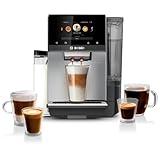
- SIMPLIFY AT-HOME COFFEE BREWING: Whether you're in the mood for a latte macchiato, cappuccino, or espresso, the large touchscreen display makes it easy to make and personalize each drink
- ULTIMATE PERSONALIZATION: Adjust the strength, size, and milk ratio, and even aroma to your exact liking
- CONVENIENCE THROUGH REMOTE BREWING: Use the Home Connect app to control your espresso machine from the couch or as you're heading home, and discover 35plus delicious beverages
- EASY TO MAINTAIN: Combined cleaning and descaling program to minimize maintenance time, plus a step-by-step guide to easily clean and descale, with Calc'n Clean
- WHAT'S IN THE BOX: Bosch VeroCafe 800 Series Fully Automatic Espresso and Coffee Machine TQU60307, Mavea Water Filter, Mavea Water Filter Insertion Aid, Microfiber Cloth, Welcome Kit, Milk Adapter, Integrated Milk Container, User Manual, Water Hardness Test Strip
3. Consider the carafe:
- What to do: Decide between glass with a hot plate or a thermal carafe.
- What “good” looks like: A thermal carafe for coffee that stays hot without getting bitter.
- Common mistake: Not realizing a hot plate can “cook” your coffee, making it taste bad after an hour.
4. Check the filter system:
- What to do: Decide if you prefer paper filters, a reusable metal filter, or pod-based.
- What “good” looks like: A system that’s easy to clean and doesn’t add significant brew time.
- Common mistake: Underestimating the time it takes to clean a complex reusable filter.
5. Evaluate ease of use and cleaning:
- What to do: Look for simple controls and removable parts.
- What “good” looks like: A machine you can operate with one hand and clean in a few minutes.
- Common mistake: Buying a machine with too many buttons you’ll never use, or parts that are a pain to wash.
6. Think about counter space:
- What to do: Measure your available space.
- What “good” looks like: A machine that fits comfortably without getting in the way.
- Common mistake: Forgetting to measure and ending up with a counter-hogging beast.
7. Read real user reviews:
- What to do: Search for reviews focusing on speed and reliability.
- What “good” looks like: Consistent praise for quick brews and few complaints about breakdowns.
- Common mistake: Relying solely on manufacturer specs, which can be optimistic.
Common mistakes (and what happens if you ignore them)
| Mistake | What it causes | Fix |
|---|---|---|
| Not preheating the machine | Slower brew time, lukewarm coffee | Run hot water through the machine before brewing your first cup. |
| Using cold water | Significantly longer brew time, under-extracted coffee | Always use fresh, cold water. Let it reach room temp if it’s ice-cold. |
| Overfilling the water reservoir | Spills, potential damage, slower brewing | Stick to the max fill line. |
| Using stale coffee grounds | Weak, bitter, or sour coffee, regardless of speed | Use freshly ground beans. Grind right before brewing if possible. |
| Not cleaning regularly | Clogged parts, slower brewing, bad-tasting coffee | Descale and clean parts as recommended by the manufacturer. |
| Using the wrong grind size | Channeling (water bypasses grounds), weak coffee | Match grind size to your brew method (coarse for French press, finer for drip). |
| Ignoring manufacturer instructions | Reduced performance, potential damage, slower brewing | Read the manual. Seriously. |
| Expecting instant coffee from drip | Disappointment, frustration | Understand that drip takes a few minutes; focus on <em>fastest</em> drip. |
| Not letting the machine finish | Incomplete extraction, weak coffee | Wait until the brewing cycle is fully complete before removing the carafe. |
| Using pre-ground coffee left open | Oxidized, flavorless grounds, slow extraction | Store grounds in an airtight container, away from light and heat. |
Decision rules (simple if/then)
- If you need coffee for one person, then consider a single-serve brewer because they are often the absolute fastest per cup.
- If you need coffee for a family or office, then a fast drip coffee maker with a thermal carafe is your best bet because it brews larger volumes quickly and keeps it hot.
- If you’re always in a rush in the morning, then prioritize machines with simple, one-touch operation because complex setups add time.
- If you hate cleaning, then look for machines with dishwasher-safe parts and a straightforward design because less fiddling means faster cleanup.
- If you value flavor over absolute speed, then a machine with a pre-infusion or bloom cycle is worth considering because it adds about 30 seconds for better taste.
- If counter space is limited, then opt for a compact drip machine or a sleek single-serve model because some fast machines can be bulky.
- If you want hot coffee without a burnt taste, then choose a thermal carafe over a glass carafe with a hot plate because thermal carafes maintain temperature naturally.
- If you’re on a tight budget, then a basic, no-frills drip coffee maker is often the fastest and cheapest option because simplicity equals speed and lower cost.
- If you want to wake up to coffee, then a programmable drip machine is useful, but remember this adds to the total time, it doesn’t make the brew itself faster.
- If you’re sensitive to noise, then look for models specifically advertised as quiet because some brewing machines can be quite loud.
FAQ
What’s the fastest way to make coffee at home?
Generally, single-serve pod machines are the quickest for a single cup, often brewing in under a minute. For larger batches, look for fast drip coffee makers that can brew a full pot in 5-7 minutes.
Do faster coffee makers make worse coffee?
Not necessarily. Speed often comes from efficient heating elements and optimized water flow. However, some super-fast methods might sacrifice a bit of nuance compared to slower, more deliberate brews.
How long does a typical fast coffee maker take?
A fast single-serve machine might take 30-60 seconds per cup. A fast drip machine could brew a 10-12 cup pot in about 5-7 minutes.
What’s the difference between a thermal carafe and a glass carafe with a hot plate?
A thermal carafe uses insulation to keep coffee hot for hours. A glass carafe sits on a hot plate, which can scorch coffee over time and affect its taste. Thermal is better for keeping coffee fresh and ready.
Can I speed up my current coffee maker?
You can’t change the machine’s inherent speed, but you can optimize. Use fresh, room-temperature water, ensure your grounds are the right size, and keep the machine clean.
Are expensive coffee makers faster?
Not always. Price often reflects build quality, advanced features, or specific brewing technologies, not just raw speed. Some basic, affordable drip machines are surprisingly fast.
What is “bloom” or “pre-infusion” and does it slow things down?
It’s a process where the machine briefly wets the coffee grounds before the main brew. This releases CO2 and can improve flavor extraction. It adds about 30 seconds to the brew time, but many find it’s worth it.
How important is the water temperature for speed?
Very. Most machines heat the water as part of the brewing process. If the machine is designed for speed, it has a powerful heater. Using cold water directly from the tap doesn’t change the machine’s heating time.
What this page does NOT cover (and where to go next)
- Detailed reviews of specific brands or models. (Look for product reviews on retailer sites or dedicated coffee blogs.)
- The best coffee beans for speed brewing. (Explore guides on bean freshness and roast levels.)
- Advanced brewing techniques like siphon or Aeropress. (These are generally slower but offer unique results.)
- How to troubleshoot specific machine malfunctions. (Consult your product manual or manufacturer support.)
- Espresso machine speed and capabilities. (Espresso is a different category with its own speed considerations.)